


Consumer medicine information

Acarizax

American house dust mite extract; European house dust mite extract

BRAND INFORMATION

Brand name

Acarizax

Active ingredient

American house dust mite extract; European house dust mite extract

Schedule

S4


Consumer medicine information (CMI) leaflet

Please read this leaflet carefully before you start using Acarizax.

What is in this leaflet

This leaflet answers some common questions about ACARIZAX®. It does not contain all the available information. It does not take the place of talking to your doctor or pharmacist.

All medicines have risks and benefits. Your doctor has weighed the risks of you taking ACARIZAX® against the benefits this medicine is expected to have for you.

If you have any concerns about taking this medicine, ask your doctor or pharmacist.

Keep this leaflet with the medicine. You may need to read it again.

What ACARIZAX® is used for

ACARIZAX® contains an allergen extract from house dust mites. It comes in a tablet form which is intended to be absorbed in the body by placing it under the tongue.

ACARIZAX® is for the treatment of house dust mite allergy that is characterised by rhinitis (sneezing, runny or itchy nose, nasal congestion) in adults and adolescents aged 12 years and above. It is also for the treatment of house dust mite related allergic asthma in adults.

ACARIZAX® is not recommended for use in children below 12 years of age.

ACARIZAX® works by increasing your immune tolerance to house dust mites leading to reduction in the severity of your allergic symptoms over time.

Before starting treatment, the doctor will check if ACARIZAX® is suitable for you by performing the appropriate blood and/or skin prick tests.

ACARIZAX® is only available with a prescription from the doctor.

Ask your doctor if you have any questions about why this medicine has been prescribed for you. Your doctor may have prescribed it for another reason.

This medicine is not expected to affect your ability to drive a car or operate machinery.

Before you take ACARIZAX®

When you must not take it

Do not take ACARIZAX® if:

  • you have an allergy to any of the ‘Other ingredients’ listed at the end of this leaflet
  • you have poor lung function (as assessed by your doctor)
  • your asthma has worsened over the last 3 months (as assessed by your doctor)
  • you have asthma as well as an ongoing airway infection such as a cold or chest infection on the day you are to take the first dose of ACARIZAX®. Your doctor may recommend delaying the start of your treatment until your cold or infection is better
  • you have an illness which affects your immune system or have cancer
  • you have recently lost or had a tooth taken out had other forms of mouth surgery, have ulcers, wounds, or infections in the mouth (refer to Before you start to take it).

Do not take the medicine after the expiry date printed on the pack or if the packaging is torn or shows signs of tampering.

Before you start to take it

Tell your doctor if you:

  • have an allergy to any of the ‘Other ingredients’ listed at the end of this leaflet
  • are being treated for depression, asthma, Parkinson’s disease or have a heart condition such as high blood pressure or an irregular heartbeat (refer to Taking other medicines)
  • have previously been treated for house dust mite allergy and had a severe allergic reaction, have recently lost or had a tooth taken out, had other forms of mouth surgery, are planning to have any form of mouth surgery, have ulcers, wounds or infections in the mouth. Your doctor may delay or stop your treatment until your condition has resolved
  • are recovering or are in remission from an illness which affects your immune system
  • have an inflamed oesophagus
  • are taking steroids
  • are pregnant or intend to become pregnant during treatment
  • are breast-feeding or intend to breast-feed during treatment.

Taking other medicines

Tell your doctor if you are taking any other medicines including any that you get without a prescription from your pharmacy, supermarket or health food shop. Some medicines and ACARIZAX® may interfere with each other.

Ask your doctor for more information on medicines to be careful of or avoid while taking ACARIZAX®.

How to take ACARIZAX®

Follow all directions given to you by your doctor or pharmacist carefully. They may differ from the information contained in this leaflet.

If you do not understand the instructions in this leaflet, ask your doctor or pharmacist for help.

How much to take

The recommended dose of ACARIZAX® is one tablet per day. Each tablet contains 12 SQ-HDM standardised allergen extract from the house dust mites Dermatophagoides farinae and Dermatophagoides pteronyssinus.

However your doctor may recommend a different dose for you. Always follow the instructions given to you by your doctor or pharmacist.

How to take it

Make sure your hands are clean and dry before handling the medicine. Follow the instructions below when taking ACARIZAX®:
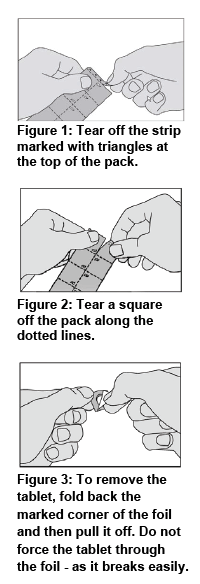
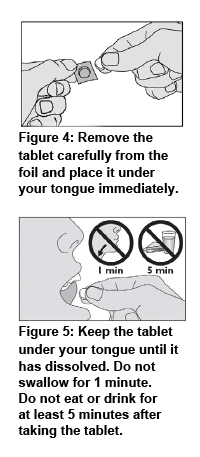
Your doctor should give you the first tablet under medical supervision and then monitor you for 30 minutes. This gives you the opportunity to discuss any possible side effects with your doctor (refer to Side effects).

When to take it

Take your medicine at about the same time each day. Taking it at the same time each day will help you get the best effect. It will also help you to remember when to take it.

Do not consume food and drink for 5 minutes after taking this medicine. Food can interfere with the absorption of this medicine.

How long to take it

Continue taking the medicine for as long as your doctor tells you to.

Do not stop taking the medicine until your doctor tells you - even if you feel better. If you do not take this medicine as prescribed, you may not get the full effect of the treatment.

If you forget to take it

If you forget to take a dose, take it later in the day.

Do not take a double dose to make up for the dose you missed.

If you have not taken ACARIZAX® for more than 7 days contact your doctor before taking ACARIZAX® again.

If you are not sure what to do, ask your doctor or pharmacist.

If you have trouble remembering when to take your medicine, ask your pharmacist for some hints.

If you take too much (overdose)

Immediately telephone your doctor or Poisons Information Centre (telephone 13 1126) for advice, or go to Accident and Emergency at the nearest hospital if you think that you or anyone else may have taken too much ACARIZAX®. Do this even if there are no signs of discomfort or poisoning. You may need urgent medical attention.

While you are using ACARIZAX®

Things you must do

If you are about to be started on any new medicine, inform your doctor or pharmacist that you are taking ACARIZAX®.

Tell any other doctors, dentists, and pharmacists who treat you that you are taking this medicine.

If you become pregnant while taking this medicine, tell your doctor immediately.

You can expect some mild to moderate localised allergic reactions during your treatment. In most cases these reactions are only temporary. However, if you think these are severe, talk to your doctor to see if you need any anti-allergic medicines such as antihistamines (refer to Side effects).

If you have not taken ACARIZAX® for more than 7 days you should contact your doctor before taking ACARIZAX® again.

Tell your doctor if you feel the treatment is not helping your condition.

Things you must not do

Do not use ACARIZAX® to treat any other conditions unless your doctor tells you to.

Do not give this medicine to anyone else even if they have the same conditions as you.

Do not take this medicine if you are below 12 years of age.

Do not stop taking your medicine without checking with your doctor. If you stop taking it suddenly, your condition may worsen or you may have unwanted side effects.

Side effects

Tell your doctor or pharmacist if you have any unpleasant effects while taking ACARIZAX® even if you do not think the effect is connected with this medicine.

All medicines can have side effects. Sometimes they are serious, most of the time they are not. You may need to seek medical attention if you get some of the side effects.

Do not be alarmed by the following lists of side effects. You may not experience any of them.

Ask your doctor or pharmacist to answer any questions you may have.

Tell your doctor or pharmacist if you notice any of the following and they worry you:

  • Irritation of the throat
  • Dryness or redness of the mouth
  • Itching of the mouth, tongue, lips, eyes or ears
  • Inflammation of the nose and throat
  • Taste disturbance or loss of taste
  • Runny nose, blocked nose or sneezing

Tell your doctor as soon as possible if you notice any of the following:

  • Prickling sensation or numbness of the mouth or tongue
  • Itching, redness, watering of the eyes
  • Swelling of the mouth, throat, tongue or lips
  • Inflammation, discomfort or burning sensation in the mouth
  • Stomach pain or discomfort
  • Diarrhoea
  • Feeling sick (nausea) or vomiting
  • Pain when swallowing or difficulty in swallowing
  • Indigestion or heartburn
  • Hoarseness
  • Blistering of the mouth and mouth ulcers
  • Fast or irregular heartbeat
  • Sensation of something stuck in the throat
  • Tightness in the chest
  • Feeling tired or dizzy
  • Itching or redness of the skin, hives
  • Ear pain

In most cases these reactions are only temporary.

If any of the following happen, stop taking ACARIZAX® and tell your doctor immediately or go to Accident and Emergency at your nearest hospital:

  • Worsening of existing asthma
  • Rapid swelling of face, mouth, throat or skin
  • Difficulties in swallowing or breathing
  • Voice changing
  • Start to feel faint
  • Feeling of fullness in the throat (like swelling)
  • Tightness in the throat.

Tell your doctor or pharmacist if you notice anything that is making you feel unwell.

Other side effects not listed above may also occur in some people.

After using ACARIZAX®

Storage

Store the blister pack in the carton to protect the tablets from light.

Keep it in a cool dry place where the temperature stays below 25°C.

Do not store ACARIZAX®, or any other medicine, in the bathroom or near a sink. Do not leave it in the car on hot days. Heat and dampness can destroy some medicines.

Keep it where young children cannot reach it. A locked cupboard at least one-and-a-half metres above the ground is a good place to store medicines.

Disposal

If your doctor tells you to stop taking the tablets, or the tablets have passed their expiry date, ask your pharmacist what to do with any ACARIZAX® that is left over.

Product description

What ACARIZAX® looks like

ACARIZAX® tablets are white to off-white with an imprint on one side. The tablets are individually packed in blister foils.

The following pack sizes are available: 10, 30 or 90 tablets.

Not all pack sizes may be marketed.

Ingredients

Active ingredients

Each ACARIZAX® tablet contains 12 SQ-HDM standardised allergen extract from the house dust mites Dermatophagoides farinae and Dermatophagoides pteronyssinus as the active ingredient.

Other ingredients

The tablet also contains:

  • gelatin (from fish)
  • mannitol
  • sodium hydroxide.

This medicine does not contain lactose, sucrose, gluten, tartrazine or any other azo dyes.

Sponsor

ACARIZAX® is sponsored in Australia by:

Seqirus Pty Ltd
ABN: 26 160 735 035
63 Poplar Road Parkville
VIC 3052 Australia
Telephone: 1800 642 865
www.seqirus.com.au

Australian Registration Number

AUST R 250392

This leaflet was prepared on:
13 May 2020

ACARIZAX® is a registered trademark of ALK- Abelló A/S used under license

Published by MIMS July 2020

BRAND INFORMATION

Brand name

Acarizax

Active ingredient

American house dust mite extract; European house dust mite extract

Schedule

S4


1 Name of Medicine

American house dust mite extract and European house dust mite extract.

2 Qualitative and Quantitative Composition

Acarizax is allergy immunotherapy.
Acarizax sublingual tablets contain 12 SQ-HDM standardised allergen extract from the house dust mites (HDM) Dermatophagoides farinae and Dermatophagoides pteronyssinus.
The unit SQ-HDM has been defined to measure the potency of Acarizax and is based on a standardised amount of allergens from each species. Each tablet contains 6 SQ-HDM D. farinae and 6 SQ-HDM of D. pteronyssinus for a total of 12 SQ-HDM.
Acarizax sublingual tablets, 12 SQ-HDM also contains gelatin (fish), mannitol and sodium hydroxide.

3 Pharmaceutical Form

Acarizax 12 SQ-HDM is supplied as white to off-white freeze-dried debossed sublingual tablets.

4 Clinical Particulars

4.1 Therapeutic Indications

Allergic rhinitis.

Acarizax is indicated for the treatment of house dust mite (HDM) allergic rhinitis not well controlled despite use of symptom relieving medication in adults and adolescents (≥ 12 years).

Allergic asthma.

Acarizax is indicated for the treatment of HDM allergic asthma not well controlled by inhaled corticosteroids and associated with HDM allergic rhinitis in adults. Patients' asthma status should be carefully evaluated before the initiation of treatment.

4.2 Dose and Method of Administration

Treatment with Acarizax should be initiated by a clinician with experience in treatment of allergies. Patients should have a confirmed clinical history and a positive test of house dust mite sensitization (specific IgE and/or skin prick test) prior to treatment.
The recommended dose for patients 12 years and above is one sublingual tablet (12 SQ-HDM) daily.
It is recommended that the first sublingual tablet is taken under medical supervision and that the patient is monitored for 30 minutes, to enable discussion and possible treatment of any immediate side effects. Also see Section 4.4 Special Warnings and Precautions for Use.
The sublingual tablet should be taken with dry fingers from the blister unit immediately after opening the blister and placed under the tongue, where it will disperse. Swallowing should be avoided for approximately 1 minute. Food and beverage should not be consumed for the following 5 minutes.
Onset of the clinical effect is to be expected 8-14 weeks after initiation of treatment. If no improvement is observed during the first year of treatment with Acarizax there is no indication for continuing treatment.
Refer to treatment guidelines for recommendations on the duration of patient treatment. International treatment guidelines refer to a treatment period of 3 years for allergy immunotherapy to achieve disease modification. Efficacy data is available for 18 months of treatment with Acarizax from the clinical trial MT-04 (MITRA) conducted in adults with HDM allergic asthma. Long-term efficacy has not been established.
Acarizax is not recommended for use in patients below 18 years of age for allergic asthma and below 12 years of age for allergic rhinitis due to insufficient data on safety and efficacy in these populations. Also see Section 5.1 Pharmacodynamic Properties, Clinical trials.
If treatment with Acarizax is interrupted for a period of up to 7 days, treatment can be resumed by the patient. If treatment is interrupted for more than 7 days, it is recommended to seek medical advice before continuing treatment.

4.3 Contraindications

Acarizax is contraindicated in patients:
with a known hypersensitivity to any of the excipients;
with FEV1 < 70% of predicted value (after adequate pharmacological treatment) at initiation of treatment;
who have experienced a severe asthma exacerbation within the last 3 months;
with asthma and experiencing an acute respiratory tract infection, initiation of Acarizax treatment should be postponed until the infection has resolved;
with active or poorly controlled autoimmune diseases, immune defects, immunodeficiencies, immunosuppression or malignant neoplastic disease with current disease relevance;
with acute severe oral inflammation or oral wounds (see Section 4.4 Special Warnings and Precautions for Use).

4.4 Special Warnings and Precautions for Use

Asthma.

Patients should be advised that Acarizax is not intended to treat acute asthma exacerbations. In the event of an acute asthma exacerbation, a short-acting bronchodilator should be used. If short-acting bronchodilator treatment is ineffective or there is a need for more inhalations than usual, medical attention must be sought.
Acarizax should initially be used as add on therapy and not be used as a substitute of pre-existing asthma medication. Abrupt discontinuation of asthma controller medication after initiation of Acarizax treatment is not recommended. Decreases in asthma controller medication should be gradual and performed under medical supervision.
Asthma is a known risk factor for severe systemic allergic reactions.
Patients must be advised to seek urgent medical attention should their asthma deteriorate suddenly.

Local allergic reactions.

When treated with Acarizax the patient is exposed to the allergen that causes the allergic symptoms. Therefore local allergic reactions are to be expected during the treatment period (see Section 4.8 Adverse Effects (Undesirable Effects)). The use of anti-allergic medication (e.g. antihistamines) should be considered for any potential significant local adverse reactions to Acarizax. These reactions are usually mild or moderate; however, more severe oropharyngeal reactions may occur.

Severe systemic allergic reactions.

Treatment with Acarizax should be discontinued immediately and urgent medical attention sought in cases of severe systemic allergic reactions, severe asthma exacerbation, angioedema, difficulty in swallowing, difficulty in breathing, changes in voice, hypotension or feeling of fullness in the throat. The onset of systemic symptoms may include flushing, pruritus, sense of heat, general discomfort and agitation/anxiety.
Although side effects are more likely to occur within the first two months of commencing Acarizax, they can occur at any time throughout the therapy.
Initiation of Acarizax in patients who have previously had a systemic allergic reaction to subcutaneous HDM immunotherapy should be carefully considered, and measures to treat any potential adverse reactions should be available. This is based on post-marketing experience from a corresponding sublingual tablet product for grass pollen immunotherapy which indicates that the risk of a severe allergic reaction may be increased for patients who have previously experienced a systemic allergic reaction to subcutaneous grass pollen immunotherapy.
Severe systemic allergic reactions may be treated with adrenaline. The effects of adrenaline may be potentiated in patients treated with tricyclic antidepressants, mono amino oxidase inhibitors (MAOIs) and/or Catechol-O-methyl transferase inhibitors (COMT) with possible fatal consequences. The effects of adrenaline may be reduced in patients treated with beta-blockers.
Patients with cardiac disease who suffer a systemic allergic reaction may be at increased risk of a severe systemic allergic reaction. Clinical experience with the use of Acarizax in patients with cardiac disease is limited.
This should be taken into consideration prior to initiating allergy immunotherapy.

Oral inflammation.

In patients with severe oral inflammation (e.g. oral lichen planus, mouth ulcers or thrush), oral wounds or following oral surgery, including dental extraction, or following tooth loss, initiation of Acarizax treatment should be postponed and any ongoing treatment should be temporarily interrupted to allow healing of the oral cavity (see Section 4.2 Dose and Method of Administration).

Eosinophilic oesophagitis.

Cases of eosinophilic oesophagitis have been reported in association with Acarizax treatment. Initiation of Acarizax in patients with known eosinophilic oesophagitis should be carefully considered, and the possibility of exacerbating existing disease should be assessed. In patients with severe or persisting gastro-esophageal symptoms such as dysphagia, abdominal pain or dyspepsia, Acarizax should be interrupted and medical evaluation must be sought.

Autoimmune diseases in remission.

Limited data is available on treatment with allergy immunotherapy in patients with autoimmune diseases in remission. Acarizax should therefore be prescribed with caution in these patients.

Use in the elderly.

Special studies in the geriatric population have not been performed; however, Acarizax has been administered to 13 subjects ≥ 65 years of age. No overall differences in safety and effectiveness were observed between these subjects and younger subjects.

Paediatric use.

Acarizax is not recommended for use in children below 12 years of age for allergic rhinitis. Clinical experience in treatment of allergic rhinitis with Acarizax in children below 12 years of age has not been established.
Acarizax is not recommended for use in patients below 18 years of age for allergic asthma. Clinical experience in treatment of allergic asthma with Acarizax in children below 18 years of age has not been established.
Only limited data are available from patients 5-11 years of age (from the phase 1 trial MT-03 which investigated safety and tolerability in subjects 5-14 years of age with HDM allergic asthma). No data on treatment with Acarizax in children below 5 years of age exist. Also see Section 5.1 Pharmacodynamic Properties, Clinical trials.

Effect on laboratory tests.

Acarizax has no effect on laboratory tests.

4.5 Interactions with Other Medicines and Other Forms of Interactions

No interaction trials have been conducted in humans and no potential drug interactions have been identified from any source.

4.6 Fertility, Pregnancy and Lactation

Effects on fertility.

There is no data available regarding fertility and use of Acarizax. While dedicated fertility studies have not been conducted, histopathological assessment performed as part of the 26 week repeat dose toxicity study in mice showed no effects on the reproductive organs attributable to Acarizax.
(Category B2)
There is no data available regarding use of Acarizax during pregnancy. No adverse effects were observed in an embryo-fetal development study in mice with doses approximately 680 times greater than clinical doses.
Treatment with Acarizax should not be initiated during pregnancy. If pregnancy occurs during treatment, the treatment may continue after evaluation of the general condition (including lung function) of the patient and reactions to previous administration of Acarizax.
Close supervision during pregnancy is recommended for patients with pre-existing asthma.
No clinical data are available for the use of Acarizax during lactation. Studies in animals to investigate excretion of Acarizax into milk were not conducted. No effects on the breastfed infants are anticipated.
Initiation of allergy immunotherapy while breast feeding is not recommended. However, if breast feeding is required during treatment, patients should be closely monitored.

4.7 Effects on Ability to Drive and Use Machines

Treatment with Acarizax has no or negligible influence on the ability to drive or use machines.

4.8 Adverse Effects (Undesirable Effects)

Subjects taking Acarizax should primarily expect mild to moderate local allergic reactions to occur within the first few days and subsiding again with continued treatment (1-3 months) (see Section 4.4 Special Warnings and Precautions for Use). For the majority of events, the reaction is expected to start within 5 minutes after intake of Acarizax on each day of occurrence and abate after minutes to hours. More severe oropharyngeal allergic reactions may occur (see Section 4.4 Special Warnings and Precautions for Use).
Isolated cases of severe acute worsening of asthma symptoms have been reported. Patients with known risk factors should not initiate treatment with Acarizax (see Section 4.3 Contraindications).
In the pooled safety analysis of adult and adolescent subjects in the Acarizax clinical development program, 85% of subjects administered Acarizax reported at least 1 treatment emergent adverse event (TEAE). This was higher when compared with the placebo group (69%).
The majority of subjects in all treatment groups in the pooled analysis experienced TEAEs that were mild to moderate in intensity.
The most frequently reported TEAEs (defined as those occurring in ≥ 5% of subjects in any active group) are summarised by system organ class in Table 1.
The most common TEAEs included oral pruritus, throat irritation, ear pruritus and nasopharyngitis (reported by 34%, 33%, 23% and 20% of subjects (Table 1)).
No overall difference in safety was observed between the adult and adolescent population.
In the pooled phase II/III adult studies, time to onset from first administration for oral pruritus, throat irritation and oedema mouth was typically fast (median onset 2 minutes, 2 minutes and 1 minute after first administration, respectively). Also see Section 4.4 Special Warnings and Precautions for Use.
Adverse reactions in adult and adolescent patients with HDM allergic rhinitis and/or allergic asthma reported in clinical trials with < 5% frequencies are listed below.
Adverse reactions are divided into groups according to the MedDRA convention frequencies: Very common (≥ 1/10), common (≥ 1/100 to < 1/10), uncommon (≥ 1/1,000 to < 1/100), rare (≥ 1/10,000 to < 1/1,000), very rare (< 1/10,000).

Infections and infestations.

Common: rhinitis, sinusitis.
Uncommon: laryngitis.

Immune system disorders.

Uncommon: anaphylactic reaction.

Nervous system disorders.

Common: dysgeusia.
Uncommon: dizziness.

Eye disorders.

Common: eye pruritus.
Uncommon: conjunctivitis allergic.

Ear and labyrinth disorders.

Uncommon: ear discomfort.

Cardiac disorders.

Uncommon: palpitations.

Respiratory, thoracic and mediastinal disorders.

Common: dysphonia, dyspnoea, oropharyngeal pain.
Uncommon: nasal congestion, nasal discomfort, rhinorrhoea, sneezing, throat tightness.
Rare: laryngeal oedema.

Gastrointestinal disorders.

Common: diarrhoea, dyspepsia, dysphagia, gastrooesophageal reflux disease, glossitis, lip pruritus, mouth ulceration, tongue pruritus, oral mucosal erythema, stomatitis, vomiting.
Uncommon: dry mouth, oesophageal irritation, oral mucosal blistering.

Skin and subcutaneous tissue disorders.

Common: pruritus, urticaria.
Uncommon: erythema.
Rare: angioedema.

General disorders and administration site conditions.

Common: chest discomfort, fatigue.
Uncommon: malaise, sensation of foreign body.

Postmarketing experience.

The following adverse reactions have been identified during post-approval use of Acarizax.

Respiratory, thoracic and mediastinal disorders.

Cough.

Gastrointestinal disorders.

Eosinophilic oesophagitis.

Immune system disorders.

Serious systemic allergic reactions, including anaphylaxis.
Systemic allergic reactions, including anaphylaxis, are considered a class effect for allergy immunotherapy. Medical supervision at first sublingual tablet intake is therefore recommended (see Section 4.2 Dose and Method of Administration). In some cases the serious systemic allergic reaction has occurred at doses subsequent to the initial dose (see Section 4.4 Special Warnings and Precautions for Use).

Reporting suspected adverse effects.

Reporting suspected adverse reactions after registration of the medicinal product is important. It allows continued monitoring of the benefit-risk balance of the medicinal product. Healthcare professionals are asked to report any suspected adverse reactions at http://www.tga.gov.au/reporting-problems.

4.9 Overdose

There have been no cases of overdosage reported.
If doses higher than the recommended daily dose are taken, the risk of undesirable effects, including systemic allergic reactions or severe local allergic reactions, may increase. In case of severe reactions such as angioedema, difficulty in swallowing, difficulty in breathing, changes in voice, or feeling of fullness in the throat, immediate medical evaluation is needed. These reactions should be treated with relevant symptomatic medication.
In the event of an overdose, the adverse effects should be treated symptomatically.
For information on the management of overdose, contact the Poisons Information Centre on 131126 (Australia).

5 Pharmacological Properties

5.1 Pharmacodynamic Properties

Mechanism of action.

Acarizax is allergy immunotherapy. Allergy immunotherapy with allergen products is the repeated administration of allergens to allergic individuals with the purpose of modifying the immunological response to allergen to provide sustained underlying protection during subsequent allergen exposure. The immune system is the target for the pharmacodynamic effect of allergy immunotherapy, but the complete and exact mechanism of action is not fully understood.
Acarizax is for the treatment of patients with specific IgE-mediated allergy symptoms induced by HDMs such as allergic rhinitis and/or allergic asthma. Treatment with Acarizax has been shown to induce a systemic antibody response with an increase in HDM specific IgG4 that is likely to compete with IgE in the binding of HDM allergens. This effect is observed after 4 weeks of treatment.
Acarizax works by modifying the immune response to HDM (D. farinae and D. pteronyssinus) allergens and provides specific desensitisation. Clinical effect during treatment has been demonstrated for both upper and lower airways (see Clinical trials). The underlying protection provided by Acarizax leads to improvement in disease control and improved quality of life demonstrated through symptom relief, reduced need for other medications and a reduced risk for exacerbation.

Clinical trials.

Adults.

Allergic asthma.

The efficacy and safety of Acarizax in adults with partly controlled HDM allergic asthma despite daily use of inhaled corticosteroid (ICS) has been investigated in a phase III randomised, double-blind, placebo-controlled, parallel-group, multicentre study (MT-04, MITRA) (n = 834).
This trial comprised 2 phases. In the first phase (treatment maintenance), subjects were randomised to receive Acarizax 12 SQ-HDM, 6 SQ-HDM or placebo once daily in addition to inhaled corticosteroids (ICS; corresponding to 400-1200 microgram budesonide) and short acting beta agonists (SABA; salbutamol 200 microgram/dose). The duration of the treatment maintenance period was 7-12 months (this varied as efficacy measurements were initiated outside of major pollen seasons to minimise confounding from other allergies). The second phase (ICS reduction/withdrawal) ran for a total of 6 months. Subjects continued to take Acarizax 12 SQ-HDM, 6 SQ-HDM or placebo once daily throughout the ICS reduction/withdrawal period. In the first 3 months of the ICS reduction/withdrawal period, each subject's ICS dose was reduced by 50%, and in the last 3 months ICS was withdrawn completely. Use of SABA was permitted throughout the ICS reduction/withdrawal period if needed.
The primary endpoint was the time to the first moderate or severe asthma exacerbation during the reduction/withdrawal period. The definitions of moderate and severe asthma exacerbations are provided in Table 2.
The results for the primary endpoint are summarised in Table 3. Both Acarizax 12 and 6 SQ-HDM demonstrated statistical significance compared to placebo for time to first asthma exacerbation (Table 3). The results for Acarizax 12 SQ-HDM also met the pre-specified criterion for clinical relevance compared to placebo [i.e. Hazard ratio (HR) ≤ 0.70]. Also see Figure 1.

Allergic rhinitis.

The efficacy and safety of Acarizax in adults with persistent moderate-to-severe HDM-allergic rhinitis despite use of symptom-relieving medication has been investigated in a phase III randomised, double-blind, placebo-controlled, parallel-group, multicentre study (MT-06, MERIT) (n = 992). The definition of persistent and moderate to severe allergic rhinitis is provided in Table 4.
Subjects were randomised to receive Acarizax 12 SQ-HDM, 6 SQ-HDM or placebo once daily for 12 months. Use of nasal steroids (budesonide 64 microgram/dose), oral antihistamines (desloratadine tablets, 5 mg), and antihistamine eye drops (azelastine 0.05%) was permitted as needed.
The primary endpoint was the average daily total combined rhinitis score (TCRS) evaluated during the last 8 weeks of treatment. The TCRS was the sum of the rhinitis symptoms score and the rhinitis medication score (maximum total possible score 24). The rhinitis symptoms score evaluated 4 nasal symptoms (runny nose, blocked nose, itching nose, sneezing) daily on a 0-3 scale (no, mild, moderate, severe symptoms) for a maximum total possible score of 12. The rhinitis medication score was the sum of the score for nasal steroid intake (2 points per puff, max. 4 puffs/day) and oral antihistamine intake (4 points/tablet, max. 1 tablet/day) for a maximum total possible score of 12.
The results for the primary endpoint are summarised in Table 5. Both Acarizax 12 and 6 SQ-HDM demonstrated a statistically significant reduction in TCRS compared to placebo. The results for both Acarizax 12 and 6 SQ-HDM also met the pre-specified criterion for clinical relevance compared to placebo (i.e. TCRS ≥ 1) commencing from 14 weeks of treatment and continuing for the duration of the trial.
Adolescents.

Allergic rhinitis.

The efficacy and safety of Acarizax has been investigated in adolescents aged 12 to 17 years with persistent moderate-to-severe HDM allergic rhinitis with or without asthma despite the use of symptom relieving medication in two phase III randomised, double blind, placebo controlled, parallel-group, multicentre trials (P001 and TO-203-3-2).
In P001, 189 adolescent subjects were randomised to receive Acarizax 12 SQ-HDM or placebo once daily for 12 months. Use of nasal steroids (mometasone furoate 50 microgram/dose), oral antihistamines (loratadine tablet 10 mg) and antihistamine eye drops (olopatadine hydrochloride 0.1%) was permitted as needed.
The primary endpoint was the average daily total combined rhinitis score (TCRS) evaluated during the last 8 weeks of treatment. The TCRS was the sum of rhinitis symptom score and rhinitis medication score with a range of 0 to 24 points. The symptom scores used for evaluation were similar to the scores used in MT-06 (also see Clinical trials, Adults, Allergic rhinitis).
The results for the primary endpoint are summarised in Table 6. Acarizax 12 SQ-HDM demonstrated a statistically significant reduction in TCRS compared to placebo. The results met the criterion for clinical relevance (i.e. TCRS ≥ 1) compared to placebo as shown for adults in MT-06.
In TO-203-3-2, 278 adolescent subjects were randomised to receive Acarizax 12 SQ-HDM, 6 SQ-HDM and placebo once daily for 12 months. Use of nasal steroids (fluticasone propionate 25-50 microgram/dose), oral antihistamines (loratadine tablet 10 mg) and antihistamine eye drops (olopatadine hydrochloride 0.1%) were permitted as needed.
The primary endpoint was the TCRS during the efficacy evaluation period (defined as the last 8 weeks of treatment). The symptom scores used for evaluation were similar to the scores used in MT-06 (also see Clinical trials, Adults, Allergic rhinitis).
The results for the primary endpoints for TO-203-3-2 are summarised in Table 7. The 12 SQ-HDM demonstrated a statistically significant reduction in TCRS compared to placebo. The results met the criterion for clinical relevance (i.e. TCRS ≥ 1) compared to placebo as shown for adults in MT-06.
Paediatric population. The safety and tolerability of the SQ HDM SLIT-tablet has been investigated in a phase 1 trial MT-03 with paediatric subjects aged 5-14 years with mild to moderate HDM allergic asthma. Only a limited number of subjects received Acarizax 12 SQ-HDM.
The majority of subjects who received the SQ-HDM SLIT-tablet experienced TEAEs (treatment emergent adverse event) that were mild in severity. The most common TEAEs reported were oral pruritus, throat irritation and oedema mouth. These TEAEs were also reported for the pooled adult and adolescent patient population (see Table 1).
Acarizax is not recommended for use in children below 12 years of age (see Section 4.4 Special Warnings and Precautions for Use; Section 4.2 Dose and Method of Administration).

5.2 Pharmacokinetic Properties

No clinical studies investigating the pharmacokinetic profile and metabolism of Acarizax have been conducted. The effect of allergy immunotherapy is mediated through immunological mechanisms, and there is limited information available on the pharmacokinetic properties.
The active molecules of an allergen extract are composed primarily of proteins. For sublingually administered allergy immunotherapy (SLIT) products, studies have shown that no passive absorption of the allergen through the oral mucosa occurs. Evidence points towards the allergen being taken up through the oral mucosa by dendritic cells, in particular Langerhans cells. Allergen which is not absorbed in this manner is expected to be hydrolysed to amino acids and small polypeptides in the lumen of the gastrointestinal tract.

5.3 Preclinical Safety Data

Genotoxicity.

Results from genotoxicity testing indicate that Acarizax does not pose any genotoxic risk to humans.

Carcinogenicity.

Dedicated carcinogenicity studies with the Acarizax tablet have not been conducted.

6 Pharmaceutical Particulars

6.1 List of Excipients

See Section 2 Qualitative and Quantitative Composition for the complete list of excipients.

6.2 Incompatibilities

Incompatibilities were either not assessed or not identified as part of the registration of this medicine.

6.3 Shelf Life

In Australia, information on the shelf life can be found on the public summary of the Australian Register of Therapeutic Goods (ARTG). The expiry date can be found on the packaging.

6.4 Special Precautions for Storage

Acarizax 12 SQ-HDM sublingual tablet has a shelf life of 48 months when stored below 25°C. Protect from light.

6.5 Nature and Contents of Container

Packs contain 10, 30 and 90 sublingual tablets supplied in aluminium blister foils.
Not all pack sizes may be available.

6.6 Special Precautions for Disposal

In Australia, any unused medicine or waste material should be disposed of by taking to your local pharmacy.

6.7 Physicochemical Properties

Chemical structure.

No data available.

CAS number.

Not applicable.
Pharmacotherapeutic group: allergen extracts, house dust mite.
ATC code: V01AA03.

7 Medicine Schedule (Poisons Standard)

Prescription Only Medicine, S4.

Summary Table of Changes