
Consumer medicine information

Addaven

Chromic chloride hexahydrate; Cupric chloride dihydrate; Ferric chloride hexahydrate; Manganese chloride tetrahydrate; Potassium iodide; Sodium fluoride; Sodium molybdate dihydrate; Sodium selenite; Zinc chloride

BRAND INFORMATION

Brand name

Addaven

Active ingredient

Chromic chloride hexahydrate; Cupric chloride dihydrate; Ferric chloride hexahydrate; Manganese chloride tetrahydrate; Potassium iodide; Sodium fluoride; Sodium molybdate dihydrate; Sodium selenite; Zinc chloride

Schedule

Unscheduled


Consumer medicine information (CMI) leaflet

Please read this leaflet carefully before you start using Addaven.

What is in this leaflet

This leaflet answers some common questions about Addaven. It does not contain all the available information. It does not take the place of talking to your doctor or pharmacist.

All medicines have risks and benefits. Your doctor has weighed the risks of you taking Addaven against the benefits they expect it will have for you.

If you have any concerns about taking this medicine, ask your doctor or pharmacist.

Keep this leaflet. You may need to read it again.

What Addaven is used for

Addaven is a medicine that contains trace elements. Trace elements are tiny amounts of chemicals that your body needs to function normally. Addaven is given intravenously (as a drip into a vein) when you cannot eat normally. This medicine is usually used as part of a balanced intravenous diet, together with proteins, fat, carbohydrates, salts and vitamins.

Before you are given Addaven

When you must not take it

  • if you are allergic to any of the ingredients of this medicine. If you develop a rash or other allergic reactions (like itching, swollen lips or face, or shortness of breath), inform your doctor immediately.
  • if your bile excretion is blocked.
  • if you have Wilson’s disease (a genetic disorder in which copper builds up in the body) or hemochromatosis (accumulation of iron in the body).

Addaven must not be given to children under 12 years of age.

Before you start to take it

Talk to your doctor if you have problems with the way your liver and/or kidney work.

Your doctor may want to do regular blood tests to check your condition. If you are taking iron orally in parallel with the infusion your doctor will check that iron is not accumulating in your body.

Iron and iodine may cause allergic reactions on rare occasions when given as a drip. Tell your doctor or nurse if you get any allergic reaction when receiving Addaven.

Pregnancy and breast-feeding

If you are pregnant or breast-feeding, think you may be pregnant or are planning to have a baby, ask your doctor for advice before using this medicine.

Taking other medicines

Tell your doctor or pharmacist if you are taking, have recently taken or might take any other medicines.

How to take Addaven

How much to take

Your doctor will decide on the correct dose for you to receive.

The recommended dose for adults is 10 millilitres (mL) each day. If you have problems with your liver or kidneys you may receive a lower dose.

How to take it

This medicine will be administered to you by a healthcare professional. You will receive your medicine by infusion (drip) into a vein.

Addaven should be mixed with another solution before it is given to you. Your doctor or nurse will make sure it is prepared correctly.

If you take too much (overdose)

It is very unlikely that you will receive more medicine than you should as your doctor or nurse will monitor you during the treatment.

However if you think that you have received too much Addaven, inform your doctor or nurse immediately.

If you have any further questions on the use of this medicine, ask your doctor or pharmacist.

While you are using Addaven

Driving and using machines

Addaven has no effect on driving or using machines.

Adverse Effects

No known undesirable effects have been reported with the use of Addaven according to recommendation. If you get any adverse effects, talk to your doctor or nurse.

Storage

Storage

Store below 30°C.

Keep this medicine out of the sight and reach of children.

Do not use this medicine after the expiry date which is stated on the carton label and embossed on the ampoule. The expiry date refers to the last day of that month.

Your doctor and hospital pharmacist are responsible for the correct storage, use and disposal of Addaven.

After dilution

The addition of Addaven should be performed immediately before the start of the infusion and should be used within 24 hours.

Disposal

Any unused medicinal product or waste material should be disposed of in accordance with local requirements.

Product Description

What it looks like

Addaven is a clear and colourless to slightly yellow solution of trace elements.

Addaven is available in a polypropylene ampoule containing 10 mL of concentrated solution. Each carton contains 20 ampoules of 10 mL.

Ingredients

The active substances in one ampoule (10 mL) are:

  • Chromic chloride
    53.3 µg
  • Cupric chloride dihydrate
    1.02 mg
  • Ferric chloride hexahydrate
    5.40 mg
  • Manganese chloride
    198 µg
  • Potassium iodide
    166 µg
  • Sodium fluoride
    2.10 mg
  • Sodium molybdate dihydrate
    48.5 µg
  • Sodium selenite
    173 µg
  • Zinc chloride
    10.5 mg

The other ingredients are: xylitol, hydrochloric acid and water for injections.

This product contains 0.052 mmol of sodium (1.2 mg) per 10 mL dose.

Supplier

Addaven is supplied in Australia by:

Fresenius Kabi Australia Pty Limited
Level 2, 2 Woodland Way
Mount Kuring-gai NSW 2080
Telephone: 1300 361 004

Addaven is supplied in New Zealand by:

Fresenius Kabi New Zealand Limited
60 Pavilion Drive
Airport Oaks, Auckland 2022
New Zealand
Freecall: 0800 144 892

Australian Registration Number

AUST R 244493

® = Registered Trademark

This leaflet was prepared on 29th July 2016.

Published by MIMS November 2016
BRAND INFORMATION

Brand name

Addaven

Active ingredient

Chromic chloride hexahydrate; Cupric chloride dihydrate; Ferric chloride hexahydrate; Manganese chloride tetrahydrate; Potassium iodide; Sodium fluoride; Sodium molybdate dihydrate; Sodium selenite; Zinc chloride

Schedule

Unscheduled


1 Name of Medicine

Chromic chloride hexahydrate, cupric chloride dihydrate, ferric chloride hexahydrate, manganese chloride tetrahydrate, potassium iodide, sodium fluoride, sodium molybdate dihydrate, sodium selenite, zinc chloride.

2 Qualitative and Quantitative Composition

Each 10 mL ampoule of Addaven contains: chromic chloride hexahydrate 53.33 microgram, cupric chloride dihydrate 1.02 mg, ferric chloride hexahydrate 5.40 mg, manganese chloride tetrahydrate 198 microgram, potassium iodide 166 microgram, sodium fluoride 2.10 mg, sodium molybdate dihydrate 48.5 microgram, sodium selenite 173 microgram, zinc chloride 10.5 mg.
The active ingredients per 10 mL of Addaven correspond to the following electrolyte profile: chromium (Cr3+) 0.20 micromol (10 microgram), copper (Cu2+) 6.0 micromol (380 microgram), iron (Fe3+) 20 micromol (1.10 mg), manganese (Mn2+) 1.0 micromol (55 microgram), iodine (I-) 1.0 micromol (130 microgram), fluoride (F-) 50 micromol (950 microgram), molybdenum (Mo6+) 0.20 micromol (19 microgram), selenium (Se4+) 1.0 micromol (79 microgram), zinc (Zn2+) 77 micromol (5.0 mg).
The content of sodium and potassium correspond to: sodium content: 52 micromol (1.20 mg), potassium content: 1 micromol (39 microgram).

Excipients with known effect.

Xylitol.
For the full list of excipients, see Section 6.1 List of Excipients.

3 Pharmaceutical Form

Addaven is a concentrated trace element solution for intravenous infusion which is clear and colourless to slightly yellow.
Osmolality: 3100 mOsm/kg water.
pH: 2.5.

4 Clinical Particulars

4.1 Therapeutic Indications

To meet basal to moderately increased requirements of trace elements in parenteral nutrition in adults, when either oral or enteral nutrition is inappropriate.

4.2 Dose and Method of Administration

Dosage.

The recommended daily dosage of Addaven in patients over 12 years of age with basal to moderately increased requirements is 10 mL (one ampoule).
In patients with renal or hepatic impairments, or mild cholestasis the dose should be adapted.

Method of administration.

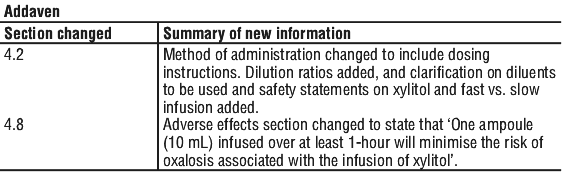
Addaven must not be given undiluted. Addaven must be diluted in a compatible parenteral nutrition solution/emulsion or an aqueous diluent before being given as an intravenous infusion, also see Compatibility.

Additive to a PN solution/emulsion.

The recommended infusion time when Addaven is administered as part of total parenteral nutrition (TPN) is 8 to 24 hours in line with the infusion rate of the TPN bag.

Additive to an aqueous diluent separate to TPN.

When Addaven is used as an additive to an aqueous diluent separate to a TPN bag, one ampoule (10 mL) can be infused over a minimum of 1 hour. The minimum infusion time of 1 hour is based on the safety concerns with xylitol infusion.

Route of administration.

Intravenous, infusion into a central vein.
Peripheral infusion of Addaven may result in local intolerability due to low pH.
It is recommended that a minimum of 1:6 dilution ratio in a compatible aqueous diluent be used for a fast 1 hour infusion rate. The recommendation of the minimum volume of diluent of 50 mL to 10 mL of Addaven can be applied to both fast and slow infusion times. The choice of slow vs. fast infusion times needs to be determined by the healthcare professional and will depend on the rate of fluid delivery the patient can receive based on their overall clinical status including renal function, hepatic function and fluid balance.
Product is for single use in one patient only. Discard any residue.

Compatibility.

Only medicinal products and nutrition solutions where compatibility has been documented may be added to Addaven. Addaven is used as an additive to parenteral nutrition admixtures in compounded bags where data are available. Compatibility data are available for the addition of 10 mL Addaven to the named branded products SMOFlipid, Intralipid 20%, Aminoven 10%, Vamin 18 EF, Dipeptiven, Soluvit N, Vitalipid N Adult and Glycophos in defined amounts and generics of glucose and electrolytes in defined concentrations. 10 mL of Addaven can also be added to the SmofKabiven and Kabiven range of products.

Note.

Addaven should never be added directly to a lipid emulsion because of the destabilising effects of trace elements. It is recommended that the macronutrients (amino acid solution and glucose with or without lipid emulsion) are mixed first, before adding the Addaven and any further additions, e.g. vitamins or electrolytes. Additions should be made aseptically.

4.3 Contraindications

Hypersensitivity to the active substances or to any of the excipients.
Conditions with total biliary obstruction.
Wilson's disease, hemochromatosis.
Children less than 12 years of age.

4.4 Special Warnings and Precautions for Use

Parenterally administered iron or iodine preparations can cause hypersensitivity reactions on rare occasions, including serious and potentially fatal anaphylactic reactions.
Patients should be clinically observed for signs and symptoms of hypersensitivity reactions. In case of hypersensitivity reactions, the infusion should be stopped immediately and appropriate measures performed.
If iron is taken orally in parallel with infusion of Addaven, the total intake of iron should be determined to ensure that there is no iron accumulation.
Peripheral infusion of Addaven may result in local intolerability due to low pH. Osmolarity also needs to be considered.
Addaven should be used with caution in patients with liver dysfunction. Liver dysfunction, including impaired biliary excretion, may interfere with excretion of trace elements from Addaven, leading to a risk of accumulation.
Addaven should be used with caution in patients with impaired renal function as excretion of some trace elements in urine may be significantly decreased.
Monitoring of trace element levels, especially manganese, is recommended.
If an individual patient has a markedly increased requirement for any of the trace elements, the regimen can be adjusted using separate supplements.
Laboratory and some animal studies indicate that vitamin B6 deficiency can increase the production of oxalate from xylitol. Adequate levels of vitamin B6 should be maintained.

Use in the elderly.

Because of the increased likelihood of impaired renal or hepatic function or concomitant disorders and their treatment, Addaven should be used with cautious monitoring in the elderly.

Paediatric use.

Addaven is not recommended for use in children under 12 years of age.

Effects on laboratory tests.

No effects on laboratory tests have been identified. Addaven is administered as part of parenteral nutrition.

4.5 Interactions with Other Medicines and Other Forms of Interactions

Molybdenum interacts with copper to form complexes that increase urinary elimination of copper.
Amino acids, which are present in all total IVN mixtures, could complex with zinc and copper and the complex could be excreted in urine. However, amino acid loss in urine is usually small.
Interactions of copper with ascorbic acid from vitamin supplementation of the parenteral nutrition mixture may occur, resulting in oxidative loss of ascorbic acid, which can be limited by use of oxygen impermeable bags.

4.6 Fertility, Pregnancy and Lactation

Effects on fertility.

The potential effects of Addaven on fertility and general reproductive performance have not been determined.
Animal reproduction studies or clinical investigations during pregnancy have not been carried out with Addaven.
The active substances in Addaven are excreted in human milk and effects have been shown in breastfed newborns/infants of treated women. Although there is a theoretical risk of zinc induced copper deficiency in the infant at high Addaven doses, the amount of zinc in the milk may not be sufficient to induce copper deficiency in infants, especially as Addaven also contains copper. The prescriber should consider the benefit/risk relationship before administering Addaven to breastfeeding women.

4.7 Effects on Ability to Drive and Use Machines

The effects of this medicine on a person's ability to drive and use machines were not assessed as part of its registration.

4.8 Adverse Effects (Undesirable Effects)

There have been no clinical trials of Addaven.
As a component of the parenteral nutrition administered, it would be extremely difficult to identify adverse reactions that could be attributed directly to Addaven.
Addaven is a reformulation of the product Addamel N, which has been approved in Europe for decades. MRI changes and neurological symptoms have been reported with manganese intake similar to or less than provided with Addamel N. The dose in Addaven has been reduced to a level where these AEs have not been shown to occur.
One ampoule (10 mL) infused over at least 1 hour will minimise the risk of oxalosis associated with the infusion of xylitol (see Section 4.2 Dose and Method of Administration).

Post-marketing.

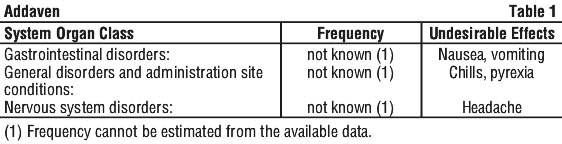
For Addamel N and Addaven, the following very rare adverse reactions (< 1/10,000) have been reported in more than 3 patients between October 1982 and September 2015. See Table 1.

Reporting suspected adverse effects.

Reporting suspected adverse reactions after registration of the medicinal product is important. It allows continued monitoring of the benefit-risk balance of the medicinal product. Healthcare professionals are asked to report any suspected adverse reactions at https://www.tga.gov.au/reporting-problems.

4.9 Overdose

In patients with impaired renal or biliary function, there is an increased risk of accumulation of trace elements.
Symptoms of zinc poisoning include hypotension, pulmonary oedema, diarrhoea, vomiting, jaundice and oliguria.
In case of a chronic overload of iron there is a risk of haemosiderosis, which in severe and rare cases can be treated by venesection.
See Section 4.2 Dose and Method of Administration for correct usage.
For information on the management of overdose, contact the Poison Information Centre on 131126 (Australia).

5 Pharmacological Properties

5.1 Pharmacodynamic Properties

Pharmacotherapeutic group: Electrolytes in combination with other drugs, ATC code: B05X A31.
Addaven is a mixture of essential trace elements in amounts intended to maintain or help replete the nutritional status, thus preventing or treat the effects of deficiencies of the elements.

Mechanism of action.

No data available.

Clinical trials.

No data available.

5.2 Pharmacokinetic Properties

Absorption.

For intravenous infusions, absorption of this nutrition is not a pharmacokinetic factor.

Distribution and metabolism.

Individual trace elements will be taken up by tissues to different extents, depending on the requirements within each tissue to maintain or restore the concentration of each element for the metabolic requirements of that tissue.

Excretion.

Copper and manganese are normally excreted via the bile, whereas selenium, zinc and chromium (especially in patients receiving intravenous nutrition) are mainly excreted via the urine.
The main route of molybdenum excretion is the urine, although small amounts are excreted in the bile. Iron is eliminated in small amounts by superficial loss and desquamation of gut cells. Premenopausal women can lose 30-150 mg of iron in the monthly blood loss.

5.3 Preclinical Safety Data

Genotoxicity.

Studies with Addaven have not been performed to evaluate the genotoxic potential.

Carcinogenicity.

Studies with Addaven have not been performed to evaluate the carcinogenic potential.

6 Pharmaceutical Particulars

6.1 List of Excipients

Xylitol 3.0 g, hydrochloric acid pH adjustment, water for injections QS to 10 mL.

6.2 Incompatibilities

Addaven may only be added to medicinal or nutritional solutions for which compatibility has been documented. For compatibility information, please see Section 4.2 Dose and Method of Administration.

6.3 Shelf Life

Approved shelf life as packaged for sale.

36 months.

Shelf life after mixing with additives.

Chemical and physical in-use stability after dilution has been demonstrated for 24 hours at 25°C.
From a microbiological point of view, the product should be used immediately. If not used immediately, in-use storage times and conditions prior to use are the responsibility of the user and would normally not be longer than 24 hours at 2-8°C.

6.4 Special Precautions for Storage

Store below 30°C.

6.5 Nature and Contents of Container

10 mL polypropylene ampoule.
Cartons: 20 x 10 mL polypropylene ampoules.
AUST R 244493.

6.6 Special Precautions for Disposal

In Australia, any unused medicine or waste material should be disposed of in accordance with local requirements.

6.7 Physicochemical Properties

Chemical structure.

Chemical structures of the active ingredients are not provided as these are simple salts.

CAS number.

See Table 2.

7 Medicine Schedule (Poisons Standard)

Australia: Not Scheduled.

Summary Table of Changes