


Consumer medicine information

Adenocor

Adenosine

BRAND INFORMATION

Brand name

Adenocor

Active ingredient

Adenosine

Schedule

S4


Consumer medicine information (CMI) leaflet

Please read this leaflet carefully before you start using Adenocor.

What is in this leaflet

This leaflet answers some common questions about Adenocor.

It does not contain all the available information. It does not take the place of talking to your doctor or pharmacist.

All medicines have risks and benefits. Your doctor has weighed the risks of you being given this medicine against the benefits they expect it will have for you.

If you have any concerns about being given this medicine, ask your doctor or pharmacist.

What Adenocor is used for

Adenocor is a type of medicine used to treat a condition called paroxysmal supraventricular tachycardia (including a condition called Wolff-Parkinson-White syndrome). This is when the heart beats too rapidly. If left untreated this condition can be life threatening.

Adenocor can also be used as an aid to doctors, to understand how your heart is working.

Adenocor works by slowing down the electrical impulses which control the heart rhythm. This allows the heart rhythm to return to normal.

Adenocor is only given in hospitals. It is given to you as an injection. The effect of Adenocor only lasts for a couple of minutes.

Your doctor, however, may prescribe Adenocor for another purpose.

Ask your doctor if you have any questions about why it has been prescribed for you. This medicine is only available with a doctor's prescription.

This medicine is not addictive.

Before you are given it

When you must not be given it

Do not receive Adenocor if you have:

  • asthma or any other lung disease
  • recently had a heart transplant
  • some other problems with your heart or heart rhythm
  • severe low blood pressure

Do not receive Adenocor if you are allergic to it or any of the ingredients listed at the end of this leaflet. Some symptoms of an allergic reaction include skin rash, itching, shortness of breath or swelling of the face, lips or tongue, which may cause difficulty in swallowing or breathing.

Before you are given it

Tell your doctor if you have allergies to:

  • any of the ingredients listed at the end of this leaflet
  • any other medicines including
    - theophylline or aminophylline
    - dipyridamole
    - carbamazepine
  • any other substances, such as foods, preservatives or dyes.

Tell your doctor if you eat or drink large amounts of food or drinks containing caffeine (eg. coffee, tea, chocolate or cola). These could affect how well Adenocor works.

Tell your doctor if you are pregnant. Like most medicines of this kind, Adenocor is not recommended to be used during pregnancy. Your doctor or pharmacist will discuss the risks and benefits of being given it if you are pregnant.

Tell your doctor if you are breastfeeding. It is not known whether Adenocor passes into breast milk. Your doctor or pharmacist will discuss the risks and benefits of being given it if you are breastfeeding or planning to breastfeed.

Tell your doctor if you have or have had any medical conditions, especially the following:

  • a history of heart problems including problems with your blood pressure
  • a history of epilepsy or seizures
  • asthma or any other lung disease

If you have not told your doctor or pharmacist about any of the above, tell them before you are given Adenocor.

Taking other medicines

Tell your doctor or pharmacist if you are taking any other medicines, including any that you buy without a prescription from your pharmacy, supermarket or health food store.

Some medicines may be affected by Adenocor. These include:

  • theophylline or aminophylline, medicines used to help relieve breathing problems
  • dipyridamole, a medicine used for people who have had a stroke
  • carbamazepine, a medicine used to treat epilepsy and seizures.

These medicines may be affected by Adenocor, or may affect how well it works. You may need to use different amounts of your medicine, or take different medicines. Your doctor or pharmacist will advise you.

Your doctor or pharmacist has more information on medicines to be careful with or to avoid while being given Adenocor.

How it is given

How much to be given

The standard dose for this medicine is a series of injections.

Adults:

One injection (3 mg). If the first injection does not slow down your heart rate within 1 or 2 minutes, one (6 mg)or two (12 mg) more doses may be given.

Children:

There is not enough evidence to recommend the use of this medicine for children.

How it is given

Adenocor will only be given to you in hospital.

Adenocor will be given to you as a rapid injection over a couple of seconds.

When to receive it

Do not eat or drink food or drinks containing caffeine (eg. coffee, tea, chocolate or cola) for at least 12 hours before you receive your injection.

If you receive too much (overdose)

As Adenocor is given to you under the supervision of a doctor, it is very unlikely that you will receive too much.

However, if you experience any unexpected or worrying side effects after being given Adenocor, tell your doctor immediately or go to Accident and Emergency at your nearest hospital, if you think you have been given too much Adenocor.

Side effects

All medicines have some unwanted side effects. Sometimes they are serious, but most of the time they are not. Your doctor has weighed the risks of using this medicine against the benefits they expect it will have for you.

Do not be alarmed by this list of possible side effects. You may not experience any of them.

Tell your doctor or nurse as soon as possible if you do not feel well while you are being given Adenocor. It helps most people with heart problems, but it may have unwanted side effects in a few people.

Tell your doctor if you notice any of the following and they worry you:

  • facial flushing
  • shortness of breath
  • a feeling of tightness across the chest
  • nausea
  • headache
  • dizziness and light headedness
  • discomfort in the throat, neck or jaw
  • a burning sensation

These are mild side effects of this medicine and usually short-lived.

Tell your doctor or nurse immediately if you notice any of the following:

  • irregular or slow heartbeat
  • problems with your breathing

These may be serious side effects of Adenocor. You may need urgent medical attention. Serious side effects are uncommon.

If any of the following happen, stop receiving this medicine and tell your doctor immediately:

  • swelling of the face, lips, mouth or throat, which may cause difficultly in swallowing or breathing.
  • rash, itching or hives on the skin.

These are very serious side effects. If you have them, you may have had a serious allergic reaction to Adenocor. You may need urgent medical attention.

These side effects are very rare.

Tell your doctor or nurse if you notice anything else that is making you feel unwell. Other side effects not listed above may occur in some consumers.

Do not be alarmed by this list of possible side effects. You may not experience any of them.

Ask your doctor, nurse or pharmacist to answer any questions you may have.

After being given it

If you have any queries about any aspect of your medicine, or any questions regarding the information in this leaflet, discuss them with your doctor, nurse or pharmacist.

Storage

Adenocor is stored in the pharmacy or on the ward. Adenocor is kept in a cool, dry place where the temperature stays below 25°C. Not to be refrigerated.

Product description

What it looks like

Adenocor is a clear colourless solution that comes in a glass vial.

Each box of Adenocor contains 6 vials.

Ingredients

Each 2 mL vial of Adenocor contains:

Active Ingredient:

  • adenosine 6 mg

Inactive Ingredients:

  • sodium chloride
  • sterile water

Adenocor does not contain gluten, sucrose, lactose, tartrazine or any other azo dyes.

Manufacturer/Sponsor

Adenocor is supplied in Australia by:

sanofi-aventis australia pty ltd
12-24 Talavera Road
Macquarie Park NSW 2113

Adenocor is supplied in New Zealand by:

sanofi-aventis new zealand limited
Level 8, James and Wells Tower
56 Cawley Street
Ellerslie
Auckland

This leaflet was prepared in February 2015.

Australian Register Number
AUST R 49439

® Registered Trademark

adenocor-ccdsv8-cmiv6-18feb15

Published by MIMS November 2019
BRAND INFORMATION

Brand name

Adenocor

Active ingredient

Adenosine

Schedule

S4


1 Name of Medicine

Adenosine.

2 Qualitative and Quantitative Composition

Each vial contains 6 mg of adenosine in 2 mL of a 0.9% w/v solution of sodium chloride in sterile water for injections.
For the full list of excipients, see Section 6.1 List of Excipients.

3 Pharmaceutical Form

Adenocor is a clear colourless sterile solution for intravenous injection (rapid bolus).

4 Clinical Particulars

4.1 Therapeutic Indications

Rapid conversion to a normal sinus rhythm of paroxysmal supraventricular tachycardias, including those associated with accessory bypass tracts (Wolff-Parkinson-White syndrome).

Diagnostic indications.

Aid to diagnosis of broad or narrow QRS complex supraventricular tachycardias. Although Adenocor is not effective in converting atrial flutter, atrial fibrillation or ventricular tachycardia to sinus rhythm, the slowing of AV conduction helps diagnosis of atrial activity.
In this respect adenosine should be used as an adjunct to, but not a replacement for, clinical and ECG observations. It should be used only when, despite all diagnostic attempts, doubt still persists.
Improved diagnostic sensitivity of intracavity electrophysiological investigations.

4.2 Dose and Method of Administration

Adenocor should be used only in hospitals, with monitoring and cardiorespiratory resuscitation equipment available for immediate use if necessary. It should be administered by rapid IV bolus injection according to the ascending dosage schedule below. To be certain the solution reaches the systemic circulation, it should be administered either directly into a vein or into an IV line. If administered via an IV line it should be injected as proximally as possible, and followed by a rapid saline flush.
Adenocor should only be used when facilities exist for cardiac monitoring. Patients who develop high-level AV block at a particular dose should not be given further dosage increments.

Therapeutic dose.

Adults.

Initial dose.

3 mg given as a rapid intravenous bolus (over 2 seconds).

Second dose.

If the first dose does not result in the elimination of supraventricular tachycardia within 1 or 2 minutes, 6 mg should be given also as a rapid intravenous bolus.

Third dose.

If the second dose does not result in the elimination of supraventricular tachycardia within 1 or 2 minutes, 12 mg should be given also as a rapid intravenous bolus.
Children. No controlled paediatric studies have been undertaken, therefore, the level of evidence does not allow a recommended posology.
Elderly. See dosage recommendations for adults.

Diagnostic dose.

The above ascending dosage schedule should be employed until sufficient diagnostic information has been obtained.

4.3 Contraindications

Adenocor is contraindicated in patients with:
known hypersensitivity to adenosine;
sick sinus syndrome, second or third degree AV block (except in patients with a functioning artificial pacemaker);
chronic obstructive lung disease (such as asthma);
long QT syndrome;
severe hypotension; decompensated states of heart failure.

4.4 Special Warnings and Precautions for Use

Adenosine is intended for use by physicians familiar with the product (see Section 4.2 Dose and Method of Administration) in a hospital setting with monitoring and cardio-respiratory resuscitation equipment available for immediate use if necessary.
The occurrence of angina, severe bradycardia, severe hypotension, respiratory failure (potentially fatal), or asystole/ cardiac arrest (potentially fatal), should lead to immediate discontinuation of administration.
In patients with history of convulsions/ seizures, the administration of adenosine should be carefully monitored.
As dipyridamole is a known inhibitor of adenosine uptake, it may potentiate the action of adenosine administration. The use of Adenoscan infusion is contraindicated in patients receiving dipyridamole (see Adenoscan product information, see Section 4.3 Contraindications). If use of adenosine bolus injection (Adenocor) is judged to be essential, dipyridamole should be discontinued 24 hours beforehand or the dose of adenosine should be significantly reduced.
Adenocor (adenosine) should be given as a rapid intravenous bolus. Adenosine is ineffective in the management of SVT when given as an infusion, rather than a bolus. This is most probably due to the different effect on sinus rate and atrioventricular nodal conduction.

Hypotension.

Because it has the potential to cause significant hypotension, adenosine should be used with caution in patients with left main coronary stenosis, uncorrected hypovolaemia, stenotic valvular heart disease, left to right shunt, pericarditis or pericardial effusion, autonomic dysfunction or stenotic carotid artery disease with cerebrovascular insufficiency.

Atrial fibrillation.

Adenocor should be used with caution in patients with atrial fibrillation or flutter and especially in those with an accessory by-pass tract since particularly the latter may develop increased conduction down the anomalous pathway.

Bradycardia.

Some cases of severe bradycardia have been reported. Some occurred in early post heart transplant patients; in other cases occult sino-atrial disease was present. The occurrence of severe bradycardia should be taken as a warning of underlying disease and could potentially favour the occurrence of torsades de pointes.

Heart block and myocardial infarction.

Adenocor (adenosine) exerts its effect by decreasing conduction through the AV node and may produce a short lasting first, second or third-degree heart block. In extreme cases, transient asystole may result (one case has been reported in a patient with atrial flutter who was receiving carbamazepine). Appropriate therapy should be instituted as needed. Patients who develop high level block on one dose of Adenocor should not be given additional doses. Because of the very short half-life of adenosine, these effects are generally self-limiting.
Adenocor should be used with caution in patients with recent myocardial infarction, heart failure, or in patients with minor conduction defects (first degree AV block, bundle branch block) that could be transiently aggravated during infusion.

Arrhythmias at time of conversion.

At the time of conversion to normal sinus rhythm, a variety of new rhythms may appear on the electrocardiogram. They generally last only a few seconds without intervention and may take the form of premature ventricular contractions, premature atrial contractions, atrial fibrillation, sinus bradycardia, sinus tachycardia, skipped beats, sinus pause and varying degrees of AV nodal block. Such findings were seen in 55% of patients. The induced bradycardia predisposes the patient to ventricular excitability disorders including ventricular fibrillation and torsades de pointes.
Because of the possible risk of torsades de pointes, Adenocor should be used with caution in patients with a prolonged QT interval.

Post heart transplantation.

In patients with recent heart transplantation (less than 1 year) an increased sensitivity of the heart to adenosine has been observed. Adenocor should be used with caution in such cases.

Bronchoconstriction.

Adenosine administered by inhalation has been reported to cause bronchoconstriction in asthmatic patients, presumably due to mast cell degranulation and histamine release. These effects have not been observed in normal subjects. Adenosine has been administered to a limited number of patients with asthma and mild to moderate exacerbation of their symptoms has been reported. Adenocor should not be used in patients with asthma (see Section 4.3 Contraindications).
Respiratory compromise has occurred during adenosine infusion in patients with obstructive pulmonary disease. Adenocor should be used with caution in patients with obstructive lung disease not associated with bronchoconstriction (e.g. emphysema, bronchitis, etc) and should be avoided in patients with bronchoconstriction or bronchospasm (e.g. asthma). Adenocor should be discontinued in any patient who develops severe respiratory difficulties.
Adenosine may precipitate or aggravate bronchospasm.

Use in hepatic impairment.

For further information, see Section 5.2 Pharmacokinetic Properties.

Use in renal impairment.

For further information, see Section 5.2 Pharmacokinetic Properties.

Use in the elderly.

No data available.

Paediatric use.

No data has been submitted from controlled studies in children.

Effects on laboratory tests.

No data available.

4.5 Interactions with Other Medicines and Other Forms of Interactions

Intravenous Adenocor (adenosine) has been effectively administered in the presence of other cardioactive drugs, such as digitalis, quinidine, beta-adrenergic blocking agents, calcium-channel blocking agents, and angiotensin-converting enzyme inhibitors, without any change in the adverse reaction profile.
Adenosine may interact with drugs that tend to impair cardiac conduction. Aminophylline, theophylline and other xanthines are competitive adenosine antagonists and should be avoided for 24 hours prior to the administration of adenosine. Food and drinks containing xanthines (e.g. tea, coffee, chocolate and cola) should be avoided for at least 12 hours prior to the administration of adenosine.
Nucleoside transport inhibitors such as dipyridamole inhibit adenosine cellular uptake and metabolism, and potentiate the action of adenosine. In one study dipyridamole was shown to produce a fourfold increase in adenosine activity. The use of Adenoscan infusion is contraindicated in patients receiving dipyridamole (see Adenoscan product information, see Section 4.3 Contraindications). If the use of adenosine bolus injection (Adenocor) is judged to be essential, dipyridamole should be discontinued 24 hours beforehand, or the dose of Adenocor should be significantly reduced.
Carbamazepine has been reported to increase the degree of heart block produced by other agents. As the primary effect of adenosine is to decrease conduction through the AV node, higher degrees of heart block may be produced in the presence of carbamazepine.

4.6 Fertility, Pregnancy and Lactation

Effects on fertility.

In rats and mice, adenosine administered intraperitoneally once a day for 5 days at 50, 100 and 150 mg/kg caused decreased spermatogenesis and increased numbers of abnormal sperm.
(Category B2)
Animal reproductive studies have not been conducted with adenosine, nor have studies been performed on pregnant women. In the absence of evidence that adenosine does not cause foetal harm, Adenocor should not be used during pregnancy unless the physician considers the benefits outweigh the potential risks.
Studies have not been performed in lactating animals or women. Therefore, adenosine should not be used during lactation. If adenosine treatment is considered essential by the physician, another form of infant feeding should be considered.

4.7 Effects on Ability to Drive and Use Machines

The effects of this medicine on a person's ability to drive and use machines were not assessed as part of its registration.

4.8 Adverse Effects (Undesirable Effects)

The following adverse reactions have been reported with adenosine rapid intravenous bolus injection. These adverse reactions have been classified using standard terminology and are categorised by body system. They are listed in order of decreasing frequency according to the following definitions:
Very common: ≥ 1/10 (10%), common: ≥ 1/100 (1%) and < 1/10 (10%), uncommon: ≥ 1/1000 (0.1%) and < 1/100 (1%), rare: ≥ 1/10,000 (0.01%) and < 1/1000 (0.1%), very rare: < 1/10,000 (0.01%), not known: (cannot be estimated from available data).

Cardiovascular system.

Very common: bradycardia; sinus pause, skipped beats; atrial extrasystoles; A-V block; ventricular excitability disorders such as ventricular extrasystoles, non-sustained ventricular tachycardia.
Uncommon: sinus tachycardia; palpitations.
Very rare: atrial fibrillation; ventricular excitability including ventricular fibrillation and torsades de pointes; severe bradycardia not corrected by atropine and possibly requiring temporary pacing.
Not known: asystole/cardiac arrest, sometimes fatal especially in patients with underlying ischemic heart disease/cardiac disorder; MI/ST segment elevation especially in patients with pre-existing severe CAD; cerebrovascular accident/transient ischemic attack, secondary to the hemodynamic effects of adenosine including hypotension; arteriospasm coronary which may lead to myocardial infarction; hypotension sometimes severe.

Respiratory system.

Very common: dyspnoea (or the urge to breathe deeply).
Uncommon: hyperventilation.
Very rare: bronchospasm.
Not known: respiratory failure; apnoea/respiratory arrest.

Central nervous system.

Common: headache; dizziness; light-headedness.
Uncommon: head pressure.
Very rare: transient and spontaneously rapidly reversible worsening of intracranial hypertension.
Not known: loss of consciousness/syncope; convulsions, especially in predisposed patients.

Gastrointestinal system.

Common: nausea.
Uncommon: metallic taste.
Not known: vomiting.

Other.

Very common: flushing; chest pressure/ pain; feeling of thoracic constriction/ oppression.
Common: apprehension; burning sensation.
Uncommon: blurred vision; sweating; feeling of general discomfort/ weakness/ pain.
Very rare: injection site reactions.
Not known: anaphylactic reaction (including angioedema and skin reactions such as urticaria and rash).

Postmarketing experience.

In postmarket clinical experience with Adenocor, hypotension, sometimes severe, has been reported. There have been reports of cerebrovascular accident/ transient ischemic attack, secondary to the hemodynamic effects of adenosine, including hypotension.
Cases of asystole/ cardiac arrest, sometimes fatal, especially in patients with underlying ischaemic heart disease/ cardiac disorder have been reported (see Section 4.4 Special Warnings and Precautions for Use).
Loss of consciousness/ syncope and convulsions especially in predisposed patients have been reported (see Section 4.4 Special Warnings and Precautions for Use).
Apnoea/ respiratory arrest and respiratory failure (see Section 4.4 Special Warnings and Precautions for Use) have been reported. Cases of fatal outcome of respiratory failure, of bronchospasm and of apnoea/ respiratory arrest have also been reported.
Cases of vomiting have been reported.
Other reports include tingling in arms, numbness, pressure in groin and transient increase in blood pressure.
Myocardial infarction and ST segment elevation have been reported, especially in patients with pre-existing severe coronary artery disease.
Anaphylactic reactions, including angioedema and skin reactions such as urticaria and rash, have been reported.

Reporting suspected adverse effects.

Reporting suspected adverse reactions after registration of the medicinal product is important. It allows continued monitoring of the benefit-risk balance of the medicinal product. Healthcare professionals are asked to report any suspected adverse reactions at www.tga.gov.au/reporting-problems (Australia).

4.9 Overdose

As the half-life of adenosine is very short (less than 10 seconds), adverse effects are generally rapidly self-limiting. Treatment of any prolonged adverse effects should be individualised and be directed toward the specific symptoms. Methylxanthines, such as caffeine and theophylline, and aminophylline are competitive antagonists of adenosine. Intravenous aminophylline or theophylline may be needed.
For information on the management of overdose, contact the Poisons Information Centre on 131126 (Australia).

5 Pharmacological Properties

5.1 Pharmacodynamic Properties

Pharmacotherapeutic group: Other cardiac preparations, ATC code: C01EB10.

Mechanism of action.

Adenocor administered by rapid intravenous injections depresses conduction through the AV node. This action can interrupt re-entry circuits involving the AV node and restore normal sinus rhythm in patients with paroxysmal supraventricular tachycardias and paroxysmal supraventricular tachycardias associated with Wolff-Parkinson-White syndrome. Once the circuit has been interrupted, the tachycardia stops and normal sinus rhythm is re-established.
By transiently slowing AV conduction, atrial activity is to evaluate from ECG recordings and therefore Adenocor can aid the diagnosis of broad or narrow QRS complex tachycardias.
Adenocor may be useful during electrophysiological studies to determine the site of AV block or to determine, in some cases of pre-excitation, whether conduction is occurring by an accessory pathway or via the AV node.

Haemodynamics.

The usual intravenous bolus dose of 3 or 6 mg Adenocor usually has no systemic haemodynamic effects. Rarely significant hypotension and tachycardia have been observed. When larger doses are given by infusion, adenosine decreases blood pressure by decreasing peripheral resistance.

Clinical trials.

No data available.

5.2 Pharmacokinetic Properties

Intravenously administered Adenocor (adenosine) is removed from the circulation very rapidly. Following an intravenous bolus, adenosine is taken up by erythrocytes and vascular endothelial cells. The half-life of intravenous adenosine is estimated to be less than 10 seconds. Adenosine enters the body pool and is primarily metabolised to inosine and adenosine monophosphate (AMP).

Hepatic and renal failure.

Hepatic and renal failure should have no effect on the activity of a bolus Adenocor (adenosine) injection. Since Adenocor (adenosine) has a direct action, hepatic and renal function are not required for the activity or metabolism of a bolus adenosine injection.

5.3 Preclinical Safety Data

Genotoxicity.

Adenosine tested negative for mutation in the Salmonella/ mammalian microsome assay. Adenosine, like other nucleosides at millimolar concentrations present for several doubling times of cells in culture, is known to produce a variety of chromosomal alterations.

Carcinogenicity.

Studies in animals have not been performed to evaluate the carcinogenic potential of Adenocor.

6 Pharmaceutical Particulars

6.1 List of Excipients

Sodium chloride, water for injections.

6.2 Incompatibilities

Incompatibilities were either not assessed or not identified as part of the registration of this medicine.

6.3 Shelf Life

In Australia, information on the shelf life can be found on the public summary of the Australian Register of Therapeutic Goods (ARTG). The expiry date can be found on the packaging.

6.4 Special Precautions for Storage

Store below 25°C. Do not refrigerate.

6.5 Nature and Contents of Container

Injection vials 6 mg/2 mL: 6s.
Clear glass vials.

6.6 Special Precautions for Disposal

Any portion of the vial not used at once should be discarded.
In Australia, any unused medicine or waste material should be disposed of by taking to your local pharmacy.

6.7 Physicochemical Properties

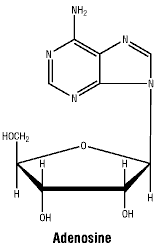
Adenosine is designated chemically as 6-amino-9-β-D-ribofuranosyl-9-H-purine and has the following chemical structure:

Chemical structure.


Adenosine is a white crystalline powder slightly soluble in water with a molecular weight of 267.2 and an empirical formula of C10H13N5O4.

CAS number.

58-61-7.

7 Medicine Schedule (Poisons Standard)

Prescription Only Medicine (Schedule 4).

Summary Table of Changes