
Consumer medicine information

Aethoxysklerol

Lauromacrogol 400

BRAND INFORMATION

Brand name

Aethoxysklerol

Active ingredient

Lauromacrogol 400

Schedule

S4


Consumer medicine information (CMI) leaflet

Please read this leaflet carefully before you start using Aethoxysklerol.

What is in this leaflet

This leaflet answers some common questions about Aethoxysklerol.

It does not contain all the available information.

It does not take the place of talking to your doctor or pharmacist.

All medicines have risks and benefits. Your doctor has weighed the risks of you having Aethoxysklerol against the benefits they expect it will have for you.

If you have any concerns about this medicine, ask your doctor, nurse or pharmacist.

Keep this leaflet. You may need to read it again.

What Aethoxysklerol is used for

Aethoxysklerol is a sterile solution that is injected into varicose veins to cause closure of the affected vein and shrink the vessel(s).

How it works

Upon injection, Aethoxysklerol works by causing the lining of the blood vessel to break up and also stops the flow of blood through that vein. The affected area is then squeezed by application of a compression bandage which helps to complete closure of the varicose vein.

Before you are given Aethoxysklerol

When you must not be given it

Do not have Aethoxysklerol injected if you have an allergy to:

  • Lauromacrogol 400 or any of the ingredients listed at the end of this leaflet.

Symptoms of an allergic reaction may include:

  • shortness of breath, wheezing or difficulty breathing
  • swelling of the face, lips, tongue or other parts of the body
  • skin rash, itching or hives

Do not have Aethoxysklerol injected if you have any of the following medical conditions:

  • you are confined to bed or have difficulty in walking
  • you have severe arterial disease
  • blockage of blood vessels by blood clots or family history of blood clots or at least three of the following: you use hormonal contraceptives (e.g. the Pill) or hormone replacement medication, you are overweight, smoke or remain immobile for long periods
  • swelling and redness along a vein which is extremely tender when touched
  • acute infection of the skin (hot, tender and red skin, sometimes with fever and chills)
  • any allergic disease
  • acute infections
  • uncontrolled systemic disease such as diabetes, overactive thyroid gland with increased sweating, tremors and rapid heart rate, tuberculosis, asthma, tumours, severe venous abnormalities, blood poisoning (symptoms may include high fever, chills, headache, confusion, rapid breathing), a disease of the blood with a reduced number of red or white blood cells or platelets (symptoms may include tiredness, headaches, dizziness, being short of breath when exercising and looking pale; frequent infections such as fever, severe chills, sore throat or mouth ulcers; bleeding or bruising more easily than normal, nosebleeds), any lung or skin disease
  • you have symptoms of a right-to-left shunt heart abnormality (only if doctor applies Aethoxysklerol as a microfoam)

If you are not sure whether you should have injections of Aethoxysklerol, talk to your doctor.

Before you are given it

Tell your doctor if have, or have had, any medical conditions, especially the following:

  • a blood clotting disorder
  • arterial disease with severe pain on walking (only if treatment of spider veins is intended)
  • numbness or weakness of the arms and legs
  • excessive accumulation of fluid in the leg
  • blood vessels affected by disease, e.g. diabetes
  • pain, swelling, redness and heat on skin in the area that is to be injected
  • you have severe heart disease
  • recent feverish temperature
  • you are over 75 years old and in poor health
  • if you know you have a right-to-left shunt heart abnormality, even if this causes no signs of disease/is not accompanied by any symptoms (only if doctor applies Aethoxysklerol as a microfoam)
  • you have had visual or nerve problems after previous varicose vein treatment (only if doctor applied Aethoxysklerol as a microfoam)

Tell your doctor if you have allergies to:

  • any other medicines
  • any other substances, such as foods, preservatives or dyes

Tell your doctor if you are pregnant or intend to become pregnant. Aethoxysklerol is not recommended for use during pregnancy. If there is a need to consider injections during your pregnancy, your doctor will discuss the benefits and risks with you.

Tell your doctor if you are breast-feeding. It is not known whether Aethoxysklerol passes into breast milk. If there is a need to consider injections whilst you are breast-feeding, your doctor will discuss the benefits and risks with you.

Tell your doctor if you have suffered from alcoholism. Aethoxysklerol contains ethanol.

Taking other medicines

Tell your doctor or pharmacist if you are taking any other medicines, including any that you buy without a prescription from your pharmacy, supermarket or health food shop.

Some medicines and Aethoxysklerol may interfere with each other. These include:

  • anaesthetics (medicines causing loss of feeling, especially pain)

These medicines may be affected by Aethoxysklerol or may affect how well it works. (You may need different amounts of these medicines, or you may need to take different medicines.) Your doctor or pharmacist will advise you and decide whether or not to give the medicine.

How and when Aethoxysklerol is given

Aethoxysklerol is given by injection into the varicose vein. It should always be injected by a doctor who has been trained in the proper techniques for injecting varicose veins. The actual dose and selection of the Aethoxysklerol concentration to be used will depend on the size of the varicose vein to be treated. Before injection, the leg must be lifted to a horizontal position or preferably lifted 30-45° above the horizontal.

Once the injection site has been covered, a firm compression bandage or elastic stocking will be applied. Immediately after fitting of the bandage, you will be asked to walk for 30 minutes in the surgery. The bandage or stocking should be worn for several days or weeks, depending on the size of the varicose veins treated. For very small vessels a period of 2-7 days is usually sufficient.

For larger varicose veins, longer compression-treatment with bandages is recommended. The bandage may need to be worn for 4-6 weeks.

Several repeat treatments at intervals of 1-2 weeks may be necessary, depending on the severity and extent of the varicose veins.

The success of treatment depends heavily on the thorough and careful follow-up compression treatment. Please follow the advice of your doctor.

How much is given

Your doctor will decide on the dose depending on the size and type of vein to be treated.

If you are given too much

It is unlikely that you will be given too much medicine. Extensive varicose veins will always be treated in several sessions. If there is any likelihood of a hypersensitivity (allergic-type) reaction, only one injection will be given. Depending on the outcome and size of the area to be treated, several injections may be given at subsequent treatment sessions.

After Aethoxysklerol injection

Things you must do

Keep a record of your injections.

Keep follow-up appointments with your doctor or clinic. It is important to have your follow-up injections of Aethoxysklerol at the appropriate times to help make sure the treatment is successful.

Things to be careful of

Make sure that the bandage does not slip down, if you suspect that the compression bandage is not doing its job see your doctor.

Make sure you tell your doctor if you think you may be having an allergic reaction to Aethoxysklerol. Your doctor will take appropriate measures and will need to know what other medicines you are currently taking.

Side effects

Tell your doctor as soon as possible if you do not feel well after having an injection of Aethoxysklerol.

Aethoxysklerol may have unwanted side effects in a few people. All medicines can have side effects. Sometimes they are serious, most of the time they are not. You may need medical treatment if you get some of the side effects.

Tell your doctor if you notice any of the following and they worry you:

  • pinkish, itchy swellings on the skin, also called hives or nettle rash, redness of the skin or any other skin reaction
  • asthma (asthmatic attack)
  • headache or migraine
  • tingling or numbness of the hands, feet or mouth
  • feeling of confusion or dizziness
  • visual disturbances
  • fast, slow or irregular heart beats, also called palpitations
  • development of new tiny blood vessels
  • swelling and redness along a vein which is extremely tender when touched
  • fainting
  • inflammation of blood vessels, often with skin rash
  • difficulty in breathing or sensation of pressure in the chest
  • coughing
  • taste disturbance or loss of taste
  • nausea or vomiting
  • darker areas of skin or bruising
  • excessive growth of normal hair at the injection site
  • pain in the limb
  • pain or blood clot formation at the injection site
  • local tissue death
  • appearance of lumps or swelling at the injection site
  • fever, sensation of heat
  • unusual weakness or generally feeling unwell
  • muscular weakness on one side of the body
  • change of blood pressure
  • nerve injury, often with numbness or tingling
  • unusual difficulty with speaking, thinking or muscle coordination

Some of the side effects listed above are more common but most of them are rare or very rare. They are usually mild and short-lived.

Tell your doctor immediately if you notice any of the following:

  • sudden signs of allergy such as rash, itching or hives on the skin, swelling of the face, lips, tongue or other parts of the body, difficulty in swallowing, shortness of breath, wheezing or trouble breathing.
  • stroke
  • loss of consciousness
  • heart attack
  • sudden chest pain, a very rapid or irregular heartbeat, or shortness of breath after a stressful situation (also called stress cardiomyopathy)
  • blood clot, usually in a leg, which causes pain, swelling or redness
  • blockage of lung artery which causes chest pain and breathlessness
  • collapse due to very low blood pressure

These may be serious side effects.

Tell your doctor immediately or go to Accident and Emergency at your nearest hospital. You may need urgent medical attention.

Most of the serious side effects are very rare.

Other side effects not listed above may occur in some patients.

Tell your doctor if you notice anything that is making you feel unwell.

Do not be alarmed by this list of possible side effects. You may not experience any of them.

Storing Aethoxysklerol

Aethoxysklerol is usually stored in the doctor’s surgery or clinic, or at the pharmacy. However, if you need to store Aethoxysklerol:

  • Keep it where children cannot reach it.
  • Keep Aethoxysklerol in the original pack until it is time for it to be given.
  • Keep it at room temperature (below 30°C), do not expose to excessive heat.

Product description

What it looks like

A clear, colourless to faintly yellowish-green solution, free of particles.

Ingredients

Active ingredient: lauromacrogol 400

Other ingredients: ethanol, dibasic sodium phosphate dihydrate, monobasic potassium phosphate, water for injections.

Aethoxysklerol does not contain lactose, sucrose, gluten, tartrazine or any other azo dyes.

Sponsor

AGS Pharma Pty Ltd
PO Box 738
Pennant Hills NSW 1715

Manufacturer/ Distributor

Aethoxysklerol is made in Germany by:

Chemische Fabrik Kreussler & Co. GmbH
Rheingaustrasse 87-93
65203 Wiesbaden

and distributed in Australia by:

Getz Healthcare Pty Limited
5 Orion Road
Lane Cove NSW 2066
Phone: 1300 886 385

Aethoxysklerol 0.5% (10 mg/ 2mL lauromacrogol 400) AUST R 79118

Aethoxysklerol 1% (20 mg/ 2mL lauromacrogol 400) AUST R 79119

Aethoxysklerol 3% (60 mg/ 2 mL lauromacrogol 400) AUST R 79121

This leaflet was prepared in January 2018.

Published by MIMS March 2018

BRAND INFORMATION

Brand name

Aethoxysklerol

Active ingredient

Lauromacrogol 400

Schedule

S4


Notes

Distributed by Getz Healthcare Pty Limited

1 Name of Medicine

Lauromacrogol 400.

2 Qualitative and Quantitative Composition

Aethoxysklerol is a sterile solution of lauromacrogol 400 available in four strengths 0.5%, 1%, 2%, 3% buffered to pH 6.5-8.0.
Aethoxysklerol 0.5% contains 10 mg lauromacrogol 400 in 2 mL ampoule.
Aethoxysklerol 1% contains 20 mg lauromacrogol 400 in 2 mL ampoule.
Aethoxysklerol 2% contains 40 mg lauromacrogol 400 in 2 mL ampoule.
Aethoxysklerol 3% contains 60 mg lauromacrogol 400 in 2 mL ampoule.
Not all presentations are distributed in Australia.

List of excipients with known effect.

Ethanol.
For the full list of excipients, see Section 6.1 List of Excipients.

3 Pharmaceutical Form

Solution for injection.
Clear, colourless to very faintly greenish yellow solution.

4 Clinical Particulars

4.1 Therapeutic Indications

The solutions are indicated for the treatment of varicose veins (up to 6 mm diameter) of the lower limbs by compression sclerotherapy.

4.2 Dose and Method of Administration

Dosage and selection of the Aethoxysklerol concentration depends on the size of the varices to be sclerosed. Sclerotherapy is followed by compression bandaging of the limb.
Extensive varicosis should always be treated in several sessions. When first treating a patient prone to hypersensitivity reactions, no more than one injection should be given. Depending on the outcome and size of the area to be sclerosed, several injections may be given at subsequent treatment sessions, provided that the maximum dosage 2 mg/kg body weight per day is not exceeded.

Method of administration.

Aethoxysklerol is to be injected into the lumen of the affected vein.
Aethoxysklerol is for single use in one patient only. Any unused product should be disposed of appropriately.
Only inject into a leg placed horizontally or elevated 30-45° above the horizontal.
The most appropriate syringe and needle size for each vein size should be used.
After puncture of the vein, the injection should usually take place with the patient in a horizontal position. All injections must be given intravenously. Especially for smaller veins, directing the needle tangentially will assist in the intravenous positioning. The injection of Aethoxysklerol should be done slowly, avoiding administration into the surrounding tissue.

Sclerotherapy of reticular varices, spider veins, central veins of spider veins, small varices.

One or two repeat treatments may be necessary, depending on the extent of the varices and on the treatment success.

Sclerotherapy of medium-sized varices.

Several repeat treatments at intervals of 1-2 weeks may be necessary, depending on the severity and extent of the varices and on the success of the previous treatments.

Subsequent care.

The success of compression sclerotherapy depends on the thorough and careful follow-up compression treatment.
Once the injection sites have been covered, a firm compression bandage or elastic stocking should be applied. The patient should walk, preferably under observation, for at least 30 minutes.

Sclerotherapy of reticular varices, spider veins, central veins of spider veins, small varices.

The bandage should usually be worn for 2-3 days after sclerotherapy of spider veins, otherwise for 3-7 days.

Sclerotherapy of medium-sized varices.

The bandage should usually be worn for 4-6 weeks.

Dosage.

A guide to the most appropriate dose of Aethoxysklerol is given in Table 1.

4.3 Contraindications

Sclerotherapy of varices of the lower limbs is contraindicated in:
known hypersensitivity to lauromacrogol 400 or any of the excipients;
immobility, i.e. bed-ridden patients, and patients unable to walk;
arterial disease such as severe artherosclerotic peripheral vascular disease;
patients with thromboembolic diseases and patients with high risk of thrombosis (e.g. known hereditary thrombophilia or patients with multiple risk factors such as use of hormonal contraceptives, hormone replacement therapy, obesity, smoking, extended periods of immobility).
Other contraindications include acute superficial thrombophlebitis; significant valvular or deep vein incompetence; huge superficial veins with wide open communications to deeper veins; acute cellulitis; phlebitis migrans; known strong predisposition to allergies; acute infections; varicosities caused by abdominal and pelvic tumours unless the tumour has been removed; uncontrolled systemic disease (especially if untreated) such as diabetes, toxic hyperthyroidism, tuberculosis, asthma, neoplasm, sepsis, blood dyscrasias and acute respiratory or skin diseases.
Severe arterial occlusive disease (Fontaine stages III and IV).
Known symptomatic right-to-left shunt*.
Depending on severity, sclerotherapy may be contraindicated in:
known hypercoagulability;
spider veins: arterial occlusive disease (Fontaine stage II);
leg oedema (if it cannot be influenced by compression);
symptoms of micro-angiopathy or neuropathy;
inflammatory skin disease in the area of treatment;
acute severe cardiac diseases (endocarditis, myocarditis). Note that heart failure, if stabilised by previous treatment, is not a contraindication to sclerotherapy. The same applies to arterial hypertension if it has been adequately managed by previous treatment;
febrile states;
advanced age with reduced mobility or very poor general health;
known asymptomatic right-to-left shunt*;
visual or neurological symptoms after previous microfoam sclerotherapy with any sclerosant*.
* Applicable to microfoam sclerotherapy only.

4.4 Special Warnings and Precautions for Use

Aethoxysklerol should only be administered by physicians experienced in injection sclerotherapy. Thorough assessment for valvular competence and deep vein patency should be undertaken prior to injection. Careful needle placement and slow injection technique of the minimum effective dose are essential.
Aethoxysklerol must never be injected intra-arterially because this can cause severe necrosis that may necessitate amputation. A vascular surgeon must be called in immediately if any such incidents occur.
In order to avoid undue adverse reactions when performing sclerotherapy in the ankle area, only a small quantity of a low concentration of Aethoxysklerol should be used. The risk of inadvertent intra-arterial injection in the foot and ankle region should also be taken into consideration.
All Aethoxysklerol preparations contain 5% (v/v) ethanol (to be considered in cases of patients with former alcoholism).

Anaphylactic reactions.

Anaphylactic reactions are very rare, but potentially life-threatening situations. The attending doctor should be prepared for emergency measures and have a suitable emergency kit available. Therapy with beta-blockers or ACE (angiotensin converting enzyme) inhibitors may influence emergency procedures for anaphylactic shock because of their cardiovascular effects. The injection should be stopped immediately and standard emergency procedure should be followed including the administration of oxygen, adrenaline and intravenous steroids. Airway management including intubation should not be delayed if upper airway obstruction is progressive.

Allergy.

Prior to treatment, a history of allergy should be taken for all patients, in particular allergic reactions to previous administration of Aethoxysklerol.

Use in the elderly.

No data available.

Paediatric use.

There are no data and therefore Aethoxysklerol is not recommended for use in children.

Effects on laboratory tests.

No data available.

4.5 Interactions with Other Medicines and Other Forms of Interactions

Lauromacrogol 400 (polidocanol) is a local anaesthetic. When combined with other anaesthetics, there may be a risk of intensifying desired or undesired effects of anaesthetics on the cardiovascular system (e.g. proarrhythmic effect).

4.6 Fertility, Pregnancy and Lactation

Effects on fertility.

No effect on fertility was observed when male and female rats were treated intermittently with lauromacrogol 400 at IV doses up to 10 mg/kg (once a week exposure in rats was about 80% of the maximum human dose in terms of surface area) prior to mating.
(Category B3)
Studies in rats have shown that lauromacrogol 400 and/or its metabolites cross the placenta and distribute to the fetus.
Administration of lauromacrogol 400 by IV injection at doses ≥ 2.5 mg/kg to pregnant rabbits once daily from gestation day 6 to 14-18 was associated with increased resorptions, foetal malformations (mainly of the limbs and head) and foetal death. The no effect dose for embryofoetal toxicity and malformations was 1.25 mg/kg IV (about 20% of the maximum proposed human dose of 2 mg/kg IV, based on body surface area).
No evidence for a teratogenic effect of lauromacrogol 400 was noted in rats at doses up to 4 mg/kg/day IV treated daily from gestation days 7-17 (about 80% of the maximum human dose based on body surface area). However, this dose of lauromacrogol 400 caused an increase in the number of runts in rats. Treatment of rats with lauromacrogol 400 at IV doses ≥ 2.5 mg/kg (about 20% of the maximum dose based on body surface area) from late gestation and during the lactation period was associated with an increased number of stillbirths and abortions. A no-effect dose for these effects was not established.
There are no adequate and well controlled studies in pregnant women. Therefore, lauromacrogol 400 should not be used in pregnant women.
It is not known whether lauromacrogol 400 is excreted into human milk. Because many drugs are excreted in human milk, caution should be exercised when Aethoxysklerol is administered to a nursing woman.
Lauromacrogol 400 and/or its metabolites were found in the milk of lactating rats for at least 48 hr after a single IV dose of [14C]-lauromacrogol 400. Administration of lauromacrogol 400 at IV doses up to 10 mg/kg (about 80% of the maximum human dose based on body surface area) to lactating rats had no effect on offspring development.

4.7 Effects on Ability to Drive and Use Machines

The effects of this medicine on a person's ability to drive and use machines were not assessed as part of its registration.

4.8 Adverse Effects (Undesirable Effects)

Pivotal clinical trial.

Aethoxysklerol and sodium tetradecyl sulfate injection caused reactions that were expected based upon the known pharmacological properties of the drugs and/or the mode of application of the drug (needle injection). Immediate local reactions (pain on injection, inflammation, swelling and local allergic reactions) and delayed local reactions (hyperpigmentation, vein thrombosis, ecchymosis and neovascularisation) were all related to the injected agent and to the known effects on vascular endothelium. In both groups the most common repeated adverse events were hyperpigmentation, vein thrombosis, ecchymosis and pain on injection. (See Table 2.)

Post marketing.

The adverse reactions listed below have been reported in association with the worldwide use of lauromacrogol 400 (polidocanol). As these were often spontaneous reports, with no reference to a defined patient group and without any control group, it is not possible to calculate frequencies exactly or establish a definite causal relationship to drug exposure in each case. However, a sound estimate on the basis of the long-term experience is possible.
Local adverse reactions (e.g. necroses), especially of the skin and of the underlying tissue (and, in rare cases, of the nerves), were observed when treating varicose veins in the leg after inadvertent injection into the surrounding tissue (paravenous injection). The risk increases with increasing Aethoxysklerol concentrations and volumes.
In addition, the following adverse reactions were observed with the frequencies seen below (information given according to MedDRA (Medical Dictionary for Regulatory Activities)).
Very common (≥ 1/10); common (≥ 1/100 to < 1/10); uncommon (≥ 1/1,000 to < 1/100); rare (≥ 1/10,000 to < 1/1,000); very rare (< 1/10,000); not known (cannot be estimated from the available data).

Immune system disorders.

Very rare: anaphylactic shock, angioedema, urticaria generalised, asthma (asthmatic attack).

Nervous system disorders.

Very rare: cerebrovascular accident, headache, migraine**, paraesthesia (local), loss of consciousness, confusional state, dizziness, aphasia, ataxia, hemiparesis, hypoaesthesia oral.

Eye disorders.

Very rare: visual impairment (visual disturbance)**.

Cardiac disorders.

Very rare: cardiac arrest, stress cardiomyopathy, palpitations.

Vascular disorders.

Common: neovascularisation, haematoma.
Uncommon: thrombophlebitis superficial, phlebitis.
Rare: deep vein thrombosis (unknown aetiology, possibly due to the underlying disease).
Very rare: pulmonary embolism, syncope vasovagal, circulatory collapse, vasculitis.

Respiratory, thoracic and mediastinal disorders.

Very rare: dyspnoea, chest discomfort, cough.

Gastrointestinal disorders.

Very rare: dysgeusia, nausea, vomiting.

Skin and subcutaneous tissue disorders.

Common: skin hyperpigmentation, ecchymosis.
Uncommon: dermatitis allergic, urticaria contact, skin reaction, erythema.
Very rare: hypertrichosis (in the area of sclerotherapy).

Musculoskeletal and connective tissue disorders.

Rare: pain in extremity.

General disorders and administration site conditions.

Common: injection site pain (short-term), injection site thrombosis (local intravaricose blood clots).
Uncommon: necrosis, induration, swelling.
Very rare: pyrexia, hot flush, asthenia, malaise.

Investigations.

Very rare: blood pressure abnormal, heart rate abnormal (tachycardia, bradycardia).

Injury, poisoning and procedural complications.

Uncommon: nerve injury.
** Rare when using sclerosing microfoam.

Reporting suspected adverse effects.

Reporting suspected adverse reactions after registration of the medicinal product is important. It allows continued monitoring of the benefit-risk balance of the medicinal product. Healthcare professionals are asked to report any suspected adverse reactions to Getz Healthcare (Ph. 1300 886 385 or [email protected]) or at http://www.tga.gov.au/reporting-problems.

4.9 Overdose

Overdose (caused by injection of an excessive amount of Aethoxysklerol for the vein size being injected) may result in local necrosis, especially if extravasation occurred. No serious sequelae were observed in patients who received Aethoxysklerol doses in excess of the recommended maximum dose of 2 mg/kg body weight per day.
For information on the management of overdose, contact the Poisons Information Centre on 13 11 26 (Australia).

5 Pharmacological Properties

5.1 Pharmacodynamic Properties

Mechanism of action.

The action of lauromacrogol 400 in this technique is considered to be that of irritation to the intima of the vein wall (disruption of the vascular endothelium causing a thrombus formation that occludes the blood vessel reducing it to a fibrotic cord). Subsequent application of a compression bandage or stocking to the leg compresses the vein walls so that the vein is permanently occluded by the development of fibrosis in the wall of the compressed vein.
Toxicological effects of lauromacrogol 400 occurred at relatively low dose levels in experimental animals, with rabbits being the most sensitive species examined. Dose-related decreases in cardiac contractility, heart rate, blood pressure, and PQ interval were observed in rats treated with lauromacrogol 400 at ≥ 0.25 mg/kg IV.
However, in the animal studies, the drug was administered intravenously without compression of the vein, as is the case for the clinical use of lauromacrogol 400. Other effects, such as emesis, hypersalivation and spasm were also observed in animals, and tended to occur during and soon after lauromacrogol 400 administration.

Clinical trials.

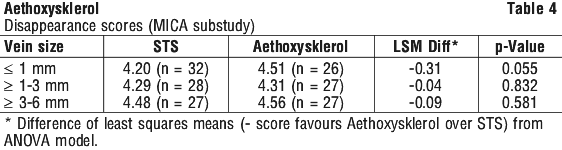
The pivotal trial in the USA consisted of two substudies in 324 patients comparing Aethoxysklerol and sodium tetradecyl sulfate (STS) in the treatment of varicose veins of the lower extremities.
The primary efficacy variable for both studies was Disappearance of Varicosities which was determined by a panel of three vascular surgeons who were blinded to the treatment conditions and rated on a scale of 1 to 5. The secondary efficacy variables were Overall Clinical Improvement (determined by the same panel) on an eleven point scale and Patient Satisfaction determined by patients on a four point scale.
No difference was detected with regard to primary endpoint, disappearance score, for any of the three vein size strata in either substudy. See Tables 3 and 4.
Overall clinical improvement was greater in Aethoxysklerol treated patients than in STS patients with the between treatment difference being statistically significant in the MICA substudy (p = 0.020) and not statistically significant in the Ohio substudy (p = 0.051). There were no statistically significant differences in either substudy in patient satisfaction score after controlling for vein size.

5.2 Pharmacokinetic Properties

Following the IV administration of [14C]-lauromacrogol 400 solution into the saphenous vein of six healthy male volunteers, blood was collected over 12 hours and urine and faeces collected over 96 hours. After 12 hours 89% of the dose was eliminated from the blood. There was a rapid disposition phase with a half-life of 19 minutes, and an elimination phase with a half-life of 4 hours. A total of 48% of the radioactive dose was recovered in urine (21%) and faeces (27%).

5.3 Preclinical Safety Data

Genotoxicity.

In short-term studies investigating the genotoxic potential of lauromacrogol 400, no evidence of mutagenicity was noted; however, a concentration-dependent increase in the incidence of chromosomal abnormalities (polyploid cells) was observed in cultured Chinese hamster fibroblasts, suggesting a possible genotoxic effect of the drug.

Carcinogenicity.

The carcinogenic potential of lauromacrogol 400 has not been adequately assessed in long-term animal studies.

6 Pharmaceutical Particulars

6.1 List of Excipients

Excipients in Aethoxysklerol are ethanol, dibasic sodium phosphate dihydrate, monobasic potassium phosphate and water for injections.

6.2 Incompatibilities

Incompatibilities were either not assessed or not identified as part of the registration of this medicine.

6.3 Shelf Life

In Australia, information on the shelf life can be found on the public summary of the ARTG. The expiry date can be found on the packaging.

6.4 Special Precautions for Storage

The solutions should be stored below 30°C and used before the expiry date on the container.

6.5 Nature and Contents of Container

Glass (2 mL) ampoules. Packs of 5 ampoules.

6.6 Special Precautions for Disposal

In Australia, any unused medicine or waste material should be disposed of in accordance with local requirements.

6.7 Physicochemical Properties

Lauromacrogol 400 is a mixture of monolauryl ethers of macrogols containing an average of 9 oxyethylene groups in the polyoxyethylene chain, it contains a lipophilic and a hydrophilic part. This molecular structure leads to the characteristic physico-chemical property of the substance, the surface activity.

Chemical structure.

Molecular formula: C12H25 (OCH2CH2)n.OH where the mean of n is approximately 9.
Mean MW ≈ 600.

CAS number.

9002-92-0.

7 Medicine Schedule (Poisons Standard)

Schedule 4.

Summary Table of Changes