


Consumer medicine information

Alcaine Eye Drops

Proxymetacaine hydrochloride

BRAND INFORMATION

Brand name

Alcaine Eye Drops 0.5%

Active ingredient

Proxymetacaine hydrochloride

Schedule

S4


Consumer medicine information (CMI) leaflet

Please read this leaflet carefully before you start using Alcaine Eye Drops.

What is in this leaflet

Read this leaflet carefully before you start to use ALCAINE Eye Drops.

This leaflet answers some common questions about ALCAINE. It does not contain all of the available information. It does not take the place of talking to your doctor or pharmacist.

The information in this leaflet was last updated on the date listed on the final page. More recent information on the medicine may be available.

You should ensure that you speak to your pharmacist or doctor to obtain the most up to date information on the medicine.

You can also download the most up to date leaflet from www.ebs.tga.gov.au

The updates may contain important information about the medicine and its use of which you should be aware.

All medicines have risks and benefits. Your doctor has weighed the expected benefits of you using ALCAINE against the risks this medicine could have for you.

If you have any concerns about taking this medicine, ask your doctor or pharmacist.

Keep this leaflet with the medicine. You may need to read it again.

What ALCAINE is used for

ALCAINE contains the active ingredient proxymetacaine hydrochloride, which belongs to a group of medicines called local anaesthetics.

ALCAINE Eye Drops are only to be used by your doctor during ophthalmic procedures.

ALCAINE is used to temporarily numb or block the feeling (anaesthetise) of pain in your eye(s) during short term medical procedures. These procedures include measuring the pressure in your eye, cataract surgery, removing stitches or a foreign body from eye e.g. a bit of dirt.

The numbing effect of ALCAINE will wear off quickly, usually about 15 minutes after the last drop is put in your eye(s).

Ask your doctor if you have any questions about why this medicine has been prescribed for you. Your doctor may have prescribed it for another reason.

Before you are given ALCAINE

When you must not be given it

ALCAINE should not be given to you if you have an allergy to:

  • Any medicine containing proxymetacaine hydrochloride
  • Any other local anaesthetics
  • Any of the ingredients in ALCAINE (these are listed under Product Description).

Some of the symptoms of an allergic reaction may include:

  • shortness of breath
  • wheezing or difficulty breathing
  • swelling of the face, lips, tongue or other parts of the body
  • rash, itching or hives on the skin.

Do not use this medicine after the expiry date printed on the pack or if the seal around the pack is broken or shows signs of tampering. If it is has expired or is damaged, return it to your pharmacist for disposal.

This medicine has been developed for use in the eye only. It is not to be swallowed or injected.

If you are not sure whether you should be given this medicine talk to your doctor.

Before you are given it

Tell your doctor if you have allergies to any other medicines or any substances such as foods, preservatives or dyes.

Tell your doctor if you have or have had any medical conditions, especially the following:

  • Epilepsy
  • Heart problems
  • Lung or breathing problems
  • Thyroid problems
  • Myasthenia gravis (a disease of the muscles causing drooping eyelids, double vision, difficulty in speaking and swallowing and sometimes muscle weakness in the arms or legs)

Tell your doctor if you have ever experienced a reaction to any other local anaesthetics.

Tell your doctor if you are pregnant or plan to become pregnant

Tell your doctor if you are breast feeding. Your doctor will discuss the risks and benefits involved.

If you have not told your doctor about any of the above, tell them before you are given ALCAINE.

Long term use may lessen the anaesthetic effect so that more of the medicine is needed to produce anaesthesia.

Long term use may also damage the surface of the eye (cornea), cause an eye infection or permanent loss of sight.

It is very important that you protect your eyes from irritating chemicals, avoid touching or rubbing your eye(s) until the anaesthesia has worn off.

Taking or using other medicines

Tell your doctor or pharmacist if you are taking any other medicines, including medicines that you buy at a pharmacy or health food shop without a doctor’s prescription.

Some medicines and ALCAINE may interfere with each other. These include a group of medicines called "cholinesterase inhibitors".

Your doctor will advise you and decide whether or not to give you ALCAINE.

How ALCAINE is given

How much is used

Your doctor will put the correct number of drops of ALCAINE into your eye(s) before starting the procedure on your eye.

Your doctor will not write a prescription for ALCAINE for your own use. ALCAINE has been specifically developed to help a doctor numb the feeling in your eye(s) while attending to your eye(s).

The usual dose is one to two drops into your eye(s) before starting the procedure on your eye. The number of times you will be given ALCAINE during the procedure will depend on the type and length of procedure to be performed. For example, your doctor will put one to two drops into your eye(s) just before measuring the pressure in your eye. However, if you are to have minor surgery such as removal of stitches your doctor will put one to two drops in your eye(s) every 5 to 10 minutes for up to three doses.

It is very important that you do not touch or rub your eye while your eye is numb because you may scratch the surface of your eye and damage it. Your doctor will put a patch over your eye after finishing the procedure to protect your eye and stop you from touching it.

If you are wearing soft contact lenses, you will be asked to remove them prior to instillation of the drops by your doctor. You may put your soft contact lenses back into your eyes after the anaesthesia has worn off and at least 15 minutes after you have been given ALCAINE

If you are given too much (overdose)

The doctor giving you ALCAINE will be experienced in the use of local anaesthetics, so it is unlikely that you will be given an overdose.

If too many drops have been put in accidentally in your eye(s) immediately rinse your eye(s) with warm water.

If you think that you or someone else has swallowed too much ALCAINE, immediately telephone the Poisons Information Centre (in Australia call 13 11 26; in New Zealand call 0800 POISON or 0800 764 766), your doctor or go to Accident and Emergency at the nearest hospital. Do this even if there are no signs of discomfort or poisoning. You may need urgent medical attention.

After you are given ALCAINE

Things you must do

You must protect you anaesthetised eye from dust particles, which could cause infection.

Things you must not do

Do not touch or rub your eye(s) while they are numb. You may scratch the surface of the eye and damage it. Your doctor will put a patch over your eye after finishing the procedure to protect your eye and stop you from touching it.

Things to be careful of

Be careful driving or operating machinery until you know how ALCAINE affects you and your vision. As with any eye medicines, temporary blurred vision or other visual disturbances may affect the ability to drive or use machinery in some people. If blurred vision occurs, wait until your vision is clear before driving or operating machinery.

Side Effects

Tell your doctor as soon as possible if you do not feel well after ALCAINE use.

All medicines can have side effects. Sometimes they are serious, however most of the time they are not. You may need medical treatment if you get some of the side effects.

Do not feel alarmed at the list of possible side effects. You may not experience any of them.

Ask your doctor, nurse, or pharmacist to answer any questions you may have.

Tell your doctor, nurse or pharmacist if you notice any of the following and they worry you:

  • Irritation, stinging and burning feeling in the eye
  • Redness or watery eyes
  • Increased winking
  • Dilated pupils causing blurred vision
  • Drying and splitting of the skin on fingertips
  • A severe, immediate allergic reaction involving the front layer (the cornea) of the eye.

Occasionally some people notice untoward effects in the rest of their body as a result of ALCAINE use.

Tell your doctor immediately or go to Accident and Emergency at your nearest hospital at the first sign of an allergic reaction such skin rash or hives. You may need urgent medical attention or hospitalisation.

Tell your doctor if you notice any unwanted effects while you were given ALCAINE, even if they do not appear in the list above.

Other side effects not listed above may also occur in some patients.

After using ALCAINE

Storage

ALCAINE will be stored by your doctor or pharmacist under the recommended conditions. It should be stored between 2°C to 8°C (Refrigerate, do not freeze). Protect from light.

ALCAINE should be used in a single patient only.

Product Description

What it looks like

ALCAINE Eye Drops are a sterile, clear liquid that comes in a 15 mL dropper bottle.

Ingredients

ALCAINE Eye Drops contain proxymetacaine hydrochloride 0.5% (5 mg/mL) as the active ingredient.

ALCAINE Eye Drops also contain:

  • glycerol
  • benzalkonium chloride (as a preservative)
  • purified water
  • hydrochloric acid and/or sodium hydroxide (to adjust pH).

Supplier

ALCAINE is supplied in Australia by:

Alcon Laboratories (Australia) Pty Ltd
ABN 88 000 740 83054
15 Talavera Road
Macquarie Park NSW 2113
Telephone: 1800 224 153

Australian registration number

AUST R No. 24299.

Date of Preparation

This leaflet was prepared in May 2023.

Internal document code (alc030523c)

Published by MIMS June 2023
BRAND INFORMATION

Brand name

Alcaine Eye Drops 0.5%

Active ingredient

Proxymetacaine hydrochloride

Schedule

S4


1 Name of Medicine

Proxymetacaine hydrochloride.

2 Qualitative and Quantitative Composition

Alcaine Eye Drops contain 5 mg/mL (0.5%) proxymetacaine hydrochloride.
Proxymetacaine hydrochloride is a white or almost white, crystalline powder, odourless or almost odourless. It is soluble in water and in chloroform; very soluble in absolute ethanol, practically insoluble in ether.

Excipient with known effect.

Benzalkonium chloride (0.1 mg/mL as a preservative).
For the full list of excipients, see Section 6.1 List of Excipients.

3 Pharmaceutical Form

Eye drops, sterile solution, preserved.

4 Clinical Particulars

4.1 Therapeutic Indications

Alcaine Eye Drops are indicated for procedures in which a rapid and short acting topical ophthalmic anaesthetic is indicated, such as in cataract surgery and suture removal from the cornea, and in tonometry, gonioscopy, removal of corneal foreign bodies, conjunctival scraping for diagnostic purposes, and other short corneal and conjunctival procedures.

4.2 Dose and Method of Administration

For ocular use only.
Single patient use only.
After cap is removed, if tamper evident snap collar is loose, remove before using product. Discard container 4 weeks after opening.
If more than one topical ophthalmic product is being used, the products must be administered at least 5 minutes apart. Eye ointments should be administered last.
To prevent contamination of the dropper tip and solution, care must be taken not to touch the eyelids, surrounding areas or other surfaces with the dropper tip. Keep the bottle tightly closed when not in use.
For tonometry and other procedures of short duration, instil one or two drops just prior to evaluation.
For minor surgical procedures such as foreign body or suture removal, instil one to two drops every five to ten minutes for one to three doses.
For prolonged anaesthesia as in cataract extraction, instil one to two drops in the eye(s) every five to ten minutes for three to five doses.

Note.

Because the "blink" reflex is temporarily eliminated, it is suggested that the eye be covered with a patch following this procedure.
Patients should be advised to avoid touching or rubbing the eye until the anaesthesia has worn off.

4.3 Contraindications

Alcaine is contraindicated in patients with known hypersensitivity to proxymetacaine hydrochloride or any of the excipients (see Section 6.1 List of Excipients).

4.4 Special Warnings and Precautions for Use

Not for injection into the eye.
Prolonged use of a topical ocular anaesthetic may produce a diminished duration of the effect, thus more and more of the medication is required to produce the desired anaesthetic effect. Prolonged use or abuse may result in corneal epithelial toxicity and may manifest as epithelial defects, subsequent corneal damage, corneal infection, corneal perforation and/or corneal opacification with accompanying permanent loss of vision. The long-term toxicity of proxymetacaine hydrochloride is unknown; prolonged use may possibly delay wound healing. Although exceedingly rare with ophthalmic application of local anaesthetics, it should be borne in mind that systemic toxicity (manifested by central nervous system stimulation followed by depression) may occur.
Local anaesthetics should be used cautiously and sparingly in patients with known allergies, epilepsy, cardiac disease, hyperthyroidism or in patients with respiratory problems. Patients who suffer from myasthenia gravis are particularly sensitive to the effects of anaesthetics. Patients with a low amount of acetylcholinesterase in the plasma, and patients being treated with cholinesterase inhibitors exhibit an increased risk for systemic side effects during topical application of ester type anaesthetics.
Protection of the eyes from irritating chemicals, foreign bodies and rubbing during the period of anaesthesia is very important. Tonometers soaked in sterilising or detergent solutions should be thoroughly rinsed with sterile distilled water prior to use.
Advise patients that, due to the effect of the anaesthetic, their eyes will be insensitive and that care should be taken to avoid accidental eye injuries.
Alcaine Eye Drops may cause allergic contact dermatitis. Avoid contact with the skin.
Alcaine Eye Drops are intended for administration by a healthcare professional for ophthalmic procedures. Topical ophthalmic anaesthetics are not intended for use by patients for self-administration.

Contact lenses.

Alcaine contains the preservative benzalkonium chloride, which may cause eye irritation, discolour and be deposited in soft (hydrophilic) contact lenses. Contact lens wear is not recommended until the anaesthetic effect has worn off.

Use in patients with hepatic impairment.

The safety and efficacy of Alcaine in patients with hepatic impairment have not been established.

Use in patients with renal impairment.

The safety and efficacy of Alcaine in patients with renal impairment have not been established.

Use in the elderly.

There is no information available for use in patients above 65 years of age.

Paediatric use.

Controlled clinical studies have not been performed with Alcaine Eye Drops to establish safety and effectiveness in children; however, the literature cites the use of proxymetacaine hydrochloride as a topical ophthalmic anaesthetic agent in children.

Effects on laboratory tests.

No data available.

4.5 Interactions with Other Medicines and Other Forms of Interactions

The metabolism of local anaesthetics derived from esters may be inhibited by anticholinesterases thus increasing the risk of systemic toxicity.

4.6 Fertility, Pregnancy and Lactation

Effects on fertility.

No study has been conducted to determine the possible adverse effects of proxymetacaine hydrochloride on fertility.
(Category B2)
Animal reproduction studies have not been conducted with Alcaine Eye Drops. It is not known whether proxymetacaine hydrochloride can cause foetal harm when administered to a pregnant woman or can affect reproductive capacity. Proxymetacaine hydrochloride use is not recommended during pregnancy.
It is not known whether this drug is excreted in human milk, however, a risk to the suckling child cannot be excluded. Because many drugs are excreted in human milk, caution should be exercised when proxymetacaine hydrochloride is administered to a breastfeeding woman. Use only when considered essential by the physician.

4.7 Effects on Ability to Drive and Use Machines

Temporary blurred vision or other visual disturbances may affect the ability to drive or use machines. If blurred vision occurs after administration, the patient must wait until the vision clears before driving or using machinery.

4.8 Adverse Effects (Undesirable Effects)

Pupillary dilatation or cycloplegic effect have rarely been observed with proxymetacaine hydrochloride. The drug appears to be safe for use in patients sensitive to other local anaesthetics, but local or systemic sensitivity occasionally occurs. Instillation of proxymetacaine in the eye at recommended concentration and dosage usually produces little or no initial irritation, stinging, burning, conjunctival redness, lacrimation or increased winking. However, some local irritation and stinging may occur several hours after instillation.
Rarely, a severe, immediate type, apparently hyperallergic corneal reaction may occur which include acute, intense and diffuse epithelial keratitis; a grey, ground glass appearance; sloughing of large areas of necrotic epithelium; corneal filaments and, sometimes, iritis and descemetitis.
Allergic contact dermatitis with drying and fissuring of the fingertips has been reported. Softening and erosion of the corneal epithelium and conjunctival congestion and haemorrhage have been reported.

Postmarketing experience.

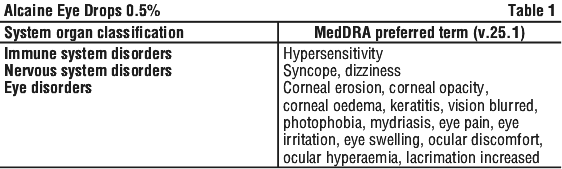
The following adverse reactions have been reported following use of proxymetacaine topical ocular preparations. Frequencies cannot be estimated from the available data. Within each system organ class, adverse reactions are presented in order of decreasing seriousness. See Table 1.
Additionally, overuse, uncontrolled use or abuse of the product may lead to ocular lesions due to the toxic effects of the anaesthetic to the epithelium.

Reporting suspected adverse effects.

Reporting suspected adverse reactions after registration of the medicinal product is important. It allows continued monitoring of the benefit-risk balance of the medicinal product. Healthcare professionals are asked to report any suspected adverse reactions at www.tga.gov.au/reporting-problems and in New Zealand, at www.medsafe.govt.nz/Safety/report-a-problem.asp.

4.9 Overdose

In the event of overdose or accidental ingestion, systemic effects may manifest as central nervous system (CNS) stimulation and may include nervousness, tremors or convulsions, followed by depression in CNS which may result in loss of consciousness and respiratory depression. A topical overdose of Alcaine Eye Drops can be flushed from the eyes with warm water. Appropriate symptomatic treatment is indicated if any systemic effects are observed.
For information on management of overdose in Australia contact the Poisons Information Centre on 13 11 26; in New Zealand, call 0800 POISON or 0800 764 766.

5 Pharmacological Properties

5.1 Pharmacodynamic Properties

Mechanism of action.

Proxymetacaine hydrochloride is a rapid acting local anaesthetic suitable for ophthalmic use. With a single drop, the onset of anaesthesia usually begins within 30 seconds and persists for 15 minutes or longer.
Proxymetacaine hydrochloride is a potent topical anaesthetic of the ester type.
The main site of anaesthetic action is the nerve cell membrane where proxymetacaine interferes with the large transient increase in the membrane permeability to sodium ions that is normally produced by a slight depolarisation of the membrane. As the anaesthetic action progressively develops in a nerve, the threshold for electrical stimulation gradually increases and the safety factor for conduction decreases; when this action is sufficiently well developed, a block of conduction is produced.
The exact mechanism whereby proxymetacaine and other local anaesthetics influence the permeability of the cell membrane is unknown; however, several studies indicate that local anaesthetics may limit sodium ion permeability through the lipid layer of the nerve cell membrane. This limitation prevents the fundamental change necessary for the generation of the action potential.

Clinical trials.

No data are available.

5.2 Pharmacokinetic Properties

After topical administration, proxymetacaine hydrochloride is absorbed into the system and generally decomposes quickly in the plasma; however, high doses can cause undesirable systemic effects.

5.3 Preclinical Safety Data

Genotoxicity.

No data available.

Carcinogenicity.

The carcinogenic potential of proxymetacaine hydrochloride has not been investigated in long-term animal studies. No study has been conducted to determine the potential mutagenicity of proxymetacaine hydrochloride.

6 Pharmaceutical Particulars

6.1 List of Excipients

Benzalkonium chloride, glycerol, hydrochloric acid and/or sodium hydroxide (to adjust pH), purified water.

6.2 Incompatibilities

Incompatibilities were either not assessed or not identified as part of the registration of this medicine.

6.3 Shelf Life

30 months.
In Australia, information on the shelf life can be found on the public summary of the Australian Register of Therapeutic Goods (ARTG). The expiry date can be found on the packaging.

6.4 Special Precautions for Storage

Store at 2° to 8°C. Refrigerate do not freeze. Protect from light.

6.5 Nature and Contents of Container

Alcaine Eye Drops are supplied in multi-dose, opaque LDPE Drop-Tainer dispenser bottles; 15 mL.

6.6 Special Precautions for Disposal

In Australia, any unused eye drops should be disposed of by taking to your local pharmacy.

6.7 Physicochemical Properties

Chemical structure.


CAS number.

5875-06-9.
Molecular weight: 330.9.
Chemical name: 2-diethylaminoethyl 3-amino-4-propoxybenzoate hydrochloride.
Empirical formula: C16H26N2O3.HCl.

7 Medicine Schedule (Poisons Standard)

Prescription Only Medicine (Schedule 4).

Summary Table of Changes