1 Name of Medicine
Azelastine hydrochloride and fluticasone propionate.
2 Qualitative and Quantitative Composition
Each nasal spray contains 125 microgram azelastine (as azelastine hydrochloride) and 50 microgram fluticasone propionate, as the active ingredients.
For the full list of excipients see Section 6.1 List of Excipients.
3 Pharmaceutical Form
APOHealth Allergy and Hayfever Relief Nasal Spray is a white, homogenous and redispersible suspension. It is available as a metered-spray suspension for intranasal administration, in an amber glass vial with a metering nasal pump and white actuator with translucent cap.
4.1 Therapeutic Indications
Symptomatic treatment of moderate to severe allergic rhinitis for up to 6 months.
4.2 Dose and Method of Administration
Duration of treatment.
APOHealth Allergy and Hayfever Relief Nasal Spray is suitable for use up to 6 months.
Dosage.
Adults and adolescents (e.g. 12 years and older).
One spray, in each nostril, twice daily (morning and evening).
For adolescents from 12 - 17 years of age, use only on medical advice.
Children below 12 years.
APOHealth Allergy and Hayfever Relief Nasal Spray is not recommended for use in children below 12 years of age as safety and efficacy has not been established in this age group.
Elderly.
No dose adjustment is required in this population (see Section 5.2 Pharmacokinetic Properties, Special populations, Age; Section 4.4 Special Warnings and Precautions for Use, Use in the elderly).
Renal impairment.
No dose adjustment is required in patients with renal impairment (see Section 5.2 Pharmacokinetic Properties, Special populations, Renal impairment; Section 4.4 Special Warnings and Precautions for Use, Use in renal impairment).
Hepatic impairment.
No dose adjustment is required in patients with mild to moderate hepatic impairment.
Caution is required when treating patients with severe hepatic impairment (see Section 5.2 Pharmacokinetic Properties, Special populations, Hepatic impairment; Section 4.4 Special Warnings and Precautions for Use, Use in hepatic impairment).
Method of administration.
APOHealth Allergy and Hayfever Relief Nasal Spray is for administration by the nasal route only.
Preparing the spray.
Shake the bottle gently before each use for about 5 seconds. Then, remove the protective cap.
Prior to first use, APOHealth Allergy and Hayfever Relief Nasal Spray must be primed by pressing down and releasing the pump 6 times until a fine mist appears. If APOHealth Allergy and Hayfever Relief Nasal Spray has not been used for more than 7 days, reprime by pressing down and releasing the pump a number of times until a fine mist is produced.
Using the spray.
After blowing the nose, spray the suspension once into each nostril keeping the head tilted downward. After each use, wipe the spray tip and replace the protective cap.4.3 Contraindications
Hypersensitivity to the active substance(s) or to any of the excipients listed in Section 6.1 List of Excipients.
4.4 Special Warnings and Precautions for Use
Somnolence.
In clinical studies, the occurrence of somnolence has been reported in some patients taking azelastine/fluticasone (see Section 4.8 Adverse Effects (Undesirable Effects)). The overall incidence of somnolence was much lower than that reported for oral antihistamines. Even so, patients should be cautioned against engaging in hazardous occupations requiring complete mental alertness and motor coordination such as operating machinery or driving a motor vehicle after administration of azelastine/fluticasone until they know how they react to the nasal spray. When administered orally in combination, azelastine hydrochloride 4.4 mg tablets and alcohol showed sedative effects. As no specific information is available with the nasal spray, caution is required if azelastine/fluticasone is used concomitantly with alcohol or other CNS depressants (see Section 4.7 Effects on Ability to Drive and Use Machines; Section 4.5 Interactions with Other Medicines and Other Forms of Interactions, Central nervous system depressants).
Local effects.
Instances of nasal ulceration and nasal septal perforation have been reported in patients following the intranasal application of corticosteroids. There were no instances of nasal ulceration or nasal septal perforation observed in clinical studies with azelastine/fluticasone.
Because of the inhibitory effect of corticosteroids on wound healing, patients who have experienced recent nasal ulcers, surgical operation, or injury to the nose or mouth should not use azelastine/fluticasone until healing has occurred.
Local infections of the nasal airways should be appropriately treated but do not constitute a specific contraindication to treatment with azelastine/fluticasone. Candidiasis of the throat can occur in patients treated with intranasal steroids. Special care should be taken when treating patients who may be susceptible to candida infections (e.g. diabetics).
APOHealth Allergy and Hayfever Relief contains benzalkonium chloride. Benzalkonium chloride may cause irritation or swelling inside the nose, especially if used for a long time.
Visual disturbance.
Visual disturbance may be reported with systemic and topical corticosteroid use. If a patient presents with symptoms such as blurred vision, increased intra-ocular pressure or other visual disturbances, the patient should be considered for referral to an ophthalmologist for evaluation of possible causes which may include cataract, glaucoma or rare diseases such as central serous chorioretinopathy (CSCR) which have been reported after use of systemic and topical corticosteroids.
Therefore, close monitoring is warranted in patients with a change in vision or with a history of increased intraocular pressure, glaucoma, and/or cataracts.
Hypothalamic-pituitary-adrenal (HPA) axis effects.
Intranasal steroid products are designed to deliver drug directly to the nasal mucosa in order to minimise overall systemic glucocorticoid exposure and side effects. Systemic effects such as HPA axis suppression, reduction of bone density and retardation of growth rate in children may occur with intranasal steroids, particularly at high doses prescribed for prolonged periods of time. If there is evidence for higher than recommended doses being used, then additional systemic corticosteroid cover should be considered during periods of stress or elective surgery.
The lowest dose of fluticasone propionate nasal spray that causes suppression of the HPA axis or effects on bone mineral density or growth retardation has not yet been established. However, the systemic bioavailability of fluticasone propionate is low (estimated at 1.26% using high doses), when given as fluticasone propionate nasal spray, and this limits the potential for such systemic side effects. Measurement of serum cortisol and 24 hour urinary cortisol in the clinical studies in adults did not suggest any HPA axis suppression with recommended doses. Studies of effects on the HPA axis in children have not been conducted.
Care must be taken while transferring patients from systemic steroid treatment to azelastine/fluticasone if there is any reason to suppose that their adrenal function is impaired.
Respiratory conditions.
In patients who have tuberculosis or untreated infections of the respiratory tract, the possible benefits of the treatment with APOHealth Allergy and Hayfever Relief Nasal Spray should be weighed against possible risk.
Use of cytochrome P450 3A4 inhibitors.
Care should be taken when co-administering known, strong CYP3A4 inhibitors, e.g. ritonavir and ketoconazole, as there is potential for increased systemic exposure to fluticasone propionate. (See Section 4.5 Interactions with Other Medicines and Other Forms of Interactions; Section 5.2 Pharmacokinetic Properties, Metabolism).
Effect on growth.
Retardation of growth rate in children may occur with intranasal steroids, particularly at high doses prescribed for prolonged periods of time. (See Section 4.4 Special Warnings and Precautions for Use, Paediatric use).
Use in renal impairment.
See Section 5.2 Pharmacokinetic Properties, Special populations, Renal impairment.
Use in hepatic impairment.
See Section 5.2 Pharmacokinetic Properties, Special populations, Hepatic impairment.
Use in the elderly.
See Section 5.2 Pharmacokinetic Properties, Special populations, Age.
Paediatric use.
Safety and effectiveness of azelastine/fluticasone in paediatric patients below the age of 12 years have not been established. For adolescents from 12 - 17 years of age, use only on medical advice.
Retardation of growth rate in children may occur with intranasal steroids, particularly at high doses prescribed for prolonged periods of time (see Section 4.4 Special Warnings and Precautions for Use, Effect on growth).
Effects on laboratory tests.
No effects are known.4.5 Interactions with Other Medicines and Other Forms of Interactions
No formal drug interaction studies have been performed with azelastine/fluticasone. The drug interactions of azelastine/fluticasone are expected to reflect those of the individual components as described below.
Central nervous system depressants.
When administered orally in combination, azelastine hydrochloride 4.4 mg tablets and alcohol showed sedative effects. As no specific information is available with the nasal spray, caution is required if azelastine/fluticasone is used concomitantly with alcohol or other CNS depressants. (See Section 4.4 Special Warnings and Precautions for Use, Somnolence; Section 4.7 Effects on Ability to Drive and Use Machines).
Cytochrome P450 inhibitors.
Under normal circumstances, very low plasma concentrations of fluticasone propionate are achieved after intranasal dosing, due to extensive first pass metabolism and high systemic clearance mediated by cytochrome P450 3A4 in the gut and liver. Hence, clinically significant drug interactions mediated by fluticasone propionate are unlikely.
Co-treatment with CYP3A4 inhibitors, including cobicistat-containing products is expected to increase the risk of systemic side effects. The combination should be avoided unless the benefit outweighs the increased risk of systemic corticosteroid side-effects, in which case patients should be monitored for systemic corticosteroid side-effects.
Ritonavir.
A drug interaction study in healthy subjects has shown that ritonavir (a highly potent cytochrome P450 3A4 inhibitor) can greatly increase fluticasone propionate plasma concentrations, resulting in markedly reduced serum cortisol concentrations. During post marketing use, there have been reports of clinically significant drug interactions in patients receiving fluticasone propionate and ritonavir, resulting in systemic corticosteroid effects including Cushing's syndrome and adrenal suppression. Therefore, concomitant use of fluticasone propionate and ritonavir should be avoided, unless the potential benefit to the patient outweighs the risk of systemic corticosteroid side effects.
Ketoconazole.
Studies have shown that other inhibitors of cytochrome P450 3A4 produce negligible (erythromycin) and minor (ketoconazole) increases in systemic exposure to fluticasone propionate without notable reductions in serum cortisol concentrations. Nevertheless, care is advised when co-administering potent cytochrome P450 3A4 inhibitors (e.g. ketoconazole), as there is potential for increased systemic exposure to fluticasone propionate (see Section 5.2 Pharmacokinetic Properties, Metabolism; Section 4.4 Special Warnings and Precautions for Use, Use of cytochrome P450 3A4 inhibitors).
Cimetidine.
After oral administration of 4.4 mg azelastine hydrochloride twice daily, cimetidine has been shown to increase the plasma levels of azelastine. This is thought to be due to cimetidine inhibiting the metabolism of azelastine by interacting with the hepatic cytochrome P450 system. No interaction was seen following co-medication with ranitidine.4.6 Fertility, Pregnancy and Lactation
Effects on fertility.
No studies on impairment of fertility were conducted with azelastine/fluticasone. However, nonclinical studies are available for the individual active component, azelastine.
In male and female rats, azelastine at oral doses of 30 mg/kg/day and greater (resulting in plasma levels which were at least about 400 times above the plasma levels at the recommended therapeutic intranasal dose) caused a decrease in the fertility index, but in long term toxicity studies up to 2 years there were no drug-related alterations in reproductive organs either in males or in females in this species. A clinical study in 21 healthy human females using an intranasal dose of 1.12 mg/day found no effect on ovulation or sexual hormone pattern.
(Category B3)
There is no or insufficient evidence of safety of azelastine/fluticasone, azelastine or fluticasone propionate in human pregnancy. No studies on the effect on embryo-foetal development have been conducted with azelastine/fluticasone combination. Animal reproductive studies of azelastine and fluticasone propionate in mice and rats revealed evidence of teratogenicity as well as other developmental toxic effects. However, equivalent effects have not been reported when these individual compounds have been given to humans during pregnancy. Direct intranasal application ensures minimal systemic exposure. As with other medicines, the use of azelastine/fluticasone during pregnancy should only be considered if the expected benefit to the mother is greater than any possible risk to the foetus.
In pregnant rats there was evidence of significant diaplacental transfer of the drug to the foetuses. Azelastine was embryo lethal and teratogenic in mice at oral doses greater than 30 mg/kg/day. In rats, azelastine was embryo-toxic at oral doses greater than 3 mg/kg/day, and teratogenicity and embryolethality were seen at doses greater than 30 mg/kg/day. In rabbits, azelastine was teratogenic at oral doses greater than 20 mg/kg/day. In pregnant rats, azelastine demonstrated no peri/postnatal toxicity at oral doses up to 30 mg/kg/day.
In rats, the no effect doses resulted in plasma levels which were at least about 25 times above the plasma levels at the recommended therapeutic intranasal dose in humans. (The calculation of the safety factor is based on plasma levels derived from oral subchronic toxicity studies.)
Reproductive toxicity studies with fluticasone propionate in mice and rats have shown the expected foetotoxic and teratogenic effects at subcutaneous doses of 100 to 150 microgram/kg/day and above. As with previous compounds of this class, these effects are unlikely to be relevant to human therapy.
It is not known whether azelastine/fluticasone is excreted in human breast milk. Because many drugs are excreted in human milk, caution should be exercised when azelastine/fluticasone is administered to a nursing woman. Since there are no data from well-controlled human studies on the use of azelastine/fluticasone by nursing mothers, based on data from the individual components, a decision should be made whether to discontinue nursing or to discontinue azelastine/fluticasone, taking into account the importance of azelastine/fluticasone to the mother. No studies in lactating animals have been conducted with the combination azelastine/fluticasone.
It is not known if azelastine is excreted in human milk.
The excretion of fluticasone propionate into human breast milk has not been investigated. Subcutaneous administration of tritiated drug to lactating rats resulted in measurable radioactivity in both plasma and milk (levels in milk were 3-7 times plasma levels) 1-8 hours post-dosing. However plasma levels in patients following intranasal application of fluticasone propionate at recommended doses are low and the amount of fluticasone ingested by the newborn is estimated to be very small as a consequence of very low maternal plasma concentration.4.7 Effects on Ability to Drive and Use Machines
Due to the potential occurrence of somnolence (see Section 4.4 Special Warnings and Precautions for Use, Somnolence), patients using azelastine/fluticasone should be cautioned against engaging in hazardous occupations requiring complete mental alertness and motor coordination such as driving or operating machinery after administration of azelastine/fluticasone until they know how they react to the nasal spray.
Caution is required if azelastine/fluticasone is used concomitantly with alcohol or other CNS depressants. (See Section 4.4 Special Warnings and Precautions for Use, Somnolence; Section 4.5 Interactions with Other Medicines and Other Forms of Interactions, Central nervous system depressants).
Adverse effects of this medicine include dizziness and visual disturbances such as blurred vision which could affect the ability to drive or use machines (see Section 4.8 Adverse Effects (Undesirable Effects)).
4.8 Adverse Effects (Undesirable Effects)
In the 4 placebo-controlled studies (MP4001, MP4002, MP4004 and MP4006), 1006 patients were treated with azelastine/fluticasone, 1012 with placebo, 851 with azelastine (AZE) in azelastine/fluticasone vehicle, 846 with fluticasone propionate (FLU) in azelastine/fluticasone vehicle, 152 with Astelin Nasal Spray (marketed AZE), and 153 with fluticasone propionate from Roxanne Laboratories Inc. (marketed FLU). The mean duration of exposure to each of these products was about 14 days. There were no relevant differences between the treatment groups in the overall rate of premature discontinuations and also the primary reason for discontinuation.
Across all treatment groups, the percentage of subjects with any AEs was low and majority of AEs were mild in nature. The most frequently reported adverse events (AEs) were dysgeusia, epistaxis and headache. However, headache and especially epistaxis were also frequently reported under placebo. Commonly, dysgeusia, a substance-specific unpleasant taste, may be experienced after administration (often due to incorrect method of application, namely tilting the head too far backwards during administration).
Treatment-emergent adverse events reported with an incidence of ≥ 1% in the azelastine/fluticasone treated group, in the 4 pivotal studies, are shown in Table 1.
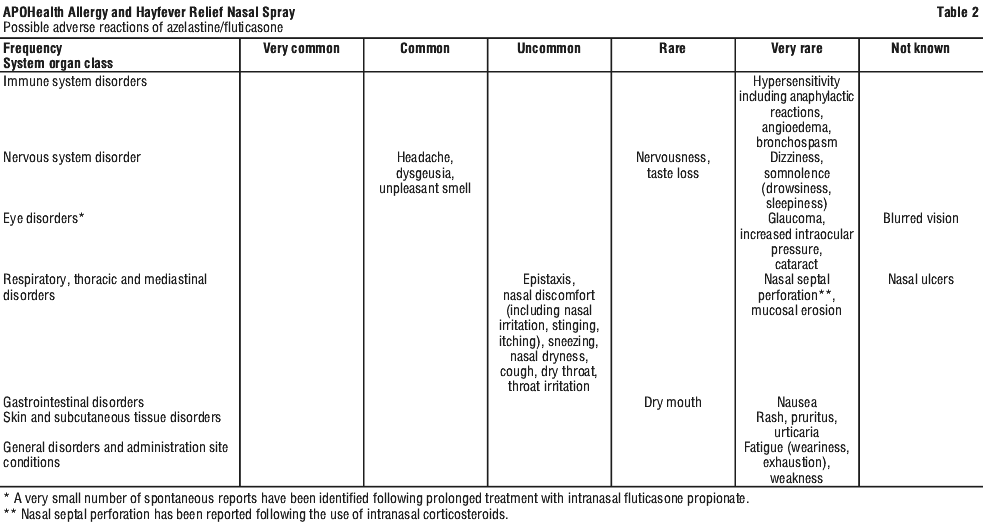
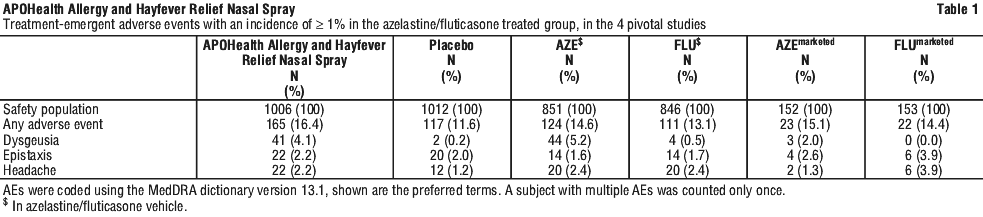 Table 2 listed possible adverse reactions for azelastine/fluticasone, with frequencies corresponding to: very common (≥ 1/10), common (≥ 1/100 to < 1/10), uncommon (≥ 1/1,000 to < 1/100), rare (≥ 1/10,000 to < 1/1,000), very rare (< 1/10,000), not known (cannot be estimated from the available data).
Reporting suspected adverse effects.
Reporting suspected adverse reactions after registration of the medicinal product is important. It allows continued monitoring of the benefit-risk balance of the medicinal product. Healthcare professionals are asked to report any suspected adverse reactions at www.tga.gov.au/reporting-problems and contact Arrotex Medical Information Enquiries/Adverse Drug Reaction Reporting on 1800 195 055.4.9 Overdose
With the nasal route of administration, overdose reactions are not anticipated.
APOHealth Allergy and Hayfever Relief Nasal Spray contains both azelastine and fluticasone propionate; therefore, the risks associated with overdosage for the individual components apply to azelastine/fluticasone.
With the nasal route of administration, overdosage reactions to azelastine are not anticipated. To date, there has been only one report of incorrect usage: a 2 year old boy drank approximately 10 mL of azelastine nasal spray. This led to a burning sensation in the nose and mouth and to spontaneous vomiting, these events lasting 5 - 10 minutes. Pulse rate, blood pressure and respiration were normal and stable, and a normal pupil reaction was found. No tissue damage in the mouth or throat occurred. The boy recovered completely.
Symptoms.
In the event of overdosage after accidental oral uptake, disturbances of the central nervous system (including drowsiness, confusion, coma, tachycardia and hypotension) are to be expected based on the results of animal experiments. Symptomatic and supportive treatment should be instigated as there is no known antidote.
There are no data available on the effects of acute or chronic overdosage with fluticasone propionate nasal spray. Intra-nasal administration of 2,400 micrograms fluticasone per day (i.e. 12 times the recommended dose) for four days to healthy human volunteers caused a small degree of suppression of adrenal steroid production.
Treatment.
Suppression of adrenal steroid production may give rise to typical signs and symptoms of Cushing's disease, such as buffalo hump, puffiness of face, hypertension and elevated blood glucose. If such a condition were to occur, care should be taken to wean the patient slowly off the steroid due to the probability of adrenal impairment. Recovery from impaired adrenocortical function caused by prolonged steroid therapy is usually slow and has been known to last up to 12 months.
For information on the management of overdose, contact the Poisons Information Centre on 131126 (Australia).5 Pharmacological Properties
5.1 Pharmacodynamic Properties
Mechanism of action.
Pharmacotherapeutic group: Decongestants and other nasal preparations for topical use, corticosteroids/ fluticasone, combinations, ATC code: R01AD58.
APOHealth Allergy and Hayfever Relief Nasal Spray is a formulation of azelastine hydrochloride and fluticasone propionate. The mechanisms of actions described below for the individual components apply to azelastine/fluticasone.
Azelastine hydrochloride, a phthalazinone derivative, is classified as a potent long-acting anti-allergic compound with selective H1-antagonist, mast cell stabilizing and anti-inflammatory properties. Data from in vivo (preclinical) and in vitro studies show that azelastine inhibits the synthesis or release of the chemical mediators known to be involved in early and late stage allergic reactions, e.g. leukotrienes, histamine, platelet-activating factor (PAF) and serotonin. The major metabolite, desmethylazelastine, also exhibits H1-receptor antagonist activity.
Azelastine/fluticasone is administered as a racemic mixture. The racemate, R- and S-enantiomers were equally potent at inhibiting eyelid histamine-induced oedema in rats, however the R-enantiomer was 2-fold less active at inhibiting eyeball histamine-induced oedema.
Azelastine nasal spray has a faster onset of action than orally administered antihistamines and nasally administered corticosteroids. A relief of nasal allergic symptoms is observed within 15 minutes after administration.
Fluticasone propionate has potent anti-inflammatory activity but when used topically on the nasal mucosa at recommended doses has little or no detectable systemic activity.
Clinical trials.
The efficacy of azelastine/fluticasone was established in four randomised, double-blind, placebo controlled studies in subjects with seasonal allergic rhinitis (SAR), namely MP4001, MP4002, MP4004, and MP4006. One further study (3311) was performed to assess the onset of action of Azelastine/Fluticasone 125/50 nasal spray using a standardised Environmental Exposure Chamber (EEC) model.
Study MP4001 compared azelastine/fluticasone with commercial azelastine nasal spray (Astelin Nasal Spray) and commercial fluticasone propionate nasal spray from Roxane Laboratories Inc. available in the US at that time. Studies MP4002, MP4004, and MP4006 compared azelastine/fluticasone with the single compounds in the azelastine/fluticasone vehicle. All 4 trials had in common 4 treatment groups, the same regimen (1 spray per nostril twice daily), the same duration of treatment (2 weeks), and the same primary and almost the same secondary endpoints. These studies included male and female subjects 12 years of age or older with a minimum 2-year history of SAR.
During the study, nasal symptoms of itchy nose, nasal congestion, runny nose, sneezing, and ocular symptoms of itchy eyes, watery eyes, and eye redness were rated twice daily in a diary, using a 4 point scale from 0 (no symptoms) to 3 (severe symptoms). The scores were summed up to a total nasal symptom score (TNSS) and a total ocular symptom score (TOSS), respectively. In addition, postnasal drip was rated on the same 4-point scale. The Rhinoconjunctivitis Quality of Life Questionnaire (RQLQ) was completed by each subject 18 years of age or older, at the start and end of 14-day treatment (or early termination).
The primary efficacy endpoint for all four placebo-controlled studies was the change from baseline in the combined (i.e. AM and PM data added) 12-hour reflective total nasal symptom score (crTNSS) over the 14 day treatment period, tested primarily in the ITT set based on last observation. Secondary efficacy endpoints included the 12-hour AM and PM reflective TNSS, the instantaneous TNSS (iTNSS), the 12-hour reflective score for postnasal drip, the 12-hour reflective TOSS, the instantaneous TOSS, the 12-hour reflective and instantaneous individual nasal and ocular symptoms and the RQLQ score. In studies MP4002, MP4004 and MP4006, an attempt was made to evaluate the onset of action.
The pooled study population was primarily female (62.9%), white (80.3%) and between 18 and 65 years of age (87.3%).
Table 3 shows the primary efficacy results for the individual pivotal studies expressed as absolute change in crTNSS compared with placebo and all active treatments. Across the individual studies, azelastine/fluticasone was significantly superior to placebo and the monotherapy components. In addition, each individual component was significantly superior to placebo.
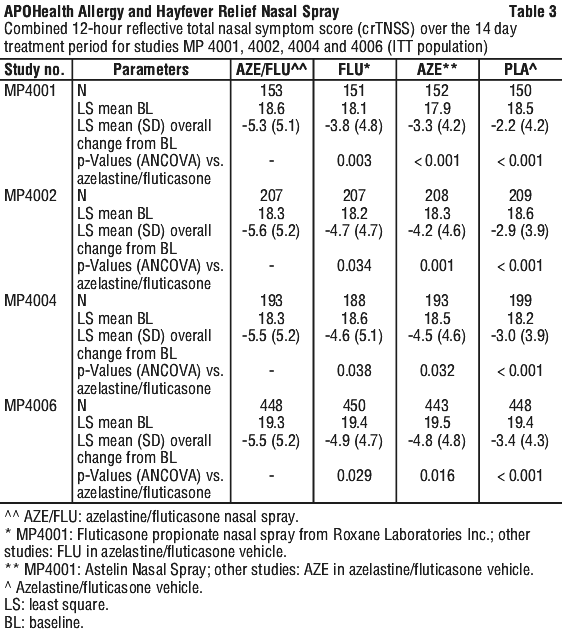 Data from studies MP4004 and MP4006 indicate that the onset of clinically relevant action for azelastine/fluticasone occurs within 30 minutes after first application of the combination.
In the meta-analysis that pooled data from the 4 efficacy studies, azelastine/fluticasone was shown to be statistically significantly superior to both azelastine and fluticasone mono-products and all active treatments were statistically significantly superior to placebo for almost all secondary efficacy variables including the reflective TNSS confined to daytime (denominated as 12-hour PM) or night time (12-hour AM), the instantaneous TNSS, the reflective TOSS, post nasal drip, and all individual nasal and ocular symptom scores (all p < 0.05) except the comparison azelastine/fluticasone with azelastine for eye redness (p = 0.0513). Azelastine/fluticasone at least doubled the effect of azelastine and fluticasone propionate in reducing nasal and ocular symptoms score.
The RQLQ score for azelastine/fluticasone was significantly improved over placebo for overall score and for each individual RQLQ domain in each individual study and in the meta-analysis. Across all studies and in the meta-analysis, the treatment difference in overall score between azelastine/fluticasone and placebo exceeded the minimum clinically significant difference of -0.50.
Azelastine/fluticasone provided substantial allergic rhinitis symptom relief (50% reduction in crTNSS) at least 3 days faster than azelastine and 6 days faster than fluticasone propionate nasal spray. The superior effect of azelastine/fluticasone to fluticasone propionate nasal spray was maintained throughout a one-year study in patients with chronic persistent allergic rhinitis and non-allergic/vasomotor rhinitis.
In an Environmental Exposure Chamber (EEC) study (3311) relief of allergic rhinitis symptoms was observed from 5 minutes after first dose of Azelastine/Fluticasone 125/50 nasal spray for nasal (TNSS) and 10 minutes for ocular symptoms (TOSS) (p < 0.05).
5.2 Pharmacokinetic Properties
Two reported pharmacokinetic studies demonstrated that simultaneous intranasal administration of azelastine hydrochloride and fluticasone propionate with azelastine/fluticasone does not result in altered systemic absorption of either agent.
Absorption.
After intranasal administration of two sprays per nostril (500 microgram of azelastine and 200 microgram of fluticasone propionate) of Azelastine/Fluticasone 125/50 nasal spray, the mean (± standard deviation) peak plasma exposure (Cmax) was 194.5 ± 74.4 picogram/mL for azelastine and 10.3 ± 3.9 picogram/mL for fluticasone and the mean total exposure (AUC) was 4217 ± 2618 picogram/mL*hr for azelastine and 97.7 ± 43.1 picogram/mL*hr for fluticasone. The median time to peak exposure (Tmax) from a single dose was 0.5 hours for azelastine and 1.0 hours for fluticasone.
After intranasal administration, the systemic bioavailability of azelastine hydrochloride is approximately 40%. The absolute bioavailability of intranasal fluticasone at high doses (2,400 microgram/day i.e. 12 times the recommended dose) is estimated as 1.26% (90% CI 0.85, 1.86).
Distribution.
After oral and intravenous administration of azelastine, the mean volume of distribution was 14.5 L/kg. In vitro studies with human plasma indicate that the plasma protein binding of azelastine and desmethylazelastine are approximately 88% and 97%, respectively.
Fluticasone propionate has a large volume of distribution at steady-state (approximately 318 L). Plasma protein binding is 91%.
Metabolism.
Azelastine is extensively metabolised, desmethylazelastine being the principal metabolite. No specific isoform of cytochrome P450 was found to be specific in the metabolism of azelastine at low concentrations (6 - 30 nanogram/mL) in human liver microsomes.
Fluticasone propionate is cleared rapidly from the systemic circulation, principally by hepatic metabolism to an inactive carboxylic acid metabolite, by the cytochrome P450 enzyme CYP3A4. Swallowed fluticasone propionate is also subject to extensive first pass metabolism. Care should be taken when co-administering potent CYP3A4 inhibitors such as ketoconazole and ritonavir as there is potential for increased systemic exposure to fluticasone propionate (see Section 4.4 Special Warnings and Precautions for Use, Use of cytochrome P450 3A4 inhibitors; Section 4.5 Interactions with Other Medicines and Other Forms of Interactions).
Excretion.
Plasma elimination half-lives after a single dose of azelastine are 22 hours for azelastine and 56 hours for the therapeutically active metabolite N-desmethyl azelastine. Up to 74% of radiolabelled oral or intravenous dose is excreted in faeces and 26% in urine. Thirteen percent is excreted in urine as unchanged azelastine.
The elimination rate of intravenous administered fluticasone propionate is linear over the 250-1000 microgram dose range and is characterised by a high plasma clearance (CL = 1.1 L/min). Peak plasma concentrations are reduced by approximately 98% within 3-4 hours and only low plasma concentrations were associated with the 7.8 hours terminal half-life. The renal clearance of fluticasone propionate is negligible (< 0.2%) and less than 5% as the carboxylic acid metabolite. The major route of elimination is the excretion of fluticasone propionate and its metabolites in the bile.
Special populations.
Azelastine/Fluticasone 125/50 nasal spray was not studied in any special populations, and no gender-specific pharmacokinetic data have been obtained. The following data are available for the individual active component, azelastine and fluticasone propionate:
Hepatic impairment.
No significant difference was found in t½, Cmax or AUC in an oral single dose study of azelastine in 6 patients with hepatic impairment compared to normal subjects. Caution is warranted in extrapolating these data to long-term use. (See Section 4.4 Special Warnings and Precautions for Use, Use in hepatic impairment).
Azelastine/Fluticasone undergoes extensive first-pass metabolism and high systemic clearance mediated by cytochrome P450 3A4 in the gut and liver, therefore the systemic exposure of intranasal fluticasone propionate in patients with severe liver disease is likely to be increased. This may result in a higher frequency of systemic adverse events. Caution is advised when treating these patients (see Section 5.2 Pharmacokinetic Properties, Metabolism; Section 4.4 Special Warnings and Precautions for Use, Use of cytochrome P450 3A4 inhibitors; Section 4.5 Interactions with Other Medicines and Other Forms of Interactions).
Renal impairment.
In a single oral dose study of azelastine in 9 patients, renal insufficiency (creatinine clearance < 50 mL/min), resulted in a 70-75% higher Cmax and AUC compared to normal subjects. However, the number of patients evaluated in this study is too small to draw meaningful conclusions. No information regarding the use of azelastine nasal spray in renally impaired patients is available. (See Section 4.4 Special Warnings and Precautions for Use, Use in renal impairment).
Age.
A pharmacokinetic study in elderly patients (n = 15) receiving oral azelastine 4.4 mg twice daily found a prolongation of the Tmax and an increase in Cmax and AUC compared to results in healthy volunteers. There have been no specific studies in the elderly with the nasal spray. In clinical and post-marketing studies of the nasal spray, no increase in the incidence of adverse reactions has been seen in elderly patients.
The efficacy and safety of azelastine/fluticasone in children under 12 years of age has not been established (see Section 4.4 Special Warnings and Precautions for Use, Paediatric use).
Race.
The effect of race has not been evaluated.
5.3 Preclinical Safety Data
Genotoxicity.
No studies of genotoxicity were conducted with azelastine/fluticasone. However, studies are available for the individual active components, azelastine and fluticasone propionate. Azelastine demonstrated no genotoxic potential in standard assays for gene mutations, chromosomal damage and DNA damage.
Fluticasone propionate has no mutagenic effect in vivo or in vitro. There was no evidence of a mutagenic potential in a standard battery of mutagenicity assays.
Carcinogenicity.
No studies of carcinogenicity were conducted with azelastine/fluticasone; however, studies are available for the individual active components, azelastine and fluticasone propionate. Azelastine demonstrated no carcinogenic potential in mice and rats at dietary doses up to 25 and 30 mg/kg/day respectively.
No evidence of a tumorigenic effect was observed in either a 2 year study in rats receiving doses of fluticasone propionate up to 57 microgram/kg/day by inhalation or in an 18 month study in mice receiving oral doses of fluticasone propionate up to 1 mg/kg/day.6 Pharmaceutical Particulars
6.1 List of Excipients
Disodium edetate, glycerol, the proprietary ingredient Avicel CL-611 (Proprietary ingredient No. 111027), polysorbate 80, benzalkonium chloride, phenethyl alcohol, purified water.
6.2 Incompatibilities
See Section 4.5 Interactions with Other Medicines and Other Forms of Interactions.
6.3 Shelf Life
In Australia, information on the shelf life can be found on the public summary of the Australian Register of Therapeutic Goods (ARTG). The expiry date can be found on the packaging.
6.4 Special Precautions for Storage
Store below 25°C. Do not freeze. Do not refrigerate.
Discard after 6 months of first opening the bottle.
6.5 Nature and Contents of Container
APOHealth Allergy and Hayfever Relief Nasal Spray (AUST R 469735).
Bottle (Amber type I glass moulded vial with silver metering pump, dip-tube, white plastic actuator and translucent cap) of 120 metered sprays.
Pack size: 17 mL bottle containing 120 sprays.
6.6 Special Precautions for Disposal
In Australia, any unused medicine or waste material should be disposed of by taking to your local pharmacy.
6.7 Physicochemical Properties
Azelastine hydrochloride occurs as a white, odourless, crystalline powder with a bitter taste. It is sparingly soluble in water, and soluble in ethanol and dichloromethane. Azelastine hydrochloride is slightly hygroscopic.
Chemical structure.
Azelastine hydrochloride.
 Chemical Name: (R,S)-4[(4-Chlorophenyl)methyl]-2-(hexahydro-1-methyl-1H-azepin-4-yl)-phthalazin-1(2H)-one hydrochloride.
Molecular Formula: C22H24ClN3O.HCl.
Molecular Weight: 418.37 gmol-1.
CAS number.
79307-93-0.
Fluticasone propionate is a white or almost white powder. It is practically insoluble in water, sparingly soluble in dichloromethane and slightly soluble in alcohol.
Chemical structure.
Fluticasone propionate.
 Chemical Name: 6α,9-Difluoro-17-[[(fluoromethyl) sulphanyl]carbonyl]-11β-hydroxy-16α-methyl-3-oxoandrosta-1,4-dien-17α-yl propanoate.
Molecular Formula: C25H31F3O5S.
Molecular Weight: 500.6 gmol-1.
CAS number.
80474-14-2.7 Medicine Schedule (Poisons Standard)
S2 - Pharmacist Medicine.
Summary Table of Changes