1 Name of Medicine
Cefalexin monohydrate.
2 Qualitative and Quantitative Composition
Blooms the Chemist Cefalexin capsules contains cefalexin (as monohydrate) equivalent to 500 mg of cefalexin anhydrous.
For the full list of excipients, see Section 6.1 List of Excipients.
3 Pharmaceutical Form
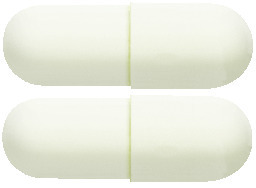
The capsules are white opaque in colour, containing a white to yellowish powder.
4.1 Therapeutic Indications
Treatment of the following infections when caused by susceptible strains of the designated micro-organisms.
Respiratory tract infections.
Caused by S. pneumoniae and group A β-haemolytic Streptococci (penicillin is the usual drug of choice in the treatment and prevention of streptococcal infections, including the prophylaxis of rheumatic fever. Cefalexin is generally effective in the eradication of Streptococci from the nasopharynx; however, substantial data establishing the efficacy of cefalexin in the subsequent prevention of rheumatic fever are not available at present).
Bacterial sinusitis.
Caused by Streptococci, S. pneumoniae and S. aureus (methicillin sensitive only).
Otitis media.
Due to S. pneumoniae, Staphylococci.
Skin and skin structure infections.
Caused by Staphylococci and/or Streptococci.
Genitourinary tract infections, including acute prostatitis.
Caused by E. coli, P. mirabilis, and Klebsiella sp.
The effectiveness of cefalexin in the treatment of bacterial infections of the brain and spinal column has not been established and cefalexin is not indicated in these conditions.
Note.
Appropriate culture and susceptibility tests should be initiated prior to and during therapy to determine susceptibility of the causative organism to cefalexin. Renal function studies should be performed when indicated.4.2 Dose and Method of Administration
Dosage.
Cefalexin oral suspension are unavailable in this brand however are available in other brands. Where correct dosing requires cefalexin oral suspension formulation, refer to the specific product information for this formulation for the complete dosage and administration instructions.
Adults.
The adult dosage ranges from 1 to 4 g daily in divided doses. The usual adult dose is 250 mg every six hours. For streptococcal pharyngitis or tonsillitis, mild, uncomplicated urinary tract infections, and skin and skin structure infections, a dosage of 500 mg may be administered every twelve hours. For more severe infections or those caused by less susceptible organisms, larger doses may be needed. If daily doses of cefalexin greater than 4 g are required, parenteral cephalosporins, in appropriate doses, should be considered. Twice daily dosing is not recommended when doses larger than 1 g daily are administered.
In the therapy of otitis media, clinical studies have shown that a dosage of 75 to 100 mg/kg/day in four divided doses is recommended.
In the treatment of β-haemolytic streptococcal infections, a therapeutic dosage of cefalexin should be administered for at least 10 days.
Method of administration.
Administered orally.
Dosage adjustment in renal impairment.
See Section 4.4 Special Warnings and Precautions for Use.4.3 Contraindications
Known allergy to the cephalosporin group of antibiotics or previous experience of a major allergy to penicillin (see Section 4.4 Special Warnings and Precautions for Use).
Blooms the Chemist Cefalexin is not indicated in the management of bacterial infections of the brain or spinal column.
4.4 Special Warnings and Precautions for Use
Before instituting therapy with cefalexin, every attempt should be made to determine if the patient has had previous hypersensitivity reactions to the cephalosporins, penicillins, or other drugs. This product should be given cautiously to penicillin sensitive patients.
There is some clinical and laboratory evidence of partial cross allergenicity of the penicillins and the cephalosporins. Patients have been reported to have had severe reactions (including anaphylaxis) to both drugs.
If an allergic reaction to cefalexin occurs, the drug should be discontinued and the patient treated with the usual agents (e.g. adrenaline or other pressor amines, antihistamines or corticosteroids).
Pseudomembranous colitis has been reported with virtually all broad-spectrum antibiotics (including macrolides, semisynthetic penicillins, and cephalosporins); therefore, it is important to consider its diagnosis in patients who develop diarrhoea in association with the use of antibiotics. Mild cases of pseudomembranous colitis usually respond to drug discontinuance alone. In moderate to severe cases, appropriate measures should be taken. Antibiotic associated pseudomembranous colitis has been reported with many antibiotics including cefalexin. A toxin produced with Clostridium difficile appears to be the primary cause. The severity of the colitis may range from mild to life threatening. It is important to consider this diagnosis in patient who develop diarrhoea or colitis in association with antibiotic use (this may occur up to several weeks after cessation of antibiotic therapy). Mild cases usually respond to drug discontinuation alone. However, in moderate to severe cases appropriate therapy with a suitable oral antibacterial agent effective against Cl. difficile should be considered. Fluids, electrolytes and protein replacement therapy should be provided when indicated.
Drugs that delay peristalsis e.g. opiates and diphenoxylate with atropine (e.g. Lomotil), may prolong and/or worsen the condition and should not be used.
Broad-spectrum antibiotics should be prescribed with caution in individuals with a history of gastrointestinal disease, particularly colitis. As with other broad-spectrum antibiotics, colitis, including rare instances of pseudomembranous colitis, has been reported in conjunction with therapy with cefalexin.
Patients should be followed carefully so that any side effects or unusual manifestations of drug idiosyncrasy may be detected.
Prolonged use of cefalexin may result in the overgrowth of nonsusceptible organisms. Careful observation of the patient is essential. If superinfection occurs during therapy, appropriate measures should be taken.
Indicated surgical procedures should be performed in conjunction with antibiotic therapy.
Severe cutaneous adverse reactions.
Severe cutaneous adverse reactions (SCAR), such as Stevens-Johnson syndrome (SJS), toxic epidermal necrolysis (TEN), drug reaction with eosinophilia and systemic symptoms (DRESS), and acute generalised exanthematous pustulosis (AGEP) have been reported in patients taking beta-lactam antibiotics. When SCAR is suspected, cefalexin should be discontinued immediately and an alternative treatment should be considered.
Neurotoxicity.
There have been reports of neurotoxicity associated with cephalosporin treatment. Symptoms of neurotoxicity include encephalopathy, seizures and/or myoclonus. Risk factors for developing neurotoxicity with cephalosporin treatment include being elderly, renal impairment, central nervous system disorders and intravenous administration. Withdrawal of the medicine should be considered if there are signs of neurotoxicity. Anticonvulsant therapy can be given if clinically indicated.
Use in renal impairment.
Cefalexin should be administered with caution in the presence of markedly impaired renal function. Careful clinical and laboratory studies should be made because safe dosage may be lower than that usually recommended.
Use in the elderly.
No data available.
Paediatric use.
Paediatric patients should be accurately dosed on a mg/kg basis with other cefalexin products.
Effects on laboratory tests.
The quantitative determination of urinary protein excretion using strong acids is misleading during cefalexin therapy as precipitation of cefalexin in the urine may occur.
A false positive reaction for glucose in the urine may occur with Benedict's or Fehling's solutions or with Clinitest tablets, but not with Tes-Tape.
Positive direct Coombs' tests have been reported during treatment with the cephalosporin antibiotics. In haematological studies or in transfusion cross matching procedures when antiglobulin tests are performed on the minor side or in Coombs' testing of newborn infants whose mothers have received cephalosporin antibiotics before parturition, it should be recognised that a positive Coombs' test may be due to the drug.4.5 Interactions with Other Medicines and Other Forms of Interactions
As with other β-lactams, the renal excretion of cefalexin is inhibited by probenecid.
In healthy subjects given single 500 mg doses of cefalexin and metformin, plasma metformin Cmax and AUC increased by an average 34% and 24% respectively, and metformin renal clearance decreased by an average of 14%. The interaction of cefalexin and metformin following multiple dose administration has not been studied. Administration of a cephalosporin to a metformin-treated patient may result in increased metformin exposure. A potential interaction between cefalexin and metformin may result in accumulation of metformin.
4.6 Fertility, Pregnancy and Lactation
Effects on fertility.
No data available.
(Category A)
Laboratory experiments with animals and clinical experience shown no evidence of teratogenicity with cefalexin, but as with all drugs, Blooms the Chemist Cefalexin should be administered with caution during all stages of pregnancy.
Cefalexin is excreted in the milk. Caution should be exercised when cefalexin is administered to a breastfeeding woman. Alternative feeding arrangements for the infant should be considered.4.7 Effects on Ability to Drive and Use Machines
The effects of this medicine on a person's ability to drive and use machines were not assessed as part of its registration.
4.8 Adverse Effects (Undesirable Effects)
Adverse drug reactions reported with cefalexin are very rare (< 0.01%) and are listed below:
Blood and lymphatic system disorders.
Eosinophilia, neutropenia, thrombocytopenia, haemolytic anaemia.
Gastrointestinal disorders.
The most frequent side effect has been diarrhoea, which may rarely be severe enough to warrant cessation of therapy with cefalexin. Nausea and vomiting have been reported rarely. Dyspepsia and abdominal pain have also occurred.
General disorders and administration site conditions.
Fatigue.
Hepatobiliary disorders.
Cholestatic jaundice, transient hepatitis, slight elevations in AST and ALT have been reported.
Immune system disorders.
Allergic reactions in the form of urticaria, and angioedema have been observed. These reactions usually subsided upon discontinuation of the medicine. Anaphylaxis has also been reported.
Infections and infestations.
Symptoms of pseudomembranous colitis may appear either during or after antibiotic treatment.
Musculoskeletal and connective tissue disorders.
Arthralgia, arthritis and joint disorders.
Nervous system disorders.
Dizziness, headache, seizure.
Encephalopathy, myoclonus (frequency not known).
Psychiatric disorders.
Hallucinations, agitation, confusion.
Renal and urinary disorders.
Reversible interstitial nephritis has been reported rarely.
Reproductive and breast disorders.
Genital and anal pruritus, genital moniliasis, vaginitis and vaginal discharge.
Skin and subcutaneous tissue disorders.
Rash, erythema multiforme.
These reactions usually subsided upon discontinuation of the drug.
Severe cutaneous adverse reactions, including Stevens-Johnson syndrome (SJS), toxic epidermal necrolysis (TEN), drug reaction with eosinophilia and systemic symptoms (DRESS), acute generalised exanthematous pustulosis (AGEP), and symmetrical drug-related intertriginous and flexural exanthema (SDRIFE) (baboon syndrome) have been reported in beta-lactam antibiotics.
Reporting suspected adverse effects.
Reporting suspected adverse reactions after registration of the medicinal product is important. It allows continued monitoring of the benefit-risk balance of the medicinal product. Healthcare professionals are asked to report any suspected adverse reactions at www.tga.gov.au/reporting-problems.4.9 Overdose
There is no definite experience of poisoning or severe overdosage with cefalexin. However, clinical features of overdosage may be similar to those seen with other cephalosporins and penicillins, i.e. convulsions, hallucinations, hyperreflexia, electrolyte imbalance, gastrointestinal disturbances and haematuria.
In the event of severe overdosage, general supportive care is recommended including close clinical and laboratory monitoring of haematological, renal, hepatic functions and coagulation status until the patient is stable.
Forced diuresis, peritoneal dialysis, haemodialysis or charcoal haemoperfusion have not been established as beneficial for an overdose of cefalexin.
For information on the management of overdose, contact the Poisons Information Centre on 131126 (Australia).
5 Pharmacological Properties
5.1 Pharmacodynamic Properties
A semisynthetic cephalosporin antibiotic for oral administration. The nucleus of cefalexin is related to that of other cephalosporin antibiotics.
Mechanism of action.
Microbiology. In vitro tests demonstrate that the cephalosporins are bactericidal because they inhibit cell wall synthesis. Cefalexin is active against the following organisms in vitro: β-haemolytic Streptococci, Staphylococci, including coagulase-positive, coagulase-negative, and penicillinase producing strains, Streptococcus (Diplococcus) pneumoniae, Escherichia coli, Proteus mirabilis, Klebsiella sp.
Note.
Most strains of Enterococci (Enterococcus faecalis) and a few strains of Staphylococci are resistant to cefalexin. It is not active against most strains of Enterobacter sp., Morganella morganii (formerly Pr. morganii), and Pr. vulgaris. It has no activity against Pseudomonas or Acinetobacter calcoaceticus (formerly Mima and Herellea sp.). When tested by in vitro methods, Staphylococci exhibit cross-resistance between cefalexin and methicillin type antibiotics.
Disc susceptibility tests. Dilution or diffusion techniques - either quantitative (MIC) or breakpoint, should be used following a regularly updated, recognised and standardised method (e.g. NCCLS). Standardised susceptibility test procedures require the use of laboratory control microorganisms to control the technical aspects of the laboratory procedures.
A report of "Susceptible" indicates that the pathogen is likely to be inhibited if the antimicrobial compound in the blood reaches the concentrations usually achievable. A report of "Intermediate" indicates that the result should be considered equivocal, and if the microorganism is not fully susceptible to alternative, clinically feasible drugs, the test should be repeated. This category implies possible clinical applicability in body sites where the drug is physiologically concentrated or in situations where high dosage of drug can be used. This category also provides a buffer zone, which prevents small uncontrolled technical factors from causing major discrepancies in interpretation. A report of "Resistant" indicates that the pathogen is not likely to be inhibited if the antimicrobial compound in the blood reaches the concentrations usually achievable, other therapy should be selected.
Note.
The prevalence of resistance may vary geographically for selected species and local information on resistance is desirable, particularly when treating with severe infections.
Clinical trials.
Not applicable.
5.2 Pharmacokinetic Properties
Absorption.
Cefalexin is acid stable and may be given without regard to meals. It is rapidly absorbed after oral administration. Following doses of 250 mg, 500 mg and 1 g, average peak serum levels of approximately 9, 18 and 32 microgram/mL respectively were obtained at one hour. Measurable levels were present six hours after administration.
Distribution.
No data available.
Metabolism.
No data available.
Excretion.
Cefalexin is excreted in the urine by glomerular filtration and tubular secretion. Studies showed that over 90% of the drug is excreted unchanged in the urine within 8 hours. During this period, peak urine concentrations following the 250 mg, 500 mg and 1 g doses were approximately 1000, 2200 and 5000 microgram/mL, respectively.
5.3 Preclinical Safety Data
Genotoxicity.
No data available.
Carcinogenicity.
No data available.6 Pharmaceutical Particulars
6.1 List of Excipients
Magnesium stearate and microcrystalline cellulose. The capsule shell also contains gelatin and titanium dioxide.
6.2 Incompatibilities
Incompatibilities were either not assessed or not identified as part of the registration of this medicine.
For information on interactions with other medicines and other forms of interactions, see Section 4.5 Interactions with Other Medicines and Other Forms of Interactions.
6.3 Shelf Life
In Australia, information on the shelf life can be found on the public summary of the Australian Register of Therapeutic Goods (ARTG). The expiry date can be found on the packaging.
6.4 Special Precautions for Storage
Store below 25°C.
6.5 Nature and Contents of Container
Blooms the Chemist Cefalexin capsules 500 mg: each blister pack contains 20 capsules.
6.6 Special Precautions for Disposal
Other handling.
In Australia, any unused medicine or waste material should be disposed of in accordance with local requirements.6.7 Physicochemical Properties
The compound is a zwitterion; i.e. the molecule contains both a basic and an acidic group. The isoelectric point of cefalexin in water is approximately 4.5 to 5. The crystalline form of cefalexin, which is available, is a monohydrate. It is a white or almost white crystalline solid having a bitter taste. Solubility in water is about 1% at room temperature. It is practically insoluble in alcohol and in ether. The cephalosporins differ from penicillins in the structure of the bicyclic ring system. Cefalexin has a d-phenylglycyl group as substituent at the 7-amino position and an unsubstituted methyl group at the 3-position.
Chemical structure.
 Chemical name: (6R,7R)-7-[(R)-2-amino-2-phenylacetamido]-3-methyl-8-oxo-5-thia-1-azabicyclo[4.2.0]oct-2-ene-2-carboxylic acid monohydrate.
Molecular formula: C16H17N3O4S.H2O. Molecular weight: 365.41.
CAS number.
23325-78-2.7 Medicine Schedule (Poisons Standard)
S4 - Prescription Only Medicine.
Summary Table of Changes