
Consumer medicine information

Carmustine Medsurge

Carmustine

BRAND INFORMATION

Brand name

Carmustine Medsurge

Active ingredient

Carmustine

Schedule

S4


Consumer medicine information (CMI) leaflet

Please read this leaflet carefully before you start using Carmustine Medsurge.

What is in this leaflet

This leaflet answers some common questions about Carmustine powder for injection.

It does not contain all the available information. It does not take the place of talking to your doctor or pharmacist.

The information in this leaflet was last updated on the date listed on the final page. More recent information on the medicine may be available.

You should ensure that you speak to your pharmacist or doctor to obtain the most up-to-date information on the medicine. Those updates may contain important information about the medicine and its use which you should be aware.

All medicines have risks and benefits. Your doctor has weighed the risks of you being given this medicine against the benefits they expect it will have for you.

If you have any concerns about being given this medicine, talk to doctor or pharmacist.

Keep this leaflet. You may need to read it again.

What Carmustine powder for injection is given for

Carmustine is used to treat malignant glioma, a type of brain cancer, and multiple myeloma, a cancer of the blood. It may also be used to treat other types of cancers called Hodgkin's Disease and Non- Hodgkin's lymphomas.

Carmustine belongs to a group of medicines called cytotoxic medicines. You may also hear of these being called chemotherapy medicines. Carmustine may be used in combination with other medicines to treat your cancer.

Your doctor may have prescribed Carmustine for another use. Ask your doctor if you have any questions about why Carmustine was prescribed.

This medicine is only available with a doctor's prescription.

How Carmustine powder for injection works

Carmustine works by killing cancer cells.

The use of Carmustine to treat your condition can lead to side-effects, which are discussed below.

Before you are given Carmustine powder for injection

When you must not have this medicine

You should not have Carmustine powder for injection if you have a history of severe allergic reactions to carmustine or any of the ingredients listed at the end of this leaflet.

You should not be given Carmustine powder for injection if you have, or have had any of the following conditions unless you have discussed it with your doctor:

  • liver problems
  • kidney problems
  • lung disease
  • blood disorder with a reduced number of white blood cells
  • blood disorder with a low blood platelet count
  • blood disorder with a decreased number of red blood cells
  • lowered immunity due to treatment with medicines such as corticosteroids, cyclosporin or other medicines used to treat cancer.

Tell your doctor if you have an infection or high temperature. Your doctor may decide to delay your treatment until the infection has gone. A mild illness, such as a cold, is not usually a reason to delay treatment.

If you are not sure whether you should be given this medicine, talk to your doctor or pharmacist.

Do not use this medicine after the expiry date (EXP) printed on the pack. If you are given it after the expiry date has passed, it may not work very well.

Do not use this medicine if the packaging is torn or shows signs of tampering or if the injection shows any visible signs of deterioration.

Before you start to have this medicine

Tell your doctor if you have allergies to

  • any other medicines
  • any other substances, such as foods, preservatives or dyes.

Females: Tell your doctor or pharmacist if you are pregnant or intend to become pregnant.

Like most cytotoxic medicines, Carmustine is not recommended for use during pregnancy. If there is any need to consider Carmustine during your pregnancy, your doctor will discuss with you the benefits and risks of using it. Carmustine may affect your developing baby if you take it during pregnancy.

Males: Tell your doctor if your partner intends to become pregnant while you are using Carmustine or shortly after you have stopped using Carmustine.

You should use some kind of birth control while you are using Carmustine and for at least 12 weeks after you stop using it. Carmustine may cause birth defects if either the male or female is using it at the time of conception.

Tell your doctor if you are currently breastfeeding or you plan to breast-feed. Do not breastfeed while using Carmustine. It is not known whether Carmustine passes into breast milk. Therefore, there is a possibility that the breast-fed baby may be affected.

Tell your doctor or pharmacist if you have or have had any medical conditions, especially the following:

  • liver problems
  • kidney problems
  • heart problems, including a heart attack
  • lung problems, including asthma
  • blood disorder with a reduced number of red or white blood cells
  • If you are pregnant or intend to become pregnant.
  • If you are breast-feeding or intend to breast-feed.

If you have not told your doctor about any of the above, tell them before you have Carmustine powder for injection.

Taking other medicines

Tell your doctor if you are taking any other medicines, including any that you buy without a prescription from your pharmacy, supermarket or health food shop.

Some medicines and Carmustine powder for injection may interfere with each other.

These medicines may be affected by carmustine,or may affect how well this medicine works or may increase side effects. You may need to use different amounts of the medicines or take different medicines.

Carmustine when used in combination with other medicines or radiation therapy may further depress your immune system.

Your doctor or pharmacist has more information on medicines to be careful with or avoid while using this medicine.

If you have not told your doctor about any of the above, tell them before you start having Carmustine.

How Carmustine powder for injection is given

Carmustine is usually given every six weeks. This is called one cycle of chemotherapy. Your doctor will decide how many of these cycles you will need.

Several courses of Carmustine therapy may be needed depending on your response to treatment. Additional treatment may not be repeated until your blood cell numbers return to acceptable levels and any uncontrolled effects have been controlled.

Ask your doctor if you want to know more about the dose of Carmustine you receive.

How much medicine is given

Your doctor will decide what dose of Carmustine you will receive based in the characteristics of your cancer. The dose also depends on your condition and other factors, such as your weight, kidney function and other chemotherapy medicines you are being given. Carmustine may be given alone or in combination with other drugs.

How this medicine is given

Carmustine is administered as a slow infusion into your vein, over 1 to 2 hours. The infusion will be prepared and given in hospital by your doctor or nurse.

If you are given too much (overdose)

As Carmustine is given to you under the supervision of your doctor, it is very unlikely that you will receive too much. However, if you experience any side effects after being given Carmustine, tell your doctor or nurse immediately or go to Accident and Emergency at your nearest hospital. You may need urgent medical attention.

Symptoms of a Carmustine overdose include the side effects listed below in the "Side Effects" section but are usually of a more severe nature.

Ask your doctor or pharmacist if you have any concerns.

Immediately telephone your doctor, or the Poisons Information Centre (Australia: telephone 13 11 26) for advice or go to Accident and Emergency at your nearest hospital, if you think you or anyone else may have been given too much Carmustine powder for injection.

Do this even if there are no signs of discomfort or poisoning.

You may need urgent medical attention.

Keep telephone numbers for these places handy.

Side effects

Tell your doctor as soon as possible if you do not feel well while you are having Carmustine powder for injection.

Like all medicines, it is possible that Carmustine may have unwanted side effects in some people. During treatment with Carmustine you will require close medical supervision.

The more common side effects of Carmustine are:

  • Suppression of your immune system; reduced white blood cells, reduced platelets, reduced red blood cells
  • Nausea, vomiting
  • Lung toxicity
  • Respiratory disorders (lung related disorders) with breathing problems.

Tell your doctor or nurse immediately or if you are not currently in hospital, go to accident and emergency at your nearest hospital if you notice any of the following:

  • Symptoms of an allergic reaction, such as:
    - shortness of breath, wheezing, difficulty breathing or a tight feeling in your chest
    - swelling of the face, lips, tongue or other parts of the body
    - rash, itching, hives or flushed, red skin
    - dizziness or light headedness.
  • Frequent infections, fever, severe chills, sore throat or mouth ulcers
  • Bleeding or bruising more easily than normal
  • Passing little or no urine, drowsiness, nausea, vomiting and breathlessness
  • Weakness, tiredness, loss of appetite, weight loss and stomach pain
  • Changes to vision or loss of sight
  • Shortness of breath, particularly with exertion, chronic dry, hacking coughing
  • Chest discomfort, irregular heartbeat
  • Loss of appetite and rapid weight loss
  • Pain, swelling or burning at the injection site.

These are serious side effects. You may need urgent medical attention or hospitalisation.

Other side effects not listed above may also occur in some patients. Tell your doctor if you notice anything else that is making you feel unwell.

After having it

Storage

Carmustine powder for injection will be stored in the pharmacy or on the ward. The unopened vials of the dry powder will be stored under refrigeration (2°C - 8°C) (Refrigerate. Do not freeze).

Product description

What it looks like

Carmustine is presented in composite packs in.

Pack of 1s:
Each carton pack consists of a vial containing 100 mg carmustine and a vial containing a 3 mL ethanol absolute sterile diluent.

Ingredients

Active ingredient:

  • carmustine 100 mg/vial.

Other ingredient:

  • ethanol absolute 3 mL/vial (required for preparation of the infusion).

Manufacturer / Sponsor

Australian Sponsor

Medicianz Healthcare Pty Ltd
Unit 2, 6-7 Gilda Court
MULGRAVE
VICTORIA 3170

Marketed and distributed by Medsurge Healthcare.
Tel: 1300 788 261
www.medsurge.com.au

Registration Number:

Carmustine Medsurge 100mg (powder for injection with diluent):
AUST R 341128

This leaflet was updated in August 2021.

Published by MIMS November 2021
BRAND INFORMATION

Brand name

Carmustine Medsurge

Active ingredient

Carmustine

Schedule

S4


Notes

Distributed by Medsurge Healthcare Pty Ltd

1 Name of Medicine

Carmustine.

2 Qualitative and Quantitative Composition

Each carton includes a vial containing 100 mg carmustine and a vial containing 3 mL ethanol absolute sterile diluent.
An overfill is included to allow withdrawal of the correct dose.
For the full list of excipients, see Section 6.1 List of Excipients.

3 Pharmaceutical Form

Powder for injection.
Carmustine 100 mg/vial is lyophilised pale-yellow flakes or congealed mass or powder in an amber glass vial. Sterile ethanol absolute is a clear, colourless liquid in a clear glass vial.

4 Clinical Particulars

4.1 Therapeutic Indications

Carmustine powder for injection is indicated as palliative therapy as a single agent or in established combination therapy with other approved chemotherapeutic agents in the following:
1. Malignant glioma.
2. Multiple myeloma - in combination with prednisone.
3. Hodgkin's disease - as secondary therapy in combination with other approved drugs in patients who relapse while being treated with primary therapy, or who fail to respond to primary therapy.
4. Non-Hodgkin's lymphomas - as secondary therapy in combination with other approved drugs for patients who relapse while being treated with primary therapy or who fail to respond to primary therapy.

4.2 Dose and Method of Administration

Administered by slow intravenous infusion. Carmustine should not be given by rapid intravenous injection.
The recommended dose of carmustine as single agent in previously untreated in patients is 200 mg/m2 intravenously every 6 weeks. This may be given as a single dose or divided into daily injections such as 100 mg/m2 on successive days. When carmustine is used in combination with other myelosuppressive drugs or in patients in whom bone marrow reserve is depleted, the doses should be adjusted accordingly.
A repeat course of carmustine should not be given until circulating blood elements have returned to acceptable levels (platelets above 100,000/mm3; leucocytes above 4,000/mm3); this usually occurs within 6 weeks. Blood counts should be monitored frequently and repeat courses should not be given before 6 weeks because of delayed toxicity.
In view of the cumulative dose-related toxicity which occurs with carmustine the total dose administered should not exceed 1500 mg/m2, unless the expected benefits outweigh the high risk of toxicity, especially pulmonary (see Section 4.8 Adverse Effects (Undesirable Effects)).
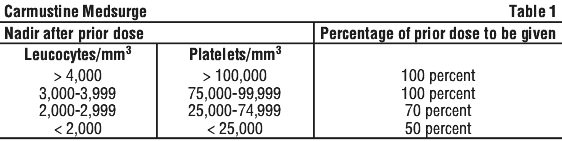
Doses subsequent to the initial dose should be adjusted according to the haematologic response of the patient to the preceding dose. The schedule in Table 1 is suggested as a guide to dosage adjustment:

Preparation of intravenous solutions.

To facilitate reconstitution, allow carmustine and the supplied sterile diluent (absolute ethanol) to come to controlled room temperature (15° to 30°C) before mixing. Dissolve carmustine completely with 3 mL of the supplied sterile diluent and then aseptically add 27 mL of sterile water for injection to the alcohol solution. Each mL of the resulting solution will contain 3.3 mg of carmustine in 10 percent ethanol having pH of 5.6 to 6.0 (Solution in the ethanol must be complete before sterile Water for Injection is added). Accidental contact of reconstituted carmustine with the skin has caused transient hyper pigmentation of the affected areas. If carmustine lyophilized material or solution contact the skin or mucosa, immediately wash the skin or mucosa thoroughly with soap and water.
Reconstitution as recommended results in a clear, colourless to light yellow solution which may be further diluted with either 0.9% sodium chloride solution for injection or 5% glucose solution for injection. The reconstituted solution should be used intravenously only and should be administered by IV drip over a 1 to 2 hour period. Injection of carmustine over shorter periods of time may produce intense pain and burning at the site of injection.
Use only glass containers for preparation and administration.

Important note.

The lyophilized dosage formulation contains no preservatives, use once only immediately after dilution and discard any residue.
Product is for single use in one patient only. Discard any residue.

4.3 Contraindications

Should not be given to individuals who have demonstrated a previous hypersensitivity to it.
Should not be given to individuals with decreased circulating platelets, leucocytes, or erythrocytes either from previous chemotherapy or other causes.

4.4 Special Warnings and Precautions for Use

Bone marrow suppression, notably thrombocytopenia and leucopenia, which may contribute to bleeding and overwhelming infections in an already compromised patient, is the most common and severe of the toxic effects of carmustine.
Carmustine has been administered directly into the carotid artery; this procedure is investigational and has been associated with ocular toxicity.
Pulmonary toxicity from carmustine appears to be dose related. Patients receiving greater than 1400 mg/m2 cumulative dose are at significantly higher risk than those receiving less. Delayed pulmonary toxicity can occur years after treatment, and can result in death, particularly in patients treated in childhood (see Section 4.8 Adverse Effects (Undesirable Effects)).
Carmustine should be administered preferably by individuals experienced in antineoplastic therapy.
It is recommended that liver and renal function tests be monitored.
Patients with pre-existing lung disease are at greater risk of developing carmustine-associated pulmonary toxicity. Thoracic irradiation and other drugs affecting the pulmonary function have also been implicated as predisposing to development of pulmonary toxicity during treatment with carmustine.
Baseline pulmonary function studies should be conducted along with frequent pulmonary function tests during treatment. Patients with a baseline below 70 percent of the predicted Forced Vital Capacity (FVC) or Carbon Monoxide Diffusing Capacity (Dlco) are particularly at risk.
Since delayed bone marrow toxicity is the major toxicity, complete blood counts should be monitored frequently for at least 6 weeks after a dose. Repeat doses of carmustine should not be given more frequently than every 6 weeks.
The bone marrow toxicity of carmustine is cumulative, and therefore dosage adjustment must be considered on the basis of nadir blood counts from prior dose (see Section 4.2 Dose and Method of Administration, Table 1).
Injection site reactions may occur during the administration of carmustine (see Section 4.8 Adverse Effects (Undesirable Effects)). Given the possibility of extravasation, it is recommended to closely monitor the infusion site for possible infiltration during drug administration. A specific treatment for extravasation reactions is unknown at this time.

Use in the elderly.

No data available.

Paediatric use.

Safety and effectiveness in children have not been established. Same monitoring and dose modification principles apply as for adults (see Section 4.8 Adverse Effects (Undesirable Effects)).

Effects on laboratory tests.

No data available.

4.5 Interactions with Other Medicines and Other Forms of Interactions

Carmustine may need to be used with caution in combination chemotherapy (see Section 4.8 Adverse Effects (Undesirable Effects)).

4.6 Fertility, Pregnancy and Lactation

Effects on fertility.

No data available.
(Category D)
Safe use in pregnancy has not been established. Therefore, the benefit to the mother versus the risk of toxicity to the mother and the fetus must be carefully weighed.
Carmustine is embryotoxic and teratogenic in rats and embryotoxic in rabbits at dose levels equivalent to human dose. Carmustine also affects fertility in male rats at doses somewhat higher than the human dose.
It is not known whether carmustine is excreted in human milk nor whether it has a harmful effect on the newborn. Therefore, administration is not recommended for nursing mothers unless alternative methods of feeding the infant are established.

Instructions to be given to patient.

Patients should be advised to use adequate contraceptive measures during treatment with carmustine.

4.7 Effects on Ability to Drive and Use Machines

The effects of this medicine on a person's ability to drive and use machines were not assessed as part of its registration.

4.8 Adverse Effects (Undesirable Effects)

Adverse reactions reported have been grouped by frequency according to the following criteria.
Very common ≥ 1/10; common ≥ 1/100 and < 1/10; uncommon ≥ 1/1000 and < 1/100; rare ≥ 1/10,000 and < 1/1000; very rare < 1/10,000.

Haematological.

Very common: Myelosuppression (delayed; usually occurs 4 to 6 weeks after drug administration and is dose related). Platelet nadirs occur at 4 to 5 weeks; leucocyte nadirs occur at 5 to 6 weeks post therapy. Thrombocytopenia is generally more severe than leucopenia (both may be dose limiting); anaemia.
Common: cumulative myelosuppression after repeated doses (manifested by more depressed indices or longer duration of suppression).
Rare: acute leukaemia and bone marrow dysplasias following long term therapy; thrombosis.

Gastrointestinal.

Very common: Nausea: vomiting (occurs within 2 hours, usually lasts 4-6 hours and is dose dependant).

Hepatic.

Uncommon: Elevated transaminases, alkaline phosphatase and bilirubin.
Rare: fatal hepatic toxicity (cumulative doses over 1200-1500 mg/m2) has occurred.

Renal.

Uncommon: Decrease in kidney size; progressive azotaemia; renal failure.

Pulmonary.

Common: Pulmonary infiltrates and/or fibrosis (high cumulative dose greater than 1400 mg/m2). This toxicity has occurred from 9 days to 43 months after treatment.
In a long-term study of 17 patients who survived childhood brain tumors, very delayed onset pulmonary toxicity occurring up to 15 years after treatment with carmustine has been reported. These children ranged between 2 and 16 years of age when treated with carmustine at doses of 800 mg/m2 or above. All received cranial irradiation and most received spinal radiotherapy. Chest X-rays and CT scans have demonstrated upper-zone fibrotic changes primarily. All children exhibited reduced pulmonary function and the toxicity was shown to be progressive, resulting in death in approximately 50% of cases.
Severity was related to age at treatment with five children treated at age less than 5 years having died of pulmonary fibrosis.
Uncommon: pulmonary fibrosis (low cumulative dose).
Pulmonary toxicity is also manifested as pneumonitis and interstitial lung disease in post-marketing experience.

Ophthalmic.

Rare: Neuroretinitis; suffusion of conjunctiva (from rapid IV infusion).

Skin and appendages.

Uncommon: Facial flushing; burning at site of injection; hyperpigmentation from accidental skin contact, extravasation*.

Cardiovascular.

Uncommon: Hypotension; tachycardia; chest pain.

Hypersensitivity.

Uncommon: Allergic reactions.

Neurological.

Uncommon: Headache.
*Complications reported for extravasation included local soft tissue toxicity, swelling, pain, erythema, burning sensation, and skin necrosis.

Reporting suspected adverse effects.

Reporting suspected adverse reactions after registration of the medicinal product is important. It allows continued monitoring of the benefit-risk balance of the medicinal product. Healthcare professionals are asked to report any suspected adverse reactions at www.tga.gov.au/reporting-problems.

4.9 Overdose

No information is available relating to carmustine poisoning in humans. Treatment will be mainly supportive. Haematological and gastrointestinal toxic effects are expected to be the principal manifestations of carmustine overdosage.
For information on the management of overdose, contact the Poisons Information Centre on 13 11 26 (Australia).

5 Pharmacological Properties

5.1 Pharmacodynamic Properties

Mechanism of action.

Carmustine alkylates DNA and RNA and has been shown to inhibit several enzymes by carbamoylation of amino acids in proteins. Carmustine is not cross resistant with other alkylators.
It is thought that the antineoplastic and toxic activities of carmustine may be due to metabolites.

Clinical trials.

No data available.

5.2 Pharmacokinetic Properties

Distribution.

Intravenously administered carmustine is rapidly degraded, with no intact drug detectable after 15 minutes. However, in studies with C14 labelled drug prolonged levels of the isotope were observed in the plasma and tissue, probably representing radioactive fragments of the parent compound.
Because of the high lipid solubility and the relative lack of ionization at a physiological pH, carmustine crosses the blood brain barrier quite effectively. Levels of radioactivity in the CSF are 50% or greater than those measured in plasma.

Excretion.

Approximately 60 to 70% of a total dose is excreted in the urine in 96 hours and about 10% as respiratory carbon dioxide. The fate of the remainder is undetermined.

5.3 Preclinical Safety Data

Genotoxicity.

No data available.

Carcinogenicity.

Carmustine is carcinogenic in rats and mice, producing a marked increase in tumour incidence in doses approximately those employed clinically.
Nitrosourea therapy does have carcinogenic potential. The occurrence of acute leukaemia and bone marrow dysplasias have been reported in patients following nitrosourea therapy.

6 Pharmaceutical Particulars

6.1 List of Excipients

Carmustine, ethanol absolute.

6.2 Incompatibilities

Incompatibilities were either not assessed or not identified as part of the registration of this medicine.

6.3 Shelf Life

In Australia, information on the shelf life can be found on the public summary of the Australian Register of Therapeutic Goods (ARTG). The expiry date can be found on the packaging.

6.4 Special Precautions for Storage

Product should be shipped and stored at 2°C - 8°C. (Refrigerate. Do not freeze).

Important note.

Carmustine has a low melting point (approximately 30.5°C - 32.0°C). Exposure of the drug to this temperature or above will cause the drug to liquify and appear as an oil film in the bottom of the vials. This is a sign of decomposition and vials should be discarded.
The stability of reconstituted solutions has not been demonstrated and their use should be commenced immediately after preparation.

6.5 Nature and Contents of Container

Carmustine powder for injection is presented as a composite pack.

Pack of 1s.

Each carton pack consists of a vial containing 100 mg carmustine and a vial containing a 3 mL sterile diluent.
Carmustine is lyophilised pale-yellow flakes or congealed mass or powder in an amber glass vial. Diluent sterile ethanol absolute diluent is a clear, colourless liquid in a clear glass vial.

6.6 Special Precautions for Disposal

In Australia, any unused medicine or waste material should be disposed of in accordance with local requirements.

6.7 Physicochemical Properties

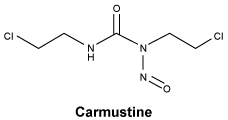
Carmustine is one of the nitrosoureas. The chemical name is 1, 3-bis(2-chloroethyl)-1-nitrosourea.

Chemical structure.

The structural formula of carmustine is shown below:

Molecular formula.

C5H9Cl2N3O2.

Molecular weight.

214.06 g/mol.
It is highly soluble in alcohol and poorly soluble in water. It is also highly soluble in lipids. One gram of carmustine is soluble in approximately 250 mL of 0.9% saline solution or 80 mL of propylene glycol.

CAS number.

154-93-8.

7 Medicine Schedule (Poisons Standard)

Schedule 4 - Prescription Only Medicine.

Summary Table of Changes