




Consumer medicine information

Celsentri

Maraviroc

BRAND INFORMATION

Brand name

Celsentri

Active ingredient

Maraviroc

Schedule

S4


Consumer medicine information (CMI) leaflet

Please read this leaflet carefully before you start using Celsentri.

What is in this leaflet

This leaflet answers some common questions about CELSENTRI.

It does not contain all the information available. It does not take the place of talking to your doctor or pharmacist.

All medicines have risks and benefits. Your doctor has weighed the risks of you using CELSENTRI against the benefits they expect it will have for you.

If you have any concerns about using this medicine, ask your doctor or pharmacist.

Keep this leaflet with the medicine. You may need to read it again.

What CELSENTRI is used for

What CELSENTRI does

CELSENTRI is used in combination with other anti-HIV medicines to treat HIV. It reduces the amount of HIV in your body and helps your immune system.

CELSENTRI is not a cure for HIV or AIDS. You should take appropriate precautions to prevent transmission.

Ask your doctor if you have any questions about why CELSENTRI has been prescribed for you. Your doctor may have prescribed CELSENTRI for another medical condition.

This medicine is available only with a doctor's prescription.

How CELSENTRI works

CELSENTRI's active ingredient (maraviroc) belongs to a group of medicines called 'CCR5 blockers'.

CELSENTRI stops the HIV-1 virus entering the CD-4 cells in your blood (also called T-cells). These are the cells in your immune system that the HIV virus attacks.

CELSENTRI works by blocking the most common entry point into the CD-4 cells - called the 'CCR5 receptor'. Because the virus cannot enter the cell, it cannot attack it, and this prevents further damage to your immune system.

CELSENTRI only stops the HIV-1 virus entering the cell, not HIV-2 (another rarer kind of the HIV virus). CELSENTRI also only stops types of HIV-1 that enter using the CCR5 receptor. Because of this, your doctor would have done a blood test to check what strain of HIV-1 you have before they prescribed CELSENTRI.

CELSENTRI has not been studied in children less than 18 years of age.

More treatment-naïve patients in clinical studies using CELSENTRI had treatment failures and developed resistance to lamivudine compared to patients using efavirenz.

Before you take CELSENTRI

Use this sheet to check for things that might affect whether you use CELSENTRI, including:

  • allergies
  • other medical conditions
  • pregnancy and breastfeeding
  • other medicines you are taking

When you must not take it

Do not take CELSENTRI if you have an allergy to:

  • any medicine containing maraviroc (the active ingredient of CELSENTRI)
  • any of the other ingredients listed at the end of this leaflet

Symptoms of an allergic reaction may include:

  • shortness of breath, wheezing or difficulty breathing
  • swelling of the face, lips, tongue or other parts of the body
  • rash, itching or hives on the skin

Do not take this medicine if the expiry date printed on the pack has passed.

Do not take CELSENTRI if the packaging is torn or shows signs of tampering.

If you are not sure whether you should start taking this medicine, talk to your doctor.

Before you start to take it

Tell your doctor if you have allergies to:

  • any other medicines,
  • any other substances such as foods, preservatives or dyes

Tell your doctor about all of your medical conditions, especially if you have the following:

  • liver problems or Hepatitis B or Hepatitis C infection, as your liver function may need to be closely monitored
  • a history of low blood pressure, low blood pressure on standing (postural hypotension) or you are taking any medicine to lower blood pressure
  • kidney problems
  • heart problems

Tell your doctor if you are pregnant or intend to become pregnant. It is not known if CELSENTRI can harm your unborn child. If you become or plan to become pregnant while taking CELSENTRI your doctor will discuss the risks and benefits of taking it.

Tell your doctor if you are breast-feeding or plan to breast-feed. You should not breast-feed if you are infected with HIV because the virus may be transmitted through the breast milk. It is not known whether the active ingredient in CELSENTRI can pass into your breast milk. Therefore, mothers must not breast-feed during treatment with CELSENTRI.

If you have not told your doctor about any of the above, tell them before you start taking CELSENTRI.

Taking other medicines

Some medicines may be affected by CELSENTRI or may affect how well it works. You may need to use different amounts of your medicine, or you may need to take different medicines. Your doctor will advise you.

Tell your doctor if you are taking any other medicines. Tell your doctor about:

  • all prescription medicines
  • all medicine you buy over-the-counter from a pharmacy or supermarket
  • all complementary and alternative therapies
  • anything you buy from a health food shop

Tell your doctor if you are taking any of the following:

  • other medicines to treat HIV or Hepatitis C infections (e.g. efavirenz, etravirine, raltegravir, lopinavir, darunavir, delavirdine, elvitegravir, atazanavir, nelfinavir, indinavir, saquinavir, boceprevir or telaprevir)
  • medicines to treat fungal infections (e.g. ketoconazole and itraconazole)
  • medicines to treat bacterial infections (e.g. clarithromycin, telithromycin, rifampicin and rifabutin)
  • medicines containing St. John's wort (Hypericum perforatum). St. John's wort can prevent CELSENTRI from working properly. Therefore, you should not take St. John's wort together with CELSENTRI
  • medicines to treat seizures (fits) (e.g. carbamazepine, phenobarbital and phenytoin

Talk to your doctor if you are not sure whether you should take this medicine.

Your doctor or pharmacist has more information on medicines to be careful with or to avoid taking together with CELSENTRI.

How to take CELSENTRI

Take the medicine only as prescribed by your doctor. This may differ from the information contained in this leaflet.

How much to take

The usual dose of CELSENTRI is 150 mg, 300 mg or 600 mg twice a day.

This depends on the other medicines that you are taking with CELSENTRI. Always take the dose recommended by your doctor.

Your doctor will tell you the dosage for the other anti-HIV medicines and whether or not you should take them at a different time to CELSENTRI.

How to take it

Swallow your CELSENTRI tablets whole. Do not chew the tablets.

CELSENTRI tablets may be taken with or without food.

If you do not understand the instructions, ask your doctor or pharmacist for help.

When to take it

Take your medicine at about the same time each day. Taking it at the same time each day will have the best effect. It will also help you remember when to take it.

It is very important to take all your anti-HIV medicines as prescribed and at the right time of day. This can help your medicines work better. It also lowers the chance of your medicines becoming less effective in fighting HIV (also known as drug resistance).

How long to take it

Take the medicine for as long as your doctor tells you to, even if you feel well.

This medicine helps to control your condition, but does not cure it.

If you forget to take it

If it is almost time for your next dose skip the dose you missed and take your next dose when you are meant to. Otherwise, take it as soon as you remember, and then go back to taking your tablet(s) as you would normally.

If you are not sure whether to skip the dose, talk to your doctor or pharmacist.

Do not take a double dose to make up for the dose that you missed. This may increase the chance of you getting an unwanted side effect.

If you find it hard to remember when to take your tablets, ask your doctor or pharmacist for help.

If you take too much (overdose)

Immediately telephone your doctor or the Poisons Information Centre (telephone 13 11 26) or go to Accident and Emergency at your nearest hospital, if you think you or anyone else may have taken too much CELSENTRI. Do this even if there are no signs of discomfort or poisoning. You may need urgent medical attention.

Symptoms of an overdose may include dizziness or light-headedness when you stand or sit up quickly. If this happens, lie down until you feel better. When you get up, do so as slowly as possible.

While you are taking CELSENTRI

Things you must do

If you are about to be started on any new medicine, remind your doctor and pharmacist that you are taking CELSENTRI.

Tell any other doctors, dentists, and pharmacists who are treating you that you are taking CELSENTRI.

Tell your doctor immediately if you become pregnant while taking CELSENTRI.

You need to use safe sexual practices while taking CELSENTRI. CELSENTRI has not been shown to decrease the chance of giving HIV to your partner.

Things you must not do

Do not stop taking CELSENTRI or change the dose, even if you feel well, without telling your doctor.

Do not take any other medicine without telling your doctor.

Do not use CELSENTRI to treat any other complaints unless your doctor tells you to.

Do not give CELSENTRI to anyone else, even if they have the same condition as you.

Things to be careful of

Be careful driving or operating machinery until you know how CELSENTRI affects you. CELSENTRI may cause dizziness or light-headedness in some people. Make sure you know how you react to CELSENTRI before you drive a car, cycle, operate machinery or do anything else that could be dangerous.

Side effects

Tell your doctor or pharmacist as soon as possible if you do not feel well while you are using CELSENTRI, even if you do not think the problem is connected with the medicine or is not listed in this leaflet.

Other side effects not listed here may affect some people.

This medicine helps most people with the HIV infection but it may have unwanted side effects in some people. All medicines can have side effects. Sometimes they are serious, most of the time they are not. You may need medical attention if you get some of the side effects.

Do not be alarmed by the following lists of side effects. You may not experience any of them.

The side effects in this sheet are divided into:

  • common side effects
  • serious side effects
  • very serious side effects

Tell your doctor if you notice anything that is making you feel unwell or if your condition changes.

It is often difficult to tell whether side effects are the result of taking CELSENTRI, effects of the HIV disease or side effects of other medicines you may be taking. For this reason it is very important to report any change in your condition. Your doctor may want to change your dose or advise you to stop taking CELSENTRI.

Tell your doctor if

The following list shows the more common side effects of CELSENTRI.

Tell your doctor or pharmacist if you notice any of the following and they worry you:

  • diarrhoea
  • nausea or vomiting
  • stomach pain or discomfort
  • indigestion
  • constipation
  • dizziness
  • abnormal sense of taste
  • problems sleeping or abnormal sleep
  • rash
  • loss of appetite
  • muscle spasms or pain
  • cough
  • joint pain
  • fever
  • colds, upper respiratory tract infections or flu-like symptoms

Tell your doctor as soon as possible if

The following list includes serious side effects which may require medical attention.

Tell your doctor as soon as possible if you notice any of the following:

  1. weakness, tiredness, headaches, being short of breath, dizziness and looking pale, fainting
  2. signs of frequent infections such as fever, severe chills, sore throat or mouth ulcers
  3. loss of appetite, vomiting and/or upper right stomach pain, feeling generally unwell, fever, itching, yellowing of the skin and eyes, passing less or more urine than normal, or a change of the colour of your urine, dark coloured urine
  4. unexpected muscle aches or pain, paralysis or weakness
  5. signs of infections such as:
  • meningitis - fever, nausea, vomiting, headache, stiff neck and sensitivity to bright light
  • pneumonia - fever, chills, shortness of breath, cough, phlegm and occasionally blood
  1. bleeding problems such as:
  • bleeding or bruising more easily than normal, nosebleeds
  • bleeding from the back passage (rectum)
  1. convulsions, fits or seizures, shaking or tremors
  2. swollen glands in the neck, armpit or groin
  3. any mental problems, such as
  • epilepsy or fits
  • loss of reflexes
  • hallucinations
  1. inability to move the muscles in the face
  2. tingling or burning sensation in the hands or feet
  3. lower back pain
  4. feeling dizzy, faint or light headed when standing up

Go to hospital if

The following list contains very serious side effects. You may need urgent medical attention or hospitalisation.

If any of the following happen, tell your doctor immediately or go to Accident and Emergency at your nearest hospital:

  • chest pain or angina
  • severe upper stomach pain, often with nausea or vomiting
  • shortness of breath, wheezing or difficulty breathing
  • swelling of the face, lips, tongue or other parts of the body
  • blisters and peeling skin around the mouth, nose, eyes and genitals
  • widespread skin rash, itching or hives on the skin
  • signs of stroke - collapse, numbness or weakness of the arms or legs, headache, dizziness and confusion, visual disturbance, difficulty swallowing, slurred speech and loss of speech
  • meningitis - fever, nausea, vomiting, headache, stiff neck and sensitivity to bright light

Changes in your immune system.
A condition called Immune Reconstitution Syndrome can happen when you start taking HIV medicines. Your immune system may get stronger and could begin to fight infections that have been hidden in your body such as pneumonia, herpes virus or tuberculosis. Tell your doctor if you develop new symptoms after starting your HIV medicines.

Possible chance of infection or cancer.
Although there is no evidence from the clinical trials of an increase in serious infections or cancer, CELSENTRI affects other immune system cells and therefore may potentially increase your chance of getting other infections or cancer.

After using CELSENTRI

Storage

Keep the CELSENTRI tablets in their pack until it is time to take them. If you take the tablets out of the pack they may not keep well.

Keep CELSENTRI in a cool dry place where the temperature stays below 30 degrees C.

Do not store CELSENTRI or any other medicine in the bathroom or near a sink. Do not leave it on a window sill or in the car. Heat and dampness can destroy some medicines.

Keep it where children cannot reach it. A locked cupboard at least one-and-a-half metres above the ground is a good place to store medicines.

Disposal

If your doctor tells you to stop using CELSENTRI or the expiry date has passed, ask your pharmacist what to do with any medicine that is left over.

Product Description

What it looks like

CELSENTRI film-coated tablets are blue in colour and oval-shaped. The tablets are marked with "MVC" followed by the tablet strength on one tablet side.

CELSENTRI 150 mg and 300 mg film-coated tablets are supplied in a polyvinyl chloride/foil blister pack or a polyvinyl chloride/child resistant foil blister pack in a carton of 60 tablets.

Ingredients

The active ingredient in CELSENTRI is maraviroc. Each tablet contains either 150 mg or 300 mg of maraviroc.

The inactive ingredients are:

  • microcrystalline cellulose
  • calcium hydrogen phosphate
  • sodium starch glycollate
  • magnesium stearate

The film-coat [Opadry II Blue (85G20583)] contains:

  • indigo carmine CI73015
  • soya lecithin
  • macrogol 3350
  • polyvinyl alcohol
  • talc
  • titanium dioxide

Supplier

CELSENTRI is supplied in Australia by:

ViiV Healthcare Pty Ltd
Level 4, 436 Johnston Street
Abbotsford Victoria 3067
Australia

Australian Registration Numbers

CELSENTRI 150 mg film-coated tablets in blister packs AUST R 137329

CELSENTRI 300 mg film-coated tablets in blister packs AUST R 137331

Trademarks are owned by or licensed to the ViiV Healthcare group of companies.

© 2019 ViiV Healthcare group of companies or its licensor.

This leaflet was prepared on 28 March 2019

Version 8.0

Published by MIMS October 2019

BRAND INFORMATION

Brand name

Celsentri

Active ingredient

Maraviroc

Schedule

S4


1 Name of Medicine

Maraviroc.

2 Qualitative and Quantitative Composition

Each film-coated tablet contains either 150 or 300 mg of maraviroc.
Tablets contain no excipients with a known effect. For the full list of excipients, see Section 6.1 List of Excipients.

3 Pharmaceutical Form

Celsentri 150 mg and 300 mg film-coated tablets.
Celsentri is supplied for oral administration in two strengths: 150 and 300 mg blue, biconvex, oval film-coated tablets debossed with "MVC" followed by the tablet strength on one tablet side.

4 Clinical Particulars

4.1 Therapeutic Indications

Celsentri, in combination with other antiretroviral medicinal products, is indicated for adult patients infected with only CCR5-tropic HIV-1.
The use of other active agents with Celsentri is associated with a greater likelihood of treatment response.

4.2 Dose and Method of Administration

Therapy should be initiated by a physician experienced in the management of HIV infection.
The following points should be considered when initiating therapy with Celsentri:
Tropism testing using an assay with appropriate validation and sensitivity, resistance testing and treatment history should guide the use of Celsentri.
Adult patients infected with only CCR5-tropic HIV-1 should use Celsentri.
CCR5 tropism should be confirmed using a highly sensitive, appropriately validated tropism assay prior to initiation of Celsentri therapy. Outgrowth of pre-existing low-level CXCR4 or dual/mixed-tropic HIV-1 not detected by tropism testing at screening has been associated with virologic failure on Celsentri.
Celsentri is not recommended in patients with dual/mixed or CXCR4-tropic HIV-1.
In treatment-naïve subjects, more subjects treated with Celsentri experienced virologic failure and developed lamivudine resistance compared to efavirenz.
The safety and efficacy of Celsentri have not been established in children younger than 18 years of age.

Adults.

The recommended dose of Celsentri is 150 mg, 300 mg or 600 mg twice daily depending on interactions with concomitant antiretroviral therapy and other medicinal products (see Table 1; see Section 4.5 Interactions with Other Medicines and Other Forms of Interactions).
Celsentri can be taken with or without food.

Children.

The safety and efficacy for the use of Celsentri in children younger than 18 years of age has not been established. Therefore, use in children is not recommended (see Section 4.4 Special Warnings and Precautions for Use; Section 5.2 Pharmacokinetic Properties).

Elderly.

There is limited experience in patients above 65 years of age; therefore, caution should be exercised when administering Celsentri in elderly patients (see Section 4.4 Special Warnings and Precautions for Use; Section 5.2 Pharmacokinetic Properties).

Renal impairment.

Table 2 provides dosing recommendations for patients based on renal function and concomitant medications.

Hepatic impairment.

Limited data in mild and moderate hepatic impairment patients demonstrated small increase in the mean Cmax of maraviroc, suggesting no dose adjustment is required. However, Celsentri should be used with caution in patients with hepatic impairment (see Section 4.4 Special Warnings and Precautions for Use; Section 5.2 Pharmacokinetic Properties).

4.3 Contraindications

Hypersensitivity to the active substance or to any of the excipients (see Section 2 Qualitative and Quantitative Composition; Section 6.1 List of Excipients).

4.4 Special Warnings and Precautions for Use

Initiating therapy.

The following points should be considered when initiating therapy with Celsentri (see Section 4.1 Therapeutic Indications; Section 4.2 Dose and Method of Administration; Section 5.1 Pharmacodynamic Properties, Pharmacodynamic effects):
Tropism testing, resistance testing and treatment history should guide the use of Celsentri.
The viral tropism cannot be predicted by treatment history or assessment of stored samples.
Adult patients infected with only CCR5-tropic HIV-1 should use Celsentri.
CCR5 tropism should be confirmed using a highly sensitive tropism assay prior to initiation of Celsentri therapy. Outgrowth of pre-existing low-level CXCR4- or dual/mixed-tropic HIV-1 not detected by tropism testing at screening has been associated with virologic failure on Celsentri.
Celsentri is not recommended in patients with dual/mixed or CXCR4-tropic HIV-1.
In treatment-naïve subjects, more subjects treated with Celsentri experienced virologic failure and developed lamivudine resistance compared to efavirenz. The main reason for discontinuations in the efavirenz group was treatment-related adverse events (see Section 5.1 Pharmacodynamic Properties, Clinical trials, Table 14).
The safety and efficacy of Celsentri have not been established in children younger than 18 years of age.

Severe skin and hypersensitivity reactions.

Hypersensitivity reactions including severe and potentially life-threatening events have been reported in patients taking Celsentri, in most cases concomitantly with other drugs associated with these reactions. These reactions were characterised by features including rash, constitutional findings, and sometimes organ dysfunction and hepatic failure. Cases of Stevens-Johnson syndrome (SJS), toxic epidermal necrolysis (TEN) and drug rash with eosinophilia and systemic symptoms (DRESS) have been reported (see Section 4.8 Adverse Effects (Undesirable Effects)). Discontinue maraviroc and other suspect agents immediately if signs or symptoms of severe skin or hypersensitivity reactions develop. Delay in stopping maraviroc treatment or other suspect drugs after the onset of rash may result in a life-threatening reaction. Clinical status including liver aminotransferases should be monitored and appropriate therapy initiated.

Cardiovascular safety.

Use with caution in patients at increased risk for cardiovascular events. Eleven patients (1.3%) who received Celsentri had cardiovascular events that may be linked to coronary heart diseases including myocardial ischemia and/or infarction during the Phase 3 studies in CCR5-tropic patients in treatment-experienced studies [total exposure of 609 patient-years (309 patient-years for BD + 300 patient-years for OD)], while no patients who received placebo had such events (total exposure 111 patient-years). These patients generally had cardiac disease or cardiac risk factors prior to Celsentri use, and the relative contribution of Celsentri to these events is not known.

Postural hypotension.

When Celsentri was administered in studies with healthy volunteers at doses higher than the recommended dose, cases of symptomatic postural hypotension were seen at a greater frequency than with placebo. Caution should be used when administering Celsentri in patients on concomitant medicinal products known to lower blood pressure. Celsentri should also be used with caution in patients with severe renal insufficiency, have risk factors for, or have a history of postural hypotension.
Patients with severe renal insufficiency who are treated with potent CYP3A inhibitors or boosted protease inhibitors (PIs) have an increased risk of experiencing postural hypotension due to an increase in maraviroc concentrations (see Section 4.2 Dose and Method of Administration; Section 4.5 Interactions with Other Medicines and Other Forms of Interactions; Section 5.2 Pharmacokinetic Properties).
Patients with cardiovascular co-morbidities could be at increased risk of cardiovascular adverse events triggered by postural hypotension.

Immune reconstitution syndrome.

In HIV infected patients with severe immune deficiency at the time of starting of highly active antiretroviral therapy (HAART), an inflammatory reaction to asymptomatic or residual opportunistic pathogens may arise and cause serious clinical conditions, or aggravation of symptoms. Typically, such reactions have been observed within the first few weeks or months of initiation of HAART. Relevant examples are cytomegalovirus retinitis, generalised and/or focal mycobacterial infections, and pneumonia caused by Pneumocystis jiroveci (formerly known as Pneumocystis carinii). Any inflammatory symptoms should be evaluated and treatment initiated when necessary. Autoimmune disorders (such as Graves' disease, polymyositis and Guillain-Barre syndrome) have also been reported to occur in the setting of immune reconstitution, however, the time to onset is more variable, and can occur many months after initiation of treatment and sometimes can be an atypical presentation.

Tropism.

Celsentri should be taken as part of an antiretroviral combination regimen. Celsentri should optimally be combined with other antiretrovirals to which the patient's virus is susceptible (see Section 5.1 Pharmacodynamic Properties, Pharmacodynamic effects).
Changes in viral tropism occur over time in HIV-1 infected patients. Therefore, there is a need to start therapy shortly after a tropism test.

Dose adjustment.

Physicians should ensure that appropriate dose adjustment of Celsentri is made when Celsentri is co-administered with potent CYP3A4 inhibitors and/or inducers since maraviroc concentrations and its therapeutic effects may be affected (see Section 4.2 Dose and Method of Administration; Section 4.5 Interactions with Other Medicines and Other Forms of Interactions). Refer to the respective prescribing information of the other medicinal products used in combination with Celsentri.

Information for patients.

Patients should be advised that antiretroviral therapies including Celsentri have not been shown to prevent the risk of transmission of HIV to others through sexual contact or contamination with blood. They should continue to use appropriate precautions. Patients should also be informed that Celsentri is not a cure for HIV-1 infection.

Potential risk of infections.

Celsentri antagonises the CCR5 co-receptor located on some immune cells, and therefore could potentially increase the risk of developing infections. The overall incidence and severity of infections, as well as AIDS defining category C infections, was comparable in the treatment groups during the Phase 3 studies of Celsentri. Patients should be monitored closely for evidence of infections while receiving Celsentri.

Potential risk of malignancy.

While no increase in malignancy has been observed in patients receiving Celsentri in Phase 3 studies, due to this drug's mechanism of action it could affect immune surveillance and lead to an increased risk of malignancy. Long-term follow-up is required to more fully assess whether Celsentri increases the risk of malignancy.

Use in hepatic impairment.

An increase in hepatic adverse reactions with Celsentri was observed during studies of treatment-experienced patients with HIV infection, although there was no overall increase in ACTG Grade 3/4 liver function test abnormalities (see Section 4.8 Adverse Effects (Undesirable Effects)).
Hepatotoxicity accompanied by severe rash or systemic allergic reaction including potentially life-threatening events has been reported. Hepatic laboratory parameters including ALT, AST, and bilirubin should be obtained prior to starting Celsentri and at other time points during treatment as clinically indicated. If rash or symptoms or signs of hepatitis or allergic reaction develop, hepatic laboratory parameters should be monitored. Discontinuation of Celsentri should be strongly considered in any patient with signs or symptoms of acute hepatitis, in particular if drug related hypersensitivity is suspected or with increased liver transaminases combined with rash or other systemic symptoms of potential hypersensitivity (e.g. pruritic rash, eosinophilia or elevated IgE).
There are limited data in patients with hepatitis B and/or C virus co-infection (see Section 5.1 Pharmacodynamic Properties, Clinical trials). Caution should be exercised when treating these patients. In case of concomitant antiviral therapy for hepatitis B and/or C, please refer to the relevant prescribing information for these medicinal products.
Patients with pre-existing liver dysfunction, including chronic active hepatitis, can have an increased frequency of liver function abnormalities during combination antiretroviral therapy and should be monitored according to standard practice.
The safety and efficacy of Celsentri have not been specifically studied in patients with significant underlying liver disorders. Since there is limited experience in patients with reduced hepatic function, therefore, Celsentri should be used with caution in this population (see Section 4.2 Dose and Method of Administration; Section 5.2 Pharmacokinetic Properties).

Use in renal impairment.

The safety and efficacy of Celsentri have not been specifically studied in patients with renal impairment, therefore, Celsentri should be used with caution in this population.
Study A4001075 evaluated the pharmacokinetics and safety of Celsentri in combination with saquinavir/ritonavir in participants with mild and moderate renal impairment compared to healthy adult volunteers (see Section 5.2 Pharmacokinetic Properties, Renal impairment).
All 18 participants received saquinavir/ritonavir 1000/100 mg in addition to 150 mg maraviroc at different dose frequencies: healthy volunteers - every 12 hours (n = 6); mild renal impairment - every 24 hours (n = 6); moderate renal impairment - every 48 hours (n = 6). Treatment duration was 7 days.
The most frequently reported treatment-related adverse event by preferred term was blood creatinine increased, reported in eight (8) of the twelve (12) participants with mild and moderate renal impairment. Nocturia, considered study drug related, was reported by 6 of the 12 participants with mild and moderate renal impairment. Patients in the study with normal renal function demonstrated a decrease in mean creatinine clearance over the course of the study, though no patient with normal function had decreased creatinine clearance reported as an adverse event.
On the basis of these results it is recommended that renal function is monitored if patients on maraviroc are co-administered saquinavir/ritonavir. The effect of this drug interaction on renal function in patients with severe renal failure has not been studied. The effect of multiple dose treatment with maraviroc without concomitant CYP3A4 has not been studied.
Table 2 provides dose and/or interval adjustment guidelines for patients with renal impairment with and without co-administered potent CYP3A4 inhibitors (see Section 4.2 Dose and Method of Administration; Section 4.5 Interactions with Other Medicines and Other Forms of Interactions; Section 5.2 Pharmacokinetic Properties).

Use in the elderly.

There were insufficient numbers of patients aged 65 and over in the clinical studies to determine whether they respond differently from younger patients. In general, caution should be exercised when administering Celsentri in elderly patients, also reflecting the greater frequency of decreased hepatic and renal function, of concomitant disease and other drug therapy (see Section 4.2 Dose and Method of Administration; Section 5.2 Pharmacokinetic Properties).

Paediatric use.

The safety and efficacy of Celsentri in paediatric patients have not been established, therefore, use in children is not recommended (see Section 4.2 Dose and Method of Administration; Section 5.2 Pharmacokinetic Properties).

Effects on laboratory tests.

See Section 4.8 Adverse Effects (Undesirable Effects), Tables 5 and 8.

4.5 Interactions with Other Medicines and Other Forms of Interactions

Maraviroc is metabolised by cytochrome P450 CYP3A. Maraviroc is also a substrate for P-glycoprotein, OATP1B1 and MRP2 in vitro. Co-administration of Celsentri with medicinal products that induce those enzymes and transporters may decrease maraviroc concentrations and reduce its therapeutic effects. Co-administration of Celsentri with medicinal products that inhibit those enzymes and transporters may increase maraviroc plasma concentrations. Dose adjustment of Celsentri is recommended when Celsentri is co-administered with potent CYP3A4 inhibitors and/or inducers. Further details for concomitantly administered medicinal products are provided below (see Table 3; see Section 4.2 Dose and Method of Administration, Table 1).
In vitro studies have shown that maraviroc does not inhibit OATP1B1, MRP2 or any of the major P450 enzymes at clinically relevant concentrations (CYP1A2, CYP2B6, CYP2C8, CYP2C9, CYP2C19, CYP2D6 and CYP3A4). Maraviroc had no clinically relevant effect on the pharmacokinetics of midazolam, the oral contraceptives ethinylestradiol and levonorgestrel, or urinary 6β-hydroxycortisol/cortisol ratio, suggesting no inhibition or induction of CYP3A4 in vivo. At higher exposure of maraviroc a potential inhibition of CYP2D6 cannot be excluded. Based on the in vitro and clinical data, the potential for maraviroc to affect the pharmacokinetics of co-administered medicinal products is low.
Renal clearance accounts for approximately 23% of total clearance of maraviroc when maraviroc is administered without CYP3A4 inhibitors. As both passive and active processes are involved, there is the potential for competition for elimination with other renally eliminated active substances. However, in vitro studies have shown that maraviroc is not a substrate for and does not inhibit any of the major renal uptake inhibitors at clinically relevant concentrations (OAT1, OAT3, OCT2 OCTN1, and OCTN2). Additionally, co-administration of Celsentri with tenofovir (substrate for renal elimination) and cotrimoxazole (contains trimethoprim, a renal cation transport inhibitor) showed no effect on the pharmacokinetics of maraviroc. In addition, co-administration of Celsentri with lamivudine/zidovudine showed no effect of maraviroc on lamivudine (primarily renally cleared) or zidovudine (non-P450 metabolism and renal clearance) pharmacokinetics.
Maraviroc inhibits P-glycoprotein (P-gp) in vitro (IC50 is 183 microM). Systemic effects on P-gp are unlikely to be of relevance. Maraviroc could inhibit P-gp in the gut and may thus affect the bioavailability of certain drugs. However, maraviroc does not significantly affect the pharmacokinetics of digoxin in vivo, suggesting that maraviroc neither inhibits nor induces the activity of P-glycoprotein.

4.6 Fertility, Pregnancy and Lactation

Effects on fertility.

Maraviroc did not impair mating or fertility of male or female rats and did not affect sperm of male rats at oral doses up to 1000 mg/kg/day. Systemic exposure to free maraviroc at this dose level was 39-fold higher than the estimated free clinical AUC0-24h for a 300 mg twice daily dose.
(Category B1)
Embryofetal development studies were conducted in rats and rabbits at oral doses up to 1000 and 200 mg/kg/day, respectively. Systemic exposure to free maraviroc at these doses was 40 (rats) and 35 times (rabbits) the free clinical AUC0-24h for a 300 mg twice daily dose. The animal studies revealed no evidence of harm to the embryo or fetus except for an increase in pre-implantation loss in rats dosed with maraviroc at a maternotoxic dose of 1000 mg/kg/day from 2 weeks prior to mating to gestation day 7.
Pre- and postnatal development studies were performed in rats at oral doses up to 1000 mg/kg/day (relative exposure to free maraviroc, 28). The only effect in the offspring was a slight increase in motor activity in high-dose male rats at both weaning and as adults, while no effects were seen in females. Other developmental parameters of these offspring, including fertility and reproductive performance, were not affected by the maternal administration of maraviroc.
No meaningful clinical data on exposure during pregnancy are available. Animal studies do not indicate direct or indirect harmful effects with respect to pregnancy, embryofetal development, parturition or postnatal development. Celsentri should be used during pregnancy only if the potential benefit justifies the potential risk to the fetus.
Health experts recommend that where possible HIV infected women do not breast feed their infants in order to avoid transmission of HIV. In settings where formula feeding is not feasible, local official lactation and treatment guidelines should be followed when considering breastfeeding during antiretroviral therapy.
It is expected that maraviroc will be secreted into human milk based on animal data, although this has not been confirmed in humans.

4.7 Effects on Ability to Drive and Use Machines

There have been no studies to investigate the effect of Celsentri on the ability to perform tasks that require judgement, motor or cognitive skills. However, patients should be informed about the possible occurrence of symptoms related to postural hypotension such as dizziness when taking Celsentri. If affected, patients should avoid potentially hazardous tasks such as driving, cycling or operating machinery.

4.8 Adverse Effects (Undesirable Effects)

The following adverse effects are discussed in other sections of the Product Information:
Hepatotoxicity (see Section 4.4 Special Warnings and Precautions for Use);
Cardiovascular effects (see Section 4.4 Special Warnings and Precautions for Use).

Studies in treatment-experienced patients.

The safety profile of Celsentri is primarily based on 840 HIV-infected patients who received at least one dose of Celsentri during two Phase 3 trials. A total of 426 of these patients received the indicated twice daily dosing regimen.
Assessment of treatment-emergent adverse events is based on the pooled data from two studies in patients with CCR5-tropic HIV-1 (MOTIVATE-1 and MOTIVATE-2). The median duration of maraviroc therapy for patients in these studies was 48 weeks, with the total exposure on Celsentri twice daily at 309 patient-years versus 111 patient-years on placebo + OBT. The population was 89% male and 84% white, with mean age of 46 years (range 17-75 years). Patients received dose equivalents of 300 mg maraviroc once or twice daily.
The most common adverse events reported with Celsentri twice daily therapy with frequency rates higher than placebo, regardless of causality, were upper respiratory tract infections, cough, pyrexia, rash and dizziness. Additional adverse events that occurred with once daily dosing at a higher rate than both placebo and twice daily dosing were diarrhoea, oedema, influenza, oesophageal candidiasis, sleep disorders, rhinitis, parasomnias and urinary abnormalities. In these two studies, the rate of discontinuation due to adverse events was 5% for patients who received Celsentri twice daily + optimised background therapy (OBT) as well as those who received OBT alone. Most of the adverse events reported were judged to be mild to moderate in severity. The data described below occurred with Celsentri twice daily dosing.
The total number of patients reporting infections were 233 (55%) and 84 (40%) in the Celsentri twice daily and placebo groups, respectively. Correcting for the longer duration of exposure on Celsentri compared to placebo, the exposure-adjusted frequency (rate per 100 subject years) of these events was 133 for both Celsentri twice daily and placebo.
Dizziness or postural dizziness occurred in 8% of patients on either Celsentri or placebo, with 2 patients (0.5%) on Celsentri permanently discontinuing therapy (1 due to syncope, 1 due to orthostatic hypotension) versus 1 subject on placebo (0.5%) permanently discontinuing therapy due to dizziness.
Treatment-emergent adverse events, regardless of causality, from studies MOTIVATE-1 and MOTIVATE-2 are summarised in Table 4. Selected events occurring at ≥ 2% of patients and at a numerically higher rate in patients treated with Celsentri + OBT are included; events that occurred at the same or higher rate on OBT alone are not displayed.

Laboratory abnormalities.

Table 5 shows the treatment-emergent grade 3-4 laboratory abnormalities that occurred in ≥ 2% of patients receiving Celsentri.
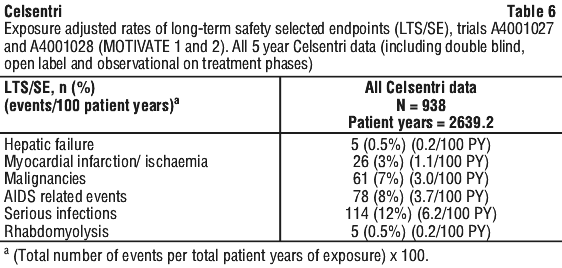
MOTIVATE 1 and MOTIVATE 2 were unblinded after the Week 48 visit of the last enrolled patient, and eligible patients could switch to an open-label phase of Celsentri twice daily extending to week 96. A subsequent observational phase extending to 5 years on treatment was conducted to assess the incidence of the following long-term safety selected endpoints; death, AIDS defining events, hepatic failure, MI/cardiac ischemia, malignancies, rhabdomyolysis, and other serious infectious events. The incidence of these selected endpoints was consistent with those seen at earlier time points in the studies and listed in Table 6.
Study in treatment-naïve patients.

Treatment-emergent adverse events. Treatment-emergent adverse events, regardless of causality, from the MERIT study, a double-blind comparative controlled study in which 721 treatment-naïve patients received Celsentri 300 mg BID (N = 360) or efavirenz (N = 361) in combination with zidovudine/lamivudine for 96 weeks, are summarized in Table 7. Selected events occurring at ≥ 2% of patients and at a numerically higher rate in patients treated with Celsentri are included; events that occurred at the same or higher rate on efavirenz are not displayed.

Laboratory abnormalities.

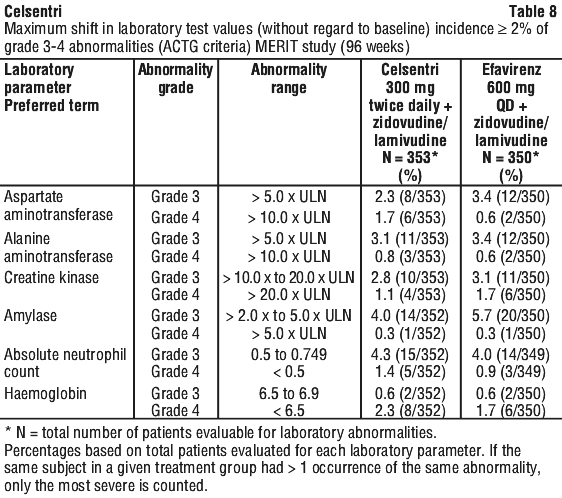
See Table 8.

Less common adverse events in clinical trials.

The following adverse events occurred in < 2% of Celsentri-treated patients. These events have been included because of their seriousness and either increased frequency on Celsentri or are potential risks due to the mechanism of action. Events attributed to the patient's underlying HIV infection are not listed.

Blood and lymphatic system.

Marrow depression and hypoplastic anaemia.

Cardiac disorders.

Unstable angina, acute cardiac failure, coronary artery disease, coronary artery occlusion, myocardial infarction, myocardial ischemia (see Section 4.4 Special Warnings and Precautions for Use).

Hepatobiliary disorders.

Hepatic cirrhosis, hepatic failure, cholestatic jaundice, portal vein thrombosis, hypertransaminaseamia, jaundice.

Infections and infestations.

Endocarditis, infective myositis, viral meningitis, pneumonia, treponema infections, septic shock, Clostridium difficile colitis, meningitis.

Musculoskeletal and connective tissue disorders.

Myositis, osteonecrosis, rhabdomyolysis, blood CK increased.

Neoplasms benign, malignant and unspecified (including cysts and polyps).

Abdominal neoplasia, anal cancer, basal cell carcinoma, Bowen's disease, cholangiocarcinoma, diffuse large B-cell lymphoma, metastases to liver, oesophageal carcinoma, nasopharyngeal carcinoma, squamous cell carcinoma, tongue neoplasia (malignant stage unspecified), anaplastic large cell lymphomas T- and null-cell types, bile duct neoplasms malignant, endocrine neoplasms malignant and unspecified.

Nervous system disorders.

Cerebrovascular accident, convulsions and epilepsy, tremor (excluding congenital).
In HIV infected patients with severe immune deficiency at the time of initiation of combination antiretroviral therapy (CART), an inflammatory reaction to asymptomatic or residual opportunistic infections may arise (see Section 4.4 Special Warnings and Precautions for Use).
Hepatotoxicity and hepatic failure with allergic features have been reported in association with Celsentri in clinical trials and post marketing (see Section 4.4 Special Warnings and Precautions for Use).
After unblinding of the study following the last subject's week 96 visit, subjects could be eligible for continued treatment during the open-label extension phase of the study with the same study drug to which they had been randomised. Safety results at week 240 on treatment were consistent with those seen at week 96.

Post marketing experience.

Very rarely, severe hypersensitivity reactions have been reported. These included drug rash with eosinophilia and systemic symptoms (DRESS), severe cutaneous reactions (Stevens-Johnson syndrome and toxic epidermal necrolysis) as well as hepatotoxicity and hepatic failure with allergic features.
In rare cases, postural hypotension which can result in syncope has been reported.

Reporting suspected adverse effects.

Reporting suspected adverse reactions after registration of the medicinal product is important. It allows continued monitoring of the benefit-risk balance of the medicinal product. Healthcare professionals are asked to report any suspected adverse reactions at www.tga.gov.au/reporting-problems.

4.9 Overdose

The highest dose administered in clinical studies was 1200 mg. The dose limiting adverse reaction was postural hypotension.
Prolongation of the QT interval was seen in dogs and monkeys at free plasma concentrations of maraviroc 6 and 12 times, respectively, to those expected in humans at the maximum recommended dose of 300 mg twice daily. However, no clinically significant QT prolongation compared to OBT alone was seen in the Phase 3 clinical studies using the recommended dose of maraviroc or in a specific pharmacokinetic study to evaluate the potential of Celsentri to prolong the QT interval.
There is no specific antidote for overdose with Celsentri. Treatment of overdose should consist of general supportive measures including keeping the patient in a supine position, careful assessment of patient vital signs, blood pressure and ECG.
If indicated, elimination of unabsorbed active Celsentri should be achieved by emesis. Administration of activated charcoal may also be used to aid in removal of unabsorbed active substance. Since Celsentri is moderately protein bound, dialysis may be beneficial in removal of this medicine.
For information on the management of overdose, contact the Poisons Information Centre on 131 126 (Australia).

5 Pharmacological Properties

5.1 Pharmacodynamic Properties

Pharmacological actions.

Pharmacotherapeutic group: Antivirals for systemic use, Other antivirals.
ATC code: J05AX09.

Mechanism of action.

Maraviroc is a member of a therapeutic class called CCR5 antagonists. Maraviroc selectively binds to the human chemokine receptor CCR5, preventing CCR5-tropic HIV-1 from entering cells.

Pharmacodynamic effects.

Antiviral activity in cell culture. Maraviroc inhibits the entry and replication of CCR5-tropic laboratory strains and clinical isolates of HIV-1 in models of acute T-cell infection. The in vitro IC50 (50% inhibitory concentration) for maraviroc against the replication of HIV-1 group M isolates (subtypes A to J and circulating recombinant form AE) and group O isolates ranged from 0.1 to 4.5 nanoM (0.05 to 2.3 nanogram/mL). HIV-1 clinical isolates resistant to nucleoside analogue reverse transcriptase inhibitors (NRTI), non-nucleoside analogue reverse transcriptase inhibitors (NNRTI), protease inhibitors (PI) and enfuvirtide were all susceptible to maraviroc in cell culture.
When used with other antiretroviral agents in vitro, the combination of maraviroc produced additive/synergistic antiviral effects with protease inhibitors (amprenavir, atazanavir, indinavir, lopinavir, nelfinavir, ritonavir and saquinavir) and was generally additive with the NRTIs (abacavir, didanosine, emtricitabine, lamivudine, stavudine, tenofovir, zalcitabine and zidovudine) and the NNRTIs (delavirdine, efavirenz and nevirapine). Maraviroc was additive/synergistic with the HIV fusion inhibitor enfuvirtide. Protein binding studies have shown that the antiviral activity of maraviroc decreases on average 2-fold in conditions where plasma proteins are present.
Maraviroc has no antiviral activity in cell culture against viruses that can use CXCR4 as their entry co-receptor (dual-tropic or CXCR4-tropic viruses, collectively termed 'CXCR4-using' virus below). The antiviral activity of maraviroc against HIV-2 has not been evaluated.
Virologic escape. Virologic escape from maraviroc can occur via two routes: the emergence of pre-existing virus which can use CXCR4 as its entry co-receptor (CXCR4-using virus) or the selection of virus that continues to use exclusively drug-bound CCR5 (CCR5-tropic virus).
Resistance in cell culture. HIV-1 variants with reduced susceptibility to maraviroc have been selected in cell culture following serial passage of two CCR5-tropic clinical viral isolates. The maraviroc-resistant viruses remained CCR5-tropic and there was no conversion from a CCR5-tropic virus to a CXCR4-using virus.

Phenotypic resistance.

Concentration response curves for the maraviroc-resistant viruses were characterised by curves that did not reach 100% inhibition in assays using serial dilutions of maraviroc (< 100% maximal percentage inhibition (MPI)), consistent with the resistant viruses being able to use CCR5 as a coreceptor for cell entry even when maraviroc is bound. Traditional EC50 fold-change was not a useful parameter to measure phenotypic resistance, as those values were sometimes unchanged despite significantly reduced sensitivity.

Genotypic resistance.

Mutations were found to accumulate in the gp120 envelope glycoprotein (the viral protein that binds to the CCR5 co-receptor). The position of these mutations was not consistent between different isolates. Hence, the relevance of these mutations to maraviroc susceptibility in other viruses is not known.
Tropism switching from CCR5- to CXCR4-tropic variants occurred spontaneously in vitro in maraviroc-treated and control cultures, and represents a theoretical mechanism for maraviroc resistance in vivo.

Cross-resistance.

HIV-1 clinical isolates resistant to NRTIs, NNRTIs, PIs and enfuvirtide were all susceptible to maraviroc in cell culture. Maraviroc-resistant viruses that emerged in cell culture remained sensitive to the fusion inhibitor enfuvirtide and the protease inhibitor saquinavir.
Resistance in vivo. The two mechanisms of virologic escape observed in vivo include the unmasking of CXCR4-using virus and the selection of virus that continues to use CCR5 but with reduced susceptibility to maraviroc, as indicated by a maximal plateau of inhibition of < 95%. Both routes to virologic escape have been observed in clinical studies of both treatment-naïve and treatment-experienced patients.
CXCR4-using virus presence at virological failure appears to originate from a pre-existing viral population. Resistance of CCR5-tropic virus through the increase of EC50 fold-change does not appear to be an important mechanism of failure.
Sequencing of the V3 loop of virus with reduced susceptibility to maraviroc has identified changes in the amino acid sequence for the majority; however, no signature mutation has been identified. Mutations within Gp160 but outside of the V3 loop, contributing to the maraviroc resistance phenotype have been reported but appear uncommon.
Treatment-experienced patients. In the pivotal studies (MOTIVATE 1 and MOTIVATE 2), 7.6% of patients had a change in tropism result from CCR5-tropic to CXCR4-tropic or dual/mixed-tropic between screening and baseline (a period of four-six weeks).

Failure with CXCR4-using virus.

CXCR4-using virus was detected in approximately 55% of patients who failed treatment on maraviroc, as compared to 6% of patients who experienced treatment failure in the Optimised Background Therapy (OBT) alone arm. To investigate the likely origin of the on treatment CXCR4-using virus, a detailed clonal analysis was conducted on virus from 20 representative patients (16 patients from the maraviroc arms and 4 patients from the OBT alone arm) in whom CXCR4-using virus was detected. This analysis indicated that CXCR4-using virus emerged from a pre-existing CXCR4-using reservoir not detected at baseline, rather than from mutation of CCR5-tropic virus present at baseline. An analysis of tropism following failure of maraviroc therapy with CXCR4-using virus in patients with CCR5 virus at baseline, demonstrated that the virus population reverted back to CCR5 tropism in 33 of 36 patients with more than 35 days of follow-up. At the time of failure with CXCR4-using virus, the resistance pattern to other antiretrovirals appears similar to that of the CCR5-tropic population at baseline, based on available data. Hence, in the selection of a treatment regimen, it should be assumed that viruses forming part of the previously undetected CXCR4-using population (i.e. minor viral population) harbours the same resistance pattern as the CCR5-tropic population.

Failure with CCR5-tropic virus.

Phenotypic resistance: in patients with CCR5-tropic virus at time of treatment failure with maraviroc, 22 out of 58 patients had virus with reduced sensitivity to maraviroc. Additionally, CCR5-tropic virus from 2 of these treatment failure patients had ≥ 3-fold shifts in EC50 values for maraviroc at the time of failure, but the significance of this is unclear. In the remaining patients, there was no evidence of virus with reduced sensitivity as identified by exploratory virology analyses on a representative group. The latter group had markers of low exposure, in some cases associated with poor compliance. A clinically-validated cut-off value for reduced virological response has not yet been established. Therefore, continued use of maraviroc after treatment failure cannot be generally recommended regardless of the viral tropism seen.
Treatment-naïve patients. In the pivotal study of treatment-naïve patients (MERIT week 96), 13/343 (3.8%) had a change in tropism result from CCR5-tropic to CXCR4-tropic or dual/mixed-tropic in the four-six week interval between screening and baseline during which time no treatment was administered.

Failure with CXCR4-using virus.

In the analysis of week 96 data, using a time to loss of virologic response (HIV-1 RNA < 50 copies/mL) endpoint, CXCR4-using virus was detected at failure in approximately 24/86 (28%) of the patients with CCR5-tropic virus at baseline and who failed treatment on maraviroc, as compared to none of patients who experienced treatment failure in the efavirenz arm. A retrospective analysis of tropism at Screening was performed using a modified tropism assay with enhanced sensitivity (100% x 4 virus detection at 0.3% prevalence compared with 10% with the original assay). Data from enrolled patients who originally screened with the R5 virus, but who screened retrospectively with CXCR4-using virus, were censored. Of the remaining subjects with CCR5-tropic virus at Baseline and who experienced virologic failure, CXCR4-using virus was detected in 17% (11/65) as compared to none in the efavirenz arm.
A detailed clonal analysis was conducted for two previously antiretroviral treatment-naïve patients enrolled in a Phase 2a monotherapy study and who had CXCR4-using virus observed after 10 day treatment with maraviroc. Consistent with the detailed clonal analysis conducted in treatment-experienced patients, the CXCR4-using variant was found to be preexisting prior to starting therapy.
All but one (11/12; 92%) of the maraviroc failures failing with CXCR4 or dual/mixed-tropic virus also had genotypic and phenotypic resistance to the background drug lamivudine at failure and 33% (4/12) developed zidovudine-associated resistance substitutions.

Failure with CCR5-tropic virus.

Phenotypic resistance: in patients with CCR5-tropic virus at time of treatment failure with maraviroc, 6 out of 38 patients had virus with reduced sensitivity to maraviroc. In the remaining 32 patients, there was no evidence of virus with reduced sensitivity as identified by exploratory virology analyses on a representative group. One additional subject had a ≥ 3-fold shift in EC50 value for maraviroc at the time of failure.

Clinical trials.

The clinical efficacy and safety of Celsentri is derived from analyses of data from three ongoing studies in adult patients infected with CCR5-tropic HIV-1: MOTIVATE-1 A4001027 and MOTIVATE-2 A4001028, in antiretroviral treatment-experienced adult patients and MERIT A4001026 in treatment-naïve patients. These studies are supported by a 48-week study in antiretroviral treatment-experienced adult patients infected with dual/mixed-tropic HIV-1, A4001029.
Studies in CCR5-tropic treatment-experienced patients. The clinical efficacy of Celsentri (in combination with other antiretroviral medicinal products) on plasma HIV RNA levels and CD4+ cell counts have been investigated in two pivotal ongoing, randomised, double-blind, multicentre studies (MOTIVATE-1 and MOTIVATE-2, n = 1076) in patients infected with CCR5-tropic HIV-1. The primary objective of these studies was to assess whether Celsentri added to OBT provided an additional reduction in plasma HIV-1 RNA level compared with OBT alone, based on the mean changes from baseline in plasma HIV-1 RNA level at Week 48. Efficacy analyses were performed on the full analysis set and per protocol populations. Patients were analysed as both As Treated and As Randomised to assess the effect on the results of subjects receiving treatments other than those to which they were randomised.
Patients who were eligible for these studies had prior exposure to at least three antiretroviral medicinal product classes [≥ 1 nucleoside reverse transcriptase inhibitors (NRTI), ≥ 1 non-nucleoside reverse transcriptase inhibitors (NNRTI), ≥ 2 protease inhibitors (PI), and/or enfuvirtide] or documented resistance to at least one member of each class. Patients were randomised in a 2:2:1 ratio to maraviroc 300 mg (dose equivalent) once daily, maraviroc 300 mg twice daily or placebo in combination with an OBT consisting of three to six antiretroviral medicinal products (excluding low-dose ritonavir). The OBT was selected on the basis of the patient's prior treatment history and baseline genotypic and phenotypic viral resistance measurements.
Table 9 illustrates the demographic and baseline characteristics of patients from the pooled analysis from the MOTIVATE-1 and MOTIVATE-2 studies.
Limited numbers of patients from races other than Caucasian were included in the pivotal clinical studies, therefore very limited data are available in these patient populations.
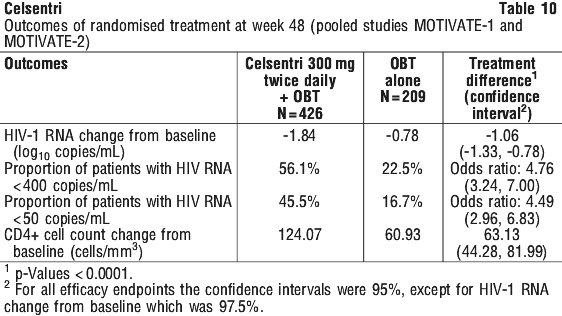
After 24 weeks of therapy, the mean change in plasma HIV-1 RNA from baseline to week 24 was -1.96 log10 copies/mL for patients receiving Celsentri 300 mg twice daily + OBT compared to -0.99 log10 copies/mL for patients receiving OBT alone. The mean increase in CD4+ counts was higher on Celsentri 300 mg twice daily + OBT (106.34 cells/mm3) than on OBT alone (57.37 cells/mm3). The proportion of subjects with HIV-1 RNA < 400/< 50 copies/mL was 60.8%/45.3% for patients receiving Celsentri 300 mg twice daily + OBT, compared to 27.8%/23% for patients receiving OBT alone (see Table 10).
Studies in non-CCR5-tropic treatment-experienced patients. Study A4001029 was an exploratory, randomised, double-blind, multicentre trial to determine the safety and efficacy of Celsentri in patients infected with dual/mixed or CXCR4-tropic HIV-1. The inclusion/exclusion criteria were similar to those for MOTIVATE-1 and MOTIVATE-2 above and the patients were randomised in a 1:1:1 ratio to Celsentri once daily, Celsentri twice daily or OBT alone. The mean changes in viral load and CD4+ counts are shown in Table 11.
Study in treatment-naïve patients. Study A4001026 is a randomised, double-blind, multicenter study in patients infected with CCR5-tropic HIV-1 classified by the original Trofile tropism assay. The primary objective was to assess whether antiviral activity (plasma viral load < 400/50 copies/mL at week 48) of Celsentri in combination zidovudine/lamivudine was non-inferior to a reference regimen of efavirenz plus zidovudine/lamivudine. Patients were required to have plasma HIV-1 RNA ≥ 2000 copies/mL and could not have: 1) previously received any antiretroviral therapy for > 14 days, 2) an active or recent opportunistic infection or a suspected primary HIV-1 infection, or 3) phenotypic or genotypic resistance to zidovudine, lamivudine, or efavirenz. Patients were randomized in a 1:1:1 ratio to Celsentri 300 mg once daily, Celsentri 300 mg twice daily, or efavirenz 600 mg once daily, each in combination with zidovudine/lamivudine. The efficacy and safety of Celsentri are based on the comparison of Celsentri twice daily versus efavirenz. A one-sided 97.5% confidence interval (CI) was constructed based on the normal approximation to the binomial distribution for the treatment difference in percentages stratified by the randomisation strata (screening viral load and geographic region). A step down procedure was used to control for multiple comparisons (i.e. < 400 and < 50). Non-inferiority was to be concluded if the lower bound of the one-sided 97.5% CI was > -10%. In a pre-planned interim analysis at 16 weeks, the Celsentri 300 mg once per day treatment arm failed to meet the pre-specified criteria for demonstrating non-inferiority and was discontinued.
The demographic and baseline characteristics of the Celsentri and efavirenz treatment groups were comparable (Table 12). Patients were stratified by screening HIV-1 RNA levels and by geographic region. The median CD4 cell counts and mean HIV-1 RNA at baseline were similar for both treatment groups.
The treatment outcomes through week 48 for the treatment-naïve study (MERIT) are shown in Table 13. Treatment outcomes (responders) include reanalysis of the screening samples using a more sensitive tropism assay, enhanced sensitivity Trofile HIV tropism assay, which became available after the Week 48 analysis.
The primary efficacy endpoints were defined as the percentage of patients with HIV-1 RNA undetectable by the standard method (< 400 copies/mL and < 50 copies/mL). After 48 weeks of combination therapy with zidovudine/lamivudine, maraviroc 300 mg BID demonstrated non-inferiority to efavirenz 600 mg QD in the proportion of patients with undetectable viral load measured at < 400 copies/mL but not at < 50 copies/mL (lower bound of 97.5% CI > -10% for non-inferiority). However, reanalysis of the data following rescreening of the samples using the enhanced sensitivity tropism assay demonstrated non-inferiority for maraviroc 300 mg BID compared to efavirenz 600 mg QD in the proportion of patients with viral loads of < 400 copies/mL and < 50 copies/mL.
The median increase from baseline in CD4+ cell counts at Week 48 was 157 cells/mm3 for the Celsentri arm compared to 127 cells/mm3 for the efavirenz arm.
The treatment outcomes at 96 weeks for the treatment-naïve patients study (MERIT) are shown in Table 14. Treatment outcomes are based on reanalysis of the screening samples using the enhanced sensitivity tropism assay. Approximately 15% of the patients identified as CCR5-tropic virus in the original analysis had CXCR4-using virus. Screening with the enhanced sensitivity version of the Trofile tropism assay reduced the number of maraviroc virologic failures with CXCR4-using virus at failure to 12 compared to 24 when screening with the original Trofile HIV tropism assay. The main reason for discontinuation in the maraviroc BID treatment group was treatment failure while the main reason for discontinuation in the efavirenz group was treatment-related adverse events (see Section 4.4 Special Warnings and Precautions for Use) (Table 14).

Note.

The nucleoside backbone used in study A4001026 was zidovudine/lamivudine.
The median increase from baseline in CD4+ cell counts at week 96 was 184 cells/mm3 for the Celsentri arm compared to 155 cells/mm3 for the efavirenz arm.
Tropism.

Treatment-experienced (MOTIVATE-1 and MOTIVATE-2).

In the majority of cases, treatment failure on maraviroc was associated with detection of CXCR4-using (i.e. CXCR4- or dual/mixed-tropic) virus which was not detected by the tropism assay prior to treatment. CXCR4-using virus was detected at failure in 54.8% of patients who failed treatment on maraviroc, as compared to 5.9% of patients who experienced treatment failure in the placebo arm. To investigate the likely origin of the on-treatment CXCR4-using virus, a detailed clonal analysis was conducted on virus from 20 representative patients (16 patients from the maraviroc arms and 4 patients from the placebo arm) in whom CXCR4-using virus was detected at treatment failure. From analysis of amino acid sequence differences and phylogenetic data, CXCR4-using virus in these patients emerged from a low level of pre-existing CXCR4-using virus not detected by the tropism assay (which is population based) prior to treatment rather than from a co-receptor switch from CCR5-tropic virus to CXCR4-using virus resulting from mutation in the virus.
At Week 48 patients failing maraviroc BID with CXCR4-using virus had a lower median increase in CD4+ cell counts from baseline (+41 cells/mm3) than those patients failing with CCR5-tropic virus (+162 cells/mm3). The median increase in CD4+ cell count in patients failing in the placebo arm was +6.5 cells/mm3.

Treatment-naïve (MERIT).

In a 96-week study of antiretroviral treatment-naïve patients, 14% (12/85) who had CCR5-tropic virus at screening with an enhanced sensitivity tropism assay (Trofile) and failed therapy on maraviroc had CXCR4-using virus at the time of treatment failure. A detailed clonal analysis was conducted in two previously antiretroviral treatment-naïve patients enrolled in a Phase 2a monotherapy study who had CXCR4-using virus detected after 10 days treatment with maraviroc. Consistent with the detailed clonal analysis conducted in treatment-experienced patients, the CXCR4-using variants appear to emerge from outgrowth of a pre-existing undetected CXCR4-using virus. Screening with an enhanced sensitivity tropism assay reduced the number of maraviroc virologic failures with CXCR4- or dual/mixed-tropic virus at failure to 12 compared to 24 when screening with the original tropism assay.
Patients who had CCR5-tropic virus at baseline and failed maraviroc therapy with CXCR4-using virus had a median increase in CD4+ cell counts from baseline of +113 cells/mm3 while those patients failing with CCR5-tropic virus had an increase of +135 cells/mm3. The median increase in CD4+ cell count in patients failing in the efavirenz arm was + 95 cells/mm3. This data is a summary for a cohort of patients identified as virologic failures using the TLOVR algorithm based on a response cut-off of plasma HIV-1 RNA < 50 copies/mL.

Studies on patients co-infected with hepatitis B and/or hepatitis C virus.

The hepatic safety of maraviroc in combination with other antiretroviral agents was assessed in patients who were stable on their current antiretroviral treatment (ART).
The participating patients were HIV-1 infected patients with baseline HIV RNA < 40 copies/mL, coinfected with Hepatitis C and/or Hepatitis B Virus on concurrent antiretroviral therapy (3 to 6 drugs excluding low-dose ritonavir) and were evaluated in a multi-centre, randomized, double-blinded, placebo-controlled study. All participants with Hepatitis B received a highly active antiretroviral therapy regimen active against HBV or HBV specific antivirals.
The primary objective assessed the incidence of Grade 3 and 4 ALT abnormalities (> 5 x upper limit of normal (ULN) if baseline ALT ≤ ULN; or > 3.5 x baseline if baseline ALT > ULN) at Week 48.
In total, 137 participants were enrolled, randomised and treated, 70 to the maraviroc group, 67 to the placebo group. Overall 21 (15%) participants discontinued from treatment prior to Week 48: 12 (17%) in the maraviroc group and 9 (13%) in the placebo group. A total of 25 participants discontinued from the study through Week 48: 14 (20.0%) in the maraviroc group and 11 (16.4%) in the placebo group. 2 participants in each group discontinued study drug but remained on study prior to Week 48. At Week 48 the 2 participants in the maraviroc continued in the study off drug, but the 2 participants in the placebo arm (who were being followed off study drug) discontinued from the study.
The majority of participants were male (85%), White (79.6%) or Black (17.5%). The age range was 28-75 years.
In the maraviroc group baseline Child-Pugh scores were Class A, n = 64; and Class B, n = 6; 22 were positive at baseline HBV, 48 for HCV; 2 had both HBV and HCV.
In the placebo group, baseline Child-Pugh scores were Class A, n = 59; Child-Pugh Class B, n = 8; 22 were positive at baseline HBV, 47 were positive for HCV and 2 were positive for both HBV and HCV.
One participant in each treatment arm was observed to meet the primary endpoint by Week 48.

Note.

The study was not powered to detect treatment difference between the groups for the intended safety endpoint, the number of participants was small, at baseline the patients were stable on existing ART with preserved liver function and the number of premature discontinuations during the study was large.

5.2 Pharmacokinetic Properties

Absorption.

The absorption of maraviroc is variable with multiple peaks. Median peak maraviroc plasma concentrations are attained at two hours (range 0.5-4 hours) following single oral doses of 300 mg commercial tablet administered to healthy volunteers. The pharmacokinetics of oral maraviroc are not dose proportional over the dose range of 1-1200 mg.
The absolute bioavailability of a 100 mg dose is 23% and is predicted to be 33% at 300 mg. Maraviroc is a substrate for the efflux transporter P-glycoprotein.

Effect of food on oral absorption.

Co-administration of a 300 mg tablet with a high fat breakfast reduced maraviroc Cmax and AUC by 33% in healthy volunteers. There were no food restrictions in the studies that demonstrated the efficacy and safety of maraviroc (see Section 5.1 Pharmacodynamic Properties, Clinical trials). Therefore, maraviroc can be taken with or without food at the recommended doses (see Section 4.2 Dose and Method of Administration).

Distribution.

Maraviroc is bound (approximately 76%) to human plasma proteins and shows moderate affinity for albumin and alpha-1 acid glycoprotein. The volume of distribution of maraviroc is approximately 194 L.
Preclinical data indicate low cerebrospinal fluid exposure with concentrations of maraviroc in the CSF of rats approximately 10% of free plasma concentrations.

Metabolism.

Studies in humans and in vitro studies using human liver microsomes and expressed enzymes have demonstrated that maraviroc is principally metabolised by the cytochrome P450 system, with CYP3A being the major metabolising enzyme. In vitro studies indicate that polymorphic enzymes CYP2C9, CYP2D6 and CYP2C19 do not contribute significantly to the metabolism of maraviroc.
Maraviroc is the major circulating component (accounting for approximately 42% of drug related radioactivity) following a single oral dose of 300 mg [14C]-maraviroc. The most significant circulating metabolite in humans is a secondary amine (approximately 22% of plasma radioactivity) formed by N-dealkylation. This polar metabolite has no significant pharmacological activity. Other metabolites are products of mono-oxidation and are only minor components of plasma drug related radioactivity.

Excretion.

A mass balance/excretion study was conducted using a single 300 mg dose of 14C-labelled maraviroc. Approximately 20% of the radiolabel was recovered in the urine and 76% was recovered in the faeces over 168 hours. Maraviroc was the major component present in urine (mean of 8% dose) and faeces (mean of 25% dose). The remainder was excreted as metabolites. After intravenous administration (30 mg), the half-life of maraviroc was 13.2 hours, 22% of the dose was excreted unchanged in the urine and the values of total clearance and renal clearance were 44.0 L/hour and 10.2 L/hour respectively.

Children.

The pharmacokinetics of maraviroc in children below 16 years of age has not been established (see Section 4.2 Dose and Method of Administration; Section 4.4 Special Warnings and Precautions for Use).

Elderly.

The pharmacokinetics of maraviroc in patients above 65 years of age has not been established (see Section 4.2 Dose and Method of Administration; Section 4.4 Special Warnings and Precautions for Use).

Renal impairment.

A study compared the pharmacokinetics of a single 300 mg dose of Celsentri in patients with severe renal impairment (creatinine clearance < 30 mL/min, n = 6) and endstage renal disease (ESRD) (n = 6) to healthy volunteers (n = 6). Geometric mean ratios for maraviroc Cmax and AUCinf were 2.4-fold and 3.2-fold higher respectively for patients with severe renal impairment, and 1.7-fold and 2.0-fold higher respectively for patients with ESRD as compared to patients with normal renal function in this study. Haemodialysis had a minimal effect on maraviroc clearance and exposure in patients with ESRD. Exposures observed in patients with severe renal impairment and ESRD were within the range observed in previous Celsentri 300 mg single-dose studies in healthy volunteers with normal renal function. However, maraviroc exposures in the patients with normal renal function in this study were 50% lower than that observed in previous studies. Based on the results of this study, no dose adjustment is recommended for patients with renal impairment receiving Celsentri without a potent CYP3A inhibitor or inducer. However, if patients with severe renal impairment or ESRD experience any symptoms of postural hypotension while taking Celsentri 300 mg twice daily, their dose should be reduced to 150 mg twice daily (see Section 4.4 Special Warnings and Precautions for Use, Use in renal impairment; Section 4.2 Dose and Method of Administration).
In addition, the study compared the pharmacokinetics of multiple dose Celsentri in combination with saquinavir/ritonavir 1000/100 mg twice daily (a potent CYP3A inhibitor combination) for seven days in patients with mild renal impairment (creatinine clearance > 50 and ≤ 80 mL/min, n = 6) and moderate renal impairment (creatinine clearance ≥ 30 and ≤ 50 mL/min, n = 6) to healthy volunteers with normal renal function (n = 6). Patients received 150 mg of Celsentri at different dose frequencies (healthy volunteers - every 12 hours; mild renal impairment - every 24 hours; moderate renal impairment - every 48 hours). Compared to healthy volunteers (dosed every 12 hours), geometric mean ratios for maraviroc AUCtau, Cmax and Cmin were 50% higher, 20% higher and 43% lower, respectively for patients with mild renal impairment (dosed every 24 hours). Geometric mean ratios for maraviroc AUCtau, Cmax and Cmin were 16% higher, 29% lower and 85% lower, respectively for patients with moderate renal impairment (dosed every 48 hours) compared to healthy volunteers (dosed every 12 hours). Based on the data from this study, no adjustment in dose is recommended for patients with mild or moderate renal impairment (see Section 4.2 Dose and Method of Administration).

Hepatic impairment.

Celsentri is primarily metabolized and eliminated by the liver. A study compared the pharmacokinetics of a single 300 mg dose of maraviroc in patients with mild (Child-Pugh class A, n = 8), and moderate (Child-Pugh class B, n = 8) hepatic impairment compared to healthy individuals (n = 8). Geometric mean ratios for Cmax and AUClast were 11% and 25% higher respectively for patients with mild hepatic impairment, and 32% and 46% higher respectively for patients with moderate hepatic impairment compared to individuals with normal hepatic function. The effects of moderate hepatic impairment may be underestimated due to limited data in patients with decreased metabolic capacity and higher renal clearance in these patients. The results should therefore be interpreted with caution. The pharmacokinetics of maraviroc have not been studied in patients with severe hepatic impairment (see Section 4.2 Dose and Method of Administration; Section 4.4 Special Warnings and Precautions for Use).

Race.

No dosage adjustment is necessary on the basis of race.

Gender.

No dosage adjustment is necessary on the basis of gender.

Pharmacogenomics.

The pharmacokinetics of maraviroc is dependent on CYP3A5 activity and expression level, which can be modulated by genetic variation. Subjects with a functional CYP3A5 (CYP3A5*1 allele) have been shown to have a reduced exposure to maraviroc compared to subjects with defect CYP3A5 activity (e.g. CYP3A5*3, CYP3A5*6, and CYP3A5*7). The CYP3A5 allelic frequency depends on ethnicity: the majority of Caucasians (~90%) are poor metabolisers of CYP3A5 substrates (i.e. subjects with no copy of functional CYP3A5 alleles) while approximately 40% of African-Americans and 70% of Sub-Saharan Africans are extensive metabolisers (i.e. subjects with two copies of functional CYP3A5 alleles).
In a Phase 1 study conducted in healthy subjects, Blacks with a CYP3A5 genotype conferring extensive maraviroc metabolism (2 CYP3A5*1 alleles; n=12) had a 37% and 26% lower AUC when dosed with maraviroc 300 mg twice daily compared with Black (n=11) and Caucasian (n=12) subjects with CYP3A5 genotypes conferring poor maraviroc metabolism (no CYP3A5*1 alleles), respectively. The difference in maraviroc exposure between CYP3A5 extensive and poor metabolisers was reduced when maraviroc was administered together with a strong CYP3A inhibitor: extensive CYP3A5 metabolisers (n=12) had a 17% lower maraviroc AUC compared with poor CYP3A5 metabolisers (n=11) when dosed with maraviroc 150 mg once daily in the presence of darunavir/cobicistat (800/150 mg).
All subjects in the Phase 1 study achieved the Cav concentrations that have been shown to be associated with near maximal virologic efficacy with maraviroc (75 nanogram/mL) in the Phase 3 study in treatment-naïve adult patients (MERIT). Therefore, despite differences in CYP3A5 genotype prevalence by race, the effect of CYP3A5 genotype on maraviroc exposure is not considered clinically significant and no maraviroc dose adjustment according to CYP3A5 genotype, race or ethnicity is needed.

5.3 Preclinical Safety Data

Genotoxicity.

Maraviroc was not mutagenic or clastogenic in a battery of in vitro and in vivo assays including bacterial reverse mutation, chromosome aberrations in human lymphocytes and mouse bone marrow micronucleus.

Carcinogenicity.

Maraviroc was evaluated for carcinogenic potential in a six month transgenic mouse study and a 24 month study in rats. In mice, maraviroc did not cause a statistically significant increase in the incidence of any tumour type at oral doses up to 1500 mg/kg/day, producing systemic exposure to unbound maraviroc 39 (males) or 72-times (females) higher than that obtained in humans at the standard clinical dose of 300 mg twice daily. In rats, administration of maraviroc produced thyroid adenomas, associated with adaptive liver changes, at 900 mg/kg/day PO (relative exposure based on AUC0-24h for free maraviroc, 18-25). The thyroid tumours in rats are unlikely to be of human relevance.

6 Pharmaceutical Particulars

6.1 List of Excipients

Tablet core.

Microcrystalline cellulose, Calcium hydrogen phosphate, Sodium starch glycollate, Magnesium stearate.

Film-coat.

[Opadry II complete film coating system 85G20583 Blue]: Indigo carmine aluminum lake, lecithin, Macrogol 3350, Polyvinyl alcohol, Purified talc, Titanium dioxide.

6.2 Incompatibilities

Incompatibilities were either not assessed or not identified as part of the registration of this medicine.

6.3 Shelf Life

In Australia, information on the shelf life can be found on the public summary of the ARTG. The expiry date can be found on the packaging.

6.4 Special Precautions for Storage

Store below 30°C.

6.5 Nature and Contents of Container

Maraviroc 150 mg and 300 mg film-coated tablets are supplied in polyvinyl chloride (PVC) blisters with aluminium lidding foil or PVC blisters with child resistant* aluminum/polyethylene terephthalate (PET) lidding foil in a carton containing 60 film-coated tablets.
*Complies with European Standard EN 14375:2003 child resistant non-reclosable packaging for pharmaceutical products - requirements and testing.

6.6 Special Precautions for Disposal

In Australia, any unused medicine or waste material should be disposed of by taking to your local pharmacy.

6.7 Physicochemical Properties

Maraviroc is a white to pale coloured powder.
Celsentri film-coated tablets contain maraviroc which is a member of a therapeutic class called CCR5 antagonists. Maraviroc is chemically described as 4,4-difluoro-N-{(1S)-3-[exo-3-(3-isopropyl-5-methyl-4H-1,2,4-triazol-4-yl)-8-azabicyclo[3.2.1] oct-8-yl]-1phenylpropyl} cyclohexanecarboxamide.
Maraviroc has a molecular weight of 513.67. It is highly soluble across the physiological pH range (pH 1.0 to 7.5).
The molecular formula of maraviroc is C29H41F2N5O.

Chemical structure.


CAS number.

376348-65-1.

7 Medicine Schedule (Poisons Standard)

S4.

Summary Table of Changes