


Consumer medicine information

Eskazole

Albendazole

BRAND INFORMATION

Brand name

Eskazole

Active ingredient

Albendazole

Schedule

S4


Consumer medicine information (CMI) leaflet

Please read this leaflet carefully before you start using Eskazole.

What is in this leaflet?

This leaflet answers some of the common questions about ESKAZOLE. It does not contain all the available information. It does not take the place of talking to your doctor or pharmacist.

All medicines have risks and benefits. Your doctor has weighed the possible risks of taking ESKAZOLE against the expected benefits.

If you have any concerns about taking this medicine talk to your doctor or pharmacist.

Keep this leaflet with this medicine. You may need to read it again.

What is ESKAZOLE used for?

ESKAZOLE contains albendazole as the active ingredient.

ESKAZOLE is used to clear worms or parasites from the gut and other tissues. ESKAZOLE is effective in a number of different conditions caused by parasites including hydatid disease and neurocysticercosis.

ESKAZOLE is thought to kill these parasites by causing them to starve. The eggs, larvae and adult parasites are affected.

Your doctor may have prescribed ESKAZOLE for another reason. Ask your doctor if you have any questions about why ESKAZOLE has been prescribed for you.

There is no evidence that ESKAZOLE is addictive.

Before you take ESKAZOLE

Do not take if:

  • you have had an allergic reaction to albendazole or any of the other ingredients contained in this medicine. Albendazole is also contained in ZENTEL. The ingredients are listed at the end of this leaflet. Signs of an allergic reaction may include an itchy skin rash, shortness of breath and swelling of the face or tongue.
  • if you have taken albendazole before and became unwell, tell your doctor or pharmacist before taking the first dose.
  • you are allergic to medicines similar to albendazole such as mebendazole (Sqworm or Vermox) or thiabendazole (Mintezol).
  • YOU KNOW OR SUSPECT YOU ARE PREGNANT.
    Pregnancy must be avoided (ie use effective contraceptive measures) during treatment, and for one month after stopping ESKAZOLE.
  • you are breast feeding.
    Your baby can absorb albendazole from breast milk if you are breast feeding. Breast feeding should be stopped while taking ESKAZOLE, and for at least 1 month after finishing treatment.
  • the expiry date printed on the pack has passed.
  • the packaging is torn or shows signs of tampering.

ESKAZOLE should not be given to children unless instructed by a doctor.

ESKAZOLE can:

  • reduce the number of blood cells produced in the body.
  • increase the levels of enzymes (chemicals found in the blood) that are produced by the liver.

Your doctor may arrange to take blood samples to check the number of blood cells and your liver enzymes before and during treatment. Depending on the results you may have to stop or interrupt your treatment.

There is only a small amount of information available about the use of ESKAZOLE in children. Use in children under 6 years of age is not recommended.

Do not give this medicine to anyone else; your doctor has prescribed it specifically for you and your condition.

Before you start taking ESKAZOLE tell your doctor if:

  • you are or think you may be pregnant or if you intend to become pregnant.
    Pregnancy must be avoided (ie use effective contraceptive measures) during treatment, and for one month after stopping ESKAZOLE.
  • you are breast feeding.
    Breast feeding should be stopped while taking ESKAZOLE, and for at least 1 month after finishing treatment.
  • you have any liver problems.

Look out for important symptoms:

Fits (seizures) and other symptoms:
People being treated for parasite infections can also have a rare and serious brain infection called neurocysticercosis but they don't always know that they have it. A reaction happens in the brain when the parasites are killed. The symptoms include fits (seizures), headache and problems with your vision.

Taking other medicines with ESKAZOLE:

The effects of some medicines may be affected if other medicines are used at the same time. You should therefore tell your doctor if you use other medicines regularly, have used other medicines until recently or wish to use other medicines at the same time as ESKAZOLE. This includes those medicines that you buy without a prescription. Your doctor will be able to tell you if any problems could occur when taking ESKAZOLE with other medicines.

How do I take it

Follow your doctors' instructions about how and when to use ESKAZOLE. Read the direction label carefully. If you have any concerns about how to take this medicine, talk to your doctor or pharmacist.

How much to take:

Your doctor will advise how many doses are needed each day, and for how long you will need to take ESKAZOLE. The usual daily dose for adults is one ESKAZOLE tablet taken twice daily with meals.

The dose in children aged 6 years and over depends on their body-weight.

When to take:

Take ESKAZOLE in the morning with breakfast and at night with the evening meal.

Take ESKAZOLE at the same time each day.

Taking your medicine at the same time each day will give the best effect. It will also help you to remember when to take your medicine.

If you forget to take:

Take the missed tablets as soon as you remember. Then take the next dose at the time it is normally due. Do not take two doses within an hour of each other.

Do not try to make up for missed doses by taking more than one dose at a time. Taking more than the prescribed dose can increase the chance of unwanted side effects.

How to take:

ESKAZOLE should be taken with a meal.

Swallow the tablets with water. For people, particularly young children, who may find it difficult to swallow the tablets whole, they can be crushed or chewed with a little water.

How long to take:

Keep taking ESKAZOLE for as long as your doctor tells you. Do not stop taking ESKAZOLE just because you feel better. ESKAZOLE is usually taken for a 28 day course. You may need to take more than one course. Usually you will need to wait for fourteen days before starting a second,or third course of tablets.

What do I do if I take too much? (Overdose)

Immediately telephone your doctor or Poisons Information Centre (13 11 26) or go to the emergency department at your nearest hospital if you or anyone else has taken a large amount of ESKAZOLE. Do this even if there are no signs of discomfort or poisoning.

While you are taking it

Things you must do:

Take ESKAZOLE exactly as your doctor has prescribed.

Tell your doctor if you become pregnant while taking ESKAZOLE.

Tell your doctor or pharmacist you are taking ESKAZOLE, before starting any other medicines.

Some medicines may affect the way other medicines work.

Things to be careful of:

Be careful driving or operating machinery until you know how you react to ESKAZOLE.

ESKAZOLE may cause dizziness in some people.

Side effects

Besides their main effect, medicines may have some unwanted effects. Unwanted effects do not always occur in every person.

Fits (seizures) and other symptoms:
People being treated for parasite infections may also have a rare and serious condition called neurocysticercosis meaning that they have parasites in the brain. By taking ESKAZOLE a reaction happens in the brain when the parasites are killed.

Look for the following combination of symptoms:

  • Headache, which can be severe
  • Nausea and vomiting
  • Fits (seizures)
  • Problems with your vision.

Contact a doctor immediately if you get these.

Most unwanted effects following ESKAZOLE are mild, and may disappear without stopping ESKAZOLE. However, some side effects may need medical treatment. Tell the doctor about any effect which is troublesome or ongoing.

Mild effects:

Tell your doctor if you notice any of the following that are troublesome or ongoing:

  • headache or dizziness
  • vomiting or feeling sick or stomach pains
  • mild skin rash
  • thinning of the hair or some hair loss. This has been reported rarely. However, hair growth returns to normal after the tablets are stopped.

More serious effects:

Tell your doctor immediately if you notice any of the following:

  • unusual bleeding or bruising
  • yellowing of the skin and eyes also called jaundice
  • fever

Stop taking ESKAZOLE and contact a doctor immediately or go to the emergency department of your nearest hospital if any of the following happens:

  • swelling of limbs, face, mouth or throat
  • shortness of breath or breathing difficulties
  • hives or severe skin reactions

These are signs of a severe allergic reaction to ESKAZOLE. Allergy to ESKAZOLE is rare.

If you are receiving ESKAZOLE for neurocysticercosis you may experience a worsening of your symptoms (such as headache and high temperature) when you first start to take ESKAZOLE.

Other rare events that have been reported with ESKAZOLE include:

  • inflammation of the pancreas
  • severe liver effects
  • effects on the eyes
  • blood disorders
  • skin rash, which may form blisters and looks like small targets (central dark spots surrounded by a paler area, with a dark ring around the edge) (erythema multiforme)
  • a widespread rash with blisters and peeling skin, particularly around the mouth, nose, eyes and genitals (Stevens–Johnson syndrome).

You should tell the doctor or pharmacist as soon as possible if any of these, or any other unusual events or problems occur during or after treatment with ESKAZOLE.

Other side effects not listed above may also occur in some people.

After taking it

Storage

Keep your tablets in the original pack until it is time to take them.

Keep the pack in a cool dry place. Store below 30°C

Do not leave it in the car on a hot day. Do not store medicine in the bathroom or near a sink.

Heat and dampness can destroy some medicines.

Keep all medicines out of the reach of children, such as in a locked cupboard.

If your doctor tells you to stop taking ESKAZOLE ask your pharmacist what to do with any tablets that are left over.

Product description

What it looks like:

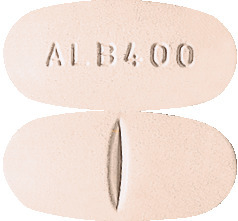
ESKAZOLE 400mg chewable tablets are a mottled, pale orange, rounded oblong, biconvex, tablets with a score line on one side and engraved ALB 400 on the other. ESKAZOLE tablets have a distinctive fruity odour

The tablets can be broken in half.

ESKAZOLE tablets are available in blisters packs of 56* and bottles of 60 tablets.

*Currently not marketed

Ingredients:

Active ingredient:

ESKAZOLE tablets contain 400mg of albendazole per tablet.

Inactive ingredients:

ESKAZOLE tablets also contains

lactose monohydrate

microcrystalline cellulose

maize starch

croscarmellose sodium

povidone

sodium lauryl sulfate

sunset yellow CI 15985

sodium saccharin

magnesium stearate

vanilla flavour 54286 BP 0551 (PI 1633)

passion fruit flavour 54442 AP0551 (PI 1629)

orange flavour 55588 AP 0551 (PI 1631)

ESKAZOLE tablets do not contain sucrose, gluten or tartrazine.

Sponsor

Aspen Pharmacare Australia Pty Ltd
34-36 Chandos Street St
Leonards, NSW 2065.

Australian registration numbers

AUST R 97505

AUST R 97504

This leaflet was revised in February 2020

Published by MIMS May 2020

BRAND INFORMATION

Brand name

Eskazole

Active ingredient

Albendazole

Schedule

S4


1 Name of Medicine

Albendazole.

2 Qualitative and Quantitative Composition

Each Eskazole tablet contains albendazole 400 mg as the active ingredient.

Excipients with known effect.

Saccharin and sugars as lactose.
For the full list of excipients, see Section 6.1 List of Excipients.

3 Pharmaceutical Form

Eskazole 400 mg chewable tablets are a mottled pale orange rounded oblong biconvex tablets with a score line on one side and embossed "ALB 400" on the reverse, with a characteristic fruity odour.

4 Clinical Particulars

4.1 Therapeutic Indications

Hydatid disease.

The long term use of Eskazole is indicated for the treatment of hydatid cysts caused by E. granulosus in adults and children over 6 years of age, where surgical intervention is not feasible because of anatomic site or the presence of multiple cysts. Albendazole shows greatest efficacy in the treatment of liver, lung and peritoneal cysts. Experience with bone cysts or those in the heart or central nervous system is limited, but cases of successful treatment with a prolonged course of albendazole have been reported.
Eskazole may also be used as an adjunct to surgical excision of hydatid cysts either:
1) prior to surgical intervention, or
2) postoperatively, if preoperative treatment was too short (less than two separate 28 day cycles) or if viable cysts are found at surgery.

Larval taeniasis (neurocysticercosis).

Eskazole is effective in the treatment of neurocysticercosis (NCC) in courses as short as 7 days.

Other indications.

There is also evidence that Eskazole is effective against Capillaria philippinensis in courses of 10 days.

4.2 Dose and Method of Administration

Eskazole 400 mg chewable tablets may be crushed, chewed, or swallowed whole.
Some people, particularly young children, may experience difficulties swallowing the tablets whole and should be encouraged to chew the tablets with a little water, alternatively tablets may be crushed and taken with a little water.
To increase the systemic bioavailability of albendazole in the treatment of tissue helminth infections, Eskazole tablets should be taken with a meal (see Section 5.2 Pharmacokinetic Properties).

Hydatid disease (echinococcosis).

Adults. Eskazole is administered orally at a total daily dose of 800 mg, given in divided doses of 400 mg twice daily, taken with meals, for a total of 28 days. This 28 day treatment period may be repeated after a 14 day drug free period, for a total of three cycles.
For patients weighing less than 60 kg, the dose is 15 mg/kg/day in divided doses according to the dosage schedule listed above.
Children (six years and over). There has been no experience to date with the use of Eskazole in hydatid disease in children under six years of age, therefore usage for this indication in children younger than six years is not recommended. (See Section 4.3 Contraindications).
The recommended dose for children 6 years of age and over is 15 mg/kg/day given in divided doses according to the dosage schedule listed above.

Inoperable and multiple cysts.

Up to three 28 day cycles of Eskazole treatment may be given. If there is no evidence of treatment efficacy (shrinkage or disappearance of cyst(s), alteration in X-ray appearance or ultrasound/CT scan density or membrane separation) in sites such as liver, lung or peritoneum within three cycles, further treatment is unlikely to produce a response. More prolonged treatment may be required for sites such as bone or brain.

Preoperatively.

Two 28 day cycles should be given prior to surgery. Where surgical intervention is necessary before completion of two cycles, Eskazole should be given for as long as possible, but for not more than 28 days per cycle.

Peri and postsurgery.

Where only a short preoperative course has been given (less than 14 days), and in cases where emergency surgery is required, Eskazole should be given postoperatively for two 28 day cycles separated by 14 drug free days. Additionally, where cysts are found to be viable following presurgical treatment, a full two cycle course should be given.

Larval taeniasis (neurocysticercosis).

Adults. The dose is 800 mg daily taken in two divided doses (400 mg twice daily) with meals for a minimum of 7 days, dependant on response. In limited studies, a course of 3 days has also been found to be adequate.
For patients weighing less than 60 kg, the dose is 15 mg/kg/day given in divided doses according to the dosage schedule listed above.
Appropriate steroid, antihistamine and/or anticonvulsant therapy should be administered as required. Oral or intravenous corticosteroids are recommended to prevent cerebral hypertensive episodes during the first week of treatment.
There is information suggesting individuals not responding to one course may benefit from a second course, and that the second course may result in cure. A two week drug free interval should be maintained between courses.
Children (six years and over). There has been no experience to date with the use of Eskazole in children under six years of age, therefore usage is not recommended. (See Section 4.3 Contraindications).
The recommended dose for children 6 years of age and over is 15 mg/kg/day given in divided doses according to the dosage schedule listed above.

Capillaria philippinensis.

In adults, one tablet (400 mg) daily for 10 days is reported to be effective.

4.3 Contraindications

Eskazole should not be administered during pregnancy or in women thought to be pregnant. Eskazole has been shown to be teratogenic and embryotoxic in rats and rabbits. Women of childbearing age should be advised to take effective precautions against conception during and within one month of completion of treatment with Eskazole (see Section 4.6 Fertility, Pregnancy and Lactation, Use in pregnancy).
Eskazole is contraindicated in persons who are known to be hypersensitive to albendazole, other benzimidazole derivatives, or any component of the tablets.
There is limited experience with the use of Eskazole in children under six years of age, therefore use in this age group is not recommended.

4.4 Special Warnings and Precautions for Use

In clinical trials involving patients with hydatid disease, approximately 16% of subjects experienced mild to moderate elevations of liver enzymes during the treatment cycle. Rare severe cases were associated with histological hepatocellular damage, which may be irreversible, and jaundice. Enzyme abnormalities have usually normalised on discontinuation of treatment. In patients with hydatid disease, liver function tests should be obtained before the start of each treatment cycle and at least every two weeks during treatment. Patients with disturbed liver function tests prior to commencing albendazole therapy should be carefully evaluated, since the drug is metabolised by the liver and has been associated with idiosyncratic hepatotoxicity. In patients with hepatic hydatidosis, it should be determined whether the underlying disease or another process is affecting liver function. If enzymes are significantly increased (greater than twice the upper limit of normal) during treatment, Eskazole should be discontinued. Eskazole treatment may be reinstituted when levels have returned to normal limits, but liver function should be monitored frequently during repeat therapy.
Eskazole has been shown to cause bone marrow suppression and therefore blood counts should be performed at the start and every two weeks during each 28 day cycle. Patients with liver disease, including hepatic echinococcosis, appear to be more susceptible to bone marrow suppression leading to pancytopenia, aplastic anaemia, agranulocytosis and leukopenia and therefore warrant closer monitoring of blood counts. Eskazole should be discontinued if clinically significant decreases in blood cell counts occur (see Section 4.2 Dose and Method of Administration; Section 4.8 Adverse Effects (Undesirable Effects)).
In patients treated with Eskazole for hydatid disease, appropriate long-term monitoring should be considered, since approximately 14% of patients followed for 2 years developed recurrent cysts.
The therapeutic action of albendazole in the treatment of neurocysticercosis, may exacerbate presenting symptoms or precipitate new neurological disturbances (e.g. headache, nausea, convulsions, visual changes). These symptoms should be anticipated and patients treated accordingly (see Section 4.8 Adverse Effects (Undesirable Effects)).
Symptoms associated with an inflammatory reaction following death of the parasite may occur in patients receiving albendazole treatment for neurocysticercosis (e.g. seizures, raised intracranial pressure, focal signs). These should be treated with appropriate steroid and anticonvulsant therapy. Oral or intravenous corticosteroids are recommended to prevent cerebral hypertensive episodes during the first week of treatment.
Pre-existing neurocysticercosis may also be uncovered in patients treated with albendazole for other conditions, particularly in areas with high taeniasis infection. Patients may experience neurological symptoms e.g. seizures, increased intracranial pressure and focal signs as a result of an inflammatory reaction caused by death of the parasite within the brain. Symptoms may occur soon after treatment, appropriate steroid and anticonvulsant therapy should be started immediately.

Use in renal impairment.

The use of Eskazole in patients with impaired renal function has not been studied.

Use in the elderly.

No data available.

Paediatric use.

See Section 4.3 Contraindications.

Effects on laboratory tests.

No data available.

4.5 Interactions with Other Medicines and Other Forms of Interactions

Cimetidine, praziquantel and dexamethasone have been reported to increase the plasma levels of the albendazole active metabolite.
Ritonavir, phenytoin, carbamazepine and phenobarbital may have the potential to reduce plasma concentrations of the active metabolite of albendazole; albendazole sulfoxide. The clinical relevance of this is unknown, but may result in decreased efficacy, especially in the treatment of systemic helminth infections. Patients should be monitored for efficacy and may require alternative dose regimens or therapies.

4.6 Fertility, Pregnancy and Lactation

Effects on fertility.

No data available.
(Category D)
See Section 4.3 Contraindications. Eskazole is contraindicated during pregnancy and for one month prior to conception. In order to avoid administering albendazole during early pregnancy, women of childbearing age should initiate treatment only after a negative pregnancy test. These tests should be repeated before initiating the next cycle. Women of childbearing age should be advised to take effective precautions against conception during and within one month of completion of treatment with albendazole for a systemic infection.
The use of Eskazole in human pregnancy has not been studied, but in animal studies it is teratogenic in more than one species. In animal studies oral treatment with maternotoxic doses of albendazole (30 mg/kg/day) during the period of organogenesis was associated with multiple malformations in rats and ectrodactyly in rabbits. In one study in rats, an oral dose (10 mg/kg/day) similar to the human therapeutic dose was not maternotoxic, but was associated with microphthalmia and microfetalis. The latter occurred alone and together with multiple malformations including cranioschisis, talipes and renal agenesis. There is no information on the possible effects of albendazole on the human foetus.
It is not known if Eskazole or its metabolites are secreted in human breast milk. Therefore, breastfeeding should be discontinued during and for at least one month after treatment.

4.7 Effects on Ability to Drive and Use Machines

The effects of this medicine on a person's ability to drive and use machines were not assessed as part of its registration.

4.8 Adverse Effects (Undesirable Effects)

In clinical trials, Eskazole was associated with new adverse events in approximately 15% of patients treated for hydatid disease. Drug related withdrawals were predominantly due to either hepatic abnormalities (3.8%) or leucopenia (0.7%).
Data from large clinical studies were used to determine the frequency of very common to rare undesirable reactions. The frequencies assigned to all other undesirable reactions (i.e. those occurring at < 1/1000) were mainly determined using postmarketing data and refer to a reporting rate rather than a true frequency.
The following convention has been used for the classification of frequency. Very common: ≥ 1/10. Common: ≥ 1/100 and < 1/10. Uncommon: ≥ 1/1000 and < 1/100. Rare: ≥ 1/10,000 and < 1/1000. Very rare: < 1/10,000.

Blood and the lymphatic system disorders.

Common: leucopenia.
Rare: pancytopenia, thrombocytopenia.
Very rare: aplastic anaemia, agranulocytosis.
Patients with liver disease, including hepatic echinococcosis, appear to be more susceptible to bone marrow suppression (see Section 4.2 Dose and Method of Administration; Section 4.4 Special Warnings and Precautions for Use).

Immune system disorders.

Common: hypersensitivity reactions including rash, pruritus and urticaria.

Nervous system disorders.

Very common: headache.
Common: neurological events, dizziness.

Eye disorders.

Rare: ocular maculopathy.

Gastrointestinal disorders.

Common: gastrointestinal disturbances (abdominal pain, nausea, vomiting).
Rare: pancreatitis.
Gastrointestinal disturbances have been associated with Eskazole when treating patients with echinococcosis.

Hepatobiliary disorders.

Very common: mild to moderate elevations of hepatic enzymes.
Uncommon: hepatitis.
Rare: severe hepatic abnormalities, jaundice.

Skin and subcutaneous tissue disorders.

Common: reversible alopecia (thinning of hair, and moderate hair loss).
Very rare: erythema multiforme, Stevens-Johnson syndrome.

General disorders and administrative site conditions.

Common: fever, hyperpyrexia.

Reporting suspected adverse effects.

Reporting suspected adverse reactions after registration of the medicinal product is important. It allows continued monitoring of the benefit-risk balance of the medicinal product. Healthcare professionals are asked to report any suspected adverse reactions at www.tga.gov.au/reporting-problems.

4.9 Overdose

There is no experience of overdosage. No specific antidote is known. Further management should be as clinically indicated or as recommended by the national poisons centre, where available.
For information on the management of overdose, contact the Poisons Information Centre on 13 11 26 (Australia).

5 Pharmacological Properties

5.1 Pharmacodynamic Properties

Mechanism of action.

Eskazole (albendazole) is effective in the long-term treatment of tissue helminth infections, including hydatid disease (echinococcosis), caused by infestation with the tapeworm Echinococcus granulosus. Eskazole is also effective in the treatment of larval Taenia solium infection (cysticercosis), particularly where there is neurological involvement (neurocysticercosis) (see Section 4.1 Therapeutic Indications).
Albendazole therapy has also been used in the short-term treatment of a wide range of intestinal helminth infections.
The anthelmintic action of albendazole is thought to be mainly intraintestinal. However, at the higher doses recommended for Eskazole, sufficient amounts of albendazole are absorbed and metabolised to the active sulphoxide metabolite, to have a therapeutic effect against tissue parasites including hydatid cysts and cysticerci.
Albendazole exhibits larvicidal, ovicidal and vermicidal activity, and is thought to exert its anthelmintic effect by inhibiting tubulin polymerization. This causes a cascade of metabolism disruption, including energy depletion, which immobilises then kills the susceptible helminth.

Clinical trials.

No data available.

5.2 Pharmacokinetic Properties

Absorption.

In man, the full extent of albendazole absorption following oral administration has not been established. However, it is known that albendazole is poorly absorbed, with most of an oral dose remaining in the gastrointestinal tract. The poor absorption is believed due to the low aqueous solubility of albendazole.

Metabolism and excretion.

Albendazole rapidly undergoes extensive first-pass metabolism in the liver and is generally not detected in plasma. Albendazole sulphoxide is the primary metabolite, which is thought to be the active moiety in effectiveness against systemic tissue infections. The plasma half-life of albendazole sulphoxide is 8½ hours.
There is wide intersubject variability in plasma sulphoxide concentrations, which is believed related to differences in absorption rather than differences in metabolism. Following oral administration of a single dose of 400 mg albendazole in fasting patients, the maximum plasma concentration of albendazole sulphoxide occurred approximately 2¼ hours after dosing and ranged from 0.4 to 1.6 micromol/L. In patients taking albendazole with breakfast (estimated fat content 40 g), the maximum plasma concentration of albendazole sulphoxide ranged from 1.8 to 6.0 micromol/L after approximately 3¾ hours. The corresponding area under the curve (AUC) values also increased when albendazole was taken with breakfast, from a median of 4.1 to 20.6 micromol/L.h over the first 8 hours. Large intersubject variability in AUC values for both the fasting or fed states has been reported. The systemic pharmacological effect of albendazole is, therefore, augmented if the dose is administered with a fatty meal, which significantly enhances absorption (approximately 5-fold).
Albendazole sulphoxide and its metabolites appear to be principally eliminated in bile, with only a small proportion appearing in the urine. Elimination from cysts (and possibly from host tissues) has been shown to occur over several weeks following high and prolonged dosing, so that low levels of albendazole sulphoxide may occur in plasma for several weeks.

5.3 Preclinical Safety Data

Genotoxicity.

Mutagenicity tests with bacterial cells and an assay of chromosomal damage in vivo have shown no clear evidence that albendazole has genotoxic activity. A cell transformation assay showed a slight dose related increase in the transformation rate of cultured mouse cells in the presence of metabolic activation.

Carcinogenicity.

No evidence of carcinogenic activity was observed in mice given albendazole in the diet at doses up to 400 mg/kg/day for 25 months. In rats, dietary administration of doses of 3.5, 7 and 20 mg/kg/day did not affect the total incidence of adrenocortical tumours (adenoma plus carcinoma), however, in females there was an increased incidence of adrenocortical carcinomas.

6 Pharmaceutical Particulars

6.1 List of Excipients

Eskazole tablets contain the following inactive ingredients: lactose monohydrate, microcrystalline cellulose, maize starch, croscarmellose sodium, povidone sodium lauryl sulfate, sunset yellow FCF aluminium lake, saccharin sodium, magnesium stearate, Sonaflo vanilla 080911 (ARTG PI No: 108516), Sonaflo passionfruit 171011 (ARTG PI No: 108517) and Orange Flavour 501071 AP 0551 (ARTG PI No: 111446).

6.2 Incompatibilities

Incompatibilities were either not assessed or not identified as part of the registration of this medicine.

6.3 Shelf Life

In Australia, information on the shelf life can be found on the public summary of the Australian Register of Therapeutic Goods (ARTG). The expiry date can be found on the packaging.

6.4 Special Precautions for Storage

Eskazole tablets should be stored below 30°C.

6.5 Nature and Contents of Container

Eskazole tablets are available in PVC/PVDC/Al blisters packs of 56* and in HDPE bottles of 60 tablets.
*Currently not marketed.

6.6 Special Precautions for Disposal

In Australia, any unused medicine or waste material should be disposed of by taking to your local pharmacy.

6.7 Physicochemical Properties

Albendazole is a white to off white, odourless or almost odourless powder, which is practically insoluble in water and slightly soluble in methanol, chloroform, ethyl acetate and acetonitrile.
Its molecular weight is 265.33.
Eskazole contains albendazole, which is methyl [5-(propylthio)- 1H-benzimidazol-2-yl] carbamate. It is a member of the benzimidazole group of anthelmintic agents.

Chemical structure.


CAS number.

54965-21-8.

7 Medicine Schedule (Poisons Standard)

Schedule 4 - Prescription only medicine.

Summary Table of Changes