



Consumer medicine information

Go-Kit

Bisacodyl; Magnesium carbonate hydrate; Citric acid

BRAND INFORMATION

Brand name

Go-Kit

Active ingredient

Bisacodyl; Magnesium carbonate hydrate; Citric acid

Schedule

S3


Consumer medicine information (CMI) leaflet

Please read this leaflet carefully before you start using Go-Kit.

What is in this leaflet

This leaflet answers some of the common questions people ask about Go-Kit.

It does not contain all the information that is known about Go-Kit. It does not take the place of talking to your doctor or pharmacist.

All medicines have risks and benefits. Your doctor will have weighed the risks of you taking Go-Kit against the benefits they expect it will have for you.

If you have any concerns about taking this medicine, ask your doctor or pharmacist.

Keep this leaflet with the medicine. You may need to read it again.

What Go-Kit is used for

Go-Kit is used for bowel cleansing in conjunction with barium meal, barium enema, air contrast examination and intravenous pyelography (IVP) of the kidneys.

The bowel needs to be clean before your doctor can examine it properly.

Go-Kit produces watery stools or bowel motions within 2 to 3 hours after the first administration and may cause frequent loose bowel motions during the night.

This medicine belongs to a group of medicines called Bowel Preparations.

Ask your doctor if you have any questions about why this medicine has been prescribed for you.

Before you take Go-Kit

When you must not take it

Do not take Go-Kit if you have an allergy to:

  • Any of the ingredients listed at the end of this leaflet
  • Any similar medicines to Go-Kit

Some symptoms of an allergic reaction may include:

  • Shortness of breath
  • Wheezing or difficulty breathing
  • Swelling of the face, lips, tongue or other parts of the body
  • Skin rash, itching or hives

Do not take Go-Kit if you have, or have had any of the following medical conditions:

  • Severe dehydration
  • Appendicitis
  • Gastrointestinal obstruction
  • Gastric retention
  • Bowel perforation
  • Toxic megacolon
  • A condition known as Paralytic Ileus where the small bowel does not work properly
  • Toxic colitis
  • A body weight less than 20kg

Caution should be exercised in “at risk” patients such as the elderly who are more at risk of dehydration as electrolyte depletion may occur. If you are elderly, ensure you receive adequate fluids during the administration of Go-Kit.

Go-Kit is not recommended in children as the safety and effectiveness in children has not been established.

Do not take Go-Kit after the expiry date printed on the pack, or if the packaging is torn or shows signs of tampering. If it has expired or is damaged, return it to your pharmacist for disposal.

If you are not sure when you should start taking Go-Kit, talk to your doctor or pharmacist.

Before you start to take it

Tell your doctor or pharmacist if you have allergies to any other medicines, foods, preservatives or dyes.

Tell your doctor if you have or have had any medical conditions especially the following:

  • Inflammatory bowel disease
  • Kidney problems
  • Heart problems
  • Diabetes
  • Dehydration
  • Stoma
  • Undiagnosed stomach pain

It may not be safe for you to take Go-Kit if you have these conditions.

Tell your doctor or pharmacist if you are pregnant, intend to become pregnant or are breast feeding. Go-Kit is not generally recommended for use in pregnant women unless the benefits outweigh the risk to the unborn baby. Your doctor will discuss the benefits and possible risks with you.

Tell your doctor if you are diabetic. The liquid diet recommended with this medication may affect your blood glucose levels and adjustment of your diabetic medication may be required.

Taking other medicines

Tell your doctor or pharmacist if you are taking any other medicines, including any that you buy without a prescription from your pharmacy, supermarket or health food shop.

Medications that are taken just before or during the course of Go-Kit may not be absorbed. This is due to the increased movement in the digestive tract and the watery diarrhoea that is caused by Go-Kit. These include:

  • Oral contraceptives ‘the pill’
  • Antibiotics
  • Medicines for diabetes.

Your doctor or pharmacist will have more information on medicines to be careful with or avoid while taking Go-Kit.

How to take Go-Kit

Follow all directions given to you by your doctor or pharmacist carefully. They may differ from the information contained in this leaflet.

If you do not understand the instructions on the box or in this leaflet, ask your doctor or pharmacist for help.

Go-Kit will produce numerous bowel motions within a short period of time. Ensure you have bathroom facilities within easy access from the time you start taking Go-Kit.

How much to take

Go-Kit contains only enough medication for one treatment.

How to take it

It should be prepared and taken according to the directions in this leaflet unless otherwise directed by your doctor.

Swallow the tablets whole.

Do not crush or chew the tablets.

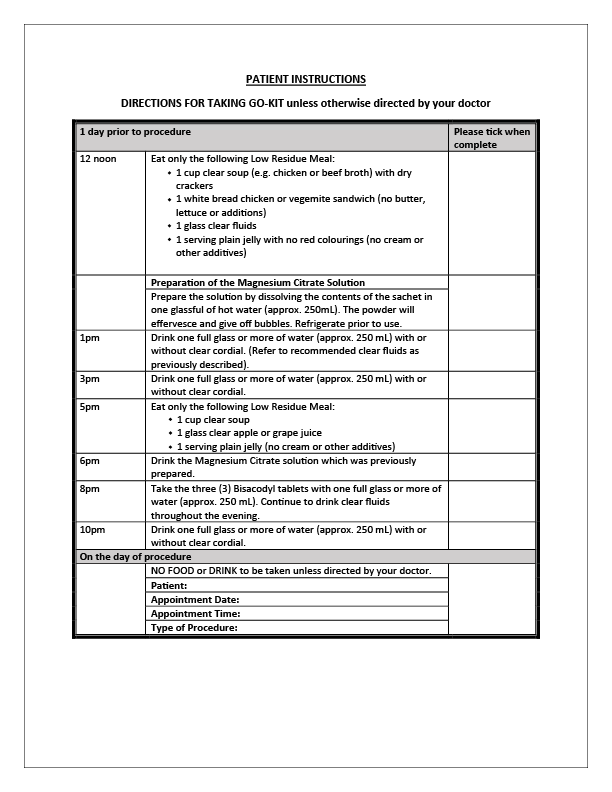
Preparation for the procedure begins at 12 noon on the day before the procedure commencing with a low residue meal. (Refer to directions leaflet).

Recommended Clear Fluids include water, strained fruit juice without pulp (apple, white grape, pineapple, pear), clear broth, tea or coffee (without milk/cream), clear sugar-free cordials such as lemon or lime (no red or purple colourings), plain sugar-free jelly and clear ice blocks.

Do not drink carbonated beverages.

Do not drink alcoholic beverages.

REMEMBER you need to be close to toilet facilities whilst you are taking Go-Kit. Bowel movements may continue for several hours after the last dose of Go-Kit has been taken.

If you take too much (overdose)

Overdosage is unlikely as Go-Kit contains only enough medication for one treatment. However in the event of an overdose, dehydration is likely and immediate action should be taken to restore electrolyte balance with appropriate fluid replacement.

Contact the Poisons Information Centre for any further information.
Australia: 13 11 26
New Zealand: 0800 764 766

While you are taking Go-Kit

Things you must do

You must ensure that you drink the recommended amount of liquid to replace the large amounts of fluid that may be lost during bowel emptying.

Things you must not do

Do not take any additional bowel preparation or laxative products.

Do not give Go-Kit to anyone else, even if they have the same condition as you.

Do not stop taking Go-Kit or lower the dose without checking with your doctor.

Side effects

Tell your doctor or pharmacist as soon as possible if you do not feel well while you are taking Go- Kit.

Go-Kit helps most people that require bowel cleansing, but it may have unwanted side effects in a few people. All medicines can have some unwanted side effects. Sometimes they are serious, most of the time they are not. You may need medical treatment if you get some of the side effects.

Ask your doctor or pharmacist to answer any questions you may have.

The following is a list of possible side effects. Tell your doctor or pharmacist if you notice any of the following and they worry you:

  • Nausea (feeling sick)
  • Vomiting
  • Stomach pain
  • Stomach bloating
  • Anal irritation
  • Allergic reaction

Do not be alarmed by this list. You may not experience any of them.

If the effects are severe, you may need medical treatment.

However these side effects usually disappear when treatment with Go-Kit is finished.

If you get any side effects, do not stop taking Go-Kit without first talking to your doctor or pharmacist.

Other side effects not listed may also occur in some patients. Tell your doctor or pharmacist if you notice anything unusual that is making you feel unwell.

Further information

Storage

Keep Go-Kit in a cool dry place where the temperature stays below 25°C.

Do not store Go-Kit or any other medicine in the bathroom or near a sink.

Do not leave it on a window sill or in the car on hot days. Heat and dampness can destroy some medicines.

Keep it where children cannot reach it. A locked cupboard at least one and a half metres above ground is a good place to store medicines.

Disposal

If your doctor or pharmacist tells you to stop taking Go-Kit or it has passed the expiry date, ask your pharmacist what to do with any medicine that is left over.

Product description

A composite pack containing a blister pack of three yellow Bisacodyl Tablets (5mg), a sachet containing 21.5g of dry white effervescent crystalline powder labelled Magnesium Citrate and a Consumer Medicine Information leaflet.

Ingredients

Each Go-Kit contains the following products:

Each Bisacodyl tablet contains 5 mg of bisacodyl as the active ingredient. It also contains: Lactose, sucrose, gelatin, starch, titanium dioxide (171), cellulose, macrogol and quinoline yellow (104).

Each sachet labelled Magnesium Citrate contains a white powder for solution, composed of magnesium carbonate 7.5g and citric acid 14g which together forms magnesium citrate in solution.

Go-Kit does not contain gluten, tartrazine or any other azo dyes.

Supplier

Fresenius Kabi Australia Pty Limited
Level 2, 2 Woodland Way
Mount Kuring-gai
NSW 2080
Tel: 1300 732 001

Fresenius Kabi New Zealand Limited
c/o Fresenius Medical Care Australia Pty Ltd
60 Pavilion Drive
Airport Oaks
Auckland
New Zealand

This leaflet was approved 2nd August 2012.

Australian Registration Number, AUST R 200381.
Published by MIMS July 2020

BRAND INFORMATION

Brand name

Go-Kit

Active ingredient

Bisacodyl; Magnesium carbonate hydrate; Citric acid

Schedule

S3


1 Name of Medicine

Bisacodyl tablets.

Bisacodyl.

Magnesium citrate sachet.

Magnesium carbonate hydrate, citric acid.

2 Qualitative and Quantitative Composition

Go-Kit is a medicine kit containing:
Three (3) yellow bisacodyl 5 mg tablets. Each bisacodyl tablet contains bisacodyl 5 mg, as the active ingredient.
One (1) magnesium citrate 21.5 g sachet. Each sachet contains magnesium carbonate hydrate 7.2 g and citric acid 14.3 g, as the active ingredients.
For the full list of excipients, see Section 6.1 List of Excipients.

3 Pharmaceutical Form

Bisacodyl tablets.

Enteric-coated tablets. For oral use.
Bisacodyl is a round yellow enteric-coated tablet.

Magnesium citrate sachet.

Powder for solution. For oral use.
The sachet contains an effervescent white crystalline powder composed of magnesium carbonate and citric acid, which together form magnesium citrate in solution.

4 Clinical Particulars

4.1 Therapeutic Indications

Go-Kit is indicated for bowel emptying and cleansing in conjunction with barium meal, barium enema x-ray examination, air contrast examination, and prior to intravenous pyelograms (IVP).

4.2 Dose and Method of Administration

The bisacodyl 5 mg tablets should be taken whole and not crushed or chewed.

Prior to the procedure.

During the day, patients should drink at least one glass (approx. 250 mL) of Recommended clear fluids (see Appendix I), in addition to the water taken with Go-Kit, each hour until bedtime to maintain adequate hydration. It is recommended that patients follow a modified diet, such as a low-fibre diet, up until they take the medication. Upon taking the medication, the patient may only have Recommended clear fluids.

Preparation of the solution.

Dissolve the contents of the 21.5 g magnesium citrate sachet, by slowly adding the powder in approximately 250 mL of warm water (not boiling) using a suitable food grade container. The solution may appear cloudy, may become hot and produce effervescence upon reconstitution. Stir gently until the effervescence ceases. If desired, the solution may be refrigerated after reconstitution. The reconstituted solution should be ingested within 24 hours of reconstitution.

Recommended dosing regimen.

Below is an example of a dosing regimen. The dosing regimen may be adjusted by a healthcare professional as required.
First dose.

Bisacodyl tablets (taken at 12:00 PM)

.Take the three (3) Bisacodyl Tablets with one full glass (approx. 250 mL) of water.
Second dose.

Magnesium citrate sachet (taken at 6:00 PM).

The solution should be ingested slowly but completely. This should be followed by drinking adequate glasses of water or Recommended clear fluids, at least one (1) glass every hour after that.

Appendix I.

Recommended clear fluids.

Water; fat-free clear soups (e.g. strained chicken noodle soup); broth/bouillon, pulp-free fruit juices (e.g. apple, pear, grape); black tea or coffee (no milk); electrolyte replacing drinks; commercial high-energy, fat-free, milk-free nutritional supplements; carbonated beverages; clear fruit cordials (lemon, lime, etc.); plain jelly; sorbet; plain boiled sweets; gums and jubes.
Sugar, salt, and sweetener can be used. No red or purple colouring. Barley sugar may be sucked if required.

4.3 Contraindications

Go-Kit should not be used by patients with acute abdominal conditions such as appendicitis, gastrointestinal obstruction, gastric retention, bowel perforation (frank or suspected), toxic megacolon, toxic colitis, ileus, body weight less than 20 kg, severe dehydration, or hypersensitivity to any of the ingredients.

4.4 Special Warnings and Precautions for Use

Identified precautions.

Use with caution in patients with inflammatory bowel disease (IBD), marked bloody diarrhoea, pre-existing electrolyte disturbances, congestive heart failure, diabetes and those with a stoma.
Go-Kit is likely to cause transient hypovolaemia, hence adequate fluid intake or replacement should be ensured (see Section 4.2 Dose and Method of Administration).
Go-Kit should be administered with caution in patients with congestive heart failure and pre-existing electrolyte disturbances. These patients should be monitored.
Go-Kit should be administered with caution to patients using calcium channel blockers, diuretics or other medications that may affect electrolyte serum levels and exacerbate volume depletion. These patients should be monitored.
Go-Kit may cause bloating, distension or abdominal pain.

Use in hepatic impairment.

No data is available.

Use in renal impairment.

Patients with kidney disease or impaired renal function should be monitored.

Use in the elderly.

Caution should be exercised in the elderly as dehydration and electrolyte depletion may occur. Elderly patients must receive adequate fluids during administration.

Paediatric use.

The safety and efficacy in children has not been established.

Effects on laboratory tests.

No data is available.

4.5 Interactions with Other Medicines and Other Forms of Interactions

Oral medication, especially those medicines with a sustained release, short half-life or a narrow therapeutic window, taken within one hour of the commencing Go-Kit to one hour after completing its administration, may be flushed from the gastrointestinal tract and not absorbed.
The low-dose contraceptive pill will not work when taken with Go-Kit as it needs as much time as possible in the gastrointestinal tract for absorption.
Go-Kit administration may potentially interact with medicines for heart conditions such as calcium channel blockers, diuretics or other medications that may affect electrolyte levels and other bowel cleansing preparations or laxatives.
Go-Kit administration may potentially interact with medicines for diabetes and diabetic patients may require adjustment of their diabetic medication, as the recommended liquid diet may affect blood glucose levels.

4.6 Fertility, Pregnancy and Lactation

Effects on fertility.

No fertility studies have been conducted.
(Category - none)
It is not known whether Go-Kit can cause foetal harm or affect reproductive capacity. Go-Kit should only be used if the benefits clearly outweigh the risks.
No lactation studies have been conducted.

4.7 Effects on Ability to Drive and Use Machines

The effects of this medicine on a person's ability to drive and use machines were not assessed as part of its registration.

4.8 Adverse Effects (Undesirable Effects)

Nausea, vomiting and anal irritation are the most common reactions. These adverse effects are usually transient and subside rapidly.
Bisacodyl may cause abdominal discomfort such as colic or cramps.
Prolonged use of Go-Kit may result in dehydration and electrolyte disturbances (see Section 4.3; Section 4.4).
Hypersensitivity reactions including angioedema and anaphylactoid reactions have been reported rarely.

Reporting suspected adverse effects.

Reporting suspected adverse reactions after registration of the medicinal product is important. It allows continued monitoring of the benefit-risk balance of the medicinal product. Healthcare professionals are asked to report any suspected adverse reactions at https://www.tga.gov.au/reporting-problems.

4.9 Overdose

In the event of overdosage, dehydration may occur. Calcium, potassium, chloride and sodium levels should be carefully monitored and immediate corrective action should be taken to restore electrolyte balance with appropriate fluid replacements.
For information on the management of overdose, contact the Poisons Information Centre on 13 11 26 (Australia).

5 Pharmacological Properties

5.1 Pharmacodynamic Properties

Mechanism of action.

Bisacodyl.

Bisacodyl is a stimulant laxative acting mainly in the large intestine. It acts locally in the gastrointestinal tract, stimulating the sensory nerve endings in the colonic mucosa to produce parasympathetic reflexes resulting in increased peristaltic contractions of the colon. Local axonic reflexes as well as segmental reflexes are initiated in the region of contact and contribute to the widespread peristaltic activity producing evacuation. For this reason, bisacodyl may be used in patients with ganglionic blockage or spinal cord damage (e.g. paraplegia, poliomyelitis). When taken on an empty stomach, bisacodyl tablets will have an effect within six (6) to eight (8) hours. When taken with food the effect of the tablets is exhibited within ten (10) to twelve (12) hours.

Magnesium citrate.

Magnesium citrate is an osmotic laxative. It acts by increasing the intestinal osmotic pressure thereby promoting retention of fluid within the bowel. Magnesium citrate draws water from the tissues into the small intestine. This stimulates the normal forward movement of the intestines, peristalsis, resulting in bowel movement within three (3) to six (6) hours.

Clinical trials.

No data is available.

5.2 Pharmacokinetic Properties

Absorption.

Bisacodyl.

Absorption from the gastrointestinal tract is minimal with enteric coated tablets or suppositories.

Distribution.

No data is available.

Metabolism.

Bisacodyl.

Following oral administration, bisacodyl is converted to the active desacetyl metabolite bis(p-hydroxyphenyl)pyridyl-2-methane by intestinal and bacterial enzymes.

Excretion.

Bisacodyl.

The small amount absorbed is excreted in the urine as the glucuronide. Bisacodyl is mainly excreted in the faeces.

5.3 Preclinical Safety Data

Genotoxicity.

No genotoxic studies have been performed.

Carcinogenicity.

No carcinogenic studies have been performed.

6 Pharmaceutical Particulars

6.1 List of Excipients

Bisacodyl.

See Table 1.

6.2 Incompatibilities

Incompatibilities were either not assessed or not identified as part of the registration of this medicine.

6.3 Shelf Life

In Australia, information on the shelf life can be found on the public summary of the Australian Register of Therapeutic Goods (ARTG). The expiry date can be found on the packaging.

6.4 Special Precautions for Storage

Store below 25°C in a dry place. To reduce microbiological hazard, use as soon as practicable after reconstitution. If storage is necessary, the solution may be stored for up to 24 hours in the refrigerator at 2-8°C.

6.5 Nature and Contents of Container

Go-Kit is presented as a medicine kit packed in an outer carton containing:
one (1) blister pack of three (3) yellow Bisacodyl 5 mg Tablets and;
one (1) Magnesium Citrate 21.5 g sachet containing a white crystalline powder.
The Australian registration number is AUST R 200381.

6.6 Special Precautions for Disposal

In Australia, any unused medicine or waste material should be disposed of in accordance with local requirements.

6.7 Physicochemical Properties

Chemical structure.

Bisacodyl.

The chemical name is 4,4’-(2-pyridylmethylene)di (phenylacetate).
Chemical formula: C22H19NO4.
Molecular weight: 361.4 g/mol.
Structural formula:

Magnesium citrate.

Chemical formula:C6H6MgO7.
Molecular weight: 214.41 g/mol.
Structural formula:

Magnesium carbonate hydrate.

Chemical formula: MgCO3.H2O.
Molecular weight: 84.31 g/mol.
Structural formula:

Citric acid.

Chemical formula: C6H8O7.
Molecular weight: 192.1 g/mol.
Structural formula:

CAS number.

Bisacodyl: 603-50-9.
Magnesium carbonate hydrate: 546-93-0.
Citric acid: 77-92-9.

7 Medicine Schedule (Poisons Standard)

Australia: S3 - Pharmacist Only Medicine.

Summary Table of Changes
