


Consumer medicine information

Hiprex

Methenamine hippurate

BRAND INFORMATION

Brand name

Hiprex

Active ingredient

Methenamine hippurate

Schedule

S3


Consumer medicine information (CMI) leaflet

Please read this leaflet carefully before you start using Hiprex.

What is in this leaflet

This leaflet answers some common questions about Hiprex tablets. It does not contain all the available information. It does not take the place of talking to your pharmacist or doctor.

If you have any concerns about taking this medicine, ask your doctor or pharmacist.

Keep this leaflet. You may need to read it again.

What Hiprex tablets are used for

Hexamine hippurate is used to suppress or eliminate urinary bacteria associated with chronic or recurrent infection.

Hiprex may be used for short or long term treatment.

Hexamine hippurate helps to acidify the urine and maintain a low urinary pH.

Hexamine hippurate has antibacterial activity.

Ask your pharmacist or doctor if you have any questions about this medicine. Your pharmacist or doctor may have given it for another reason.

Before you take Hiprex tablets

When you must not take it

Do not take this medicine if you have an allergy to:

  • any medicine containing Hexamine (methenamine) hippurate.
  • any of the ingredients listed at the end of this leaflet.

Some of the symptoms of an allergic reaction may include:

  • shortness of breath
  • wheezing or difficulty breathing
  • swelling of the face, lips, tongue or other parts of the body
  • rash, itching or hives on the skin.

Do not take this medicine after the expiry date printed on the bottle or if the packaging is torn or shows signs of tampering.

If you are not sure whether you should start taking this medicine, talk to your pharmacist or doctor.

Before you start to take it

Tell your pharmacist if you have allergies to any other medicines, foods, preservatives or dyes.

Tell your pharmacist if you have or have had any of the following medical conditions:

  • kidney problems
  • liver problems

Tell your pharmacist or doctor if you are pregnant or plan to become pregnant. Your pharmacist or doctor will discuss the benefits and possible risks of taking the medicine during pregnancy.

Ask your pharmacist or doctor about taking this medicine if you are breastfeeding. It is not known if hexamine hippurate passes into the breast milk. Your pharmacist or doctor will discuss the potential benefits and risks of taking the medicine if you are breastfeeding.

If you have not told your pharmacist or doctor about any of the above, tell him/her before you start taking Hiprex tablets.

Taking other medicines

Tell your pharmacist or doctor if you are taking any other medicines, including any that you get without a prescription or that are herbal from your pharmacy, supermarket or health food shop.

Some medicines and Hiprex may interfere with each other. These include:

  • sulphur based drugs, this may include antibiotics, and medicines used to treat build up of fluids in the body, seizures or diabetes
  • medicines taken to alkalise the urine

Your pharmacist or doctor will have more information on medicines to be careful with or avoid while taking Hiprex.

How to take Hiprex tablets

Follow all directions on the bottle or those given to you by your pharmacist or doctor carefully.

If you do not understand the instructions on the bottle, ask your pharmacist or doctor for help.

Hiprex can be taken with or without food.

How much to take

Adults & children over 12 years: - 1 g twice daily

Children 6-12 years - 500 mg to 1 g twice daily

Children under 6 years: - Do not use

When to take it

Take your medicine twice daily.

The maximum adult dose is 2 g per day.

If you take too much (overdose)

Immediately telephone your doctor or the Poisons Information Centre for advice, or go the Accident and Emergency at the nearest hospital, if you think that you or anyone else may have taken too many Hiprex tablets. Do this even if there are no signs of discomfort or poisoning.

Poisons Information Australia:
Tel. 13 11 26

While you are using Hiprex tablets

Things you must do

Talk to your pharmacist or doctor if your symptoms do not improve. Your pharmacist or doctor will assess your condition and decide if you should continue to take the medicine.

Things you must not do

Do not take Hiprex tablets to treat any other complaints unless your pharmacist or doctor tells you to.

Do not give your medicine to anyone else, even if they have the same condition as you.

Do not take more than the recommended dose unless your pharmacist or doctor tells you to.

Do not use this medicine in children under 6 years of age.

Things to be careful of

Some patients may have alkaline urine due to a vegetarian diet or an infection. As indicated by urinary pH or clinical response administration of ascorbic acid (1 g twice daily) is recommended.

Side effects

Tell your pharmacist or doctor as soon as possible if you do not feel well while you are taking Hiprex tablets.

This medicine helps most people, yet it may have unwanted side effects in a few people. All medicines can have side effects. Sometimes they are serious, most of the time they are not. You may need medical attention if you get some of the side effects.

Do not be alarmed by the following list of possible side effects. You may not experience any of them.

Ask your pharmacist or doctor to answer any questions you may have.

Tell your pharmacist or doctor if you notice any of the following and they worry you:

  • nausea
  • upset stomach
  • painful urination
  • rash
  • inflammation of the mouth

The above list includes the more common side effects of your medicine. They are usually mild.

If any of the following happen, tell your doctor immediately or go to Accident and Emergency at your nearest hospital:

  • shortness of breath
  • wheezing or difficulty breathing
  • swelling of the face, lips, tongue or other parts of the body
  • rash, itching or hives on the skin

The above list includes very serious side effects. You may need urgent medical attention or hospitalisation. These side effects are very rare when used at the recommended dose for a short period of time.

Tell your pharmacist or doctor if you notice anything that is making you feel unwell.

Other side effects not listed above may also occur in some people.

Before and after using Hiprex tablets

Storage

Keep your medicine in the original bottle until it is time to take it.

Keep your medicine in a cool dry place where the temperature stays below 30°C.

Do not store Hiprex or any other medicine in the bathroom or near a sink. Do not leave it on a window sill or in the car. Heat and dampness can destroy some medicines.

Keep Hiprex out of reach of children. A locked cupboard at least one-and-a-half metres above the ground is a good place to store medicines.

Disposal

Ask your pharmacist what to do with any medicine that is left over, or if the expiry date has passed.

Product description

What it looks like

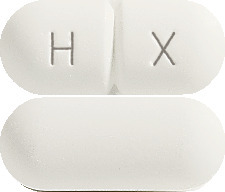
Hiprex tablets (1 g) are white capsule shaped, scored and marked HX on one side.

Hiprex is available in bottles of 20 and 100 tablets.

Ingredients

Active ingredient:

  • hexamine hippurate

Other ingredients:

  • magnesium stearate
  • povidone
  • silica - colloidal anhydrous

Hiprex is free from:

  • sugar
  • lactose
  • gluten
  • sodium
  • artificial colours

Sponsor

iNova Pharmaceuticals (Australia) Pty Limited
ABN: 13 617 871 539
Level 10, 12 Help Street
Chatswood NSW 2067
Tel (Australia): 1800 630 056

™ = Trademark

This leaflet was prepared in November 2017.

Published by MIMS February 2018
BRAND INFORMATION

Brand name

Hiprex

Active ingredient

Methenamine hippurate

Schedule

S3


1 Name of Medicine

Methenamine hippurate.

2 Qualitative and Quantitative Composition

Each tablet contains 1 g of methenamine hippurate.
For the full list of excipients, see Section 6.1 List of Excipients.

3 Pharmaceutical Form

White, oblong-shaped tablet, coded HX with score line on one surface and plain on the other face.

4 Clinical Particulars

4.1 Therapeutic Indications

For prophylaxis or suppression of bacteriuria associated with chronic or recurrent infection of the urinary tract.

4.2 Dose and Method of Administration

Adults and children 12 years or older.

1 tablet twice daily, with or without food.
Not recommended for use in children under 12 years.

Method of administration.

For oral administration.
The tablets may be halved or crushed and taken with water if the patient is unable to swallow whole tablets.

Special populations.

Renal impairment.

No dose adjustments for patients with mild or moderate renal insufficiency.
Methenamine hippurate is not recommended for use by patients with neurogenic bladder, renal tract abnormalities or using long-term catheters. (see Section 4.3 Contraindications).

4.3 Contraindications

Hypersensitivity or allergy to methenamine hippurate, formaldehyde or to any of the excipients listed in Section 6.1 List of Excipients.
Severe renal failure (eGFR < 10 mL/min/1.73 m2), kidney infection, severe dehydration, or gout.
Severe hepatic impairment.
Metabolic acidosis.

4.4 Special Warnings and Precautions for Use

The underlying causes and risk factors for urinary tract infections should be investigated, and changes to perineal hygiene, sexual practices, urinary voiding and diet to maintain the normal urinary tract flora may be indicated before pharmacological interventions.
The effectivity of methenamine hippurate as a prophylactic agent depends on the acidity of urine, the bacterial species and counts in urine, their susceptibility to methenamine, and the exposure interval to formaldehyde that is hydrolysed from methenamine (see Section 5.1 Pharmacodynamic Properties, Mechanism of action). Methenamine may be ineffective when the urinary tract is colonised by new species, when bacteria multiply quickly under certain conditions, or when bacteria migrate from the lower urinary tract to the kidneys, therefore patients should be encouraged to consult their doctor at the onset of signs and symptoms of infection.
Bacteriological analysis of a urine sample is recommended to confirm the clinical diagnosis. When antibiotic treatment of bacteriuria or urinary tract infection is indicated, prophylaxis with methenamine hippurate should be stopped until infection is cleared, and urine becomes sterile (< 104 counts per mL).

Use in the elderly.

The elderly are at higher risk of urinary tract infections because of changes in oestrogen levels (women), prostate problems (men), incontinence, increased use of medications, surgical or medical interventions including catheters, or decreased mobility and personal hygienic practices. No difference in the safety of methenamine hippurate in the elderly compared to the younger population has been observed.

Paediatric use.

Hiprex is not recommended for children under 12 years of age (see Section 4.2 Dose and Method of Administration).

Effects on laboratory tests.

In laboratory tests using acid hydrolysis of urine during pregnancy, the presence of methenamine or formaldehyde can result in unmeasurably low oestriol results. Enzymatic hydrolysis will provide more accurate results.
Methenamine can affect the determination of steroids, catecholamines and 5-hydroxyindole acetic acid in urine and give false results depending on the analytical method used.

4.5 Interactions with Other Medicines and Other Forms of Interactions

Sulphonamides.

Some sulphonamides may form an insoluble crystalline precipitate with formaldehyde in urine, therefore concurrent administration with methenamine should be avoided.

Alkalising agents.

Methenamine hydrolyses into the therapeutically active formaldehyde under acidic conditions in urine, therefore concomitant use with agents that make urine alkaline or urinary alkalising agents such as potassium citrate or acetazolamide reduce the effectivity of methenamine and should be avoided.
Antacids might cause an increase of urine pH and hence decrease the effect of methenamine.

4.6 Fertility, Pregnancy and Lactation

Effects on fertility.

There are no human data available on fertility. Data from studies in rats do not indicate any effects on female fertility, while effects on male fertility have not been adequately tested (see Section 5.3 Preclinical Safety Data).
(Category A)
There is inadequate evidence of safety of methenamine hippurate in human pregnancy, but it has been in wide use for many years without apparent ill consequence. Animal studies are insufficient with respect to reproductive toxicity.
In limited studies in pregnant rabbits with methenamine hippurate at approximately 3 times the clinical dose based on body surface area, there was increased post-implantation loss resulting in lower litter sizes and a limited occurrence of foetal deformities including shortness of tail and malrotation of limbs. No effects on development were noted at doses equivalent to the clinical dose. Methenamine hippurate, administered at approximately 3 times the clinical dose, based on body surface area, did not adversely affect the fertility of female rats. Effects on male fertility have not been adequately studied.
As a precautionary measure, it is preferable to avoid the use of methenamine hippurate during pregnancy.
Methenamine hippurate is excreted in human milk, but at therapeutic doses of Hiprex no effects on the breastfed newborn or infant are anticipated.

4.7 Effects on Ability to Drive and Use Machines

Hiprex has no, or negligible, effects on the ability to drive and use machines.

4.8 Adverse Effects (Undesirable Effects)

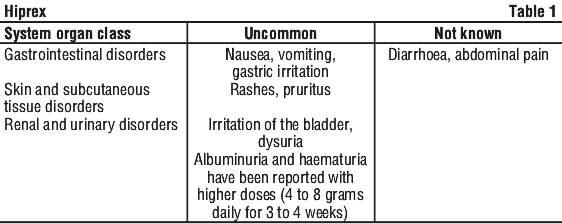
The safety of methenamine hippurate is estimated from its well-established use and published literature on studies involving small numbers of patients. Adverse effect frequencies are defined as: very common (≥ 1/l0); common (≥ 1/100 to < 1/10); uncommon (≥ 1/1000 to < 1/100); rare (≥ 1/10,000 to < 1/1000); very rare (< 1/10,000); not known (cannot be estimated from the available data). See Table 1.
Occasionally superinfection with yeast may occur. At high dosage, chemical cystitis leading to dysuria may occur.

Reporting suspected adverse effects.

Reporting suspected adverse reactions after registration of the medicinal product is important. It allows continued monitoring of the benefit-risk balance of the medicinal product. Healthcare professionals are asked to report any suspected adverse reactions at http://www.tga.gov.au/reporting-problems.

4.9 Overdose

For information on the management of overdose, contact the Poisons Information Centre on 13 11 26 (Australia).

5 Pharmacological Properties

5.1 Pharmacodynamic Properties

Pharmacotherapeutic group: urinary antibacterial agent, ATC code: J01XX05.

Mechanism of action.

Hiprex contains methenamine hippurate, a salt of methenamine and hippuric acid, which is absorbed and excreted rapidly.
Methenamine hippurate is a urinary antibacterial agent with a wide spectrum covering both gram-positive and gram-negative organisms. Urinary antibacterial activity can be shown within 30 minutes of administration.
The antibacterial action of methenamine hippurate arises from the slow release of formaldehyde when methenamine is hydrolysed in acidic urine.
Formaldehyde denatures the proteins and nucleic acid of bacteria, in particular E. coli, enterococci and staphylococci. Enterobacter aerogenes is generally resistant while urea-splitting bacteria such as Proteus and Pseudomonas species are inhibited by methenamine only when urine is sufficiently acidic.
A formaldehyde concentration above 25 micrograms per mL of urine maintained for about 2 hours is effective as a bactericidal. Higher urinary pH, flow rates and frequency decrease the formation, concentration and exposure time of formaldehyde and therefore its effectivity.

Clinical trials.

The authors of a Cochrane review of methenamine hippurate for prevention of urinary tract infections (Lee et al, 2012) concluded that methenamine hippurate may be effective for preventing UTI in patients without renal tract abnormalities, particularly when used for short term prophylaxis, but that it does not appear to work in patients with neuropathic bladder or in patients who have renal tract abnormalities.
In a randomised, double blind, long term, crossover study (Cronberg et al, 1987), 1 g twice daily of methenamine hippurate was compared with placebo for its preventive effect on recurrent attacks of acute cystitis. Methenamine hippurate and placebo were interchanged every six months for two years. Out of 21 enrolled patients, 14 completed the first year and 13 both years of treatment, which permitted the evaluation of 27 patient years. There were 52 episodes of acute cystitis caused by reinfection: 41 occurred during placebo treatment and only 11 during the methenamine hippurate regimen (p < 0.01).

5.2 Pharmacokinetic Properties

Absorption.

Following oral administration, methenamine is rapidly absorbed from the gastrointestinal tract, with a peak plasma concentration of about 30 mg/L occurring approximately 1-2 hours after ingestion of a single dose. It then declines with a mean elimination half-life of about 4 hours.
The peak plasma concentration from twice daily dosing is about 35 mg/L at steady-state, indicating that no drug accumulation takes place.

Distribution.

The average distribution volume was about 0.56 L/kg, which is similar to the total body water in adults.

Metabolism.

A small proportion of methenamine is degraded by stomach acid to formaldehyde, which is absorbed and quickly converted to formic acid - which in turn is oxidised to carbon dioxide and water or eliminated quickly through the kidneys. The remaining methenamine is unchanged until excreted by the kidneys.

Excretion.

Excretion is by both tubular secretion and glomerular filtration. About 82% of a single methenamine dose is recovered intact in urine within 24 hours, while about 88% is recovered from 1 g twice daily dosing after a 12-hour interval.

5.3 Preclinical Safety Data

Genotoxicity.

Limited in vitro tests indicate that methenamine is non-mutagenic to Salmonella typhimurium strains in the presence of S9, but some mutagenic effects with metabolic activation were observed after nitrosation.

Carcinogenicity.

In limited studies, no evidence of carcinogenic activity was found in mice and rats, and methenamine did not induce neoplasms.

6 Pharmaceutical Particulars

6.1 List of Excipients

Magnesium stearate, colloidal anhydrous silica, povidone.

6.2 Incompatibilities

Incompatibilities were either not assessed or not identified as part of the registration of this medicine (also see Section 4.5 Interactions with Other Medicines and Other Forms of Interactions).

6.3 Shelf Life

In Australia, information on the shelf life can be found on the public summary of the Australian Register of Therapeutic Goods (ARTG). The expiry date can be found on the packaging.

6.4 Special Precautions for Storage

Store below 30°C. Keep container tightly closed/airtight.

6.5 Nature and Contents of Container

Bottle.

20 or 100 tablets.

6.6 Special Precautions for Disposal

In Australia, any unused medicine or waste material should be disposed of by taking to your local pharmacy.

6.7 Physicochemical Properties

Chemical structure.


Methenamine hippurate is a white to off-white powder. It is freely soluble in water.

Chemical name.

2-benzamidoacetic acid; 1,3,5,7-tetrazatricyclo[3.3.1.13,7] decane.

Molecular formula.

C15H12N5O31.

Molecular weight.

319.36 g/mol.

CAS number.

5714-73-8.

7 Medicine Schedule (Poisons Standard)

(S3) Pharmacist Only Medicine.

Summary Table of Changes