


Consumer medicine information

Minirin Injection

Desmopressin acetate

BRAND INFORMATION

Brand name

Minirin/ Octostim Injections

Active ingredient

Desmopressin acetate

Schedule

S4


Consumer medicine information (CMI) leaflet

Please read this leaflet carefully before you start using Minirin Injection.

What is in this leaflet

This leaflet answers some common questions about MINIRIN Injection.

It does not contain all the available information. It does not take the place of talking to your doctor or pharmacist.

All medicines have risks and benefits. Your doctor has weighed the risks of you been given MINIRIN Injection against the benefits they expect it will have for you.

If you have any concerns about this medicine you will be given, ask your doctor or pharmacist.

Keep this leaflet with the medicine. You may need to read it again.

What MINIRIN Injection is given for

The active ingredient, desmopressin acetate in MINIRIN Injection is a synthetic version of a naturally occurring substance produced in the brain called vasopressin.

It has a number of different actions in the body including an action on the kidneys to reduce the amount of urine produced. This means that MINIRIN injection can be used for several different conditions including:

  • cranial diabetes insipidus (CDI), large amounts of urine being produced day and night and constant thirst where intranasal administration is inconvenient
  • as a diagnostic test to establish if the kidneys have the ability to concentrate urine in adults.

Ask your doctor if you have any questions about why this medicine has been prescribed for you. Your doctor may have prescribed it for another reason.

This medicine is not addictive.

It is available only with a doctor's prescription.

This medicine is not expected to affect your ability to drive a car or operate machinery.

Before you are given MINIRIN Injection

When you must not be given it

MINIRIN Injection must not be given to you if you have an allergy to:

  • any medicine containing desmopressin or any of the ingredients listed at the end of this leaflet.

Some of the symptoms of an allergic reaction may include:

  • shortness of breath, wheezing or difficulty breathing
  • swelling of the face, lips, tongue or other parts of the body
  • rash, itching or hives on the skin.

You must not be given MINIRIN Injection if you:

  • suffer from polydipsia (have excessive thirst and requiring increased fluid intake) or psychogenic polydipsia (psychologically-caused increased thirst and increased fluid intake
  • have cardiac insufficiency (heart failure in which the heart is not able to pump enough blood throughout the body resulting in shortness of breath, swelling of feet or legs due to fluid build-up)
  • have low levels of sodium in your bloodstream
  • have SIADH (hormone secretion disorder where there is an overproduction of a hormone causing fluid retention, resulting in weakness, tiredness or confusion).
  • have a history of a condition marked by severe pain in the chest, often also spreading to the shoulders, arms and neck, owing to an inadequate supply to the heart (angina pectoris).Have Von Willebrand disease type IIB (a Bleeding disorder).

Do not breast-feed if you are taking this medicine. MINIRIN Injection is not recommended while you are breast-feeding.

Do not give this medicine to a child under the age of 6 years. Safety and effectiveness in children younger than 6 years have not been established.

Do not take this medicine after the expiry date printed on the pack or if the packaging is torn or shows signs of tampering. If it has expired or is damaged, return it to your pharmacist for disposal.

If you are not sure whether you should start taking this medicine, talk to your doctor.

Before it is given to you

Tell your doctor if you have allergies to any other medicines, foods, preservatives or dyes.

Tell your doctor if you have or have had any of the following medical conditions:

  • a known allergy to anti-diuretic hormone (ADH)
  • heart or blood vessel disease or any other disease for which you take diuretics (fluid tablets)
  • low blood pressure
  • cystic fibrosis or any other disease which causes fluid or salt imbalance
  • any disease of the blood clotting cells
  • serious problems with bladder function or with passing urine.

Tell your doctor if you are pregnant or plan to become pregnant or are breast-feeding.

MINIRIN Injection should only be given to a pregnant woman if it is needed. Your doctor can discuss with you the risks and benefits involved.

It is recommended that you do not breastfeed while given MINIRIN Injection.

If you have not told your doctor about any of the above, tell him/her before you will be given MINIRIN Injection.

Taking other medicines

Tell your doctor or pharmacist if you are taking any other medicines, including any that you get without a prescription from your pharmacy, supermarket or health food shop.

Some medicines and MINIRIN Injection may interfere with each other. These include:

  • tricyclic antidepressants, which are medicines used to treat e.g. depression (such as clomipramine, imipramine, desipramine)
  • selective serotonin reuptake inhibitors (SSRIs), which are medicines used to treat e.g. depression or anxiety (such as citalopram, paroxetine, sertraline)
  • chlorpromazine, which is an anti-psychotic medicinal product used to treat e.g. schizophrenia
  • carbamazepine, which is used to treat e.g. bipolar disorder and epilepsy
  • antidiabetic medicinal products used for type II diabetes (medicines in the sulfonylurea group), particularly chlorpropamide
  • medicines used to treat high blood pressure and some other conditions (ACE inhibitors or angiotensin receptor blockers e.g. enalapril, perindopril, irbesartan etc.)
  • non-steroidal anti-inflammatory drugs (NSAIDs), which are medicinal products used for the treatment of pain and inflammation (e.g. aspirin and ibuprofen).

These medicines may be affected by MINIRIN Injection or may affect how well it works. You may need different amounts of your medicines, or you may need to take different medicines.

Your doctor and pharmacist have more information on medicines to be careful with or avoid while you have been given this medicine.

How MINIRIN is given

MINIRIN may be given by injection into a muscle or into a vein (intravenously), depending on its use.

MINIRIN Injection is not intended for self-administration.

How much MINIRIN Injection you will be given

The dose of MINIRIN Injection prescribed by your doctor will vary depending on the condition being treated and your response to the treatment.

Cranial diabetes insipidus
The average daily dose for adults is 1 to 4 micrograms by injection. The dose for children will be up to 0.4 micrograms daily. The dose you receive will be adjusted to suit personal requirement. MINIRIN Injection is usually given in two doses each day. Sometimes a single daily dose is sufficient to control your condition.

Test the ability of the kidneys to concentrate urine
Adults will receive a single dose of up to 4 micrograms at any one time.

When MINIRIN Injection is given

Cranial diabetes insipidus
You will be given MINIRIN Injection at times specified by your doctor.

Test the ability of the kidneys to concentrate urine
Your doctor will advise you.

How long MINIRIN is given

Cranial diabetes insipidus
MINIRIN Injection can prevent or control the thirst and frequent urination associated with CDI. You will be less thirsty and urinate a smaller volume less often.

It is likely that you will need to be given MINIRIN Injection or other forms of MINIRIN for the rest of your life.

This medicine helps to control your condition, but does not cure it. It is important to keep taking your medicine even if you feel well.

Test the ability of the kidneys to concentrate urine
Your doctor will explain the details of the test.

What to expect

Individuals will vary greatly in their response to MINIRIN Injection and you may not feel any effect. You will receive regular monitoring to check on your body's response to MINIRIN Injection.

If you have a defect in your blood clotting cells, your skin bleeding time will be monitored before surgery to determine whether you are at high risk of blood loss.

If you are given too much (overdose)

It is unlikely that you will be given too much MINIRIN Injection.

Immediately telephone your doctor or the Poisons Information Centre (telephone 13 11 26) for advice, or go to Accident and Emergency at the nearest hospital, if you think that you or anyone else may have taken too much MINIRIN Injection. Do this even if there are no signs of discomfort or poisoning. You may need urgent medical attention.

Symptoms of an overdose may include confusion, drowsiness, continuing headache, nausea or vomiting, rapid weight gain due to a build-up of water in the body, or, in severe cases, convulsions.

The signs of overdosage can be treated by restoring your body's fluid balance, lowering the dose or giving MINIRIN Injection less often or it may be stopped completely.

While you are being given MINIRIN Injection

Things you must do

If you are about to be started on any new medicine, remind your doctor and pharmacist that you are being given MINIRIN Injection.

Tell all doctors, dentists and pharmacists who are treating you that you are being given MINIRIN Injection, especially if you are being started on any new medicines.

Tell your doctor immediately if you become pregnant while being given MINIRIN Injection. Your doctor can discuss with you the risks of using it while you are pregnant.

If you are going to have surgery, tell the surgeon or anaesthetist that you are being given this medicine. It may affect other medicines used during surgery.

If you are about to have any blood tests, tell your doctor that you are being given this medicine. It may interfere with the results of some tests.

Keep all of your doctor’s appointments so that your progress can be checked. Your doctor may do some tests from time to time to make sure the medicine is working and to prevent unwanted side effects.

Things you must not do

MINIRIN Injection should not be given to you to treat any other complaints unless your doctor tells you to do so.

Things to be careful of

Cranial diabetes insipidus

Carefully follow your doctor’s instruction about fluid intake. It is very important to keep your body water in balance, so that you do not let yourself get too thirsty or drink too much fluid.

Test the ability of the kidneys to concentrate urine

You must avoid drinking fluids from one hour before taking MINIRIN Injection until at least eight hours after administration of the spray. Over this period, drink no more than a few sips of water or other fluids. This is because a high fluid intake during this period can increase the chance that you will feel unwell (e.g. headache, nausea, dizziness).

Side effects

Tell your doctor or pharmacist as soon as possible if you do not feel well while you are being given MINIRIN Injection.

This medicine helps most people who are given it but it may have unwanted side effects in a few people. All medicines can have side effects. Sometimes they are serious, most of the time they are not. You may need medical attention if you get some of the side effects.

If you are over 60 years of age you may have an increased chance of getting side effects.

Do not be alarmed by the following lists of side effects. You may not experience any of them.

Ask your doctor or pharmacist to answer any questions you may have.

Tell your doctor or pharmacist if you notice any of the following and they worry you:

  • facial pressure or pain
  • headache
  • increased body temperature (fever)
  • inflammation of the stomach and intestines
  • stomach pain or nausea
  • fatigue or tiredness.

The above list includes the more common side effects of your medicine. They are usually mild and short-lived.

Tell your doctor as soon as possible if you notice any of the following:

  • emotional, behavioural or visual disturbances
  • fast heart rate
  • low blood pressure, feeling dizziness or lightheaded
  • allergic reactions including skin rash or more general reactions.

The above list includes serious side effects which may require medical attention. Serious side effects are rare.

If you notice any of the following, tell your doctor immediately or go to Accident and Emergency at your nearest hospital:

  • confusion or drowsiness
  • continuing headache
  • nausea or vomiting
  • rapid weight gain, which may be due to a build-up of water in the body
  • convulsions, fitting and blackouts.

The above list includes very serious side effects. You may need urgent medical attention or hospitalisation. These side effects are very rare.

Tell your doctor or pharmacist if you notice anything that is making you feel unwell.

After MINIRIN Injection is given

Storage

MINIRIN Injection is usually stored in the hospital pharmacy or in the ward.

Keep MINIRIN Injection in a refrigerator at a temperature between 2°C and 8 °C. Do not freeze. Keep it in its original packaging and protect it from light. If you store the medicine out of its original packaging it may not keep well.

Do not store MINIRIN Injection, or any other medicine, in the bathroom or near a sink. Do not leave it on a window sill or in the car. Heat and dampness can destroy some medicines.

Keep it where children cannot reach it. A locked cupboard at least one-and-a-half metres above the ground is a good place to store medicines.

Disposal

If your doctor tells you to stop taking this medicine or the expiry date has passed, ask your pharmacist what to do with any medicine that is left over.

Product description

What it looks like

MINIRIN Injection contains 4 micrograms of the active ingredient, desmopressin acetate, in 1mL solution. It is a clear colourless solution for injection packed in 1 mL ampoules. The ampoules are available in boxes of 10.

Ingredients

MINIRIN Injection also contains the inactive ingredients:

  • sodium chloride
  • hydrochloric acid (to adjust the pH)
  • water for injections.

This medicine does not contain sucrose, gluten, tartrazine or any other azo dyes.

Sponsor

MINIRIN Injection is supplied in Australia by:

Ferring Pharmaceuticals Pty Ltd
Suite 2, Level 1, Building 1
20 Bridge Street
Pymble, NSW 2073
Australia.

AUST R 40689 - MINIRIN desmopressin acetate 4 microgram/1mL injection ampoule

This leaflet was prepared in December 2018.

#155-v5B.

MINIRIN and FERRING are registered trademarks of Ferring B.V.

Published by MIMS February 2019

BRAND INFORMATION

Brand name

Minirin/ Octostim Injections

Active ingredient

Desmopressin acetate

Schedule

S4


1 Name of Medicine

Desmopressin acetate.

2 Qualitative and Quantitative Composition

Minirin Injection contains desmopressin 4 microgram/mL.
Octostim Injection contains desmopressin 15 microgram/mL.
For the full list of excipients, see Section 6.1 List of Excipients.

3 Pharmaceutical Form

Solution for injection.
Clear colourless solution.

4 Clinical Particulars

4.1 Therapeutic Indications

Diabetes insipidus (Minirin Injection).

The treatment of ADH sensitive cranial diabetes insipidus, including treatment of posthypophysectomy polydipsia and polyuria.

Renal concentrating capacity (Minirin Injection).

By intramuscular administration to adults only, as a diagnostic test to establish renal concentrating capacity.

Mild and moderate haemophilia A and von Willebrand's disease (Minirin and Octostim Injections).

By intravenous infusion only, for the increase of factor VIII levels in patients undergoing dental or minor surgery. Not to be used in type IIB von Willebrand's disease, since platelet aggregation may be induced.

Bleeding in patients with platelet dysfunction (Minirin and Octostim Injections).

Treatment of excessive bleeding in patients with congenital or acquired clinical conditions associated with platelet dysfunction which is characterised by a prolonged bleeding time, except Glanzmann's thrombasthenia or platelet cyclooxygenase deficiency.
Examples are patients with uraemia, congenital or drug induced platelet dysfunction, and patients undergoing cardiac surgery with cardiopulmonary bypass for prosthetic valve replacement or aortocoronary bypass grafting, especially when it is complicated by platelet function defects sufficient to prolong bleeding time despite relatively normal platelet cover. Desmopressin acetate offers no benefit as routine therapy in patients having an uncomplicated (simple) cardiopulmonary bypass procedure.
There is no definite evidence of efficacy in bleeding associated with cirrhosis of the liver and such use is not recommended.

4.2 Dose and Method of Administration

Minirin Injection is normally administered intravenously but may, if needed, be given intramuscularly.
Octostim Injection is recommended for intravenous use only.

a. For ADH-sensitive cranial diabetes insipidus (Minirin Injection).

Adult.

The average daily dose is 1 to 4 micrograms by injection.

Paediatric.

Up to 0.4 micrograms (400 nanograms) daily.
The daily dose is usually given as two divided doses. The dosage must be determined for each individual patient and adjusted according to the diurnal pattern of response. Response should be estimated by two parameters: adequate duration of sleep and adequate, but not excessive, water turnover. In the event of signs of water retention/ hyponatraemia, treatment should be interrupted and the dose adjusted. A single daily dose may be appropriate if it is tolerated and also satisfactorily controls the diabetes insipidus. About one-third of patients may be controlled on a small daily dose. For immediate postoperative polyuria and polydipsia, the dose should be controlled by measurement of the urine osmolality. Monitoring in a high dependency setting is recommended. If there is doubt that a dose has been administered, a second dose should not be given until diuresis has occurred.

Mode of administration.

Minirin Injection may be administered intramuscularly or intravenously when the intranasal route is inconvenient.
When using doses of less than 4 micrograms the dose should be drawn up from the ampoule as a fraction of a millilitre using a diabetic syringe and not prepared by dilution or given by infusion. This is necessary because of the tendency of peptides to adhere to glass surfaces when in very dilute solutions.
The parenteral daily doses are usually given as 2 divided doses separately adjusted if necessary. A single daily dose may be appropriate if it is tolerated and also satisfactorily controls the diabetes insipidus.

b. As a diagnostic test of renal concentrating capacity (Minirin Injection).

(See Section 4.4 Special Warnings and Precautions for Use, In addition for renal concentrating capacity testing).

Adults.

Single dose of up to 4 micrograms by intramuscular injection.

Paediatric.

Due to lack of safety data, paediatric use is not recommended.

c. Mild to moderate haemophilia A and von Willebrand's disease (Minirin and Octostim Injections).

VIII: C assays should be undertaken regularly during treatment. Within ½ hour before surgery 0.4 microgram desmopressin acetate/kg diluted to 10-100 mL in isotonic saline is given as slow intravenous infusion over 15-20 min. Before and 20 min after the infusion, VIII: C assays and in the case of von Willebrand's disease determination of VIIIR: Ag and bleeding time should also be carried out unless the patient's response is known from pretesting.
The critical haemostatic level for dentistry or surgery should be judged by the same criteria as if the patient were being managed with blood products, except that the level may be expected to continue to rise for one to two hours after the infusion rather than beginning to fall immediately.
If a sufficient response was obtained with the initial dose of desmopressin acetate, further doses may be given at 12 hourly intervals so long as cover is required. VIII: C levels must be monitored regularly since some patients have shown a diminishing response to successive infusions.
If a sufficient level has not been reached to cover the intended surgical procedure, a supplementary dose of factor VIII concentrate should be given to make up the deficit.

d. Treatment of bleeding in subjects with inherited and acquired platelet function defects (Minirin and Octostim Injections).

Desmopressin acetate is given at a dose of 0.3 microgram/kg diluted to 50 mL in isotonic saline as a slow intravenous infusion over 30 minutes. Further doses may be given at 12 hourly intervals as long as cover is required. In some patients, a 12 hourly injection for 3-4 days may result in clinically significant fluid retention. In some studies, combined therapy consisting of desmopressin acetate and a fibrinolytic inhibitor was used.

General surgery (except cardiac surgery).

Half an hour prior to surgery, desmopressin acetate is given as a slow intravenous infusion over 30 minutes.

Cardiac surgery.

Desmopressin acetate is to be administered in patients with a prolonged bleeding time when cardiopulmonary bypass has been completed and immediately after protamine has been given to neutralise the effect of heparin or at any time thereafter.

Nonsurgical use.

In patients with epistaxis, menorrhagia or other bleeding episodes, desmopressin acetate is given as a slow intravenous infusion over 30 minutes. Red blood cell transfusion is of value in improving haemostasis in uraemic patients.

Instructions to be given to patients.

Parenteral.

Desmopressin acetate is not intended for self administration.

4.3 Contraindications

Hypersensitivity to desmopressin acetate or any of the excipients.
Habitual and psychogenic polydipsia (resulting in a urine production exceeding 40 mL/kg/24 hours).
A history of unstable angina pectoris and/or known or suspected cardiac insufficiency and other conditions requiring treatment with diuretics.
Known hyponatraemia.
Syndrome of inappropriate ADH secretion (SIADH).
von Willebrand's disease type IIB.

4.4 Special Warnings and Precautions for Use

Desmopressin acetate is ineffective for the treatment of nephrogenic diabetes insipidus.
a. Minirin/ Octostim Injections should be used with caution in patients at risk for increased intracranial pressure.
b. Minirin/ Octostim Injections should be used with caution in patients with conditions characterised by fluid and/or electrolyte imbalance.
Desmopressin acetate should not be administered to dehydrated or overhydrated patients until water balance has been adequately restored. In haemophilia, where high doses are given, extreme care must be paid to the water balance. Fluid intake should be restricted as much as possible and the patient should be weighed regularly.
Treatment with Minirin/ Octostim Injections should be interrupted or carefully adjusted during acute intercurrent illnesses characterised by fluid and/or electrolyte imbalance (such as systemic infections, fever, gastroenteritis) as well as in excessive bleeding, and the fluid and electrolyte balance should be carefully monitored.

c. Hyponatraemia and hydration.

Hyponatraemia in the context of the use of desmopressin is generally due to fluid overload, thus careful attention to fluid balance is needed. Other causes of hyponatraemia which may need excluding depending on the clinical situation include renal salt wasting due to central lesions, renal disorders or adrenal disorders.
Infants, elderly and patients with serum sodium levels in the lower range of normal may have an increased risk of hyponatraemia.

Central diabetes insipidus.

The aim of fluid therapy is to replace urinary fluid loss.
Children, patients with cognitive impairment, and patients with inadequate thirst sensation need close monitoring of fluid intake.
Regular monitoring of serum and urinary sodium and osmolality is recommended at the discretion of the clinician.

In addition for renal concentrating capacity testing.

When used for diagnostic purposes the fluid intake must be limited to a maximum of 0.5 L to satisfy thirst from 1 hour before until at least 8 hours after administration. Renal concentrating capacity testing in children below the age of 1 year should only be performed under carefully supervised conditions in hospital.

In addition for haemostatic use.

Measures to prevent fluid overload must be taken in patients requiring treatment with diuretic agents.
d. Special attention must be paid to the risk of fluid retention/hyponatraemia. The fluid intake should be restricted to the least possible and the body weight should be checked regularly. Should there be a gradual increase of the body weight, decrease of serum sodium to below 130 mmol/L or plasma osmolality to below 270 mOsm/kg body weight, the fluid intake must be reduced drastically and the administration of Minirin/ Octostim Injections interrupted.

e. Risks of thrombosis and cardiovascular events.

Due to risk of development of tachyphylaxis following repeated dosing with desmopressin, alternative haemostatic therapies, other than desmopressin, should be considered in situations where long-term haemostasis is required (active bleeding for more than 2-4 days), including active postoperative bleeding and variceal bleeding in patients with cirrhosis.

Myocardial ischaemia.

Desmopressin acetate should be used with caution in patients with cardiovascular disease and the elderly.
Due to post-marketing reports of deep vein thrombosis, cerebrovascular accident and disorder (stroke), cerebral thrombosis, myocardial infarction, angina pectoris and chest pain in relation to Minirin/ Octostim Injections used for the haematological indications, considerations should be taken before using Minirin/ Octostim Injections in patients with risk factors for or a history of thrombosis, atherosclerotic cardiovascular disease, atherosclerotic cerebrovascular disease or angioplasty.
Special attention should be given when desmopressin is co-administered with other drugs affecting water and/or sodium homeostasis (see Section 4.5 Interactions with Other Medicines and Other Forms of Interactions). In patients with chronic therapy with drug(s) affecting water and/or sodium homeostasis, Minirin/ Octostim Injections should be administered after confirmation of normal baseline sodium.

f. Postoperative use.

In a context of the management of diabetes insipidus, the use of desmopressin in a postoperative setting should only occur after the diagnosis of diabetes insipidus has been confirmed. Small doses should be administered with strict fluid balance and regular clinical assessment.

g. In patients with platelet dysfunction.

Skin bleeding time should be monitored i) before surgery, with marked prolongation indicating high risk of increased blood loss, ii) during treatment with desmopressin acetate.
h. Minirin/ Octostim Injections do not reduce prolonged bleeding time in thrombocytopenia.
i. Minirin/ Octostim Injections should be used with caution in patients with cystic fibrosis because of impaired water handling and increased risk of hyponatraemia.
j. Severe bladder dysfunction and outlet obstruction should be considered before starting treatment for central diabetes insipidus.

Paediatrics use.

Minirin/ Octostim injections should be used with caution in very young patients.

Use in the elderly.

Minirin/ Octostim Injections should be used with caution in elderly patients, particularly those with other risk factor for thrombotic disease.

Use in renal impairment.

Minirin/ Octostim Injections should be used with caution in patients with moderate and severe renal insufficiency (creatinine clearance below 50 mL/min) (see Section 5.2 Pharmacokinetic Properties).

Use in hepatic impairment.

No dose adjustment is needed for patients with hepatic impairment (see Section 5.2 Pharmacokinetic Properties).

Effects on laboratory tests.

No data available.

4.5 Interactions with Other Medicines and Other Forms of Interactions

Special attention should be given when desmopressin is co-administered with other drugs affecting water and/or sodium homeostasis, e.g. opioids, selective serotonin reuptake inhibitors, tricyclic antidepressants, nonsteroidal anti-inflammatory drugs, chlorpromazine, carbamazepine and some antidiabetics of the sulfonylurea group since concurrent use can lead to an increased risk of fluid retention/hyponatraemia (see Section 4.4 Special Warnings and Precautions for Use).
It is unlikely that desmopressin will interact with drugs affecting hepatic metabolism, since desmopressin has been shown not to undergo significant liver metabolism in in vitro studies with human microsomes. However, formal in vivo interaction studies have not been performed.

4.6 Fertility, Pregnancy and Lactation

Effects on fertility.

Studies with desmopressin in animals have shown no impairment of fertility in male and female rats.
(Category B1)
Caution should be exercised when prescribing to pregnant women.
Data on a limited number (n = 53) of exposed pregnancies in women with diabetes insipidus as well as data on a limited number of exposed pregnancies in women with bleeding complications (n = 216) indicate no adverse effects of desmopressin on pregnancy or on the health of the foetus/ newborn child. To date, no other relevant epidemiological data are available. Animal studies do not indicate direct or indirect harmful effects with respect to pregnancy, embryonic/ foetal development, parturition or postnatal development.
Embryofoetal development studies performed with desmopressin in rats and rabbits given subcutaneous doses up to 50 nanogram/kg/day and 200 microgram/kg/day, respectively, and in rats given intravenous doses up to 241 microgram/kg/day, revealed no evidence for a harmful effect on the foetus.
Animal reproduction studies have shown no clinically relevant effects on parents and offspring. In vitro analysis of human cotyledon models have shown that there is no transplacental transport of desmopressin when administered at therapeutic concentration corresponding to recommended dose.
Subtherapeutic levels of desmopressin acetate have been detected in the breast milk of lactating women. Until further evidence of its safe use during lactation is available, it is not to be administered to lactating women.

4.7 Effects on Ability to Drive and Use Machines

Minirin and Octostim Injections have no or negligible influence on the ability to drive and use machines.

4.8 Adverse Effects (Undesirable Effects)

Summary of the safety profile.

The most frequently reported adverse reaction with Minirin Injection during post-marketing is hyponatraemia. Hyponatraemia may cause headache, nausea, vomiting, water intoxication, weight increase, malaise, abdominal pain, muscle cramps, dizziness, confusion, decreased consciousness, generalised or local oedemas (peripheral, face), and in severe cases brain oedema, hyponatraemic encephalopathy, convulsions, and coma (see Section 4.4 Special Warnings and Precautions for Use).
Rare cases of serious hypersensitivity reactions including anaphylactoid shock and reaction have been reported in association with Minirin/ Octostim Injections (see Section 4.4 Special Warnings and Precautions for Use).

Tabulated list of adverse reactions.

Table 1 is based on the frequency of adverse drug reactions reported in clinical trials with Minirin Injection conducted in adults for treatment of central diabetes insipidus and haematological indications (N=53) and Octostim injections (N=76), combined with the post-marketing experience for Minirin/ Octostim Injections. Reactions only seen in post-marketing or in other desmopressin formulations have been added in the 'Frequency not known' table (Table 2). Table 1 and 2 shows the frequencies of adverse reactions reported. Adverse reactions are classified according to frequency and system organ class. Frequency categories are defined according to the following convention: common (≥ 1/100 to < 1/10); uncommon (≥ 1/1,000 to < 1/100); rare (≥ 1/10,000 to < 1/1,000); very rare (< 1/10,000) and frequency not known (cannot be estimated from the available data).

Description of selected adverse reactions.

During post-marketing the most frequently reported adverse reaction with Minirin/ Octostim is hyponatraemia. Hyponatraemia may cause headache, nausea, vomiting, water intoxication, weight increase, malaise, abdominal pain, muscle cramps, dizziness, confusional state, decreased consciousness, generalised or local oedemas (peripheral, face), and in severe cases brain oedema, hyponatraemic encephalopathy, convulsions, and coma. Nausea, vomiting, headache and dizziness have been reported without registered hyponatraemia. The hyponatraemia is a result of the antidiuretic effect, arising from increased water reabsorption by the renal tubules and osmotic dilution of plasma. Special attention should be paid to the precautions addressed, see Section 4.4 Special Warnings and Precautions for Use.
Hyponatraemia is reversible. Treatment should be individualised and rapid overcorrection should be avoided to reduce the risk of further complications (see Section 4.4 Special Warnings and Precautions for Use).
Post-marketing hypersensitivity reactions including local allergic reactions such as dyspnoea, erythema, generalized or local oedemas (peripheral, face), pruritus, rash, rash macular, rash maculopapular, rash erythematous, skin plaque and urticaria, have been reported in association with Minirin/ Octostim Injections. More serious hypersensitivity reactions including anaphylactic shock and reaction, and anaphylactoid shock and reaction have also been reported in association with Minirin/ Octostim Injections. Allergic reactions usually occur rapidly after drug administration and may occur during first time usage or after repeated exposure of Minirin/ Octostim Injections.
Table 2 lists adverse events from post-marketing experience via spontaneous case reports and literature cases.
These reactions are reported voluntarily from a population of uncertain size, as it is not possible to reliably estimate their frequency which is therefore categorised as not known.
Rare post-marketing cases of deep vein thrombosis, cerebrovascular accident/disorder (stroke), cerebral thrombosis, pulmonary embolism, myocardial infarction, angina pectoris and chest pain have been reported in patients treated with desmopressin. Due to confounding factors and/or missing information, a causal relationship with Minirin/ Octostim Injections has not been established/ confirmed.
Paediatric population.

Adverse reaction data from clinical trials in children is very limited.

Other special populations.

Elderly and patients with serum sodium levels in the lower range of normal may have an increased risk of developing hyponatraemia (see Section 4.4 Special Warnings and Precautions for Use).

Reporting suspected adverse effects.

Reporting suspected adverse reactions after registration of the medicinal product is important. It allows continued monitoring of the benefit-risk balance of the medicinal product. Healthcare professionals are asked to report any suspected adverse reactions at www.tga.gov.au/reporting-problems.

4.9 Overdose

Overdose of Minirin/ Octostim Injections leads to a prolonged duration of action with an increased risk of water retention and hyponatraemia.

Treatment.

The treatment of hyponatraemia should be individualised and can include discontinuation of Minirin treatment fluid restriction and symptomatic treatment.
For information on the management of overdose, contact the Poison Information Centre on 13 11 26 (Australia).

5 Pharmacological Properties

5.1 Pharmacodynamic Properties

Pharmacotherapeutic group: vasopressin and analogues. ATC code: H01B A02.
Minirin Injection 4 microgram/mL and Octostim Injection 15 microgram/mL, contain desmopressin, a structural analogue of the natural pituitary hormone arginine vasopressin, also known as antidiuretic hormone (ADH). Early treatment of central diabetes insipidus used a more or less purified extract from bovine or porcine posterior pituitaries. These caused unpleasant complications of use. When vasopressin became known, two forms were found - arginine vasopressin (found in humans) and lysine vasopressin (found in pig pituitaries).
Two chemical changes have been made to the natural hormone to form desmopressin: a. deamination of the N-terminal of cysteine-1; b. substitution of 8-D-arginine for 8-L-arginine.
According to results from antidiuretic and pressor tests in rats these changes increase antidiuretic activity three to five fold, while pressor activity is reduced to 0.1% of that of ADH.

Mechanism of action.

The actions of desmopressin can be summarised as follows:

Antidiuretic action.

Desmopressin acts at a receptor site in the renal collecting tubule to increase permeability to water reabsorption.

Effect on factor-VIII.

High doses (0.3 microgram/kg intravenously) of desmopressin acetate produce marked and sustained increases of factor-VIII coagulant activity (VIII: C) as well as of the von Willebrand factor (vWF). At the same time plasminogen activator is released.

Effect on bleeding time.

At doses of 0.3-0.4 microgram/kg intravenously, desmopressin results in a normalisation of, or marked reduction in, the prolonged skin (template) bleeding time. The exact mechanism of this effect is not known.
It is not known whether the effects of desmopressin are direct or act through a mediator or second messenger.
There is a temporal correlation between a reduction in bleeding time and the presence in plasma of high molecular weight monomers of the von Willebrand factor which are thought to be released from storage sites. It is thought likely that desmopressin exerts its effect through its V2-receptor agonist activity.

Other effects.

Oxytocic effect.

A slight in vitro oxytocic effect has been reported in animals. A slight stimulatory effect on uterine activity in non-pregnant women has been noted at doses of 15 and 20 micrograms intranasally (see Section 4.6 Fertility, Pregnancy and Lactation, Use in pregnancy).

Vasodilator effect.

At doses used to treat bleeding, desmopressin has a vasodilatory effect, causing a minor decrease in diastolic or systolic blood pressure.

Clinical trials.

No data available.

5.2 Pharmacokinetic Properties

Absorption.

Using intravenous (IV) doses, 100% of desmopressin is systematically available. The bioavailability following subcutaneous injection compared with intravenous administration is about 85%. Maximal plasma concentration after 0.3 microgram/kg given as a subcutaneous injection is achieved after approximately 60 minutes and in average it amounts to 600 nanogram/mL.

Distribution.

No information is available on protein binding. The distribution of desmopressin is best described by a two compartment distribution model, with a volume of distribution during the elimination phase of 0.3-0.5 L/kg.

Metabolism.

It is thought that the presence of the D-isomer in position eight prolongs the antidiuretic effect compared to ADH.
The in vivo metabolism of desmopressin has not been studied. In vitro human liver microsome metabolism studies of desmopressin have shown that no significant amount is metabolised in the liver by the cytochrome P450 system, and thus human liver metabolism in vivo by the cytochrome P450 system is unlikely to occur. The effect of desmopressin on the pharmacokinetics of other drugs is likely to be minimal due to its lack of inhibition of the cytochrome P450 drug metabolising system.

Excretion.

The excretion of desmopressin is similar to that of ADH but considerably slower. The total clearance of desmopressin has been calculated to 7.6 L/hr. In healthy subjects the fraction excreted unchanged was 52% (44-60%). Plasma half-life varies between 3 and 4 hours. The duration of the haemostatic effect depends on the half-life for factor-VIII coagulant activity (VIII: C), which is about 8-12 hours.

Characteristics in specific groups of patients.

Renal impairment.

See Table 3.

Clinical implications of pharmacokinetic data.

Desmopressin is thought to be resistant to the inactivation that occurs with ADH. Intravenous or intramuscular doses should be about one tenth the intranasal dose for equivalent efficacy. In some patients, the duration of effect may be sufficiently long to permit once daily dosage if the single dose can be tolerated.

5.3 Preclinical Safety Data

Genotoxicity.

Non-clinical data reveal no special hazard for humans based on conventional studies of safety, pharmacology, repeated dose toxicity, genotoxicity and toxicity to reproduction and development.

Carcinogenicity.

No studies of the carcinogenic potential have been performed.

6 Pharmaceutical Particulars

6.1 List of Excipients

Minirin and Octostim Injections also contain sodium chloride, hydrochloric acid and water for injections.

6.2 Incompatibilities

Incompatibilities were either not assessed or not identified as part of the registration of this medicine.

6.3 Shelf Life

In Australia, information on the shelf life can be found on the public summary of the Australian Register of Therapeutic Goods (ARTG). The expiry date can be found on the packaging.

6.4 Special Precautions for Storage

Store at 2 to 8°C. Refrigerate. Do not freeze. Protect from light.

6.5 Nature and Contents of Container

Parenteral.

Minirin Injection 4 microgram/mL: Box of 10 ampoules of 1 mL.
Octostim Injection 15 microgram/mL (for intravenous administration only): Box of 10 ampoules of 1 mL.

6.6 Special Precautions for Disposal

In Australia, any unused medicine or waste material should be disposed of in accordance with local requirements.

6.7 Physicochemical Properties

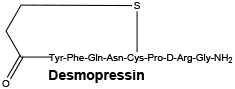
Chemical structure.


Synonyms of desmopressin: DDAVP.
1-desamino-8-D-arginine vasopressin.
Desamino-cys-1-D-arginine-8 vasopressin.
Molecular weights: Desmopressin base: 1069.22.
Desmopressin acetate: 1183.34.
Desmopressin is a white, fluffy powder, soluble in water, alcohol and glacial acetic acid.

CAS number.

Desmopressin base: 16679-58-6.
Desmopressin acetate: 62288-83-9.

7 Medicine Schedule (Poisons Standard)

Prescription Only Medicine (S4).

Summary Table of Changes