



What is in this leaflet
This leaflet answers some common questions about Navelbine Oral.
It does not contain all the available information.
It does not take the place of talking to your doctor or pharmacist.
All medicines have benefits and risks. Your doctor has weighed the risks of you taking Navelbine Oral against the benefits this medicine is expected to have for you.
If you have any concerns about taking this medicine, ask your doctor or pharmacist.
Keep this leaflet with the medicine. You may need to read it again.
What Navelbine Oral is used for
Navelbine Oral is used to treat lung cancer and advanced breast cancer.
Navelbine Oral may be used on its own or in combination with other medicines to treat cancer.
Navelbine Oral belongs to a group of medicines called antineoplastic or cytotoxic medicines. You may also hear of these medicines being called chemotherapy.
Navelbine Oral contains the medicine, vinorelbine which belongs to a family of medicines called vinca alkaloids. Navelbine Oral works by stopping cancer cells from growing and multiplying causing the cells to die.
Navelbine Oral is not recommended for use in children and adolescents aged less than 18 years as there is no information on its effects in these age groups.
Your doctor may have prescribed Navelbine Oral for another purpose.
Ask your doctor if you have any questions about why Navelbine Oral has been prescribed for you.
This medicine is available only with a doctor’s prescription.
Before you are given Navelbine Oral
When you must not be given it
Do not take Navelbine Oral if you have an allergy to the active substance, vinorelbine or to the other vinca alkaloids, (vinblastine, vincristine, vindesine, vinflunine), or to any of the ingredients listed at the end of this leaflet.
Symptoms of an allergic reaction to Navelbine Oral may include:
- shortness of breath
- wheezing, difficulty breathing or a tight feeling in your chest
- swelling of the face, lips, tongue or other parts of the body
- rash, itching, hives or flushed, red skin.
Do not take Navelbine Oral if you have or have had (within the last two weeks), a severe infection. Tell your doctor if you have or have had a severe infection in the last two weeks. Your doctor may decide to delay your treatment until the infection has gone.
Do not take Navelbine Oral if you have or have had any of the following medical conditions:
- severe liver problems;
- a low white blood cell and/or platelet count which you may notice as signs of frequent infections such as fever, severe chills, sore throat or mouth ulcers;
- surgery on your stomach or small bowel;
- stomach or intestinal disorders;
- any condition requiring long-term oxygen therapy;
Do not take Navelbine Oral if you are pregnant or intend to become pregnant. Like most medicines used to treat cancer, Navelbine Oral is not recommended for use in pregnancy. Navelbine Oral may affect your developing baby if you take it during pregnancy. If there is a need to consider Navelbine Oral during your pregnancy, your doctor will discuss with you the benefits and risks of using it.
Do not breastfeed while being treated with Navelbine Oral. Navelbine Oral may pass into breast milk and therefore there is a possibility that the breast-fed baby may be affected.
Do not take Navelbine Oral if you plan to have a yellow fever vaccine or have just had one.
Do not have Navelbine Oral after the expiry date printed on the pack. The expiry date refers to the last day of that month. If you have this medicine after the expiry date has passed, it may not work as well.
Do not have Navelbine Oral if the packaging is torn or shows signs of tampering.
If it has expired or is damaged, return it to your pharmacist for disposal.
If you are not sure whether you should start having Navelbine Oral, talk to your doctor.
Before you are given it
Navelbine Oral is a potent cytotoxic drug that results in a decrease in blood cells. Your blood count will be carefully monitored before and during your treatment.
Tell your doctor if you have allergies to:
- any other medicines;
- any other substances, such as foods, preservatives or dyes.
Tell your doctor if you have or have had any medical conditions, especially the following:
- heart problems (including chest pain and heart attack);
- liver problems;
- a low white blood cell and/or platelet count which you may notice as signs of frequent infections such as fever, severe chills, sore throat or mouth ulcers;
- stomach problems (including surgery on your stomach);
- lung problems, including asthma;
- the rare hereditary problem of fructose intolerance (due to the presence of sorbitol).
Tell your doctor if you are having or have had any other medicines or treatments for cancer, including radiation therapy. Navelbine Oral must not be taken if you are currently receiving radiation therapy to your liver.
Tell your doctor if you plan to have a vaccination. Having a live attenuated vaccine (eg: measles, mumps, rubella vaccine) is not recommended while taking Navelbine Oral as they may increase the risk of life-threatening vaccine disease.
Tell your doctor if your ability to carry out activities of daily living is strongly reduced.
Tell your doctor if you are pregnant or intend to become pregnant. Navelbine Oral is not recommended for use in pregnancy.
If you are a fertile man or woman, you should use an effective method of contraception during your treatment with Navelbine Oral and for three months after your last dose of Navelbine Oral.
Men being treated with Navelbine Oral are advised not to father a child during and up to a minimum of 3 months after treatment. Prior to treatment, advice should be sought for conserving sperm due to the chance of irreversible infertility as a consequence of treatment with Navelbine Oral.
Tell your doctor if you are breast-feeding or plan to breast-feed. You should stop breast-feeding before starting treatment with Navelbine Oral.
Taking other medicines
Tell your doctor or pharmacist if you are taking, have recently taken, or might take any other medicines, including any that you buy without a prescription from your pharmacy, supermarket or health food shop.
Some medicines and Navelbine Oral may interfere with each other. These include:
- mitomycin and lapatinib, medicines used to treat cancer;
- warfarin, phenindione and other medicines used to prevent blood clots;
- other medicines used to treat cancer such as cisplatin;
- ketoconazole and itraconazole, medicines used to treat fungal infections;
- retonavir, a medicine used to treat HIV and AIDS;
- rifampicin, a medicine used to treat tuberculosis or meningitis;
- cyclosporin and tacrolimus, drugs which reduce the body's ability to fight illness/disease (known as immunosuppressants).
- phenytoin, a medicine used to treat epilepsy or fits.
These medicines may be affected by Navelbine Oral or may affect how well it works. You may need to take different amounts of your medicine, or you may need to take different medicines. Your doctor will advise you.
Your doctor and pharmacist may have more information on medicines to be careful with or to avoid while taking Navelbine Oral.
If you have not told your doctor about any of the above, do so before you begin treatment with Navelbine Oral.
How Navelbine Oral is given
How much is given
Your doctor will decide what dose you will receive. This depends on your body surface area, your condition and factors such as your liver function and whether you are receiving any other chemotherapy medicines.
Your doctor may adjust your dose during treatment.
Navelbine Oral may be given alone or in combination with other drugs.
Several courses of Navelbine Oral therapy may be needed depending on your response to treatment.
Navelbine Oral reduces the number of white blood cells in the body. Your doctor will check these levels regularly. Further doses of Navelbine Oral may be delayed until your blood cell numbers return to acceptable levels.
How it is given
Navelbine Oral is given as a capsule.
Swallow your Navelbine Oral capsule whole with a full glass of water, without chewing or sucking the capsule. The liquid inside Navelbine Oral is an irritant and may cause damage if it comes in contact with your skin, mucosa or eyes.
Damaged capsules should not be swallowed.
If contact with the contents of the capsule does occur, wash the affected area thoroughly with water or a normal saline solution.
Navelbine Oral should be taken with food.
If vomiting occurs within a few hours of taking Navelbine Oral, the dose of Navelbine Oral should not be repeated. Your doctor may prescribe a medication to help with vomiting if it is a problem.
To open the child resistant packaging:
- Cut the blister along the black dotted line;
- Peel off the soft plastic foil;
- Push the capsule through the aluminium foil.
How long it is given
Navelbine Oral is usually given every week, but it may be given less often if you are also having other medicines to treat cancer. Your doctor will decide how many doses you will need.
If you miss a dose
Tell your doctor as soon as possible if you realise that you have missed your dose of Navelbine Oral.
If you have problems remembering when your next dose is due, use a diary or calendar or ask a friend to remind you. Please also refer to your Navelbine Oral ‘Patient Booklet’.
Overdose
Immediately telephone your doctor or Poisons Information Centre (telephone 13 11 26) for advice or go to Accident and Emergency at your nearest hospital if you think that you or anyone else may have taken too much Navelbine Oral. Do this even if there are no signs of discomfort or poisoning. You may need urgent medical attention.
While you are being given Navelbine Oral
Things you must do
Keep all appointments with your doctor. Your doctor will need to do some blood and other tests from time to time to check on your progress and monitor any unwanted side effects.
Tell any other doctors, dentists and pharmacists who are treating you that you are having treatment with Navelbine Oral.
If you are about to be started on any new medicine, tell your doctor, dentist or pharmacist that you are having treatment with Navelbine Oral.
If you become pregnant while taking Navelbine Oral, tell your doctor immediately.
Navelbine Oral can lower the number of white blood cells and platelets in your blood. This means that you have an increased chance of getting an infection or bleeding.
Take the following precautions to reduce your risk of infection or bleeding:
- Check with your doctor immediately if you think you may be getting an infection, or if you get a fever, chills, cough, hoarse throat, lower back or side pain or find it painful or difficult to urinate;
- Avoid people who have infections;
- Be careful when using a toothbrush, toothpick or dental floss. Your doctor, dentist, nurse or pharmacist may recommend other ways to clean your teeth and gums. Check with your doctor before having any dental work.
- Be careful not to cut yourself when you are using sharp objects such as a razor or nail cutters.
- Avoid contact sports or other situations where you may bruise or get injured.
Things to be careful of
Be careful driving or operating machinery until you know how Navelbine Oral affects you.
If you experience symptoms that affect your ability to concentrate and react, do not drive a car or operate machinery. Dizziness and fatigue are common side effects of Navelbine Oral. Make sure you know how Navelbine Oral affects you before you drive a car, operate machinery or do anything else that could be dangerous if you are feeling tired or dizzy. Drinking alcohol may make these symptoms worse.
Side effects
Tell your doctor, nurse or pharmacist as soon as possible if you do not feel well while you are taking Navelbine Oral.
Like other medicines that treat cancer, Navelbine Oral can cause side effects, some of which may be serious. You may need medical treatment if you get some of these side effects.
Ask your doctor or pharmacist to answer any questions you may have.
Tell your doctor, nurse or pharmacist if you notice any of the following and they worry you:
- nausea;
- vomiting;
- diarrhea;
- loss of appetite;
- unusual tiredness, weakness, sleepiness, drowsiness or lack of energy;
- unusual hair loss or thinning;
- weight loss;
- constipation;
- upset stomach;
- aching muscles, muscle tenderness or weakness, not caused by exercise;
- skin reactions;
- headache;
- dizziness;
- change in or loss of taste;
- pain, including pain at the tumour site;
- indigestion;
- weight gain;
- jaw pain;
- painful swollen joints;
- trouble sleeping;
- coughing;
These are the more common side effects of Navelbine Oral.
Tell your doctor or nurse as soon as possible if you notice any of the following:
- frequent infections or signs of infection such as fever, severe chills, sore throat or mouth ulcers (symptoms of a lack of white blood cells);
- tiredness, headaches, being short of breath when exercising, dizziness and looking pale (symptoms of a decreased number of red blood cells);
- bleeding or bruising more easily than normal (symptoms of a low blood platelet count);
- stomach pain;
- viral, bacterial or fungal infections;
- sore mouth;
- mouth ulcers and cold sores;
- high blood pressure;
- low blood pressure;
- difficulty swallowing;
- pain when passing urine or other urinary problems;
- changes in your vision;
- blood infections (sepsis) symptoms such as high fever and deterioration in general health;
- lack of muscle control may be associated with abnormal gait and speech changes
- liver disorders (abnormal liver test).
These may be serious side effects. You may need medical attention.
If any of the following happen, tell your doctor immediately or go to Accident and Emergency at your nearest hospital:
- difficulty breathing, short of breath;
- chest pain;
- palpitations, fast or irregular heartbeat
- rash, itching or hives on the skin
- swelling of the feet and ankles, face, lips, tongue or other parts of the body.
These are very serious side effects. You may need urgent medical attention or hospitalisation.
Other side effects not listed above may occur in some patients. Tell your doctor, nurse or pharmacist if you notice anything else that is making you feel unwell.
Tell your doctor if you notice any of the side effects listed in this section, even after you have finished your Navelbine Oral treatment. The benefits and side effects of Navelbine Oral may take some time to occur.
Do not be alarmed by this list of possible side effects. You may not experience any of them.
After treatment with Navelbine Oral
Storage
If you are storing Navelbine Oral at home:
Store your Navelbine Oral capsules in the refrigerator (2 to 8°C) in its original packaging. Do not freeze it.
Protect Navelbine Oral from light.
Keep it where children cannot reach it.
Do not store Navelbine Oral or any other medicine in the bathroom or near a sink. Do not leave it on a windowsill or in the car Heat and dampness will destroy the medicine.
Disposal
If your doctor stops your treatment with Navelbine Oral, or it has passed its expiry date, return any leftover capsules to your pharmacist. Do not dispose of Navelbine Oral via wastewater or household waste. This will help to protect the environment.
Product description
What it looks like
Navelbine Oral soft capsules are available in four strengths: 20 mg, 30 mg, 40 mg* and 80 mg*.
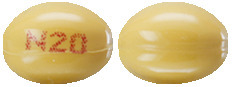
Navelbine Oral 20 mg soft capsules are light brown and printed N20.
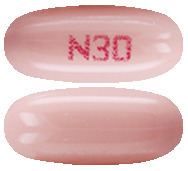
Navelbine Oral 30 mg soft capsules are pink and printed N30.
Navelbine Oral 40 mg soft capsules are brown and printed N40.
Navelbine Oral 80 mg soft capsules are pale yellow and printed N80.
*These pack sizes are not available in Australia.
Navelbine Oral comes in blister packs of 1 tablet.
Ingredients
Active ingredient:
- vinorelbine tartrate
Other ingredients:
- ethanol
- purified water
- glycerol
- macrogol 400
- gelatin
- anidrisorb 85/70
- phosal 53 MCT
- medium-chain triglycerides
- edible ink red
- titanium dioxide
- iron oxide yellow
- iron oxide red.
Navelbine Oral is supplied by:
Pierre Fabre Australia Pty Limited
Suite 901, 1 Elizabeth Plaza, North Sydney,
NSW 2060
Australian Registration Number:
20 mg: AUST R 99498
30 mg: AUST R 99558
40 mg: AUST R 99561
80 mg: AUST R 99564
This leaflet was prepared in August 2020.
Published by MIMS November 2020
 For any administration planned at the 80 mg/m2/week dose, if the neutrophil count falls below 500/mm3 or more than once between 500 and 1000/mm3, the dose must be delayed until recovery and reduced from 80 to 60 mg/m2 per week during the 3 subsequent administrations. See Table 2.
 It is possible to re-escalate the dose from 60 to 80 mg/m2/week if the neutrophil count does not drop below 500/mm3, or more than once between 500 and 1000/mm3, during the three administrations given at the 60 mg/m2 dose.
 Even for patients with a body surface area (BSA) ≥ 2 m2, the dose should never exceed 120 mg per week at 60 mg/m2 and 160 mg per week at 80 mg/m2.


 In a multicentre, phase II study of 56 patients in combination with cisplatin 100 mg/m2 (day 1 q 4 weeks), the weekly administration of vinorelbine (IV vinorelbine 25 mg/m2 day 1, oral vinorelbine 60 mg/m2 days 8, 15 and 22) produced a response rate of 30% for all registered patients and 33% for evaluable patients in the first line treatment of unresectable, localised or metastatic NSCLC. Median progression free survival and survival were 5.5 and 8.9 months, respectively.
 A response rate of 30% was reported in study 97 CA 206 and 21% in study 96 CA 201. The lower response rate observed in the latter study could be explained by the very poor prognosis features in the patients having received no prior adjuvant chemotherapy: 57% of patients had stage IIIB-IV disease, 67% had a disease free interval less than 2 years and 62% had at least 3 organs involved. In this subset of patients, the response rate was only 14%.
 The two combination arms, oral vinorelbine plus capecitabine and docetaxel plus capecitabine, produced similar disease control rates (70.5% vs 70.8% in the ITT population), similar response rates (31.8% vs 35.4%), similar progression free survival (7.2 months vs 8.9 months) and similar time to treatment failure (5.6 months vs 4.3 months). In comparison, the sequential regimen of oral vinorelbine followed by capecitabine was inferior to the combination regimens for all the efficacy parameters considered.
 The two regimens alternating oral and IV vinorelbine in combination with epirubicin or docetaxel gave similar response rates of approximately 50%. Median durations of overall survival tended to be longer for the taxane combinations than for the combination with epirubicin.
