1 Name of Medicine
Paracetamol.
2 Qualitative and Quantitative Composition
Each tablet contains paracetamol 500 mg.
For the full list of excipients see Section 6.1 List of Excipients.
3 Pharmaceutical Form
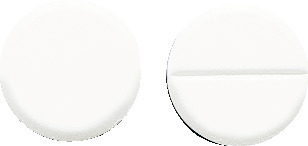
12 mm round bevelled edge, bisect one side white uncoated tablet.
4.1 Therapeutic Indications
For the temporary relief of pain and discomfort associated with: headache, migraine headache, sinus headache, toothache, dental procedures, backache, muscular ache, arthritis, rheumatics, period pain, sore throat, osteoarthritis, neuralgia and colds and flu.
Reduces fever.
4.2 Dose and Method of Administration
To be taken with water every 4-6 hours if necessary.
Adults and children over 12 years: 1 to 2 tablets (maximum 8 tablets in 24 hours).
Children (7-12 years): half to 1 tablet (maximum 4 tablets in 24 hours).
4.3 Contraindications
Paracetamol tablets is contraindicated in patients who are hypersensitive to paracetamol or to any of the excipients of this medicine. It must not be used in patients with known glucose-6-phosphate-dehydrogenase deficiency. This medicine must not be used in patients with impaired liver function.
4.4 Special Warnings and Precautions for Use
This medication may be dangerous when used in large amounts or for long periods.
Hepatotoxicity may occur with paracetamol even at therapeutic doses, after short treatment duration and in patients without pre-existing liver dysfunction. Hepatotoxicity may develop following as little as 10 to 15 g of paracetamol and hepatic failure is known to occur occasionally with long term use of paracetamol.
To avoid the risk of overdose:
Check that paracetamol is absent from the composition of other medicinal products taken concomitantly.
Patients with known analgesic intolerance or known bronchial asthma must only use paracetamol tablets after having consulted a physician (hypersensitivity reactions including bronchospasm possible).
Caution is advised in patients with underlying sensitivity to aspirin and/or to non-steroidal anti-inflammatory drugs (NSAIDs).
Severe cutaneous adverse reactions (SCARs): life threatening cutaneous reactions Stevens-Johnson Syndrome (SJS), and toxic epidermal necrolysis (TEN) have been reported with the use of paracetamol. Patients should be advised of the signs and symptoms and monitored closely for skin reactions. If symptoms or signs of SJS and TEN (e.g. progressive skin rash often with blisters or mucosal lesions) occur, patients should stop paracetamol treatment immediately and seek medical advice.
Paracetamol should be used upon medical advice in patients with:
Severe renal insufficiency;
Chronic alcohol use including recent cessation of alcohol intake;
Low glutathione reserves;
Gilbert's syndrome.
High anion gap metabolic acidosis.
Cases of high anion gap metabolic acidosis (HAGMA) due to pyroglutamic acidosis have been reported in patients with severe illness such as severe renal impairment and sepsis, or patients with malnutrition and other sources of glutathione deficiency (e.g. chronic alcoholism) who were treated with paracetamol at therapeutic dose for a prolonged period or a combination of paracetamol and flucloxacillin. If HAGMA due to pyroglutamic acidosis is suspected, prompt discontinuation of paracetamol and close monitoring is recommended. The measurement of urinary 5-oxoproline may be useful to identify pyroglutamic acidosis as underlying cause of HAGMA in patients with multiple risk factors.
Use in hepatic impairment.
Paracetamol tablets should not be administered to patients with hepatic dysfunction (see Section 4.3 Contraindications).
Use in renal impairment.
Paracetamol tablets should not be administered to patients with renal dysfunction (see Section 4.3 Contraindications).
Use in the elderly.
No data available.
Paediatric use.
Not recommended for children under 7 years of age.
Effects on laboratory tests.
Uric acid and blood glucose.
Intake of paracetamol may affect the laboratory determination of uric acid by phosphotungstic acid and of blood glucose by glucose oxidase-peroxidase.4.5 Interactions with Other Medicines and Other Forms of Interactions
Paracetamol may increase the risk of bleeding in patients taking warfarin and other antivitamin K. Anticoagulant dosage may require reduction and patients should be monitored for appropriate coagulation and bleeding complications.
Paracetamol absorption is increased by drugs which increase gastric emptying e.g. metoclopramide and domperidone and decreased by drugs which decrease gastric emptying e.g. propantheline, antidepressants with anticholinergic properties, narcotic analgesics.
Paracetamol may increase chloramphenicol concentrations by slowing down excretion, entailing the risk of increased toxicity. The risk of paracetamol toxicity may be increased in patients receiving other potentially hepatoxic drugs or drugs that induce liver microsomal enzymes, such as antiepileptics (such as phenobarbital, phenytoin, carbamazepine, topiramate), barbiturates, hypnotics, rifampicin and alcohol.
Paracetamol excretion may be affected and plasma concentrations altered when given probenecid.
Cholestyramine reduces the absorption of paracetamol if given within 1 hour of paracetamol.
Chelating resins can decrease the intestinal absorption of paracetamol and potentially decrease its efficacy if taken simultaneously. In general, there must be an interval of more than 2 hours between taking the resin and taking paracetamol, if possible.
Caution should be taken when paracetamol is used concomitantly with flucloxacillin as concurrent intake has been associated with high anion gap metabolic acidosis due to pyroglutamic acidosis, especially in patients with risks factors (see Section 4.4).
When used concurrently with zidovudine, an increased tendency for neutropenia may develop. Combination of paracetamol and zidovudine should be avoided.
4.6 Fertility, Pregnancy and Lactation
Effects on fertility.
No data available.
(Category A)
Drugs which have been taken by a large number of pregnant women and women of childbearing age without any proven increase in the frequency of malformations or other direct or indirect harmful effects on the foetus having been observed. Paracetamol can be used during pregnancy if clinically needed however it should be used at the lowest effective dose for the shortest possible time and at the lowest possible frequency.
Paracetamol can cross the placenta; however, so teratogenic effects have been observed in rats or mice, after doses of up to 250 mg/kg.
A woman in the third trimester of pregnancy ingested 22.5 g paracetamol. Early treatment with oral acetylcysteine resulted in good outcome for both mother and foetus.
Paracetamol is excreted in breast milk. The amount available for ingestion by the infant has been reported variously as less than 0.1% of a single 500 mg dose and as 0.04 to 0.23% of a single 650 mg dose. Maternal ingestion of paracetamol in usual analgesic doses does not appear to present a risk to the nursing infant.4.7 Effects on Ability to Drive and Use Machines
The effects of this medicine on a person's ability to drive and use machines were not assessed as part of its registration.
4.8 Adverse Effects (Undesirable Effects)
Reports of adverse reactions are rare. Although the following reactions have been reported: dyspepsia, sweating, erythema, urticaria, anaphylactic shock, angioneurotic oedema, difficulty breathing, drop in blood pressure, nausea, allergic reactions such as skin rashes, hypersensitivity reactions and haematological reactions, including thrombocytopenia, leukopenia, neutropenia, agranulocytosis and pancytopenia. Bronchospasm may be triggered in patients having a tendency of analgesic asthma. Toxic epidermal necrolysis (TEN), Stevens-Johnson Syndrome (SJS), acute generalised exanthematous pustulosis, fixed drug eruption (see Section 4.4 Special Warnings and Precautions for Use) and cytolytic hepatitis, which may lead to acute hepatic failure, have also been reported.
Overdosage with paracetamol if left untreated can result in severe, sometimes fatal liver damage and rarely, acute renal tubular necrosis.
Haemolytic anaemia, particularly in patients with underlying glucose 6-phosphate dehydrogenase deficiency has been reported. Kounis syndrome has been reported.
High anion gap metabolic acidosis with frequency "Not known" (cannot be estimated from the available data): Cases of high anion gap metabolic acidosis due to pyroglutamic acidosis have been observed in patients with risk factors using paracetamol (see Section 4.4). Pyroglutamic acidosis may occur as a consequence of low glutathione levels in these patients.
Reporting suspected adverse effects.
Reporting suspected adverse reactions after registration of the medicinal product is important. It allows continued monitoring of the benefit-risk balance of the medicinal product. Healthcare professionals are asked to report any suspected adverse reactions at http://www.tga.gov.au/reporting-problems.4.9 Overdose
Elderly persons, small children, patients with liver disorders, chronic alcohol consumption or chronic malnutrition, as well as patients concomitantly treated with enzymes-inducing drugs are at an increased risk of intoxication, including fatal outcome.
Symptoms.
Toxic symptoms include vomiting, abdominal pain, hypotension and sweating. Nausea, vomiting, anorexia, pallor and abdominal pain generally appear during the first 24 hours of overdosage with paracetamol. Overdosage with paracetamol may cause hepatic cytolysis which can lead to hepatocellular insufficiency, gastrointestinal bleeding, metabolic acidosis, encephalopathy, disseminated intravascular coagulation, coma and death. Increased levels of hepatic transaminases, lactate dehydrogenase and bilirubin with a reduction in prothrombin level can appear 12 to 48 hours after acute overdosage. Overdosage can also lead to pancreatitis acute renal failure and pancytopenia. The most serious adverse effect of acute overdosage of paracetamol is a dose-dependent, potentially fatal hepatic necrosis. In adults, hepatotoxicity may occur after ingestion of a single dose of 12 g (24 tablets) of paracetamol; a dose of 25 g (50 tablets) or more is potentially fatal. Symptoms during the first 2 days of acute poisoning by paracetamol do not reflect the potential seriousness of the intoxication. Major manifestations of liver failure such as jaundice, hypoglycaemia and metabolic acidosis may take at least 3 days to develop.
Treatment.
Despite lack of significant early symptoms, patients should be referred to hospital urgently for immediate medical attention.
Activated charcoal may reduce absorption of paracetamol if given within one hour after oral ingestion. In patients who are not fully conscious or have impaired gag reflex, consideration should be given to administering activated charcoal via a nasogastric tube, once the airway is protected.
Plasma concentration of paracetamol should be measured at 4 hours or later after ingestion (earlier concentrations are unreliable).
Treatment with N-acetylcysteine may be used up to 24 hours after ingestion of paracetamol, however, the maximum protective effect is obtained up to 8 hours post-ingestion. The effectiveness of the antidote declines sharply after this time. If required the patient should be given intravenous N-acetylcysteine, in line with the established dosage schedule. If vomiting is not a problem, oral methionine may be a suitable alternative.
Further measures will depend on the severity, nature and course of clinical symptoms of intoxication and should follow standard intensive care protocols.
For information on the management of overdose, contact the Poisons Information Centre on 131126 (Australia).5 Pharmacological Properties
5.1 Pharmacodynamic Properties
Mechanism of action.
Paracetamol has analgesic and antipyretic effects.
Clinical trials.
No data available.
5.2 Pharmacokinetic Properties
Absorption.
After oral administration, paracetamol is absorbed rapidly and completely from the small intestine; peak plasma levels occur 10 to 60 minutes after oral administration. Food intake delays paracetamol absorption.
Distribution.
Paracetamol is uniformly distributed throughout most body fluids; the apparent volume of distribution is 1 to 1.2 L/kg. Paracetamol can cross the placenta and is excreted in breast milk. Plasma protein binding is negligible at usual therapeutic concentrations but increases with increasing concentrations.
Metabolism.
Paracetamol is metabolised by the hepatic microsomal enzyme system. In adults at therapeutic doses, paracetamol is mainly conjugated with glucuronide (45-55%) or sulfate (20-30%). A minor proportion (less than 20%) is metabolised to catechol derivatives, and mercapturic acid compounds via oxidation. Paracetamol is metabolised differently by infants and children compared to adults, the sulfate conjugate being predominant.
Excretion.
Paracetamol is excreted in the urine mainly as the glucuronide and sulfate conjugates. Less than 5% is excreted as unchanged paracetamol. 85-90% of the administered dose is eliminated in the urine within 24 hours of ingestion. The elimination half-life is about 1 to 4 hours.
5.3 Preclinical Safety Data
Genotoxicity.
No data available.
Carcinogenicity.
No data available.6 Pharmaceutical Particulars
6.1 List of Excipients
Paracetamol DC90-3SD (PI# 108577) (contains crospovidone, maize starch, povidone, pregelatinised maize starch, stearic acid).
6.2 Incompatibilities
Incompatibilities were either not assessed or not identified as part of the registration of this medicine.
6.3 Shelf Life
In Australia, information on the shelf life can be found on the public summary of the Australian Register of Therapeutic Goods (ARTG). The expiry date can be found on the packaging.
6.4 Special Precautions for Storage
Store below 30°C. Protect from moisture.
6.5 Nature and Contents of Container
PVC/Al blister packs of 16, 20, 24, 48, 50, 96, 100 tablets.
Not all pack sizes may be marketed.
6.6 Special Precautions for Disposal
In Australia, any unused medicine or waste material should be disposed of by taking to your local pharmacy.
6.7 Physicochemical Properties
Chemical structure.
Chemical name: N-acetyl-p-aminophenol.
Structural formula:
 Molecular formula: C8H9NO2.
Molecular weight: 151.17.
CAS number.
103-90-2.7 Medicine Schedule (Poisons Standard)
Packs of 16 - Not scheduled.
Packs of 20, 24, 48, 50 - S2, Pharmacy Medicine.
Packs of 96, 100 - S3, Pharmacist Only Medicine.
Summary Table of Changes