



What is in this leaflet
This leaflet answers some common questions about PHARMACOR Fingolimod.
It does not contain all the available information. It does not take the place of talking to your doctor or pharmacist.
The information in this leaflet was last updated on the date listed on the final page. More recent information on the medicine may be available.
You should ensure that you speak to your pharmacist or doctor to obtain the most up to date information on the medicine.
Any updates may contain important information about the medicine and its use of which you should be aware.
All medicines have risks and benefits. Your doctor has weighed the benefits he/she expects PHARMACOR Fingolimod will provide to you against the risks in deciding to prescribe this medicine for you.
If you have any concerns about this medicine, ask your doctor or pharmacist.
Keep this leaflet with the medicine. You may need to read it again.
What PHARMACOR Fingolimod is used for
PHARMACOR Fingolimod contains the active substance fingolimod, which belongs to a group of medicines known as sphingosine 1-phosphate (S1-P) receptor modulators.
PHARMACOR Fingolimod can alter the way the body's immune system works and is used in adults, children and adolescents (10 years of age and above) to treat relapsing forms of multiple sclerosis (MS). MS is a long-term condition that affects the central nervous system (CNS), particularly how the brain and spinal cord work. In MS, inflammation destroys the protective cover around the nerves (called myelin) and stops the nerves from working properly.
The cause of MS is unknown but it is thought that an abnormal response by the body's immune system plays an important part in the process which damages the CNS.
This medicine slows down the progression of physical disability and decreases the number of flare-ups (relapses) in patients with relapsing MS.
PHARMACOR Fingolimod helps to fight against attacks on myelin by the immune system by affecting the ability of some white blood cells to move freely within the body and by stopping the cells that cause inflammation from reaching the brain. This reduces nerve damage caused by MS.
PHARMACOR Fingolimod may also have a direct and beneficial effect on certain brain cells (neural cells) involved in repairing or slowing down the damage of MS.
Ask your doctor if you have any questions about how PHARMACOR Fingolimod works or why this medicine has been prescribed for you or your child.
This medicine is only available with a doctor's prescription. It is not addictive.
PHARMACOR Fingolimod is used in children and adolescents (10 years of age and above) to treat relapsing-multiple sclerosis. PHARMACOR Fingolimod has not been studied in children under 10 years of age.
Experience with PHARMACOR Fingolimod in older people (more than 65 years old) is limited.
Talk to your doctor if you have any concerns.
Before you take PHARMACOR Fingolimod
When you must not take it
Do not take PHARMACOR Fingolimod if you:
- have had a heart attack, unstable angina, stroke or warning stroke or certain types of heart failure in the last 6 months
- have certain types of irregular or abnormal heartbeat (arrhythmia)
- are taking or have recently taken medicine for irregular heartbeat such as quinidine, disopyramide, amiodarone or sotalol (due to a possible added effect on irregular heartbeat).
Do not take PHARMACOR Fingolimod if you have an allergy to:
- fingolimod (the active ingredient) or to any of the other ingredients listed at the end of this leaflet
- any other similar medicines (such as medicines of the same class or with a similar structure).
Some of the symptoms of an allergic reaction may include:
- shortness of breath
- wheezing or difficulty breathing
- swelling of the face, lips, tongue or other parts of the body
- rash, itching or hives on the skin.
Do not take this medicine after the expiry date printed on the pack or if the packaging is torn or shows signs of tampering. In these cases, return it to your pharmacist.
Before you start to take it
Tell your doctor if you have allergies to any other medicines, foods, dyes or preservatives. Your doctor will want to know if you are prone to allergies.
Tell your doctor if you are pregnant, think you might be pregnant soon, or are trying to become pregnant. You should avoid becoming pregnant while taking PHARMACOR Fingolimod or in the two months after you stop taking it because PHARMACOR Fingolimod may harm your unborn baby.
If you become pregnant while taking PHARMACOR Fingolimod, tell your doctor without delay. You and your doctor will decide what is best for you and your baby.
You should not breast-feed while you are taking PHARMACOR Fingolimod. PHARMACOR Fingolimod can pass into breast milk and there is a risk of serious side effects for a breast-fed baby.
Tell your doctor if you have had heart problems, a stroke or warning of a stroke.
Checking the health of your heart is important. If any of the following applies to you, your doctor may decide not to use PHARMACOR Fingolimod:
- irregular or abnormal heartbeat
- severe heart disease
- uncontrolled high blood pressure
- history of stroke or other diseases related to blood vessels in the brain
- severe breathing difficulties when asleep (sleep apnoea that is not treated)
- a heart rhythm disturbances (called QTc prolongation or abnormal ECG heart tracing) or the risk of these disturbances
- slow heart rate or if you have a history of sudden loss of consciousness (fainting). Your doctor may decide not to use PHARMACOR Fingolimod or may refer you first to a cardiologist for further advice before commencing your first dose of PHARMACOR Fingolimod.
If your doctor thinks that PHARMACOR Fingolimod is appropriate for you, he/she may refer you first to a cardiologist (doctor specialised in heart disease). You may also be monitored overnight by a health care professional after taking the first dose of PHARMACOR Fingolimod.
Tell your doctor if you have never had chickenpox or have no record of vaccination against chickenpox. Your doctor will test your status of the antibody against this virus and may decide to vaccinate you (if you do not have antibodies to this virus). In this case you will start PHARMACOR Fingolimod treatment one month after the full course of the vaccination is completed.
Children or adolescents (10 years of age and above) need to have completed their vaccination schedule before starting treatment with PHARMACOR Fingolimod.
Tell your doctor before taking PHARMACOR Fingolimod if you have one of the following medical conditions:
- a lowered immune response (due to a disease or medicines that suppress the immune system). See "taking other medicines". You may get infections more easily or an infection you already have may get worse.
- problems with your liver. You will have a blood test to check your liver function before youstart taking PHARMACOR Fingolimod. PHARMACOR Fingolimod may affect your liver function.
Tell your doctor if you plan to receive a vaccine. You should not receive certain types of vaccines (called "live attenuated vaccines") during and up to 2 months after treatment with PHARMACOR Fingolimod (see "Taking other medicines").
Tell your doctor if you have an infection as it may get worse. Infections can be serious and sometimes life-threatening. Before you start taking PHARMACOR Fingolimod, your doctor will confirm whether you have enough white blood cells (these fight infections) in your blood.
Your doctor may also recommend vaccination against human papilloma virus (HPV) before starting treatment.
If you are not sure whether any of the above conditions apply to you, your doctor can advise you.
Before you start treatment with PHARMACOR Fingolimod:
- A skin examination is recommended before you start and at regular intervals during treatment. Your doctor will decide what to do if skin problems are noticed.
- an eye examination before you start treatment and at regular intervals afterwards is recommended if you have or have had one of the following conditions:
- visual disturbances or other signs of swelling in the central vision area at the back of the eye (a condition known as macular oedema)
- inflammation or infection of the eye (uveitis)
- diabetes. - vaccination against human papilloma virus (HPV) is recommended. If you are female, your doctor will also recommend
- HPV screening
If you are female, a pregnancy test is recommended to check if you are pregnant.
Taking other medicines
Tell your doctor or pharmacist if you are taking any other medicines, including any that you buy without a prescription from a pharmacy, supermarket or health food shop.
Some medicines may interfere with this medicine. Tell your doctor if you are taking any of the following:
- medicines for an irregular or abnormal heartbeat such as quinidine, procainamide, amiodarone or sotalol. (see section "Do not take PHARMACOR Fingolimod")
- medicines that slow down heartbeat such as atenolol (a beta-blocker); verapamil, diltiazem or (calcium channel blockers) or ivabradine or digoxin. Your doctor may decide not to use PHARMACOR Fingolimod or may refer you first to a cardiologist to switch to medicines that do not slow your heart rate or to decide how you should be observed after the first dose of PHARMACOR Fingolimod
- medicines that can cause an abnormal heart rhythm called Torsades de Pointes such as citalopram, chlorpromazine, haloperidol, methadone or erythromycin
- medicines that suppress or modulate the immune system including other medicines used to treat MS such as beta interferon, glatiramer acetate, natalizumab mitozantrone, dimethyl fumarate, teriflunomide, alemtuzumab or corticosteroids due to a possible added effect on the immune system
- vaccines. If you need to receive a vaccine, seek your doctor's advice first. During and up to 2 months after treatment with PHARMACOR Fingolimod, administration of some vaccines containing live virus (live attenuated vaccines) may result in an infection that the vaccination is designed to prevent, while others may not work as well.
You may need to take different amounts of your medicines or to take different medicines while you are taking PHARMACOR Fingolimod. Your doctor and pharmacist can provide you with more information.
If you have not told your doctor about any of these things, tell him/ her before you start taking this medicine.
How to take PHARMACOR Fingolimod
Follow all directions given to you by your doctor and pharmacist carefully. They may differ from the information contained in this leaflet.
If you do not understand the instructions on the label, ask your doctor or pharmacist for help.
First dose precaution
Because PHARMACOR Fingolimod may have a short-term effect on your heart rate when you take the first dose (or when children/adolescents switch from the 0.25 mg capsule to the 0.5 mg capsule), you will be required to have the health of your heart checked:
- before your first dose of PHARMACOR Fingolimod
- 6 hours after taking your first dose of PHARMACOR Fingolimod, and
- if you start PHARMACOR Fingolimod again after a break from therapy (depending on how long the break is and how long you have been receiving PHARMACOR Fingolimod treatment).
You will need to stay at the doctor's office or clinic for 6 hours after taking the first dose of PHARMACOR Fingolimod (or after taking the first dose of 0.5 mg when your child switches from the 0.25 mg capsule daily dose) so that your heart rate and blood pressure can be checked each hour. Your doctor will also check and record the electrical activity of your heart (using a test called an ECG), and check your heart rhythm.
Tell your doctor if you feel dizzy, tired, or are conscious of your heartbeat.
At the end of the 6-hour observation period, you will be required to have a second ECG.
In case of unusual ECG or slow heart rate at the end of the 6-hour observation period, you may be observed for longer and overnight if necessary. In this case, the same observation process that took place for your first dose of PHARMACOR Fingolimod will also apply for your second dose.
At the beginning of treatment, PHARMACOR Fingolimod can cause the heart rate to slow down in some patients. If your heart rate slows down after your first dose, you may feel dizzy or tired or be consciously aware of your heartbeat. If your heart rate slows down too much or your blood pressure drops, you may need treatment without delay. Slow heart rate usually returns to normal within one month.
PHARMACOR Fingolimod can also cause an irregular heartbeat in some patients, especially after the first dose. Irregular heartbeat usually returns to normal in less than one day.
How much to take
Adults
The usual dose is one capsule per day (0.5 mg of fingolimod).
Children and adolescents (10 years of age and above)
The dose depends on the body weight:
- Children and adolescents who weigh 40 kg or less: one 0.25 mg capsule per day.
- Children and adolescents with a body weight above 40 kg: one 0.5 mg capsule per day.
Children and adolescents who started on one 0.25 mg capsule per day and reach a stable body weight above 40 kg will be instructed by their doctor to switch to one 0.5 mg capsule per day. In this case, it is recommended to repeat the first dose observation period.
Do not exceed the recommended dose.
How to take it
Swallow the PHARMACOR Fingolimod capsule with a glass of water.
PHARMACOR Fingolimod can be taken with or without food.
When to take it
Take your medicine at about the same time each day. Taking it at the same time each day will have the best effect. It will also help you remember when to take it. It does not matter if you take this medicine before or after food.
How long to take it
Continue taking your medicine for as long as your doctor tells you to. Your doctor will check your progress to make sure the medicine is working and will discuss with you how long your treatment should continue.
Do not stop taking PHARMACOR Fingolimod unless your doctor tells you to. Your symptoms may return or become worse if you stop the treatment. Tell your doctor if you have worsening of MS symptoms after stopping PHARMACOR Fingolimod.
PHARMACOR Fingolimod will stay in your body for up to 2 months after you stop taking it. Your white blood cell count (lymphocyte count) may also remain low during this time and the side effects described in this leaflet may still occur.
If you stop taking PHARMACOR Fingolimod:
- for 1 day or more during the first 2 weeks of treatment, or
- for more than 7 days during weeks 3 and 4 of treatment, or
- for more than 2 weeks after your first month of PHARMACOR Fingolimod treatment,the initial effect on your heart rate may occur again.
If you restart PHARMACOR Fingolimod therapy after a break, your doctor may decide to monitor your heart rate and blood pressure every hour, to run ECGs, or to monitor you overnight.
If you forget to take it
If it is almost time for your next dose, skip the dose you missed and take your next dose when you are meant to.
Do not take a double dose to make up for the dose that you missed.
If you miss a dose during the first 2 weeks call your doctor right away. Your doctor may decide to observe you at the time you take the next dose.
This may increase the chance of you getting an unwanted side effect.
If you are not sure what to do, ask your doctor or pharmacist.
If you have trouble remembering when to take your medicine, ask your pharmacist for some hints.
If you take too much (overdose) or if you have taken a first dose by mistake
Immediately telephone your doctor or Poisons Information Centre (telephone number: 13 11 26), or go to Accident and Emergency at your nearest hospital if you think that you or anyone else may have accidentally taken too much PHARMACOR Fingolimod or taken a first dose of PHARMACOR Fingolimod by mistake. Do this even if there are no signs of discomfort or poisoning. Keep the telephone numbers for these places handy. You may need urgent medical attention. Your doctor may decide to observe you with hourly heart rate and blood pressure measurements, run ECGs, and he/she may decide to monitor you overnight.
Symptoms of an overdose may include:
- swelling in hands or feet
- tingling or numbness in hands or feet
- muscle pain
- fever.
While you are takingPHARMACOR Fingolimod
Things you must do
You should avoid becoming pregnant while taking PHARMACOR Fingolimod or in the two months after you stop taking it because PHARMACOR Fingolimod may harm your unborn baby.
Talk to your doctor about the associated risk. Talk with your doctor about reliable methods of birth control that you should use during treatment and for 2 months after you stop treatment.
If you become pregnant while taking this medicine, tell your doctor immediately. PHARMACOR Fingolimod should not be taken if you are pregnant.
Tell your doctor about any changes in your vision, especially if:
- the centre of your vision gets blurry or has shadows
- if you develop a blind spot in the centre of your vision
- if you have problems seeing colours or fine detail.
PHARMACOR Fingolimod may cause macular oedema uncommonly (swelling of a small area at the back of the eye). When this side effect does occur, it usually happens in the first 4 months of treatment. Your chance of developing macular oedema is higher if you have diabetes or have had an inflammation of the eye called uveitis. It can cause some of the same vision symptoms as an MS attack (optic neuritis).
Tell your doctor straight away if you think you have an infection, have fever, or feel like you have the flu. You may get infections more easily while you are taking PHARMACOR Fingolimod (and for up to 2 months after you stop taking it). Any infection that you already have may get worse. Infections could be serious and sometimes life-threatening.
If you are a woman, your doctor may recommend screening for HPV.
Talk to your doctor straight away if you notice any skin nodules (e.g. shiny pearly nodules), patches or open sores that do not heal within weeks. Skin cancers have been reported in MS patients treated with PHARMACOR Fingolimod. Symptoms may include abnormal growth or changes of skin tissue (e.g.unusual moles) which may change in colour, shape or size over time.
Your doctor should carry out regular skin examinations during your treatment with PHARMACOR Fingolimod.
Limit your exposure to the sun and UV rays by wearing appropriate clothing and regularly applying sunscreen with a high degree of UV protection. This will help minimise your risk of developing skin cancers.
Tell your doctor straight away, if you get any of following symptoms or diseases during your treatment with PHARMACOR Fingolimod because it could be serious:
If you believe your MS is getting worse (e.g. weakness or visual change) or if you notice any new or unusual symptoms, talk to your doctor as soon as possible, because these may be the symptoms of a rare brain disorder caused by infection and called progressive multifocal leukoencephalopathy (PML) or a condition called tumefactive lesions. Your doctor may organise an MRI scan to decide if you need to stop taking AKM-Fingolimod
- If you think you have an infection; a fever; feel like you have the flu, or have a headache accompanied by stiff neck, sensitivity to light, nausea, and/or confusion (these may be symptoms of meningitis).
- sudden onset of severe headache, confusion, seizures and vision changes which are symptoms of acondition called posterior reversible encephalopathy (PRES).
Keep all of your doctor's appointments so that your progress can be checked. Your doctor will do regular checks to help prevent you from having side effects from the medicine.
If you are about to be started on any new medicine, remind your doctor and pharmacist that you are taking PHARMACOR Fingolimod.
Tell any other doctor, dentist or pharmacist who treats you that you are taking PHARMACOR Fingolimod.
Things you must not do
You should not receive certain types of vaccines (live attenuated vaccines) during and for up to 2 months after treatment with this medicine (see "Taking other medicines").
Do not give this medicine to anyone else, even if their condition seems similar to yours.
Do not use it to treat any other complaints unless your doctor tells you to.
Things to be careful of
Your doctor will tell you whether your illness allows you to drive vehicles and use machines safely. PHARMACOR Fingolimod is not expected to have an influence on your ability to drive and use machines.
Side effects
Tell your doctor or pharmacist as soon as possible if you do not feel well while you are taking PHARMACOR Fingolimod even if you do not think it is connected with the medicine.
All medicines can have side effects. Sometimes they are serious, most of the time they are not. You may need medical treatment if you get some of the side effects.
Do not be alarmed by these lists of possible side effects. You may not experience any of them.
Ask your doctor or pharmacist to answer any questions you may have.
Tell your doctor if you notice any of the following side effects and they worry you:
- infection from flu virus with symptoms such as tiredness, chills, sore throat, joint or muscles aching, fever
- feeling of pressure or pain in the cheeks and forehead (sinusitis)
- headache
- diarrhea
- back pain
- cough.
- weight loss.
If any of these affects you severely, tell your doctor
Tell your doctor if you observe any of the following side effects (common and usually not serious) and they affect you severely:
- ringworm, a fungal infection affecting the skin (tinea versicolour)
- dizziness
- severe headache often together with nausea, vomiting and sensitivity to light (signs of migraine)
- weakness
- itchy, red, burning rash (eczema)
- itchy skin
- breathlessness
- abnormal lung function test results starting after one month of treatment, remaining stable after that and reversible after treatment discontinuation.
- blurred vision (see also information on macular oedema below)
- nausea
- muscle pain
- joint pain.
Tell your doctor straight away if you notice any of the following:
- bronchitis with symptoms such as coughing with phlegm, chest pain, fever
- shingles or herpes zoster symptoms such as blisters, burning, itching or pain of the skin, typically on the upper body or face. Other symptoms may be fever and weakness in the early stages of infection, followed by numbness, itching, and red patches with severe pain.
- fever, cough, difficulty breathing, tiredness, aching joints and muscles which are signs of infections. While you are taking PHARMACOR Fingolimod (and for up to 2 months after you stop taking it), you may get infections more easily. Any infection that you already have may get worse. Infections could be serious and life-threatening.
- slow heartbeat (bradycardia) or irregular heartbeat
- pneumonia with symptoms such as fever, cough, difficulty breathing
- shadows or blind spot in thecentre of your vision, blurred vision, problems seeing colours or details which are symptoms of macular oedema (swelling in the central vision area of the retina at the back of the eye)
- moles which may change size, shape, elevation or colour over time, or new moles which may be symptoms of melanoma, a type of skin cancer usually developing from an unusual mole (naevus). The moles may itch, bleed or ulcerate.
- skin nodules (e.g. shiny pearly nodules), patches or open sores
- skin lesions of unusual colour
- convulsion, fits (more frequent in children and adolescents than in adults)
- bleeding or bruising more easily than normal. This may be due to low level of platelets (thrombocytopenia)
These side effects can be serious.
Tell your doctor immediately or go to Accident and Emergency if you notice any of the following:
- swelling of the face, lips, mouth, tongue or throat which may cause difficulty in swallowing or breathing
- sudden onset of rash or hives
- yellowing of your skin or the whites of your eyes, abnormally dark urine, unexplained nausea, vomiting and tiredness. Your doctor may carry out blood tests to check your liver function and may consider stopping PHARMACOR Fingolimod treatment if your liver problem is serious.
- sudden onset of severe headache, confusion, seizures and/or vision changes, which are symptoms of a condition called posterior reversible encephalopathy (PRES).
- an infection, fever, feel like you have the flu, or have a headache accompanied by stiff neck, sensitivity to light, nausea, and/or confusion which are symptoms of a condition called cryptococcal infections (a type of fungal infection), including cryptococcal meningitis.
- worsening of MS symptoms (e.g. weakness or visual changes) which could be signs of a rare brain disorder caused by infection called progressive multifocal leukoencephalopathy.
Some side effects may not give you any symptoms and can only be found when tests are done. Some of these side effects include:
- hypertension (PHARMACOR Fingolimod may cause a mild increase in blood pressure)
- higher levels of liver enzymes
- increased level of blood fat (triglycerides)
- low level of white blood cells (lymphopenia, leucopenia).
Tell your doctor if you notice anything else that is making you feel unwell. Some people may have other side effects not yet known or mentioned in this leaflet.
After using PHARMACOR Fingolimod
Tell your doctor straight away, if you believe your MS is getting worse after you have stopped treatment with PHARMACOR Fingolimod, because it could be serious.
Symptoms of MS can return and may become worse compared to before or during treatment.
Storage
- Keep your medicine in the original container until it is time to take it.
- Store it in a cool dry place where the temperature stays below 25°C.
- Do not store PHARMACOR Fingolimod or any other medicine in the bathroom or near a sink.
- Do not leave it in the car or on window sills.
Keep the medicine where children cannot reach it. A locked cupboard at least one-and-a-half metres above the ground is a good place to store medicines.
Disposal
If your doctor tells you to stop taking this medicine or the expiry date has passed, ask your pharmacist what to do with any capsules you have left over.
Product description
What it looks like
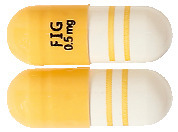
PHARMACOR Fingolimod 0.5 mg hard capsules are white opaque body with two radial band imprinted with yellow ink and bright yellow cap imprinted with "FIG 0.5 mg" with black ink, containing white to off-white powder.
PHARMACOR Fingolimod capsules are available in packs containing 7, 28 and 84 capsules.
Ingredients
PHARMACOR Fingolimod 0.5 mg
Each PHARMACOR Fingolimod capsule contains 0.56 mg of fingolimod hydrochloride (equivalent to 0.5 mg of fingolimod) as the active ingredient. The capsule also contains the following inactive ingredients:
Capsule core:
- Calcium hydrogen phosphate
- magnesium stearate (E572)
Capsule shell:
- Iron oxide yellow
- Titanium dioxide
- Gelatin
Printing ink
- TekPrintTM SW-9008 Black Ink
- TekPrintTM SB-3002 Gold Ink
PHARMACOR Fingolimod does not contain gluten, tartrazine or any other azo dyes.
Sponsor
PHARMACOR Fingolimod 0.5 mg is supplied in Australia by:
Pharmacor Pty Limited
Chatswood NSW 2067
Australia
Australian Registration Number:
Pharmacor Fingolimod 0.5 mg - AUST R 302317
This leaflet was prepared in 12/2020
Published by MIMS February 2023


 Study D2302 (TRANSFORMS) was a 1-year randomised, double-blind, double-dummy, active (interferon beta-1a 30 micrograms, intramuscular, once weekly)-controlled phase III study in patients with RRMS who had not received any natalizumab in the previous 6 months. Prior therapy with interferon-beta or glatiramer acetate up to the time of randomisation was permitted.
 Pooled results of studies D2301 and D2302 showed a consistent reduction of annualised relapse rate compared to comparator in subgroups defined by gender, age, prior multiple sclerosis therapy, disease activity or disability levels at baseline.


