


Consumer medicine information

Prolastin C Liquid

Alpha-1-proteinase inhibitor

BRAND INFORMATION

Brand name

Prolastin C Liquid

Active ingredient

Alpha-1-proteinase inhibitor

Schedule

S4


Consumer medicine information (CMI) leaflet

Please read this leaflet carefully before you start using Prolastin C Liquid.

What is in this leaflet

Please read this leaflet carefully before you start using PROLASTIN® C (prō-‘lǎs-tĭn) LIQUID.

This leaflet answers some common questions about PROLASTIN® C LIQUID, a prescription medicine. It does not contain all the available information. It does not take the place of talking to your doctor.

All medicines have risks and benefits. Your doctor has weighed the risks of you using PROLASTIN® C LIQUID against the benefits they expect it will have for you.

If you have any concerns about using this medicine, ask your doctor.

Keep this leaflet with you. You may need to read it again.

What Prolastin® C Liquid is used for

PROLASTIN® C LIQUID is used to treat Alpha-1-proteinase inhibitor deficiency. This is a genetic disorder. It is characterised by very low amounts of your own Alpha-1-proteinase inhibitor protein in your lungs. Some patients develop a serious lung disease called emphysema.

PROLASTIN® C LIQUID contains human Alpha-1-proteinase inhibitor manufactured from blood products. You take PROLASTIN® C LIQUID to boost Alpha-1-proteinase inhibitor in your bloodstream and lungs.

One of the reasons your lungs have been damaged is because you lack enough of Alpha-1-proteinase inhibitor. Other causes include smoking and infections. Alpha-1-proteinase inhibitor inhibits enzymes that break down lung tissue. Be aware that there are no medical studies in people to prove that taking PROLASTIN® C LIQUID over a long period of time will stop or slow down the symptoms of emphysema.

Before you use Prolastin® C Liquid

When you must not use it

Do not use PROLASTIN® C LIQUID if you know you lack immunoglobulin A (IgA) in your bloodstream and your body has made its own antibodies against IgA. You could have a bad allergic reaction to PROLASTIN® C LIQUID because it contains trace amounts of IgA.

Smoking is not recommended during your treatment with PROLASTIN® C LIQUID.

If you are not sure whether you should use PROLASTIN® C LIQUID, talk to your doctor.

Your doctor should not administer PROLASTIN® C LIQUID if the carton seal has been broken.

Before you start to use it

Tell your doctor if:

  • You are pregnant or intend to become pregnant. It is not known whether PROLASTIN® C LIQUID is harmful to an unborn baby when given to a pregnant woman.
  • You are breastfeeding. Many medicines are excreted into the human breast milk.
  • You do not tolerate medicines made from blood.
  • You are concerned that your child may be treated with PROLASTIN® C LIQUID. The safety and effectiveness of PROLASTIN® C LIQUID in children have not been established.
  • You are a smoker as the effectiveness of PROLASTIN® C LIQUID in smokers has not been established.

If you have not told your doctor about any of the above, tell your doctor before you are treated with PROLASTIN® C LIQUID.

Your body may not tolerate PROLASTIN® C LIQUID if you have the very rare condition of “IgA deficiency” and your body has already made its own antibodies against immunoglobulin A (IgA). If your doctor suspects that you are experiencing an allergic or anaphylactic reaction during administration of PROLASTIN® C LIQUID, your doctor must immediately discontinue the infusion.

Special safety warning

When medicines are made from human plasma, certain measures are put in place to prevent infections from viruses or the Creutzfeldt-Jakob disease (CJD) agent from being passed on to patients. These include

  • Carefully selecting plasma donors to make sure those at risk of carrying infections are excluded.
  • Testing of each donation and pools of plasma for signs of virus or virus infections.
  • Including steps in the processing of the plasma that can inactivate or remove viruses.

Despite these measures, when medicines prepared from human plasma are administered, the possibility of passing on infection cannot be totally excluded. This applies to any unknown or emerging viruses or other types of infections.

Discuss the risks and benefits of this medicine with your doctor before using it.

Talk to your doctor if you become sick with a virus infection. Your doctor or you may want to report the infection to Grifols Australia Pty Ltd 1800 339 479.

Taking other medicines

Tell your doctor if you are taking any other medicines, including medicines that you buy without a prescription from your pharmacy, supermarket or health food shop. You should also tell any health professional who is prescribing a new medicine for you that you are using PROLASTIN® C LIQUID.

Your doctor has more information on medicines to be careful with or avoid while using PROLASTIN® C LIQUID. Interactions with other medicines are not known.

How to use Prolastin® C Liquid

How much to use

Your doctor will decide the amount of PROLASTIN® C LIQUID that is right for you. A standard dose is 60 milligrams of PROLASTIN® C LIQUID for every 1 kilogram of body weight. PROLASTIN® C LIQUID is administered into a vein with fluid. This is usually done in a health care facility. You will need to be observed for at least 20 minutes after the infusion.

When to use it

Your doctor will determine when your treatments should be given. The standard schedule is weekly. The infusion takes approximately 15 minutes.

How long to use it

You will use PROLASTIN® C LIQUID weekly until your doctor tells you otherwise.

If you forget to use it

If you miss a scheduled infusion of PROLASTIN® C LIQUID, talk to your doctor about rescheduling.

While you are using Prolastin® C Liquid

Things you must do

If you are about to be started on any new medicine tell your doctor that you are using PROLASTIN® C LIQUID.

Things you must not do

Do not give PROLASTIN® C LIQUID to anyone else, even if they have the same condition as you.

Things to be careful of

No effects on ability to drive and use machines have been observed with PROLASTIN® C LIQUID.

In case of overdose

If you use too much (overdose)

There have been no reported cases of overdose for PROLASTIN® C LIQUID. No data are available concerning overdose in humans.

Immediately telephone your doctor or the National Poisons Centre (telephone 0800 POISON or 0800 764 766), or go to accident and emergency at your nearest hospital, if you think that you or anyone else may have taken too much PROLASTIN® C LIQUID.

Do this even if there are no signs of discomfort or poisoning.

Side effects

Tell your doctor as soon as possible if you do not feel well after being treated with PROLASTIN® C LIQUID.

All medicines can have side effects. Sometimes they are serious, most of the time they are not. You may need medical treatment if you get some of the known adverse effects.

Ask your doctor to answer any questions you may have.

Tell your doctor if any of the following side effects happen during or soon after the infusion.

  • Headache
  • Dizziness
  • Fatigue
  • Shortness of breath (dyspnoea)
  • Hives (urticaria) or rash

Occasionally, you may experience:

  • Chills
  • Chest discomfort or pain
  • Out of sorts feeling (malaise)
  • Itching (pruritus)
  • Allergic or anaphylactic type reactions including shock
  • Influenza-like illness

Rarely, you may experience:

  • Racing heartbeat (tachycardia)

There is a possibility that your body could react to PROLASTIN® C LIQUID. Allergic reactions to PROLASTIN® C LIQUID have occurred. If you go into shock, your doctor will treat you by following standard guidelines for shock therapy.

Other adverse effects not listed above may also occur in some patients. Tell your doctor if you notice any other side effects or if any of the above side effects get serious.

Do not be alarmed by this list of possible adverse effects. You may not experience any of them.

After using Prolastin® C Liquid

Storage

Your doctor must store PROLASTIN® C LIQUID unopened vials refrigerated at 2°C to 8°C with no more than 1 month at room temperatures (up to 25°C) after which the product must be used or immediately discarded. PROLASTIN® C LIQUID should never be stored in a freezer. Your doctor must use PROLASTIN® C LIQUID on or before the expiry date stamped on the label. Do not use after the expiration date.

Your doctor must never use PROLASTIN® C LIQUID that was ever frozen, is cloudy, or discoloured. The solution is clear or slightly opalescent, colourless or pale yellow or pale green or pale brown. The solution may have a few particles in it.

All medicines, including PROLASTIN® C LIQUID, must be kept out of reach of children.

Disposal

Your doctor will dispose of any unused or expired medicine or medical waste in accordance with local requirements.

Medicines should not be disposed of into wastewater or household waste. Ask your doctor or pharmacist how to dispose of medicines no longer required. These measures will help to protect the environment.

Product description

What it looks like

PROLASTIN® C LIQUID is a clear or slightly opalescent, colourless or pale yellow or pale green or pale brown solution in a glass vial.

Ingredients

Active ingredient:

  • Alpha-1-proteinase inhibitor

Inactive ingredients:

  • Alanine
  • monobasic sodium phosphate monohydrate
  • water for injections

PROLASTIN® C LIQUID is sterile and does not contain an antimicrobial preservative.

Sponsor details

Grifols Australia Pty Ltd
Unit 5/80 Fairbank Road, Clayton South, VIC 3169
Australia

Australian Registration Number

PROLASTIN® C LIQUID

Alpha-1-proteinase inhibitor (human) 500 mg solution for injection for intravenous infusion vial: AUST R 371334

Alpha-1-proteinase inhibitor (human)1000 mg solution for injection for intravenous infusion vial: AUST R 305253

Alpha-1-proteinase inhibitor (human) 4000 mg solution for injection for intravenous infusion vial: AUST R 371339

Date of preparation

This leaflet was prepared on 27 May 2022

Published by MIMS September 2022
BRAND INFORMATION

Brand name

Prolastin C Liquid

Active ingredient

Alpha-1-proteinase inhibitor

Schedule

S4


1 Name of Medicine

Alpha-1-proteinase inhibitor (human) 500 mg solution for injection for intravenous infusion vial.
Alpha-1-proteinase inhibitor (human) 1000 mg solution for injection for intravenous infusion vial.
Alpha-1-proteinase inhibitor (human) 4000 mg solution for injection for intravenous infusion vial.

2 Qualitative and Quantitative Composition

Prolastin C Liquid has a purity of ≥ 90% alpha-1-proteinase inhibitor. Each single-use vial contains approximately 500 mg (10 mL), 1,000 mg (20 mL), and 4,000 mg (80 mL) of functionally active alpha-1-proteinase inhibitor as determined by capacity to neutralise porcine pancreatic elastase.
Prolastin C Liquid is prepared from pooled human plasma collected from donors in the USA.
Prolastin C Liquid contains no preservative.
For the full list of excipients, see Section 6.1 List of Excipients.

3 Pharmaceutical Form

Prolastin C Liquid is a sterile non-pyrogenic solution for injection for intravenous infusion of alpha-1-proteinase inhibitor. The solution is clear or slightly opalescent, colourless or pale yellow or pale green or pale brown.

4 Clinical Particulars

4.1 Therapeutic Indications

Prolastin C Liquid is an alpha-1-proteinase inhibitor indicated to increase serum alpha-1-proteinase inhibitor levels in adults with congenital deficiency of alpha-1-antitrypsin and with clinically significant emphysema (FEV1 < 80%).
The data for clinical efficacy of Prolastin C Liquid is derived from changes in the biomarkers alpha-1 anti-protease level and CT lung density. Efficacy on FEV1 or patient relevant endpoints such as quality of life or pulmonary exacerbations has not been established in randomised clinical trials.
Clinical trials have only included patients who were not smoking.

4.2 Dose and Method of Administration

For intravenous use only.
Treatment must be initiated and monitored by a respiratory physician, and should be in conjunction with other pharmacological and non-pharmacological therapies.
To be eligible for treatment, patients must be diagnosed with alpha-1-antitrypsin deficiency on the basis of genotype, as well as have levels of alpha-1-antitrypsin < 11 microM, and clinical symptoms of emphysema.

Dosage.

The recommended dose of Prolastin C Liquid is 60 mg/kg body weight administered intravenously once weekly.
Dose ranging studies using efficacy endpoints have not been performed with any alpha-1-proteinase inhibitor product.
The carton and the label on each vial of Prolastin C Liquid show the actual amount of functionally active alpha-1-proteinase inhibitor in mg (as determined by the capacity to neutralise porcine pancreatic elastase).

Preparation and handling.

1. Allow unopened Prolastin C Liquid to warm up to room temperature before administration.
2. Remove the plastic flip top from the vial.
3. Swab the exposed stopper surfaces with alcohol and allow to dry.
4. Inspect the Prolastin C Liquid visually for particulate matter and discolouration prior to pooling. The product may contain a few protein particles. The solution is clear or slightly opalescent, colourless or pale yellow or pale green or pale brown. Do not use if the product is discoloured or cloudy.
5. Pool Prolastin C Liquid from several vials to achieve the intended mg/kg body weight dose into an empty, sterile intravenous solution container using aseptic technique.
6. Keep pooled solution at room temperature for administration within three hours.

Method of administration.

Product is for single use in one patient only. Discard any residual.
Visually inspect parenteral drug products for particulate matter and discolouration prior to administration, whenever solution and container permit. Do not administer if the solution is not transparent, if it contains suspended particles or sediment.
Do not administer if the carton seal has been broken. Infuse Prolastin C Liquid intravenously at 0.08 mL/kg/min as determined by patient response and comfort. The recommended dosage of 60 mg/kg takes approximately 15 minutes to infuse.
Infuse Prolastin C Liquid separately, without mixing with other agents or diluting solutions.
Administer within 3 hours after preparation.

4.3 Contraindications

Prolastin C Liquid is contraindicated in:
IgA deficient patients with antibodies against IgA, due to the risk of severe hypersensitivity.
Patients with a history of anaphylaxis or other severe systemic reaction to alpha-1-proteinase inhibitor.

4.4 Special Warnings and Precautions for Use

Hypersensitivity reactions.

Hypersensitivity reactions may occur. Should evidence of an acute hypersensitivity reaction be observed, promptly stop the infusion and begin appropriate therapy.
Prolastin C Liquid may contain trace amounts of IgA. Patients with known antibodies to IgA, which can be present in patients with selective or severe IgA deficiency, have a greater risk of developing potentially severe hypersensitivity and anaphylactic reactions. Prolastin C Liquid is contraindicated in patients with antibodies against IgA.

Transmissible infectious agents.

When medicines are made from human plasma, certain measures are put in place to prevent infections from viruses or the Creutzfeldt-Jakob disease (CJD) agent from being passed on to patients. These include:
carefully selecting plasma donors to make sure those at risk of carrying infections are excluded;
testing of each donation and pools of plasma for signs of virus or virus infections;
including steps in the processing of the plasma that can inactivate or remove viruses.
Despite these measures, when medicines prepared from human plasma are administered, the possibility of passing on infection cannot be totally excluded. This applies to any unknown or emerging viruses or other types of infections.
Discuss the risks and benefits of this product with the patient, before prescribing or administering it to a patient. Report all infections thought by a physician possibly to have been transmitted by this product to Grifols Australia Pty Ltd 1800 339 479.

Use in the elderly.

Clinical studies with Prolastin C Liquid did not contain sufficient numbers of subjects aged 65 and older to determine whether they respond differently from younger subjects. As for all patients, dosing for geriatric patients should be appropriate to their overall situation.

Paediatric use.

Safety and effectiveness in the paediatric population have not been established.

Effects on laboratory tests.

Alpha-1-proteinase inhibitor is a normal constituent of human blood plasma so no specific effects on laboratory testing should be anticipated.

4.5 Interactions with Other Medicines and Other Forms of Interactions

None known.

4.6 Fertility, Pregnancy and Lactation

Effects on fertility.

No studies have been conducted on the effect of Prolastin C Liquid on fertility.
(Category B2)
Animal reproduction studies have not been conducted with Prolastin C Liquid. It is not known whether Prolastin C Liquid can cause fetal harm when administered to a pregnant woman or can affect reproduction capacity. Prolastin C Liquid should be given to a pregnant woman only if clearly needed.
It is not known whether Prolastin C Liquid is excreted in human milk. Because many drugs are excreted in human milk, caution should be exercised when Prolastin C Liquid is administered to a nursing woman.

4.7 Effects on Ability to Drive and Use Machines

The effects of this medicine on a person's ability to drive and use machines were not assessed as part of its registration. However, adverse effects of Prolastin C Liquid include dizziness which could affect the ability to drive or use machines (see Section 4.8 Adverse Effects (Undesirable Effects)).

4.8 Adverse Effects (Undesirable Effects)

The most serious adverse reaction observed during clinical trials with Prolastin C was an abdominal and extremity rash in one subject. The most common adverse reactions observed at a rate of > 5% in subjects receiving Prolastin C Liquid were diarrhoea and fatigue, each of which occurred at a rate of 6% (two subjects each).
Because clinical studies are conducted under widely varying conditions, adverse event rates observed cannot be directly compared to rates in other clinical trials and may not reflect the rates observed in practice.
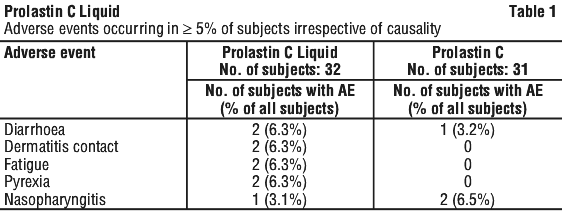
One clinical trial was conducted with Prolastin C Liquid: a 16 week, multicentre, randomised, double-blind crossover study to assess the safety, immunogenicity, and pharmacokinetic comparability of Prolastin C Liquid to Prolastin C in 32 subjects.
Adverse events occurring in ≥ 5% of subjects during the 16 week double-blind crossover treatment period are shown in Table 1.
A total of 23 COPD exacerbations were reported for a total of 18 individual subjects. Twelve subjects (12/32, 38%) during Prolastin C Liquid treatment experienced 13 COPD exacerbations, and 9 subjects (9/31, 29%) during Prolastin C treatment had 10 COPD exacerbations. Three COPD exacerbations occurred during the Follow-Up Period after Prolastin C Liquid treatment and 1 COPD exacerbation occurred in the Follow-up period after Prolastin C treatment. The overall rate of pulmonary exacerbations during treatment with either product was 1.9 exacerbations per subject-year. No exacerbation was considered to be serious, except for one event after Prolastin C treatment during the Follow-Up period (due to hospitalization).
Two separate prior clinical studies were conducted with Prolastin C: (1) A 20 week, open-label, single arm safety study in 38 subjects, and (2) A 16 week, randomised, double-blind, crossover pharmacokinetic comparability study vs. Prolastin in 24 subjects, followed by an 8 week open-label treatment with Prolastin C. Thus, 93 subjects were exposed to Prolastin C in clinical trials.
The most serious adverse reaction observed during clinical studies with Prolastin C was an abdominal and extremity rash in one subject. The rash resolved subsequent to outpatient treatment with antihistamines and steroids. Two instances of a less severe, pruritic abdominal rash were observed upon rechallenge despite continued antihistamine and steroid treatment, which led to withdrawal of the subject from the trial.
Adverse reactions considered drug related by the investigators occurring in 1.6% of subjects (one subject each) treated with Prolastin C were malaise, headache, rash, hot flush, and pruritus. Drug related chills occurred in 3.2% (2 subjects) of Prolastin C subjects.
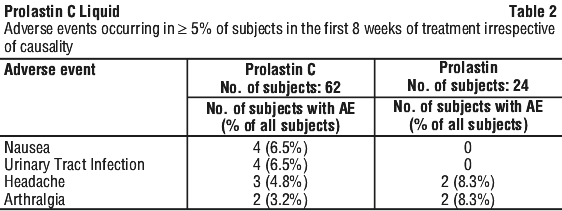
Adverse events occurring irrespective of causality in ≥ 5% of subjects in the first 8 weeks of treatment are shown in Table 2. Adverse events which occurred in the first 8 weeks of treatment are shown in the table in order to control for the differing treatment durations of the safety and PK studies (20 weeks vs. two 8 week periods).
Table 3 displays the overall adverse event rate (> 0.5%), irrespective of causality, as a percentage of infusions received.
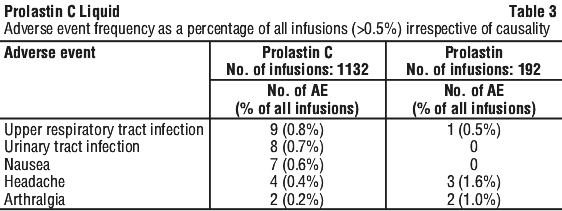
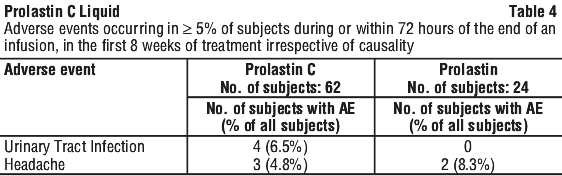
Table 4 displays the overall rates of adverse events (≥ 5%), in the first eight weeks of treatment, that began during or within 72 hours of the end of an infusion of Prolastin C or Prolastin.
Ten exacerbations of chronic obstructive pulmonary disease were reported by 8 subjects in the 24 week pharmacokinetic crossover study. During the 16 week double-blind crossover phase, 4 subjects (17%) had a total of 4 exacerbations during Prolastin C treatment and 4 subjects (17%) had a total of 4 exacerbations during Prolastin treatment. Two additional exacerbations in 2 subjects (8%) occurred during the 8 week open-label treatment period with Prolastin C. The overall rate of pulmonary exacerbations during treatment with either product was 0.9 exacerbations per subject-year.
In the randomised, crossover pharmacokinetic clinical trial, no immunogenicity response was observed in subjects dosed with Prolastin C Liquid or Prolastin C.
In the single-arm, open-label safety clinical trial, three treatment naïve subjects out of 36 subjects evaluated developed antibody to alpha-1-proteinase inhibitor at week 24 after receiving Prolastin C. A fourth subject (non-naïve) was positive prior to and after receiving Prolastin C, but levels were unchanged during the study. None of the four antibody specimens was able to neutralise the protease inhibitor capacity of Prolastin C. In the randomised, crossover pharmacokinetic clinical trial comparing Prolastin C and Prolastin, none of 24 subjects developed antibodies to Prolastin C.

Post-marketing surveillance.

Because postmarketing reporting of adverse reactions is voluntary and from a population of uncertain size, it is not always possible to reliably estimate the frequency of these reactions or establish a causal relationship to product exposure.
Expected postmarketing experience for Prolastin C Liquid is based on the reactions reported for Prolastin C. The reactions which have been chosen for inclusion due to their seriousness, frequency of reporting, possible causal connection to Prolastin C, or a combination of these factors, are:

General.

Chest discomfort/chest pain, chills, malaise, influenza-like illness, fatigue.

Nervous system.

Dizziness, headache.

Skin and subcutaneous system.

Pruritus and rash including urticaria.

Respiratory system.

Dyspnoea.

Immune system.

Hypersensitivity including anaphylactoid/ anaphylactic reactions.

Cardiac.

Tachycardia.

Reporting suspected adverse effects.

Reporting suspected adverse reactions after registration of the medicinal product is important. It allows continued monitoring of the benefit-risk balance of the medicinal product. Healthcare professionals are asked to report any suspected adverse reactions at www.tga.gov.au/reporting-problems.

4.9 Overdose

To date, there have been no reported cases of overdose for alpha-1-proteinase inhibitor. No data are available concerning overdose in humans.
For information on the management of overdose, contact the Poison Information Centre on 131126 (Australia).

5 Pharmacological Properties

5.1 Pharmacodynamic Properties

Mechanism of action.

Alpha-1-proteinase inhibitor deficiency (alpha-1-antitrypsin deficiency, AAT deficiency) is an autosomal, co-dominant, hereditary disorder characterised by low serum and lung levels of alpha-1-PI-proteinase inhibitor. Smoking is an important risk factor for the development of emphysema in patients with alpha-1-proteinase inhibitor deficiency. Because emphysema affects many, but not all individuals with the more severe genetic variants of alpha-1-proteinase inhibitor deficiency, augmentation therapy with alpha-1-proteinase inhibitor is indicated only in patients with severe alpha-1-proteinase inhibitor deficiency who have clinically evident emphysema.
Only some alpha-1-proteinase inhibitor alleles are associated with clinically apparent Alpha-1-proteinase inhibitor deficiency. Approximately 95% of all severely alpha-1-proteinase inhibitor deficient patients are homozygous for the PiZ allele. Individuals with the PiZZ variant typically have serum Alpha-1-proteinase inhibitor levels less than 35% of the average normal level. Individuals with the Pi(null)(null) variant have undetectable alpha-1-proteinase inhibitor protein in their serum. Individuals with these low serum alpha-1-proteinase inhibitor levels, i.e. less than 11 microM, have a markedly increased risk for developing emphysema over their lifetimes. In addition, PiSZ individuals, whose serum alpha-1-proteinase inhibitor levels range from approximately 9 to 23 microM, are considered to have moderately increased risk for developing emphysema, regardless of whether their serum alpha-1-proteinase inhibitor levels are above or below 11 microM.
Augmenting the levels of functional protease inhibitor by intravenous infusion is an approach to therapy for patients with alpha-1-proteinase inhibitor deficiency. The intended theoretical goal is to provide protection to the lower respiratory tract by correcting the imbalance between neutrophil elastase and protease inhibitors. The maintenance of blood serum levels of alpha-1-proteinase inhibitor (antigenically measured) above 11 microM has been historically postulated to provide therapeutically relevant anti-neutrophil elastase protection. Individuals with severe alpha-1-proteinase inhibitor deficiency have been shown to have increased neutrophil and neutrophil elastase concentrations in lung epithelial lining fluid compared to normal PiMM individuals, and some PiSZ individuals with Alpha-1-proteinase inhibitor above 11 microM have emphysema attributed to alpha-1-proteinase inhibitor deficiency.
The pathogenesis of emphysema is understood to evolve as described in the "protease-antiprotease imbalance" model. Alpha-1-proteinase inhibitor is understood to be the primary antiprotease in the lower respiratory tract, where it inhibits neutrophil elastase. Normal healthy individuals produce sufficient alpha-1-proteinase inhibitor to control the neutrophil elastase produced by activated neutrophils and are thus able to prevent inappropriate proteolysis of the lung tissue by neutrophil elastase. Conditions that increase neutrophil accumulation and activation in the lung, such as respiratory infection and smoking, will in turn increase levels of neutrophil elastase. However, individuals who are severely deficient in endogenous alpha-1-proteinase inhibitor are unable to maintain an appropriate antiprotease defence, and, in addition, they have been shown to have increased lung epithelial lining fluid neutrophil and neutrophil elastase concentrations. Because of these factors, many (but not all) individuals who are severely deficient in endogenous alpha-1-proteinase inhibitor are subject to more rapid proteolysis of the alveolar walls leading to chronic lung disease. Prolastin C Liquid serves as alpha-1-proteinase inhibitor augmentation therapy in the patient population with severe alpha-1-proteinase inhibitor deficiency and emphysema, acting to increase and maintain serum and lung epithelial lining fluid levels of alpha-1-proteinase inhibitor.
In clinical studies, patients received Prolastin replacement therapy, 60 mg/kg body weight, once weekly for up to 26 weeks (average 24 weeks of therapy). With this schedule of replacement therapy, blood levels of alpha-1-proteinase inhibitor were maintained above 11 microM (based on the commercial standards for Alpha-1-proteinase inhibitor immunologic assay). Chronic augmentation therapy results in significantly increased levels of alpha-1-proteinase inhibitor and functional anti-neutrophil elastase capacity in the epithelial lining fluid of the lower respiratory tract of the lung, as compared to levels prior to commencing augmentation therapy with Prolastin.
Prolastin C Liquid increases antigenic and functional (anti-neutrophil elastase capacity, ANEC) serum levels.

Clinical trials.

A randomised, placebo-controlled study, EXAcerbations and CT scan as Lung Endpoints (EXACTLE), was conducted with the precursor product, Prolastin to assess the loss of lung tissue and effect of augmentation therapy in AAT deficiency using computed tomography (CT) densitometry. In total, 77 patients with AAT deficiency (three centres) were randomised to receive weekly infusions of either 60 mg/kg alpha-1-proteinase inhibitor (Prolastin) or placebo (2% albumin) over 2 to 2.5 years. CT was performed at baseline, 12, 24, and 30 months. The primary endpoint was the 15th percentile of whole lung density assessed by CT scan. Four prospectively defined methods were used for statistical analyses. A trend of reduced loss of lung tissue in patients with AAT deficiency receiving augmentation therapy versus those on placebo was demonstrated when data were analysed via any of the four methods. While this trial was not powered to achieve statistical significance, the four analyses resulted in p-values between 0.049 and 0.084. Prolastin was also found to modify exacerbations. The duration of the exacerbation in the Prolastin group was about 10% shorter than the placebo group and there were significantly fewer severe exacerbations in the Prolastin group. Other lung function parameters (FEV1, KCO, DLCO SVC, TLC, IVC, ERV, FRC and ERV/FRC) consistently reflected a similar deterioration of lung function in both treatment groups. The quality of life as determined with the percentage score of the SGRQ remained on average unchanged.
The clinical efficacy of Prolastin C Liquid or any alpha-1-proteinase inhibitor product in influencing the course of pulmonary emphysema or pulmonary exacerbations has not been demonstrated in adequately powered, randomised, controlled clinical trials.

5.2 Pharmacokinetic Properties

Prolastin C Liquid is an alanine stabilized liquid formulation of alpha-1-proteinase inhibitor. It was developed as an alternative dosage form to the Prolastin C lyophilized product. Both dosage forms have the same strength, 1000 mg/20 mL. Therefore, a pharmacokinetic (PK) study was conducted as to compare Prolastin C Liquid to Prolastin C. The PK study was a randomized, double-blind, crossover trial conducted in 32 adult subjects age 44 to 71 years with severe alpha-1-proteinase inhibitor deficiency. Eighteen subjects were male and 14 subjects were female. Sixteen subjects were randomized to each treatment sequence. All but one subject had the PiZZ genotype and the remaining subject was PiSZ. Twenty-eight subjects had received prior alpha-1-proteinase inhibitor augmentation therapy and 4 subjects were naïve to alpha-1-proteinase inhibitor augmentation therapy. Study subjects were randomly assigned to receive either 60 mg/kg body weight of functional Prolastin C Liquid or Prolastin C weekly by intravenous infusion during the first 8-week treatment period. Following the last dose in the first 8-week treatment period, subjects underwent serial blood sampling for PK analysis and then crossed over to the alternate treatment for the second 8-week treatment period. Following the last treatment in the second 8-week treatment period, subjects underwent serial blood sampling for PK analysis. In addition, blood samples were drawn for trough levels before infusion at Weeks 6, 7, 8, and 9, as well as before infusion at Weeks 14, 15, 16, and 17. A final PK sample was drawn at Week 20 (4 weeks after the last dose) to correct for endogenous alpha-1-proteinase inhibitor levels.

Absorption.

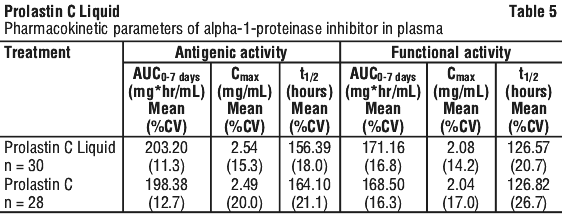
The pharmacokinetic parameters of alpha-1-proteinase inhibitor in plasma showed comparability between Prolastin C Liquid treatment and Prolastin C treatment, as shown in Table 5. Comparability was also demonstrated with respect to alpha-1-proteinase inhibitor functional activity assay.
The key pharmacokinetic parameter was the area under the plasma concentration-time curve (AUC0-7 days) following 8 weeks of treatment with Prolastin C Liquid or Prolastin C. The 90% confidence interval (1.03-1.08) for the ratio of AUC0-7 days for Prolastin C Liquid and Prolastin C indicated that the 2 products are comparable, i.e. the entire range falls within the 0.80 - 125% interval.
Trough levels measured at steady state during the PK study using an antigenic content assay showed Prolastin C Liquid resulted in a mean trough of 17.72 microM and Prolastin C resulted in a mean trough of 16.88 microM.

Metabolism.

The mean t1/2 values were 156.4 hours and 164.1 hours for Prolastin C Liquid and Prolastin C.

Distribution and excretion.

The intersubject variability (%CV) in Cmax, AUC0-7 days, corrected AUC0-7 days, t1/2, and CL of alpha-1-proteinase inhibitor (antigenic content) was ≤ 22.1% for each treatment, indicating general consistency in the distribution and elimination of Prolastin C Liquid between subjects and treatments.

5.3 Preclinical Safety Data

Genotoxicity.

Genotoxicity studies have not been conducted with Prolastin C Liquid.

Carcinogenicity.

Carcinogenicity studies have not been conducted with Prolastin C Liquid.

6 Pharmaceutical Particulars

6.1 List of Excipients

Alanine, monobasic sodium phosphate monohydrate, water for injections.

6.2 Incompatibilities

Incompatibilities were either not assessed or not identified as part of the registration of this medicine.

6.3 Shelf Life

In Australia, information on the shelf life can be found on the public summary of the Australian Register of Therapeutic Goods (ARTG). The expiry date can be found on the packaging.

6.4 Special Precautions for Storage

Store unopened vials refrigerated at 2°C to 8°C with no more than 1 month at room temperatures (up to 25°C) after which the product must be used or immediately discarded.
Do not use after the expiration date on its label.
Do not freeze.

6.5 Nature and Contents of Container

Container type.

Clear type I glass vial closed with a chlorobutyl stopper, protected with aluminium flip-off cap.

Pack sizes.

One 10 mL vial in one carton; one 20 mL vial in one carton; one 80 mL in one carton.
Components of the packaging do not contain natural rubber latex.

6.6 Special Precautions for Disposal

In Australia, any unused medicine or waste material should be disposed of in accordance with local requirements.

6.7 Physicochemical Properties

Chemical structure.

Alpha-1-proteinase inhibitor is a glycoprotein containing 394 amino acid residues. It is a typical member of the family of proteins that are serine protease inhibitors or serpins. Alpha-1-proteinase inhibitor has a molecular weight of 51,000 Daltons, an isoelectric point of 4.4 to 4.8 and functions by forming a tight complex with target proteases. While alpha-1-proteinase inhibitor does not contain disulfide bonds, it is highly structured, with 80% of the amino acids in alpha-1-proteinase inhibitor residing in eight well-defined helixes or three large β-sheets. The amino acid sequence at the reactive center, in particular methionine-358, helps define the inhibitor specificity by providing a putative cleavage site for the target proteinase, human neutrophil elastase. Structural analysis of naturally occurring variants of alpha-1-proteinase inhibitor show salt bridges within the molecule are necessary for proper processing of the protein in vivo, and for full protease inhibitory activity. Alpha-1-proteinase inhibitor contains approximately 12% carbohydrate. It has three branched carbohydrate chains linked to asparagine residues. All carbohydrate attachment sites are located on the outside of the folded protein, projecting into the surrounding solution. This distributes the carbohydrate portion of the molecule over most of the surface of the folded protein.

CAS number.

9041-92-3.

7 Medicine Schedule (Poisons Standard)

Schedule 4 (Prescription only medicine).

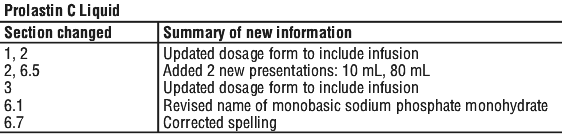
Summary Table of Changes