


Consumer medicine information

Quilonum SR Tablets

Lithium carbonate

BRAND INFORMATION

Brand name

Quilonum SR

Active ingredient

Lithium carbonate

Schedule

S4


Consumer medicine information (CMI) leaflet

Please read this leaflet carefully before you start using Quilonum SR Tablets.

What is in this leaflet?

Please read this leaflet carefully before you take Quilonum SR tablets.

This leaflet answers some common questions about Quilonum SR. It does not contain all of the available information.

It does not take the place of talking to your doctor or pharmacist.

All medicines have risks and benefits. Sometimes new risks are found even when a medicine has been used for many years. Your doctor has weighed the expected benefits of you taking Quilonum SR against the risks this medicine could have for you.

If you have any concerns about taking this medicine, ask your doctor or pharmacist.

Keep this leaflet with the medicine. You may need to read it again.

What is Quilonum SR used for?

Quilonum SR is used to treat mental illness. It is taken both to treat and prevent episodes of mood swing, either up (mania) or down (depression), in a condition called either manic-depression or bipolar disorder.

Your doctor may have prescribed Quilonum SR for another reason.

Quilonum SR tablets are not addictive.

Before you take Quilonum SR

Do not take if:

You must not take Quilonum SR if:

  • you have ever had an allergic reaction (See"Side-Effects") to lithium or any of the ingredients listed toward the end of this leaflet. (See "Ingredients")
  • you have taken lithium before and become unwell, tell your doctor before starting these tablets
  • you have severe kidney or heart disease
  • you are weakened by illness or dehydrated
  • you have a low level of sodium in your blood
  • you have an untreated underactive thyroid gland or Addison's disease
  • the expiry date (EXP) printed on the pack has passed
  • the packaging is torn or shows signs of tampering

Tell your doctor if:

You must tell your doctor if:

  • you are allergic to foods, dyes, preservatives or any other medicines.
  • you are breastfeeding, pregnant or trying to become pregnant.
    If Quilonum SR is taken during the first 12 weeks of pregnancy, when organs are formed, the baby may be born with birth defects involving the heart and blood vessels.
    Use of Quilonum SR towards the end of pregnancy may produce serious unwanted effects in the newborn baby. These unwanted effects usually last for 1 to 2 weeks after the baby has been born.
    Do not breast-feed while you are taking this medicine.
  • you are having, or going to have electroconvulsive (electric shock) therapy
  • you have a condition called Brugada syndrome, or someone in your family has Brugada syndrome (a genetic disease that affects the heart)
  • you are taking any other medicines, including medicines you buy without a prescription. In particular tell your doctor if you are taking any of the following medicines which:
    - changes urine output (diuretics, or fluid tablets)
    - change the acidity of urine (sodium bicarbonate)
    - lower blood pressure or treat heart conditions (such as methyldopa, "calcium channel blockers" and "ACE inhibitors")
    - treat wheezy breathing (such as theophylline or aminophylline)
    - control fits or convulsions (such as carbamazepine or phenytoin)
    - treat depression (such as fluoxetine or imipramine)
    - treat arthritis (non-steroidal anti-inflammatory drugs, such as indomethacin and piroxicam, as well as "COX II inhibitors" such as celecoxib and rofecoxib.
    - contains metronidazole ("anti-infective")
    - decrease appetite
    - contain a steroid (ie prednisolone)
    - treat certain mental condition (ie haloperidol or ziprasidone)
    - angiotensin II receptor antagonists (ie irbesartan (Avapro, Karvea), candesartan (Atacand)

How do I take Quilonum SR?

Follow your doctor's instructions about how and when to take Quilonum SR.

Please read the label carefully. If you have any questions about Quilonum SR and how to take it, please ask your doctor or pharmacist.

How much to take

The usual dose of Quilonum SR is one 450mg tablet twice a day. If necessary your doctor may increase or decrease the dose you take each day.

How to take it

Swallow the tablet(s) whole, with cold water and preferably with food. Do not break in half, chew or crush the tablets, or try to dissolve them.

How long to take it for

Keep taking your Quilonum SR for as long as your doctor tells you to. Do not stop taking Quilonum SR, or change the dose without first checking with your doctor.

Use in children and elderly patients

There is no specific information to recommend the use of Quilonum SR in children under 12 years. Your doctor will determine the appropriate dose for elderly patients.

What do I do if I take too much? (Overdose)

Immediately telephone your doctor or Poisons Information Centre (telephone 131126) for advice, if you think you or anyone else may have taken too much Quilonum SR, even if there are no signs of discomfort or poisoning.

If you are not sure what to do, contact your doctor, pharmacist or nearest hospital. Be sure to show the doctor the pack of tablets.

While you are taking Quilonum SR

Things you must do

Tell your doctor if, for any reason, you have not taken your medicine exactly as directed. If you forget to take Quilonum SR, take it as soon as you remember. Do not double the dose to make up for any missed or forgotten doses.

  • Keep all of your doctor's appointments so that your progress can be checked.
    Because unwanted effects can occur with changes in your body function or in your condition, it is important that you are monitored closely by your doctor and have regular blood tests.
  • It is important to maintain a normal diet and fluid intake, particularly an adequate and constant salt and water intake.
    It may be necessary to stop lithium if you develop another illness.

Things you must not do

Do not give this medicine to anyone else, even if their symptoms seem similar to yours.

Do not use Quilonum SR to treat any other complaints unless your doctor says to.

Do not stop taking Quilonum SR without talking to your doctor or pharmacist.

Things to be careful of

Be careful driving or operating machinery until you know how Quilonum SR affects you. Lithium may cause dizziness, sleepiness, poor co-ordination and hallucinations. If you are affected you should not drive or operate machinery.

What are the side-effects?

Check with your doctor as soon as possible if you think you are experiencing any side effects or allergic reactions due to taking Quilonum SR, even if the problem is not listed below. Like other medicines, Quilonum SR can cause some side-effects. If they occur, they are most likely to be minor and temporary. However, some may be serious and need medical attention.

Tell your doctor or pharmacist if you experience any of the following after taking Quilonum SR.

Mild side effects which may disappear without stopping treatment include:

  • mild nausea
  • loose bowel motions
  • taste impairment
  • abdominal discomfort
  • tiredness
  • weakness
  • dizziness
  • slurred speech
  • fine tremor of the hands
  • muscle twitching or jerking
  • muscle or joint pain
  • larger than usual urine volumes
  • mild constant thirst
  • worsening of acne or psoriasis
  • mild allergic rash
  • hair loss
  • weight gain
  • cold hands and feet
  • swelling of hands, ankles or feet
  • excessive salivation
  • dry mouth
  • loss of appetite
  • changes in sexual function.

Tell your doctor immediately if you notice any of the following:

  • severe or persistent nausea, vomiting, or diarrhoea
  • drowsiness
  • extreme tiredness
  • blurred vision
  • ringing in the ears
  • lack of balance or difficulty in walking
  • passage of very large volumes of urine with raging thirst
  • seizures or fits
  • acute renal failure (kidney disease where you pass little or no urine. Other symptoms include drowsiness, nausea, vomiting and breathlessness)
  • changes in rhythm or rate of heart beat
  • impair or loss of consciousness.
  • Wheezing, swelling of the lips/mouth, difficulty in breathing, hayfever, lumpy rash (hives) or fainting. These could be symptoms of an allergic reaction.

This is not a complete list of all possible side-effects. Others may occur in some people and there may be some side-effects not yet known.

Tell your doctor or pharmacist if you notice any side-effects from your medicine which are not mentioned here.

Do not be alarmed by this list of possible side-effects. You may not experience any of them.

How do I store Quilonum SR?

Keep this medicine where children cannot reach it, such as in a locked cupboard.

Do not leave in a car, on a window sill or in the bathroom.

Keep Quilonum SR tablets in its blister pack until time to take them.

Return any unused or expired medicine to your pharmacist.

Product description

What Quilonum SR looks like

Quilonum SR comes as white tablets in blister packaging containing 100 tablets. Each tablet has breaklines on both sides of the tablet.

Ingredients

Each Quilonum SR tablet contains 450mg of the active ingredient lithium carbonate.

Quilonum SR tablets also contain inactive ingredients, including the colouring agent titanium dioxide, maize starch, lactose monohydrate, gelatin, purified talc, povidone, carmellose calcium, calcium behenate, magnesium stearate, macrogol 6000 and Eudragit E 100.

Supplier

Aspen Pharmacare Australia Pty Ltd
34-36 Chandos Street
St Leonards NSW 2065
Australia.

Quilonum SR Tablets:
AUST R 53377

Quilonum SR® is a registered trade mark of Aspen Global Incorporated.

© 2012 Aspen Global Incorporated.

Date of revision: January 2018

Published by MIMS November 2025
BRAND INFORMATION

Brand name

Quilonum SR

Active ingredient

Lithium carbonate

Schedule

S4


1 Name of Medicine

Lithium carbonate.

2 Qualitative and Quantitative Composition

Quilonum SR contains lithium carbonate as the active ingredient.

Excipients with known effect.

Sugars as lactose.
For the full list of excipients, see Section 6.1 List of Excipients.

3 Pharmaceutical Form

Quilonum SR tablets are white, film-coated tablets.

4 Clinical Particulars

4.1 Therapeutic Indications

Lithium is indicated in the treatment of acute episodes of mania and hypomania and for the prophylaxis of recurrent manic-depressive illness.

4.2 Dose and Method of Administration

Quilonum SR tablets should be given every 12 hours. Tablets should not be broken in half, crushed or chewed, nor taken with a hot drink. No attempt should be made to dissolve them. Dosage must be individualised according to serum concentrations and clinical response. It is advisable that serum lithium concentrations are estimated 4 to 5 days after starting treatment. Blood samples for serum lithium concentrations should be drawn 12 hours after the last dose, immediately prior to next dose.
Lithium should be taken with food, as this appears to reduce the likelihood of gastrointestinal adverse effects, such as diarrhoea. However, the precise effect of food on the absorption of Quilonum SR is not known.
When switching a patient from immediate release form to prolonged release, give the same total daily dose when possible. Most patients on maintenance therapy are stabilised on 900 mg daily. These patients should be monitored at 1-2 week intervals, and dosage adjusted if necessary, until stable and satisfactory serum concentrations and clinical state are achieved.

Acute mania.

Optimal patient response can usually be established with 1800 mg per day in divided doses. Such doses will normally produce the desired serum lithium concentrations between 0.8 and 1.4 mmol/L. Dosage must be individualised according to serum levels and clinical response. Regular monitoring of the patients' clinical state and serum lithium concentrations is necessary. Serum concentrations should be determined once or twice per week during the acute phase, and until the serum level and clinical condition of the patient have been stabilised.

Long-term therapy/ prophylaxis.

Dosage should be adjusted to maintain a serum lithium concentration 0.6 to 1.0 mmol/L. Dosage will vary from one individual to another, but usually 900 mg to 1200 mg per day in divided doses will maintain this concentration. Serum lithium concentration should be assessed frequently during the acute phase, and in uncomplicated cases/ during maintenance, every 2 months.

4.3 Contraindications

Lithium should not be given to patients with significant renal or cardiovascular disease, including conduction abnormalities, or untreated hypothyroidism. Lithium should not be given to patients with low body sodium including dehydrated patients, those with Addison's disease or reduced dietary salt intake, since the risk of lithium toxicity is higher in these patients.
Quilonum SR should not be given to patients with a previous history of hypersensitivity to lithium or any of the excipients contained in the tablets (see Section 6.1 List of Excipients).

4.4 Special Warnings and Precautions for Use

Check the following before use.

Renal, cardiac and thyroid function should be assessed prior to initiating therapy, and periodically thereafter.

Lithium toxicity.

Lithium toxicity is closely related to serum lithium concentrations and can occur at doses close to therapeutic concentrations. Treatment should be discontinued immediately on the first signs of toxicity. These include:
Cardiovascular events, e.g. QT/QTc prolongation (see Section 4.5 Interactions with Other Medicines and Other Forms of Interactions).
Gastrointestinal events, e.g. diarrhoea, vomiting, dehydration.
Neurological events, e.g. ataxia, tremor, hypertonia, involuntary muscular contractions, peripheral neuropathy, hypoactive or absent deep tendon reflexes, hyper-reflexia, speech disorders, confusion, somnolence and nystagmus.

Intoxication.

The ability to tolerate lithium is greater during the acute manic phase and decreases when manic symptoms subside.
Vomiting, diarrhoea, intercurrent infection, fluid deprivation, excess sweating and some drugs (see Section 4.5 Interactions with Other Medicines and Other Forms of Interactions) may reduce the renal clearance of lithium and thereby precipitate intoxication. Lithium excretion may also be reduced in elderly patients. The elderly often respond to reduced dosage and may exhibit signs of toxicity at serum concentrations ordinarily tolerated by younger patients.
It is important to maintain a normal diet and fluid intake, particularly an adequate and constant salt and water intake. Patients should be informed of, and told to report signs of, intoxication, polyuria and polydipsia, or episodes of nausea and vomiting. The family should be instructed in the early signs of toxicity.
Acute renal failure has been reported rarely with lithium toxicity.
Treatment should be discontinued during intercurrent illness.
Gradual withdrawal of lithium (over a period greater than 15 days) is recommended, as it may delay recurrence of the patient's underlying symptoms.
On the first sign of toxicity, treatment should be immediately discontinued (see Section 4.9 Overdose).

Brugada syndrome.

Lithium is a known inhibitor of cardiac sodium channels and can unmask Brugada syndrome. For this reason, lithium should be avoided in patients with Brugada syndrome. If there are no therapeutic alternatives and the decision is made to initiate lithium this should be done in a controlled medical environment with an ECG performed following the start of treatment and periodically thereafter.
In patients who have undergone bariatric surgery, a lower maintenance dose of lithium may be required. Lithium levels should be closely monitored due to the risk of lithium toxicity until weight has stabilized.

Use with diuretics.

Diuretics should only be used with caution during lithium treatment (see Section 4.5 Interactions with Other Medicines and Other Forms of Interactions). Lithium levels should be monitored at shorter intervals and appropriate dosage adjustment should be made.

Combined treatment with neuroleptics.

An encephalopathic syndrome, (characterised by weakness, lethargy, fever, tremulousness, confusion, extrapyramidal symptoms, leucocytosis, elevated serum enzymes), has occurred in a few patients treated with lithium and neuroleptics. In some instances, the syndrome was followed by irreversible brain damage. Because a possible causal relationship between these events and treatment with lithium and neuroleptics, patients receiving combined therapy should be monitored closely for early evidence of neurologic toxicity and treatment discontinued promptly if symptoms appear. This encephalopathic syndrome may be similar to or the same as neuroleptic malignant syndrome.

Combined treatment with electroconvulsive therapy.

There have been reports of increased risk of neurological adverse effects (e.g. delirium, prolonged seizures and confusion) when patients on lithium treatment received electroconvulsive therapy (ECT). If the combined treatment of lithium with ECT is clinically indicated, ECT should be used with caution and the patient should be closely monitored.

Chronic lithium therapy.

Chronic lithium therapy may be associated with diminution of renal concentrating ability, occasionally presenting as nephrogenic diabetes insipidus with polyuria and polydipsia. Such patients should be carefully managed to avoid dehydration with resulting lithium retention and toxicity. This condition is usually reversible when the lithium is discontinued.
Histological changes (including tubulointerstitial nephropathy) have been reported after long-term treatment with lithium. These changes may lead to impaired renal function. It is unclear if these changes are always reversible on stopping lithium. It is advisable to monitor renal function periodically.
Cases of microcysts, oncocytomas and collecting duct renal carcinoma have been reported in patients with severe renal impairment who have received lithium for more than 10 years (see Section 4.8 Adverse Effects (Undesirable Effects)).
Morphologic changes with glomerular and interstitial fibrosis and nephron atrophy have been reported in patients on chronic lithium therapy. Some structural changes have also been reported in manic-depressives never exposed to lithium. The relationship between renal function, morphologic changes and lithium therapy has not been established. When kidney function is assessed, routine urinalysis and other tests may be used to evaluate tubular function (e.g. urine SG or osmolality following water deprivation, or 24 hour urine volume) and glomerular function (e.g. serum creatinine or creatinine clearance).

Hypercalcemia and hyperparathyroidism.

Treatment with lithium can cause hypercalcemia that may or may not be accompanied by hyperparathyroidism (see Section 4.8 Adverse Effects (Undesirable Effects)). It is recommended to monitor blood calcium levels before onset of treatment and periodically thereafter during treatment, and if necessary, parathyroid hormone level.

Clinical worsening and suicide risk associated with depression or bipolar disorder.

Patients with depression or bipolar disorder may experience worsening of their depressive symptoms and/or the emergence of suicidal ideation and behaviours (suicidality) whether or not they are taking antidepressant medications. Patients should be closely monitored for clinical worsening and suicidality, especially at the beginning of a course of treatment, or at the time of dose changes.
High risk patients, such as those with a history of suicidal behaviour or thoughts, young adults, and those patients exhibiting a significant degree of suicidal ideation prior to commencement of treatment, are at a greater risk of suicidal thoughts or suicide attempts, and should receive careful monitoring during treatment.
Patients (and caregivers of patients) should be alerted about the need to monitor for any worsening of their condition and/or the emergence of suicidal ideation/ behaviours or thoughts of harming themselves and to seek medical advice immediately if these symptoms present.
Consideration should be given to changing the therapeutic regimen, including possibly discontinuing the medication, in patients who experience clinical worsening (including development of new symptoms) and/or the emergence of suicidal ideation/ behaviour, especially if these symptoms are severe, abrupt in onset, or were not part of the patient's presenting symptoms.

Use in the elderly.

Lithium should be used with care in the elderly. Elderly patients often require lower lithium dosages to achieve therapeutic serum concentrations. They may also exhibit adverse reactions at serum concentrations ordinarily tolerated by younger patients.

Paediatric use.

Since information regarding the safety and efficacy in children under 12 years of age is not available, lithium therapy is not recommended in this age group.

Effects on laboratory tests.

See Section 4.4 Special Warnings and Precautions for Use; Section 4.5 Interactions with Other Medicines and Other Forms of Interactions.

4.5 Interactions with Other Medicines and Other Forms of Interactions

Clinicians should be aware that lithium may interact with a variety of drugs. Caution should therefore be exercised when lithium is coadministered with any other medication. In particular, the following important clinical interactions have been reported.

Interactions which increase serum lithium concentrations.

The following have been reported to increase steady-state serum lithium concentrations, possibly resulting in lithium toxicity.

Metronidazole.


Nonsteroidal anti-inflammatory drugs.

Lithium levels should be monitored when patients initiate or discontinue NSAID use. In some cases, lithium toxicity has resulted from interactions between an NSAID and lithium. Indomethacin and piroxicam have been reported to increase significantly steady-state plasma lithium concentrations. There is also evidence that other nonsteroidal anti-inflammatory agents, including the selective cyclooxygenase-2 (COX-2) inhibitors, have the same effect.

ACE inhibitors.


Angiotensin II receptor antagonists.


Diuretics.

See also below. Thiazides, which show a paradoxical antidiuretic effect resulting in possible water retention and lithium intoxication; potassium sparing; loop.

Interactions which decrease serum lithium concentrations.

A decrease in the serum lithium concentration may be seen on the concomitant administration of lithium with urea; xanthines; alkalinizing agents such as sodium bicarbonate; diuretics (see also above): osmotic; carbonic anhydrase inhibitors including acetazolamide.
Other drugs affecting electrolyte balance (e.g. appetite suppressants, steroids) may alter lithium excretion.
Serum lithium concentrations should therefore be monitored more frequently if concomitant therapy with any of the above drugs is initiated.

Interactions causing neurotoxicity.

The following have been reported as causing neurotoxicity when used concomitantly with lithium.

Neuroleptics.

(See Section 4.4 Special Warnings and Precautions for Use). Concurrent dosage should be lower than usual.

Antiepileptics.

Such as carbamazepine.

Methyldopa.


Selective serotonin reuptake inhibitors (SSRIs).

Possible interactions have been reported with fluoxetine, therefore, concomitant use of other SSRIs (paroxetine, sertraline) should be undertaken with caution as this combination may precipitate a serotonergic syndrome.

Calcium channel blockers.

These may increase the neurotoxic effects of lithium, and serum lithium concentrations may need to be at the lower end of the therapeutic range.

Tricyclic antidepressants.


Additional interactions.

Lithium may prolong the effects of neuromuscular blocking agents.
Concomitant use of lithium and ziprasidone may result in prolongation of the QTc interval.
SGLT2 inhibitors may increase renal lithium excretion and the blood lithium levels may be decreased. Serum concentration of lithium should be monitored more frequently after initiation and dose changes of SGLT2 inhibitors.

Topiramate.

There have been reports on lithium toxicity when concurrently administered with topiramate. Lithium levels should be closely monitored when co-administered with topiramate.

4.6 Fertility, Pregnancy and Lactation

Effects on fertility.

See Use in pregnancy.
(Category D)
Lithium crosses the placental barrier. In animal studies, lithium has been reported to interfere with fertility, gestation, and foetal development. In humans, lithium may cause foetal harm when administered to a pregnant woman. Data from the lithium birth register, which collects data on the known cases of first trimester exposure to lithium suggests an increase in cardiac and other abnormalities, especially Ebstein's anomaly. As of 1980, 225 infants were included in the register. Of these, 25 infants were born with congenital abnormalities, including 18 with serious cardiovascular malformations, 6 of which were cases of Ebstein's anomaly.
Lithium taken near term may produce symptoms of lithium toxicity in the newborn which include disturbance of thyroid function. Most effects are self limiting with resolution within 1-2 weeks.
Lithium should not be used in pregnancy, especially during the first trimester, unless in the judgement of the physician it is considered necessary. Patients should be informed of potential hazards to the foetus.
In certain cases where a severe risk to the patient could have existed if treatment were stopped, lithium has been continued during pregnancy. If given, serum levels should be measured frequently because of the changes in renal function associated with pregnancy and parturition.
Lithium is excreted in human milk. Breastfeeding should be discontinued during lithium therapy.

4.7 Effects on Ability to Drive and Use Machines

At the beginning of treatment, the occasional onset of fatigue can impair reflexes. Lithium may cause disturbances of the CNS (e.g. somnolence, dizziness or hallucinations). Patients should be warned of the possible hazards when driving or operating machinery.

4.8 Adverse Effects (Undesirable Effects)

The occurrence and severity of adverse reactions are generally directly related to serum lithium concentrations as well as to individual sensitivity to lithium and generally occur more frequently and with greater severity at higher concentrations. Fine hand tremor, polyuria, thirst and nausea may occur during initial therapy, and may persist throughout acute treatment. Nausea is usually transient. All of these symptoms usually subside with continued therapy or with reduction in dosage.
Other adverse events commonly reported during lithium therapy include weight gain, fatigue and mild cognitive impairment.
Diarrhoea, vomiting, drowsiness, muscular weakness and incoordination are early signs of lithium toxicity, however, they can occur at lithium concentrations less than 2.0 mmol/L. At higher concentrations ataxia, tinnitus, blurred vision, giddiness and increasing polyuria are seen. Treatment should be discontinued immediately on the first sign of toxicity.
The following reactions appear to be related to serum lithium concentrations. Adverse reactions can occur in patients with serum concentrations within the therapeutic range (i.e. below 1.5 mmol/L or lower in the elderly).

Body as a whole.

Oedema.

Cardiovascular.

Cardiac arrhythmia, hypotension, ECG changes including nonspecific T wave changes, oedema, Raynaud's phenomena, peripheral circulatory collapse, bradycardia, sinus node dysfunction.

Dermatologic.

Alopecia, acne, folliculitis, pruritus, psoriasis exacerbation, rash, drug reaction with eosinophilia and systemic symptoms (DRESS).

Endocrine.

Euthyroid goitre, hypothyroidism, rare cases of hyperthyroidism, hyperglycaemia, hypercalcaemia, hyperparathyroidism, parathyroid adenoma and parathyroid hyperplasia, weight gain.

Gastrointestinal.

Anorexia, nausea, vomiting, diarrhoea, gastritis, excessive salivation, abdominal pain.

Haematological.

Leucocytosis.

Hypersensitivity.

Angioedema.

Neuromuscular/ CNS.

Tremor, fasciculations, twitching clonic movements of extremities, impaired nerve conduction, ataxia, choreoathetoid movements, hyperactive deep tendon reflexes, extrapyramidal symptoms, syncope, seizures, slurred speech, dizziness, vertigo, nystagmus, somnolence, stupor, coma, hallucinations, memory loss, taste distortion, taste impairment, scotomata, pseudotumour cerebri, autonomic effects including blurred vision, dry mouth, dysgeusia and impotence/ sexual dysfunction. Myasthenia gravis has been observed rarely.

Renal.

Symptoms of nephrogenic diabetes insipidus, urinary incontinence and, after long-term therapy, histological renal changes (including tubulointerstitial nephropathy) and impaired renal function. Microcysts, oncocytoma and collecting duct renal carcinoma (in long-term therapy) in patients with severe renal impairment (see Section 4.4 Special Warnings and Precautions for Use).

Musculoskeletal and connective tissue disorders.

Arthralgia, myalgia.

Reporting suspected adverse effects.

Reporting suspected adverse reactions after registration of the medicinal product is important. It allows continued monitoring of the benefit-risk balance of the medicinal product. Healthcare professionals are asked to report any suspected adverse reactions at www.tga.gov.au/reporting-problems.

4.9 Overdose

The toxic levels for lithium are close to the therapeutic concentrations.

Symptoms.

Symptoms of moderate to severe lithium toxicity include anorexia, persistent nausea and vomiting, blurred vision, muscle fasciculations, clonic limb movement, hyperactive deep tendon reflexes, choreoathetoid movements, delirium, syncope, stupor, EEG changes, coma and circulatory failure. The onset of symptoms may be delayed, with peak effects not occurring for as long as 24 h, especially in patients who are not receiving chronic lithium therapy or following the use of a prolonged release preparation. In severe intoxication generalized seizure, renal failure and death may ensue.

Treatment.

No specific antidote to lithium poisoning is known. Lithium toxicity is a medical emergency, since it can result in permanent neuronal damage and death.
Lithium therapy should be ceased, and supportive and symptomatic treatment should be initiated. Correction of electrolyte balance and fluid resuscitation is critical. Current guidelines on poisons management should be followed.
Particular attention should be paid to maintenance of fluid and electrolyte balance and of adequate renal function. Where convulsions are present, diazepam may be used. Peritoneal dialysis or haemodialysis may help eliminate the lithium ion. The latter method is preferable, particularly in chronic toxicity where serum lithium exceeds 4 mmol/L. Forced diuresis/ saline diuresis has resulted in serious problems with electrolyte balance and is inferior to dialysis.
Serum lithium levels should be monitored. Clinical improvement generally takes longer than reduction of serum lithium concentrations. Activated charcoal does not adsorb lithium. Prolonged release tablets do not disintegrate in the stomach and most are too large to pass up a lavage tube.
For information on the management of overdose, contact the Poisons Information Centre on 13 11 26 (Australia).

5 Pharmacological Properties

5.1 Pharmacodynamic Properties

Mechanism of action.

Preclinical studies have shown that lithium alters sodium transport in nerve and muscle cells and effects a shift toward intraneuronal metabolism of catecholamines, but the specific biochemical mechanism of lithium action in mania is unknown.

Clinical trials.

No data available.

5.2 Pharmacokinetic Properties

Absorption.

Whilst Quilonum SR tablets are designed to reduce fluctuations in plasma lithium concentrations, the formulation is not prolonged release in the usual sense; rather, the delayed uptake results primarily from the physicochemical characteristics of the lithium carbonate.
Quilonum SR is almost completely absorbed from the gastrointestinal tract, with peak serum concentrations occurring 2.5 to 5.5 hours after ingestion.

Distribution and metabolism.

Lithium does not bind to plasma proteins, is not metabolised, and is distributed nonuniformly throughout body water. The volume of distribution of lithium is approximately equivalent to total body water (0.6 L/kg). Lithium does not cross the blood brain barrier rapidly. The half-life of lithium is approximately one day, and equilibrium is reached after five to seven days of regular intake.

Excretion.

No hepatic metabolism of lithium occurs, and glomerular filtration eliminates the entire dose. The proximal renal tubule resorbs 60 to 70% of the filtered lithium load, whereas no absorption occurs in the distal tubule. Renal clearance of lithium is decreased with renal insufficiency and hyponatraemia. Pregnancy and an alkaline urine increase lithium clearance.

5.3 Preclinical Safety Data

Genotoxicity.

See Section 4.6 Fertility, Pregnancy and Lactation, Use in pregnancy.

Carcinogenicity.

No data available.

6 Pharmaceutical Particulars

6.1 List of Excipients

Quilonum SR tablets also contain inactive ingredients including povidone, maize starch, lactose monohydrate, gelatin, carmellose calcium, purified talc, calcium behenate, magnesium stearate, titanium dioxide, macrogol 6000, and basic butylated methacrylated copolymer (E-12.5).

6.2 Incompatibilities

Incompatibilities were either not assessed or not identified as part of the registration of this medicine.

6.3 Shelf Life

In Australia, information on the shelf life can be found on the public summary of the Australian Register of Therapeutic Goods (ARTG). The expiry date can be found on the packaging.

6.4 Special Precautions for Storage

Store below 25°C.

6.5 Nature and Contents of Container

Slow Release Tablets containing 450 mg lithium carbonate per tablet, in PVC/Aluminium blister packs of 100.

6.6 Special Precautions for Disposal

In Australia, any unused medicine or waste material should be disposed of by taking to your local pharmacy.

6.7 Physicochemical Properties

Quilonum SR contains lithium carbonate, a white, light alkaline powder with molecular formula Li2CO3 and molecular weight 73.89.

CAS number.

554-13-2.

7 Medicine Schedule (Poisons Standard)

S4.

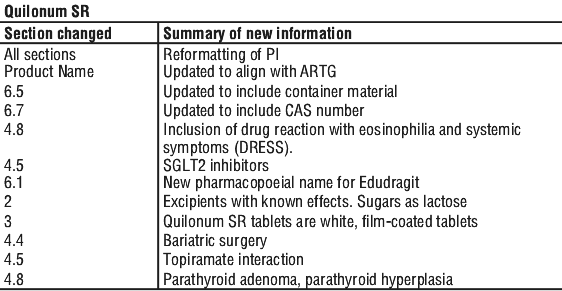
Summary Table of Changes