







What is in this leaflet?
This leaflet answers some common questions about Sandoz Lamotrigine tablets. It does not contain all of the available information. It does not take the place of talking to your doctor or pharmacist.
All medicines have risks and benefits. Your doctor has weighed the risks of you taking Sandoz Lamotrigine tablets against the benefits they expect it will have for you.
If you have any concerns about taking this medicine, ask your doctor or pharmacist.
Keep this leaflet with the medicine. You may need to read it again.
What Sandoz Lamotrigine tablets are used for?
Sandoz Lamotrigine tablets contains Lamotrigine as the active ingredient and belongs to a group of medicines called "anti-epileptic drugs".
Anti-epileptic drugs used to treat epilepsy.
It is used for the treatment of epilepsy in patients over 2 years of age. Lamotrigine In general, it is initially used in addition to other medicines for the treatment of epilepsy including partial or generalized seizures and Lennox-. Gastaut Syndrome. It is thought that this medicine work by changing the levels of some chemicals associated with seizures.
Ask your doctor if you have any questions about why Sandoz Lamotrigine tablets have been prescribed for you. Your doctor may have prescribed it for another reason.
This medicine is only available with a doctor’s prescription.
It is not addictive.
Before you take it
When you must not take it
Do not take Sandoz Lamotrigine tablets if you have ever had an allergic reaction to
- lamotrigine
- any of the ingredients listed at the end of this leaflet.
Symptoms of an allergic reaction may include shortness of breath, wheezing or difficulty in breathing; swelling of the face, lips, tongue or any other parts of the body; rash, itching or hives on the skin.
Do not take Lamotrigine this medicine after the expiry (EXP) printed on the pack has passed.
Do not take Sandoz Lamotrigine tablets if thepackaging is torn or shows signs of tampering.
Before you start taking Sandoz Lamotrigine tablets
Tell your doctor if you are taking any other medicines that contain lamotrigine.
Tell your doctor if you are allergic to any other medicines or any foods, dyes or preservatives.
Tell your doctor if you have or have had any of the following medical conditions:
- a history of allergy or rash to other anti-epileptic drugs
- liver or kidney disease
- Parkinson's disease
- if you have ever developed meningitis after taking lamotrigine.
Tell your doctor if you are pregnant or trying to become pregnant.
Sandoz Lamotrigine may affect your unborn baby if you take it during pregnancy but it is still important that you control your fits while you are pregnant. Your doctor will discuss the risks and benefits of taking Sandoz Lamotrigine during pregnancy.
It is recommended that women on anti-epileptic drugs, such as Sandoz Lamotrigine, receive pre-pregnancy counselling with regard to the possible risk to their unborn child.
Studies have shown a decrease in the levels of folic acid during pregnancy when Sandoz Lamotrigine is also used. It is therefore recommended that you take daily 5 mg folate supplement before becoming pregnant and during the first 12 weeks of your pregnancy.
Tell your doctor if you are breast feeding or planning to breast feed. Sandoz Lamotrigine can pass into breast milk and may affect your baby. Your doctor will discuss the risks and benefits of taking Sandoz Lamotrigine if you are breast feeding.
Do not give this medicine to anyone else even if their symptoms seem similar to yours.
Do not take Sandoz Lamotrigine to treat any other complaints unless your doctor says to.
Use in children
Epilepsy: Sandoz Lamotrigine is not recommended in children under 2 years of age. Children's weight should be checked and the dose reviewed as weight changes with growth occur.
Taking other medicines
Tell your doctor if you are taking any other medicines, including any that you get without a prescription from a pharmacy, supermarket or health food shop.
Some medicines may interfere with Sandoz Lamotrigine. These include:
- valproate and carbamazepine, used to treat both epilepsy and mental health problems
- any form of hormonal medicine, e.g. "the pill" or HRT
- other anti-epileptic drugs, e.g. phenytoin, primidone or phenobarbitone
- OCT2 substrates such as dofetilide
- rifampicin, an antibiotic, which is used to treat infections, including tuberculosis
- medicines used to treat Human Immunodeficiency Virus (HIV) infection
- risperidone, used to treat mental health problems.
These medicines may be affected by Sandoz Lamotrigine or may affect how well it works. You may need to take different amounts of your medicine or you may need to take different medicines.
Your doctor or pharmacist has more information on medicines to avoid while taking Sandoz Lamotrigine.
How to take Sandoz Lamotrigine tablets
Using Sandoz Lamotrigine Tablets for the first time
You may notice that you feel dizzy, tired, or unsteady in the first few weeks of treatment with Sandoz Lamotrigine tablets. During this period you may also notice that you have slight problems with your vision such as blurred or double vision. As your reactions may be slower during this period you should not operate any machinery or appliances and you should not drive a car. If any of these effects do not go away or are troublesome you should see your doctor.
If you develop any skin rash (e.g. spots or 'hives') during Sandoz Lamotrigine treatment contact your doctor immediately. There are reports of severe potentially life-threatening skin rashes associated with Sandoz Lamotrigine treatment, particularly in children. Sandoz Lamotrigine should be discontinued at the first sign of rash unless the rash is clearly not drug related
If you have any questions about taking Sandoz Lamotrigine tablets ask your doctor or pharmacist.
How much to take
Take Sandoz Lamotrigine tablets as directed by your doctor or pharmacist. Never change the dose yourself. Do not increase the dose more quickly than you have been told.
Your doctor and pharmacist will be able to tell you:
- how many tablets to take at each dose.
- how many doses to take each day.
- when to take each of your doses.
The label on the container that the tablets were supplied in will give the same information. If there is something that you do not understand ask either your doctor or pharmacist.
It is usual for the dose of Sandoz Lamotrigine tablets to start at quite a low level and be slowly increased during the first few weeks of treatment. The doses that your doctor prescribes will generally depend on any other anti-epileptic medications you are taking, and your response to Sandoz Lamotrigine tablets.
If you are about to start or stop taking contraceptive pills while taking Sandoz Lamotrigine tablets, your doctor may need to adjust the dose of Sandoz Lamotrigine depending on how well your condition is being treated.
You should tell your doctor if there are any changes in your menstrual pattern, such as breakthrough bleeding.
Your doctor may need to change the dose of Sandoz Lamotrigine during your pregnancy.
Children’s weight should be checked and the dose reviewed as weight changes occur.
If you have any questions about the dose that you have been prescribed you should ask your doctor or pharmacist.
How to take it
Sandoz Lamotrigine tablets may be swallowed whole or dispersed in a small volume of water (at least enough to cover the whole tablet).
Sandoz Lamotrigine tablets are not chewable tablets.
If you have any questions about how to take Sandoz Lamotrigine tablets ask your doctor or pharmacist.
How long to take it
For epilepsy patients, do not stop taking or change the dose without first checking with your doctor. Your doctor will advise you if you need to stop taking Sandoz Lamotrigine tablets and how to do this gradually over a period of two weeks.
If you take too much (overdose)
Immediately telephone your doctor or Poisons Information Centre (telephone 13 11 26) for advice or go to Accident and Emergency at your nearest hospital if you think that you or anyone else may have taken too many Sandoz Lamotrigine tablets. Do this even if there are no signs of discomfort or poisoning.
If you take too much Sandoz Lamotrigine you may be more likely to have serious side effects which may be fatal.
Symptoms of SANDOZ LAMOTRIGINE overdose can include rapid, uncontrollable eye movements, clumsiness and lack of coordination affecting your balance, impaired or loss of consciousness, fits or coma.
While you are taking it
Things you must do
Take Sandoz Lamotrigine exactly as your doctor has prescribed.
Contact your doctor immediately if you develop any skin rash such as spots or 'hives' during Sandoz Lamotrigine treatment. There are reports of severe, potentially life-threatening rashes associated with lamotrigine treatment, particularly in children. Sandoz Lamotrigine should be discontinued at the first sign of rash unless the rash is clearly not drug related.
Tell any other doctor, dentist or pharmacist who is treating you that you are taking Sandoz Lamotrigine tablets especially if you are about to be started on any new medicines.
If you require a laboratory test, tell your doctor or hospital that you are taking this medicine. Sandoz Lamotrigine tablets may interfere with some laboratory tests to detect other drugs.
Talk to your doctor as soon as possible if you are pregnant or if you are planning to become pregnant Your doctor will discuss the risks and benefits of taking SANDOZ LAMOTRIGINE during pregnancy.
Talk to your doctor if you are breast feeding or planning to breast feed. SANDOZ LAMOTRIGINE can pass into breast milk and may affect your baby. Your doctor will discuss the risks and benefits of breast feeding while you are taking it.
Tell your doctor if, for any reason, you have not taken your medicine exactly as directed. Otherwise, your doctor may think that it was not working as it should and change your treatment unnecessarily.
Things you must not do
For epilepsy patients, do not stop taking SANDOZ LAMOTRIGINE or change the dose without first checking with your doctor. If you stop taking Sandoz Lamotrigine tablets suddenly, your epilepsy may come back or become worse. This is known as "rebound seizures".
Your doctor will advise you if you need to stop taking Sandoz Lamotrigine tablets and how to do this gradually over about 2 weeks.
Do not take a double dose to make up for any that you may have missed.
Things to be careful of
Be careful driving or operating machinery until you know how Sandoz Lamotrigine tablets affect you. Make sure you know how you react to Sandoz Lamotrigine before you drive a car, operate machinery or do anything else that could be dangerous if you are dizzy or light-headed. If this occur do not drive.
Children should not ride a bike, climb trees or do anything else that could be dangerous if they are feeling dizzy or sleepy.
Tell your doctor immediately or go to the Accident and Emergency department of your nearest hospital if you or someone you know has any suicidal thoughts or other mental/mood changes. All mentions of suicide or violence must be taken seriously. Families and caregivers of children and adolescents who are taking Sandoz Lamotrigine should be especially watchful for any changing behaviour. Antiepileptic medicines such as Sandoz Lamotrigine may increase the risk of suicidalbehaviour (including suicidal thoughts and suicide attempts).
Side-Effects
Tell your doctor as soon as possible if you do not feel well while you are taking SANDOZ LAMOTRIGINE.
All medicines can have side effects. Sometimes they are serious, most of the time they are not. You may need medical treatment if you get some of the side effects.
Ask your doctor or pharmacist to answer any questions you may have.
The most commonly reported side-effects are:
- dizziness
- skin rash
- dry mouth
- headache
- drowsiness
- feeling sleepy
- respiratory or lung problems
- diarrhoea
- feeling sick (nausea), vomiting
- feeling weak
- movement problems such as tics, unsteadiness, jerkiness and tremor (shakiness)
- back pain or joint pain
- stomach pain
- liver problems
- double vision, blurred vision
- rapid, uncontrollable eye movements
- trouble sleeping hallucinations
- confusion
- loss of memory
- depression
- irritability/aggression
- agitation
- increased activity in children
In general these side effects usually happen only during the first few weeks of treatment with Sandoz Lamotrigine tablets.
Tell your Doctor immediately, or go to Accident and Emergency department of your nearest hospital if you or someone you know has any suicidal thoughts or other mental/mood changes whilst taking Sandoz Lamotrigine tablets. All mentions of suicide or violence must be taken seriously. Families and caregivers of children and adolescents who are taking Sandoz Lamotrigine should be especially watchful for any changing behaviour. Antiepileptic medicines such as Sandoz Lamotrigine may increase the risk of suicidal behaviour (including suicidal thoughts and suicide attempts).
Potentially serious skin reaction.
A small number of people taking Sandoz Lamotrigine get an allergic reaction or potentially serious skin reaction, which may develop into more serious problems if they are not treated. Severe allergic reactions are rare.
These symptoms are more likely to happen during the first few months of treatment with Sandoz Lamotrigine, especially if the dose is too high or if the dose is increased too quickly, or if Sandoz Lamotrigine is taken with a medicine called valproate. Serious skin reactions are more common in children. Symptoms of these serious allergic reactions include:
- any skin reaction, e.g. rash or 'hives'
- wheezing, difficulty in breathing
- swelling of the face, lips or tongue
- sore mouth or sore eyes
- fever
- swollen glands.
Tell your doctor immediately if you notice any of the above symptoms.
Liver and blood problems
Tell your doctor if you notice any of these symptoms:
- drowsiness
- itching
- abdominal pain or tenderness
- feeling very tired
- easy bruising or unusual bleeding
- a sore throat, or more infections such as a cold than usual
- yellow skin (jaundice).
Your doctor may decide to carry out tests on your liver, kidneys or blood and may tell you to stop taking Sandoz Lamotrigine if you experience these rare symptoms.
If you are taking Sandoz Lamotrigine for epilepsy, tell your doctor as soon as possible if your seizures get worse or if you have a new type of seizure. You may need urgent medical attention or hospitalisation. Serious side effects are rare.
Tell your doctor if you notice anything else that is making you feel unwell, even if you think the problems are not connected with this medicine and are not referred to in this leaflet Other side effects not listed above may also occur in some people.
Do not be alarmed by this list of possible side effects. You may not experience any of them.
After taking Sandoz Lamotrigine tablets
Storage
Keep Sandoz Lamotrigine tablets where young children cannot reach them. A locked cupboard at least one-and-a half metres above the ground is a good place to store medicines.
Keep your tablets in the container that they were supplied in.
The container has been designed to help protect the tablets. If you take the tablets out of the pack they may not keep well.
Keep Sandoz Lamotrigine tablets in a cool dry place where the temperature stays below 25ºC. Protect from light.
Do not store Sandoz Lamotrigine tablets, or any other medicine, in a bathroom or near a sink.
Do not leave Sandoz Lamotrigine tablets in the car or on window sills as heat and dampness may affect the tablets.
Disposal
If your doctor tells you to stop taking Sandoz Lamotriginetablets, or the tablets have passed their expiry date, ask your pharmacist what to do with any tablets left over.
Product description
What Sandoz Lamotrigine tablets look like
Sandoz Lamotrigine tablets come in 4 different strengths.
Sandoz Lamotrigine 25mg tablets are white, round, circular tablets, with 25 debossed on one side and breakline on the other. Aust R 291469.
Sandoz Lamotrigine 50mg tablets are white, round circular tablets, with 50 debossed on one side and a breakline on the other. Aust R 291470.
Sandoz Lamotrigine 100mg tablets are white, round circular tablets, with 100 debossed on one side and a breakline on the other. Aust R 291471.
Sandoz Lamotrigine 200 mg tablets are white coloured, capsule shaped biconvex tablets, with 200 debossed on one side and plain on the other. Aust R 291472.
Ingredients
The active ingredient in Sandoz Lamotrigine tablets is lamotrigine. Each Sandoz Lamotrigine tablet contains 25mg, 50mg, 100mg or 200mg of lamotrigine.
Each Sandoz Lamotrigine tablet also contains:lactose, maize starch, microcrystalline cellulose, sodium starch glycollate and magnesium stearate.
Sandoz Lamotrigine tablets do not contain gluten.
Australian sponsor
Cipla Australia Pty Ltd
Level 1, 132- 136 Albert Road
South Melbourne VIC 3205
Further Information
Do not throw this leaflet away. You may need to read it again.
This leaflet was prepared June 2020
Published by MIMS August 2020
 Because of a risk of rash, the initial dose and subsequent dose escalation should not be exceeded (see Section 4.4 Special Warnings and Precautions for Use).
 Because of a risk of rash, the initial dose and subsequent dose escalation should not be exceeded (see Section 4.4 Special Warnings and Precautions for Use).


 The relative risk for suicidal thoughts or behaviour was higher in clinical trials for epilepsy than in clinical trials for psychiatric or other conditions, but the absolute risk differences were similar for the epilepsy and psychiatric indications.
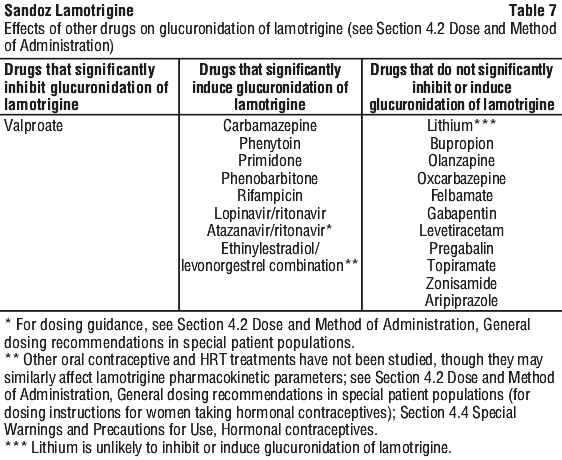 Approximately 96% of a given dose of lamotrigine is eliminated by conjugation metabolism mediated by glucuronyl-transferases. Cytochrome P450 is not involved in the elimination of lamotrigine to any significant extent. Therefore the likelihood that lamotrigine inhibits the elimination of drugs metabolised by cytochrome P450 is low.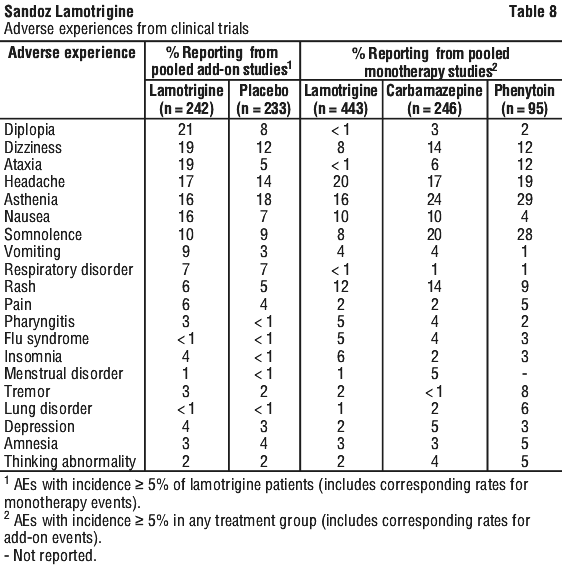
 Adverse events that occurred with a frequency of less than 5% and greater than 1% of patients receiving lamotrigine and numerically more frequent than placebo were:
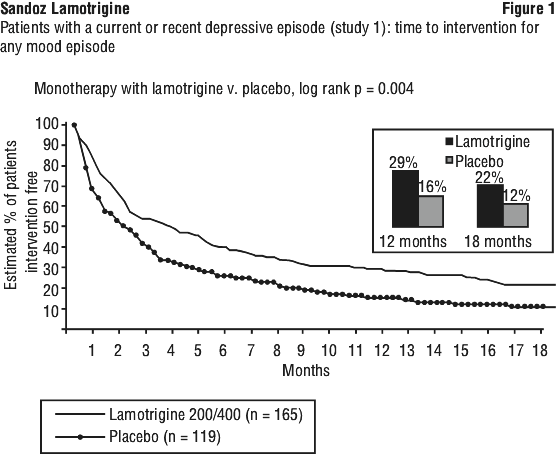
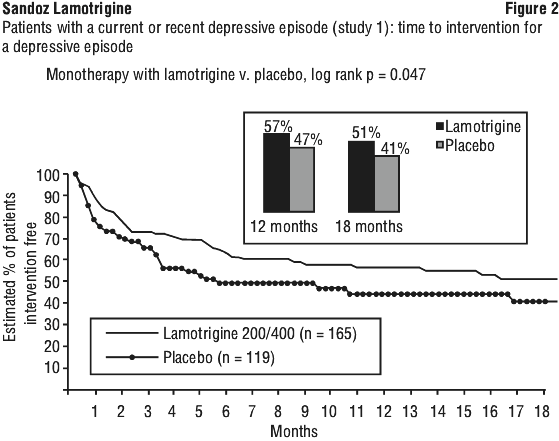 In Study 2, patients received double-blind monotherapy with lamotrigine (100 to 400 mg/day, n = 58), or placebo (n = 69). Lamotrigine was superior to placebo in delaying TIME (p = 0.023) (Figure 3). When the type of the first mood episode requiring intervention was examined separately, lamotrigine was superior to placebo for depressive episodes (p = 0.015) (Figure 4). The difference from placebo for a manic/hypomanic episode was not significant (p = 0.280).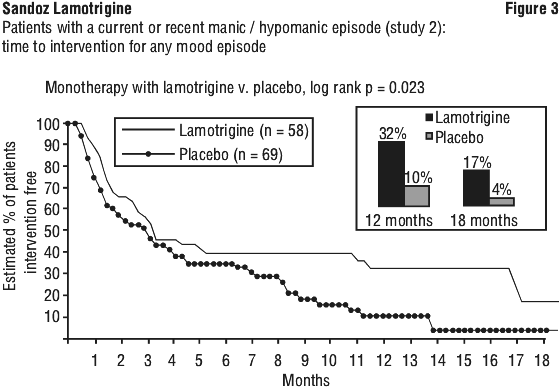
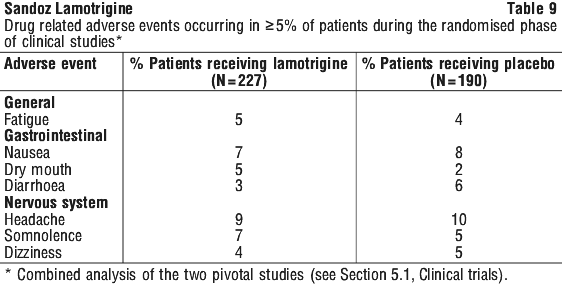
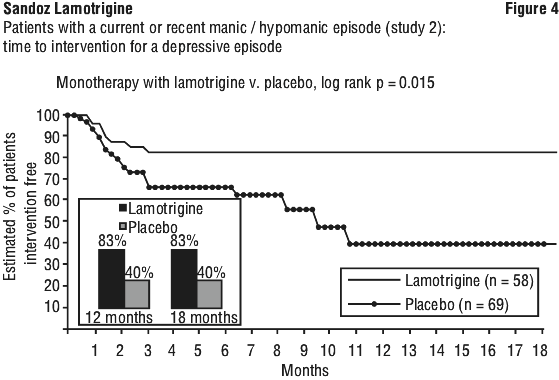 The two pivotal studies showed that patients treated with lamotrigine remained stable for a significantly longer time than those who received placebo and lamotrigine is effective in preventing mood episodes in adult patients with bipolar disorder regardless of the index episode (depression or mania).
 Chemical name: 3,5-diamino-6-(2,3 - dichlorophenyl)-1,2,4 - triazine.