



Consumer medicine information

Triprim

Trimethoprim

BRAND INFORMATION

Brand name

Triprim

Active ingredient

Trimethoprim

Schedule

S4


Consumer medicine information (CMI) leaflet

Please read this leaflet carefully before you start using Triprim.

What is in this leaflet

This leaflet answers some common questions about TRIPRIM tablets. It does not contain all the available information. It does not take the place of talking to your doctor or pharmacist.

All medicines have risks and benefits. Your doctor has weighed the risks of you taking TRIPRIM against the benefits they expect it will have.

If you have any concerns about taking this medicine, ask your doctor or pharmacist.

Keep this leaflet with the medicine. You may need to read it again.

What TRIPRIM is used for

The name of your medicine is TRIPRIM. The active ingredient is called trimethoprim.

Trimethoprim belongs to a group of medicines called antibiotics.

TRIPRIM is used to treat urinary tract infections caused by bacteria. It works by stopping the growth of bacteria that are causing your infection.

Use TRIPRIM only as directed and consult a health care professional if pain or symptoms persist.

TRIPRIM should not be administered to premature babies or infants under 4 months of age.

TRIPRIM is not recommended for use in children under the age of 6 years.

The safety and effectiveness of TRIPRIM in children under the age of 6 years has not been established.

Your doctor may have prescribed this medicine for another condition.

Ask your doctor if you have any questions about why TRIPRIM has been prescribed for you.

TRIPRIM tablets are only available with a doctor’s prescription.

Before you take it

When you must not take it

Do not take TRIPRIM if you are allergic to:

  • Trimethoprim or any other antibiotics
  • Any of the ingredients listed at the end of this leaflet.

Some of the symptoms of an allergic reaction to TRIPRIM may include red, itchy skin rashes, difficulty in breathing, swelling of the face, lips or throat or faintness.

Do not use it after the expiry date (EXP.) printed on the pack.

Do not take TRIPRIM if the packaging is torn or shows signs of tampering. If it has expired or is damaged, return it to your pharmacist for disposal.

Before you start to take it

You must tell your doctor if:

  • You are allergic to any other medicines or any foods, dyes or preservatives.
  • You are pregnant or intend to become pregnant.
    TRIPRIM is rated in Australia as a Category B3 drug for the use in pregnancy. Ask your doctor about the risks and benefits involved when using TRIPRIM during pregnancy.
  • You are breast-feeding or intend to breastfeed.
    TRIPRIM is able to pass into breast milk. There is a possibility that the breast-fed baby may be affected. Therefore, do not take TRIPRIM if you are breast-feeding or plan to breastfeed.

Tell your doctor if you have or have had any other medical conditions/ health problems, especially the following:

  • kidney or liver problems
  • any type of blood disorder
  • porphyria
  • folate deficiency

If you have not told your doctor about any of the above, tell them before you start to take any TRIPRIM.

Taking other medicines

Tell your doctor if you are taking any other medicines, including medicines that you buy without a prescription from a pharmacy, supermarket or health food shop.

SOME of these medicines may interfere with TRIPRIM.

These include:

  • pyrimethamine, a medicine used to prevent malaria
  • warfarin, a medicine used to prevent blood clots
  • methotrexate, a medicine used to treat arthritis and some types of cancer
  • phenytoin, a medicine used to control seizures
  • digoxin, procainamide, medicines used to treat heart conditions
  • zidovudine, zalcitabine, lamivudine, medicines used to treat AIDS
  • dapsone, rifampicin, antibiotic medicines
  • cyclosporine, a medicine used to prevent organ rejection
  • repaglinide, used to treat diabetes
  • diuretics, medicines that are used to increase the urine production
  • certain blood pressure medications that can increase potassium levels in the blood

The above medicines may either reduce the effectiveness of TRIPRIM, reduce its own effectiveness and/or react with TRIPRIM resulting in untoward or sometimes dangerous side effects.

This list is not exhaustive. Your doctor or pharmacist has more information on medicines to be careful with or avoid while taking TRIPRIM.

Talk to your doctor about the need for additional contraception while taking TRIPRIM.

Some antibiotics may decrease the effectiveness of some birth control pills.

Tell your doctor or pharmacist that you are taking TRIPRIM before you start to take any other medicine.

How to take it

How much to take

The recommended doses of TRIPRIM are:

Adults and children over 12 years:
The usual dose is 1 tablet daily.

Elderly patients may need smaller doses.

Children 6-12 years:
The usual dose is ½ tablet daily.

Do not give TRIPRIM to children under the age of 6 years. There is no information concerning the right dose for children under the age of 6 years.

Different people may respond differently to TRIPRIM, so your doctor may tell you to take a different dose.

Do not change your dose unless your doctor tells you to do so.

Some people may need to take folate supplements while taking TRIPRIM. These people may include the elderly, people with folate deficiency and people taking certain medicines. Your doctor will tell you if this is necessary.

How to take it

Swallow the tablets with a glass of water.

TRIPRIM tablets may be taken with or without food.

Taking TRIPRIM with food will lessen the chance of a stomach upset.

When to take it

Take your TRIPRIM tablets before bedtime.

If you forget to take it

If it is almost time for your next dose, skip the dose you missed and take your next dose when you are meant to.

Otherwise, take your dose as soon as you remember, and then go back to taking it as you would normally.

Do not take a double dose to make up for the dose that you missed. This may increase the chance of you getting an unwanted side effect.

If you are unsure about whether to take your next dose, speak to your doctor or pharmacist.

If you have trouble remembering when to take your medicine, ask your pharmacist for some hints.

How long to take it

Continue taking TRIPRIM as long as your doctor recommends it.

For most infections, TRIPRIM is only taken for 7 days.

Do not stop taking TRIPRIM, even if you feel better after a few days, unless advised by your doctor. Your infection may not clear completely if you stop taking your medicine too soon.

If you take too much (Overdose):

Immediately telephone your doctor or Poisons Information Centre (telephone 13 11 26) for advice, or go to casualty at your nearest hospital, if you think that you or anyone else may have taken too much TRIPRIM. Do this even if there are no signs of discomfort or poisoning. Also, report any other medicine or alcohol which has been taken. You may need urgent medical attention.

Keep telephone numbers for these places handy.

If you take too much TRIPRIM you may have the following symptoms: nausea, vomiting, dizziness, headaches, confusion, and mental depression.

While you are taking it

Things you must do

Immediately stop taking TRIPRIM if a skin rash or any other allergic reaction occurs.

Tell all doctors, dentists, and pharmacists who are treating you that you are taking TRIPRIM.

Use this medicine exactly as directed or as your doctor has prescribed.

If you become pregnant while taking TRIPRIM, tell your doctor immediately.

If symptoms of your infection do not improve within a few days or if they become worse, see your doctor immediately.

Visit your doctor regularly if you have been taking TRIPRIM for a long time. Your doctor needs to check your progress and see whether you need to stop taking TRIPRIM.

Always discuss with your doctor any problems or difficulties during or after taking TRIPRIM.

Things you must not do

Do not take any other medicines while you are taking TRIPRIM without first telling your doctor.

Do not drive or operate machinery until you know how TRIPRIM affects you.

Do not give this medicine to anyone else, even if his or her symptoms seem similar to yours.

Side effects

Tell your doctor or pharmacist as soon as possible if you do not feel well while you are taking TRIPRIM.

This medicine helps most people with the medical condition listed in the beginning of this leaflet, but it may have unwanted side effects in some people.

All medicines have side effects. Sometimes they are serious, most of the time they are not. You may need medical treatment if you get some of the side effects.

Ask your doctor or pharmacist any questions you may have.

Tell your doctor if you notice any of the following and they worry you:

  • Nausea (feeling sick)
  • Vomiting
  • Diarrhoea
  • Sore tongue
  • Stomach upset
  • Dizziness
  • Fainting
  • Ringing, hissing, whistling, buzzing, or persisting noise in the ears
  • Joint or muscle pain
  • Nosebleeds

Tell your doctor immediately if you notice any of the following:

  • Any type of skin rash which includes redness and itching
  • Unusual bruising or bleeding
  • Tiredness which may occur with headache, weight loss and yellowing of the eyes or skin
  • Signs of frequent infections such as fever, chills, sore throat or mouth ulcers
  • Swelling of the face, lips, mouth, tongue and throat
  • Shortness of breath, wheezing or difficulty breathing
  • Depression, hallucinations, confusion, nervousness, feeling anxious
  • Blurred vision, redness of the eye, eye pain, increased sensitivity to light

Some people may get other side effects with TRIPRIM.

Check with your doctor as soon as possible if you have any problems while taking TRIPRIM even if you do not think the problems are connected with the medicine or are not listed in this leaflet.

After using it

Storage

Keep your tablets in the bottle they were provided in until it is time to take them.

Keep it where children cannot reach it. A locked cupboard at least one and a half metres above the floor is a good place to store medicines.

Keep TRIPRIM in a cool dry place where the temperature stays below 30°C and protect from light.

Do not store it, or any other medicines in a bathroom or near a sink.

Do not leave it in the car or on windowsills. Heat and dampness can destroy some medicines.

Do not take TRIPRIM if the tablets do not look quite right.

Disposal

If your doctor tells you to stop taking this medication OR it has passed its expiry date, ask your pharmacist what to do with any left over.

Product description

What it looks like

TRIPRIM tablets (oral) are 300 mg, white, biconvex, round tablet embossed ‘TRIPRIM’ and scored on the upper face. Bottom face plain. Supplied in glass bottles of 7 tablets.

Ingredients

Active ingredient:

  • trimethoprim

Other ingredients:

  • starch-pregelatinised maize
  • sodium starch glycollate
  • magnesium stearate

TRIPRIM does not contain lactose, sucrose, gluten, tartrazine or any other azo dyes.

Sponsor

Arrotex Pharmaceuticals Pty Ltd
15-17 Chapel Street
Cremorne VIC 3121
Australia

The Australian Registration Number for TRIPRIM 300 mg tablets is AUST R 11009.

This leaflet was updated in July 2023.

Published by MIMS September 2023
BRAND INFORMATION

Brand name

Triprim

Active ingredient

Trimethoprim

Schedule

S4


1 Name of Medicine

Trimethoprim.

2 Qualitative and Quantitative Composition

A synthetic antibacterial.
Each tablet contains 300 mg of trimethoprim.
For full list of excipients, see Section 6.1 List of Excipients.

3 Pharmaceutical Form

White biconvex, round tablet embossed 'TRIPRIM' and scored on the upper face. Bottom face plain.

4 Clinical Particulars

4.1 Therapeutic Indications

Triprim is indicated for the treatment of acute urinary tract infections caused by sensitive organisms.

4.2 Dose and Method of Administration

Adults and children over 12 years.

300 mg daily for 7 days.

Children over 6 years.

150 mg daily for 7 days.

Children under 6 years.

There is no information available at present concerning the appropriate dose of Triprim in children under the age of 6 years.
In the treatment of acute urinary tract infection due to susceptible organisms it is not necessary to use Triprim for longer than 7 days.
To ensure maximal urinary concentrations it may be advantageous to take the dose before bedtime. The dose may be taken with food to minimise the possibility of gastrointestinal disturbance.

4.3 Contraindications

Triprim should not be given to patients with a history of trimethoprim hypersensitivity or hypersensitivity to any other constituents of this medicine listed in Section 6.1 List of Excipients.
Patients with severely impaired renal function (creatinine clearance less than 10 mL/min) should not be prescribed Triprim unless the plasma concentration of trimethoprim is monitored repeatedly during treatment.
Severe hepatic insufficiency.
Triprim should not be given to patients with severe haematological disorders or documented megaloblastic anaemia due to folate deficiency.
Trimethoprim should not be administered to premature infants or children under 4 months of age.
Trimethoprim should not be administered to pregnant women and during the nursing period.

4.4 Special Warnings and Precautions for Use

Possible folate deficiency.

Care should be exercised in treating suspected folate deficient patients. Folate supplementation should be considered. Folinic acid (3-6 mg/day) as calcium folinate, may be administered without interfering with the antibacterial activity of trimethoprim, except in Enterococci infections.
Regular monthly blood counts are advisable when trimethoprim is given for long periods since there exists a possibility of symptomatic changes in haematological laboratory indices due to lack of available folate.

Electrolyte abnormalities.

Close monitoring of serum electrolytes is advised in patients at risk of hyperkalaemia. Elevations in serum potassium have been observed in some patients treated with trimethoprim. Patients at risk for the development of hyperkalaemia include older patients those with renal insufficiency, poorly controlled diabetes mellitus, or those using concomitant potassium-sparing diuretics, potassium supplements, potassium-containing salt substitutes, renin angiotensin system inhibitors (e.g. ACE inhibitors or renin angiotensin receptor blockers) or those taking other medicines that are known to increase serum potassium (e.g. heparin). If concomitant use of the above mentioned agent is deem appropriate, monitoring of serum potassium is recommended. (See Section 4.5 Interactions with Other Medicines and Other Forms of Interactions; Section 4.8 Adverse Effects (Undesirable Effects)).

Skin rash.

Trimethoprim should be discontinued if a skin rash appears.

Porphyria.

Trimethoprim has been associated with acute attacks of porphyria and is considered unsafe in porphyria patients.
Trimethoprim has been noted to impair phenylalanine metabolism but this is of no significance in phenylketonuric patients on appropriate dietary restriction.
Rare incidents of serious hypersensitivity reactions have been reported in patients on trimethoprim therapy.

Depression of haemopoiesis.

Rare incidents of trimethoprim interfering with hematopoiesis have been reported, especially when administered in large doses and/or for prolonged periods. Regular haematological tests should be undertaken in patients receiving long term treatment and those predisposed to folate deficiency, (e.g. the elderly), to check for possible pancytopaenia as an effect on folate metabolism is possible. If any such change is seen, folinic acid should reverse the effect.

Blood glucose.

Monitoring of blood glucose is advised if co-administered with repaglinide (see Section 4.5).

Rare hereditary conditions.

Patients with rare hereditary problems of galactose intolerance, total lactase deficiency or glucose-galactose malabsorption should not take this medicine.

Use in hepatic impairment.

Trimethoprim should be used cautiously in patients with impaired hepatic function.

Use in renal impairment.

Trimethoprim may cause a significant, reversible increase in serum creatinine. It is unclear if this represents inhibition of tubular secretion of creatinine or genuine renal dysfunction. It should not be given in severe impairment unless blood concentrations can be monitored.
Monitoring of renal function and serum electrolytes should be considered particularly with longer term use.
Trimethoprim should only be initiated and used in dialysis patients under close supervision from specialists in both infectious disease and renal medicine.
Trimethoprim should be used cautiously in patients with impaired renal function.

Use in the elderly.

Care should be exercised in treating elderly.
Elderly people may be more susceptible and a lower dose may be advisable. Patients and their carers should be told how to recognise signs of blood disorders and advised to seek immediate medical attention if symptoms such as fever, sore throat, rash, mouth ulcers, purpura, bruising or bleeding develop. If there is evidence of folic acid deficiency, calcium folinate should be administered and response checked by haematologic monitoring. It may be necessary to discontinue trimethoprim.

Paediatric use.

Trimethoprim should not be administered to premature infants or infants during the first few weeks of life. See Section 4.2 Dose and Method of Administration.
Particular care should be exercised in the haematological monitoring of children on long term therapy.

Effects on laboratory results.

Regular monthly blood counts are advisable when Triprim is given for long periods since there exists a possibility of symptomatic changes in haematological laboratory indices due to lack of available folate.
Trimethoprim may cause depression of haemopoiesis.
Trimethoprim may interfere with the Jaffé alkaline picrate reaction assay for creatinine, resulting in overestimations of normal values.
Trimethoprim interferes with assays for serum methotrexate when dihydrofolate reductase from Lactobacillus casei is used in the assay.

4.5 Interactions with Other Medicines and Other Forms of Interactions

Antimalarials.

There is the possibility of megaloblastic anaemia developing in patients prescribed with trimethoprim whilst taking pyrimethamine for malarial prophylaxis. Increased antifolate effect when trimethoprim is given with pyrimethamine.

Warfarin and other coumarins.

Trimethoprim may potentiate the anticoagulant activity of warfarin and other coumarins though the precise mechanism is unclear. Careful control of the anticoagulant therapy during treatment with trimethoprim is advisable.

Phenytoin, digoxin, procainamide.

Trimethoprim may increase serum concentrations and potentiate the effect of phenytoin, digoxin and procainamide. Close monitoring of the patient's condition and serum levels is advisable.

Zidovudine, zalcitabine, lamivudine.

Trimethoprim has been reported to reduce the renal excretion and increase blood concentrations of zidovudine, zalcitabine, lamivudine.

Dapsone.

Trimethoprim and dapsone increase each other's serum concentration when given concomitantly.

Repaglinide.

Trimethoprim may enhance the hypoglycaemic effects of repaglinide.

Rifampicin.

Rifampicin may decrease the trimethoprim concentration.

Antibacterials.

Plasma concentration of trimethoprim is possibly reduced by rifampicin. Plasma concentration of both medicines may increase when trimethoprim is given with dapsone.

Cyclosporin.

An increased risk of nephrotoxicity has been reported with use of trimethoprim or co-trimoxazole and cyclosporin.

Medicines that form cations.

When trimethoprim is administered simultaneously with medicines that form cations at physiological pH, and are also partly excreted by active renal secretion (e.g. procainamide, amantadine), there is the possibility of competitive inhibition of this process which may lead to an increase in plasma concentration of one or both of the medicines.

Diuretics.

In patients given trimethoprim who were also receiving diuretics, hyponatraemia has been reported. In elderly patients taking diuretics, particularly thiazides, there is an increased incidence of thrombocytopaenia with purpura.

Folate antagonists and anticonvulsants.

Trimethoprim may induce folate deficiency in patients predisposed to folate deficiency such as those receiving concomitant folate antagonists or anticonvulsants.

Bone marrow depressants.

Use of trimethoprim with other depressants of bone marrow function may increase the likelihood of myelosuppression or bone marrow aplasia and there may be a particular risk of megaloblastic anaemia if it is given with other folate inhibitors, such as pyrimethamine or methotrexate.
Cytotoxic agents such as azathioprine, mercaptopurine and methotrexate increase the risk of haematologic toxicity when given with trimethoprim.
If Triprim is considered appropriate therapy in patients receiving other anti-folate drugs such as methotrexate, a folate supplement should be considered (see Section 4.4 Special Warnings and Precautions for Use).
Cases of pancytopenia have been reported in patients taking trimethoprim in combination with methotrexate. Most of these patients were on long term methotrexate therapy, and/or predisposed to folate deficiency, and none of them were reported to have received a prophylactic folinic acid supplement (see Section 4.4 Special Warnings and Precautions for Use).

Folate antagonists and anticonvulsants.

Trimethoprim may induce folate deficiency in patients predisposed to folate deficiency such as those receiving concomitant folate antagonists or anticonvulsants.
If trimethoprim is considered appropriate therapy in patients receiving other anti-folate medicines such as methotrexate, a folate supplement should be considered (see Section 4.4 Special Warnings and Precautions for Use).

ACE inhibitors.

Concomitant use of medicines known to increase serum potassium, such as angiotensin converting enzyme inhibitors, angiotensin receptor blockers and potassium sparing diuretics, potassium supplements, potassium containing salt substitutes, renin-angiotensin system inhibitors (e.g. ACE inhibitors or renin angiotensin receptor blockers) and other potassium increasing substances (e.g. heparin may result in severe hyperkalaemia. Monitoring of potassium should be undertaken as appropriate.

4.6 Fertility, Pregnancy and Lactation

Effects on fertility.

No data available.
(Category B3)
Trimethoprim may interfere with folic acid metabolism, and animal experiments have shown that administration of very high doses of trimethoprim during organ development may give rise to birth defects typical of folic acid antagonism.
Trimethoprim is contraindicated in pregnant women, premature infants or infants during the first few weeks of life. If trimethoprim is given during pregnancy, folic acid supplementation may be required.
The usual caution in prescribing any drug for women of child-bearing age should be exercised with trimethoprim.
Trimethoprim is excreted in human milk. When Triprim is administered to a nursing mother alternative arrangement should be made for feeding the infant.

4.7 Effects on Ability to Drive and Use Machines

The effects of this medicine on a person's ability to drive and use machines were not assessed as part of its registration.

4.8 Adverse Effects (Undesirable Effects)

The adverse effects encountered most often with trimethoprim are rash and pruritus. Other adverse effects reported involved the gastrointestinal and haematopoietic systems.

Dermatologic reactions.

Rash, pruritus and exfoliative dermatitis. Rarely: erythema multiforme, Stevens-Johnson syndrome and toxic epidermal necrolysis. At the recommended dose of 300 mg daily the incidence of rash is 7.9%. These rashes were maculopapular, morbilliform, pruritic and generally mild to moderate, appearing 7 to 14 days after the initiation of therapy.
Common: Urticaria, skin rashes.
Very rare: Photosensitivity, fixed drug eruption, erythema nodosum, bullous dermatitis, purpura, angioedema, exfoliative dermatitis, erythema multiforme, Stevens-Johnson syndrome, toxic epidermal necrolysis.
Unknown: Pruritus.
Lyell's syndrome (toxic epidermal necrolysis) carries a high mortality.

Infections and infestations.

Common: Monilial overgrowth.

Gastrointestinal reactions.

Epigastric distress, nausea, vomiting and glossitis.
Common: Diarrhoea.
Very rare: Constipation, stomatitis, pseudomembranous colitis, pancreatitis.
Unknown: Sore mouth, gastrointestinal disturbance.

Haematologic reactions.

Thrombocytopenia, leukopenia, neutropenia, megaloblastic anaemia, and methaemoglobinaemia.
Although an effect on folate metabolism is possible, interference with haematopoiesis occurs rarely at the recommended dosage. If any such change is seen, calcium folinate may be administered. Elderly patients may be more susceptible and a lower dosage may be advisable.
Fatalities have been reported (especially in the elderly, or those with impairment of renal or hepatic function in whom careful monitoring is advised, see Section 4.3 Contraindications), however the majority of haematological changes are mild and reversible when treatment is stopped.
Very rare: Pancytopaenia, bone marrow depression, agranulocytosis, aplastic anaemia, haemolytic anaemia, eosinophilia, purpura, haemolysis.
Unknown: Hyperkalaemia (particularly in the elderly and in HIV patients). Trimethoprim therapy may affect haematopoiesis.

Metabolism and nutritional disorders.

Hyperkalaemia, hyponatraemia.
Very rare: Hypoglycaemia, anorexia.
Close supervision is recommended when trimethoprim is used in elderly patients, patients with renal impairment or in patients taking high doses as these patients may be more susceptible to hyperkalaemia and hyponatraemia.

Psychiatric disorders.

Very rare: Depression, hallucinations, confusional states, agitation, anxiety, abnormal behaviour, insomnia and nightmares.

Nervous system disorders.

Common: Headache.
Very rare: Dyskinesias, aseptic meningitis, tremor, ataxia, dizziness, lethargy, syncope, paraesthesiae, convulsions, peripheral neuritis, vertigo, tinnitus.
Aseptic meningitis was rapidly reversible on withdrawal of the drug, but recurred in a number of cases on re-exposure to either co-trimoxazole or to trimethoprim alone or trimethoprim-containing agents.

Eye disorders.

Very rare: Uveitis.

Respiratory, thoracic and mediastinal disorders.

Very rare: Cough, shortness of breath, wheeze, epistaxis.

Musculoskeletal and connective tissue disorders.

Very rare: Arthralgia and myalgia.

Renal and urinary disorders.

Very rare: Impaired renal function (sometimes reported as renal failure), haematuria.
Unknown: Raised serum creatinine and blood urea nitrogen levels. It is not known however, whether this represents inhibition of creatinine tubular secretion or genuine renal dysfunction.

Immune system disorders.

Anaphylaxis, anaphylactoid reactions, hypersensitivity, angioedema, drug fever, allergic vasculitis.
Very rare: Hypersensitivity, drug fever, allergic vasculitis resembling Henoch-Schoenlein purpura, periarteritis nodosa, systemic lupus erythematosus.

Miscellaneous reactions.

Fever, disturbance in liver enzymes, elevation of serum transaminases and bilirubin, increases in BUN and serum creatinine levels, abdominal cramps, stomatitis, cholestatic jaundice, hepatic necrosis. Cholestatic jaundice and hepatic necrosis may be fatal.

Reporting suspected adverse effects.

Reporting suspected adverse reactions after registration of the medicinal product is important. It allows continued monitoring of the benefit-risk balance of the medicinal product. Healthcare professionals are asked to report any suspected adverse reactions at http://www.tga.gov.au/reporting-problems.

4.9 Overdose

For information on the management of overdose, contact the Poisons Information Centre on 13 11 26 (Australia).

Acute.

Signs of acute overdosage with trimethoprim may appear following ingestion of 1 gram or more of the drug and include nausea, vomiting, dizziness, headaches, mental depression, confusion and bone marrow depression (see Chronic).

Treatment.

Treatment consists of general supportive measures. Acidification of the urine will increase renal elimination of trimethoprim. Peritoneal dialysis is not effective and haemodialysis only moderately effective in eliminating the drug.

Chronic.

Use of trimethoprim at high doses and/or for extended periods of time may cause bone marrow depression manifested as thrombocytopenia, leukopenia and/or megaloblastic anaemia. If signs of bone marrow depression occur, trimethoprim should be discontinued and the patient should be given folinic acid as calcium folinate, 3 to 6 mg intramuscularly daily for three days, or as required to restore normal haematopoiesis.

5 Pharmacological Properties

5.1 Pharmacodynamic Properties

Mechanism of action.

Trimethoprim blocks the formation of tetrahydrofolic acid from dihydrofolic acid by binding to and reversibly inhibiting the enzyme dihydrofolate reductase. Its affinity for the bacterial dihydrofolate reductase enzyme is much stronger than for the corresponding mammalian enzyme. Thus trimethoprim selectively interferes with bacterial biosynthesis of nucleic acids and proteins.
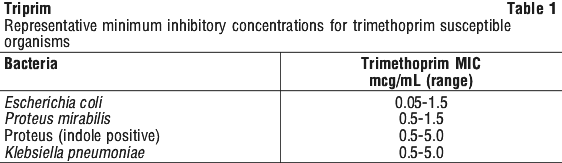
Trimethoprim is active in vitro against the common urinary tract pathogens. (See Table 1.)
It is not active against Pseudomonas spp.

Normal vaginal and faecal flora are the source of most pathogens causing urinary tract infections. It is therefore relevant to consider the suppressive effect of trimethoprim at these sites.
Concentrations of trimethoprim in vaginal secretions are consistently greater than those found simultaneously in the serum, being typically 1.6 times the concentration of simultaneously obtained serum samples.
Sufficient trimethoprim is excreted in the faeces to markedly reduce or eliminate trimethoprim susceptible organisms from the faecal flora.
In vitro resistance develops rapidly when susceptible bacteria are passed through increasing concentrations of the drug. However, following clinical use there have been conflicting reports on the development of resistance to trimethoprim when used alone. The possibility of increasing resistance to trimethoprim cannot at present be ruled out. Generally, resistance is more likely to occur in hospital than in domiciliary use. Plasmid mediated as well as chromosomal resistance to trimethoprim have been reported.

Clinical trials.

No data available.

5.2 Pharmacokinetic Properties

Absorption.

Trimethoprim is rapidly absorbed following oral administration.

Distribution.

Approximately 44% of the drug is protein bound in the blood.

Metabolism.

The half-life of trimethoprim ranges from 8 to 12 hours in the presence of normal renal function.

Excretion.

Excretion of trimethoprim is chiefly by the kidneys through glomerular filtration and tubular secretion. Urine concentrations are considerably higher than are the concentrations in the blood. After oral administration 50% to 60% of trimethoprim is excreted in the urine within 24 hours, approximately 80% of this being unmetabolised trimethoprim. Less than 4% appears in the faeces. Concentrations of trimethoprim exceed those in plasma in the case of prostatic tissue and fluid, and vaginal secretions.

5.3 Preclinical Safety Data

Genotoxicity.

No data available.

Carcinogenicity.

No data available.

6 Pharmaceutical Particulars

6.1 List of Excipients

Triprim tablets contain the following excipients: magnesium stearate, sodium starch glycollate, and pregelatinised maize starch.

6.2 Incompatibilities

Incompatibilities were either not assessed or not identified as part of the registration of this medicine.

6.3 Shelf Life

In Australia, information on the shelf life can be found on the public summary of the Australian Register of Therapeutic Goods (ARTG). The expiry date can be found on the packaging.

6.4 Special Precautions for Storage

Store below 30°C, protect from light and moisture.

6.5 Nature and Contents of Container

Available in glass bottles of 7 tablets.

6.6 Special Precautions for Disposal

In Australia, any unused medicine or waste material should be disposed of by taking to your local pharmacy.

6.7 Physicochemical Properties

It is a white to light yellow, odourless, bitter compound. Very slightly soluble in water, slightly soluble in ethanol (96 per cent).

Chemical structure.

Chemical name: 2,4-diamino-5-(3,4,5-trimethoxybenzyl) pyrimidine.

CAS number.

CAS no.: 738-70-5.
MW: 290.3: pKA 7.3.

7 Medicine Schedule (Poisons Standard)

S4 (Prescription Only Medicine).

Summary Table of Changes