


Consumer medicine information

Typhim Vi

Salmonella typhi Vi polysaccharide vaccine

BRAND INFORMATION

Brand name

Typhim Vi

Active ingredient

Salmonella typhi Vi polysaccharide vaccine

Schedule

S4


Consumer medicine information (CMI) leaflet

Please read this leaflet carefully before you start using Typhim Vi.

What is in this leaflet

This leaflet answers some common questions about Typhim Vi.

It does not contain all the available information.

It does not take the place of talking to your doctor or pharmacist.

All medicines, including vaccines, have risks and benefits. Your doctor has weighed the risks of you or your child having Typhim Vi against the benefits they expect it will have.

If you have any concerns about this vaccine, ask your doctor, nurse or pharmacist.

Keep this leaflet. You may need to read it again.

What Typhim Vi is used for

Typhim Vi is a vaccine used to help prevent typhoid fever, which is caused by a bacterium called Salmonella typhi.

The organism which causes typhoid fever can be passed on through contaminated food or water. If you are in an area where there is a risk of getting typhoid fever, in addition to having Typhim Vi, it is also very important to be careful with your personal, food and water hygiene. Hygiene will also help avoid illness caused by other bacteria in the water.

Typhim Vi may be given to people aged 2 years and older.

If you want more information on personal care in areas where there is a risk of getting typhoid fever, talk to your doctor, nurse or pharmacist.

How Typhim Vi works

Typhim Vi works by causing your body to produce its own protection against typhoid fever. It does this by making substances, called antibodies, which destroy the Salmonella typhi organism. If you have been vaccinated against Salmonella typhi, your body is able to attack that organism if you come in contact with it.

Your body usually takes several weeks after vaccination to fully develop this protection against typhoid fever.

You must have one dose at least 2 weeks before you may be exposed to typhoid fever.

If you are continually or repeatedly exposed to the Salmonella typhi organism, it is recommended that you have an injection of Typhim Vi every 3 years.

Most people will make enough antibodies against Salmonella typhi. However, as with all vaccines, 100% protection cannot be guaranteed.

The vaccine cannot give you or your child typhoid fever.

The chance of a severe reaction from Typhim Vi is very small, but the risks from not being vaccinated against typhoid fever may be very serious.

Before you are given Typhim Vi

When you must not be given it

Do not have Typhim Vi if you have an allergy to:

  • Typhim Vi or any of the ingredients listed at the end of this leaflet.

Do not have Typhim Vi if you have, or recently have had, an:

  • illness, with fever.

Typhim Vi is not recommended for use in children under 2 years of age. Typhim Vi vaccine is a polysaccharide vaccine: just as with other polysaccharide vaccines, children under 2 years are too young to make sufficient antibodies to this type of vaccine.

Do not have Typhim Vi after the expiry date printed on the pack.

Do not have Typhim Vi if the packaging is torn or shows signs of tampering.

If you are not sure whether you or your child should have Typhim Vi, talk to your doctor or pharmacist.

Before you are given Typhim Vi

Tell your doctor if you have reacted to any previous vaccination with any of the following:

  • an allergic reaction. Allergic reactions may include an itchy rash (also known as 'hives'), swelling of lips, face or tongue which may cause difficulty breathing.

Tell your doctor if you have, or have had, any medical conditions, especially the following:

  • lowered immunity due to illness. Examples are some blood disorders, HIV/AIDS or cancer
  • lowered immunity due to treatment with medicines such as corticosteroids, cyclosporin or other medicines used to treat cancer (including radiation therapy) as you may not make the expected amount of antibody
  • if you have a low platelet count or are prone to easy bruising or bleeding.

Tell your doctor if you are pregnant or intend to become pregnant. Your doctor will discuss the possible risks and benefits of having Typhim Vi during pregnancy.

Tell your doctor if you are breast-feeding. It is not known if Typhim Vi passes into breast milk. Your doctor will discuss the possible risks and benefits of having Typhim Vi during breast-feeding.

Taking other medicines

Tell your doctor or pharmacist if you are taking any other medicines, including any that you buy without a prescription from your pharmacy, supermarket or health food shop.

Some medicines and Typhim Vi may interfere with each other.

Your doctor or pharmacist will advise you and decide whether or not to give the vaccine.

Having other vaccines

Your doctor will advise you if Typhim Vi is to be given at the same time as another vaccine.

Your doctor and pharmacist may have more information on medicines and vaccines to be careful with, or avoid, during vaccination with Typhim Vi.

How Typhim Vi is given

Typhim Vi is given as an injection, usually into your upper arm muscle, by a doctor or nurse. For children, the muscle of the upper thigh may be preferred.

Typhim Vi should not be injected directly into a vein, or any blood vessel.

How much is given

The dose is the same for adults and children, 0.5 mL of vaccine.

Overdose

Overdose is unlikely as your doctor is giving you the injection.

If you have any concerns, ask your doctor.

When Typhim Vi is given

Typhim Vi should be given at least 14 days before any risk of coming into contact with typhoid bacteria.

If you live in an area where you are at risk of getting typhoid fever, it is recommended that you have an injection of Typhim Vi every 3 years.

Possible side effects

All medicines, including vaccines, can have side effects. Sometimes they are serious, most of the time they are not. You may need medical treatment if you get some of the side effects.

Tell your doctor or pharmacist as soon as possible if you do not feel well after having Typhim Vi.

Typhim Vi may have unwanted side effects in a few people. Usually they occur at the site of the injection, in the first 48 hours.

Ask your doctor or pharmacist to answer any questions you may have.

Tell your doctor or pharmacist if you notice any of the following and they worry you:

  • local reaction around the injection site such as, pain or discomfort, tenderness, redness, or hard lump
  • headache
  • tiredness, weakness or fatigue
  • generally feeling unwell
  • decreased activity
  • raised temperature
  • aching muscles, muscle tenderness or weakness, not caused by exercise
  • nausea
  • vomiting
  • diarrhoea
  • stomach pains
  • joint pain
  • asthma
  • fainting
  • skin reactions such as rash, itching or itchy rash

If any of the following happen, tell your doctor immediately or go to Accident and Emergency at your nearest hospital:

  • sudden signs of allergy such as rash, itching or hives on the skin, swelling of the face, lips, tongue or other parts of the body, shortness of breath, wheezing or difficulty breathing
  • allergic reactions, symptoms for which include fever, swelling, skin rash, enlargement of the lymph nodes

These are very serious side effects. You or your child may need urgent medical attention or hospitalisation.

All of these side effects are rare.

Other side effects not listed above may occur in some patients. Tell your doctor or pharmacist if you notice anything that is making you feel unwell.

Do not be alarmed by this list of possible side effects. You may not experience any of them.

Storing Typhim Vi

Typhim Vi is usually stored in the doctor's surgery or clinic, or at the pharmacy. However, if you need to store Typhim Vi:

Keep it where children cannot reach it.

Keep Typhim Vi in the original pack until it is time for it to be given.

Keep it in the refrigerator, between +2°C and +8°C. Do not freeze Typhim Vi. Freezing destroys the vaccine.

Further Information

Typhim Vi is available only with a doctor's prescription.

Ask your doctor if you are unsure about anything or want more information about Typhim Vi.

What Typhim Vi looks like

Each dose of Typhim Vi consists of one syringe pre-filled with 0.5 mL of clear colourless liquid.

What Typhim Vi contains

Each dose contains:

Active ingredients:

  • 25 micrograms Salmonella typhi Vi Polysaccharide (Ty2 strain).

Other ingredients:

  • phenol
  • sodium chloride
  • dibasic sodium phosphate dihydrate
  • monobasic sodium phosphate dihydrate
  • water for injection
  • formaldehyde (trace).
  • casein (trace)

Typhim Vi does not contain lactose, sucrose, gluten, tartrazine or other azo or non-azo type of dyes.

The manufacture of this product includes exposure to bovine materials. No evidence exists that any case of vCJD (considered to be the human form of bovine spongiform encephalopathy) has resulted from the administration of any vaccine product.

Name and Address of the Sponsor

Australia:

sanofi-aventis australia pty ltd
Talavera Corporate Centre - Building D
12 - 24 Talavera Road
Macquarie Park NSW 2113
Australia
Tel: 1800 818 806

New Zealand:

sanofi-aventis new zealand limited
Level 8
56 Cawley St
Ellerslie
Auckland
New Zealand
Tel: 0800 283 684

Aust R number

Aust R 45073

Date of preparation

July 2020

typhim-ccdsv11-cmiv3-20jul20

™ Trademark of Sanofi Pasteur SA

Published by MIMS September 2020
BRAND INFORMATION

Brand name

Typhim Vi

Active ingredient

Salmonella typhi Vi polysaccharide vaccine

Schedule

S4


1 Name of Medicine

Typhim Vi Salmonella typhi Vi polysaccharide vaccine.

2 Qualitative and Quantitative Composition

Each 0.5 mL dose contains:
Salmonella typhi Vi polysaccharide 25 micrograms.
Typhim Vi is a sterile solution prepared from the purified Vi capsular polysaccharide of Salmonella typhi (Ty 2 strain). The purified Vi capsular polysaccharide is diluted in isotonic buffer solution which contains phenol as preservative.
For the full list of excipients, see Section 6.1 List of Excipients.
The manufacture of this product includes exposure to bovine materials. No evidence exists that any case of vCJD (considered to be the human form of bovine spongiform encephalopathy) has resulted from the administration of any vaccine product.

3 Pharmaceutical Form

Solution for injection.

4 Clinical Particulars

4.1 Therapeutic Indications

Typhim Vi is indicated for active immunisation against typhoid fever caused by Salmonella typhi in individuals 2 years of age and over.

4.2 Dose and Method of Administration

A single dose of 0.5 mL for adults is given intramuscularly in the deltoid, and the dose for children is given intramuscularly either in the deltoid or the vastus lateralis. The vaccine should not be injected into the gluteal area or areas where there may be a nerve trunk.
The vaccination dose is the same for adults and children.
Typhim Vi should be administered at least 14 days prior to potential exposure to infection with Salmonella typhi.
An optimal revaccination schedule has not been established. Revaccination consisting of a single dose every three years for individuals under conditions of repeated or continued exposure to the Salmonella typhi organism is recommended at this time.
Product is for single use only and must not be used in more than one individual. Discard any remaining unused contents.

4.3 Contraindications

Known systemic hypersensitivity reaction to any component of Typhim Vi or a life threatening reaction after previous administration of the vaccine or vaccine containing the same substance.
Vaccination must be postponed in case of febrile or acute disease.

4.4 Special Warnings and Precautions for Use

As each dose may contain traces of formaldehyde and casein, which are used during vaccine production, caution should be exercised when the vaccine is administered to individuals with hypersensitivity to these substances.
This vaccine provides protection against the risk of infection related to Salmonella typhi, but gives no protection against Salmonella paratyphi A or B or against non-typhoidal Salmonellae.
The immunogenicity of Typhim Vi could be reduced by immunosuppressive treatment or immunodeficiency. In such cases it is recommended to postpone the vaccination until the end of the treatment or resolution of the disease. Nevertheless, vaccination of individuals with chronic immunodeficiency such as HIV infection is recommended even if the antibody response might be limited.
Do not administer by intravascular injection; ensure that the needle does not penetrate a blood vessel.
As with all injectable vaccines, appropriate medical treatment and supervision should always be readily available in case of rare anaphylactic reactions following the administration of the vaccine.
Syncope (fainting) can occur following, or even before, any vaccination as a psychogenic response to needle injection. Procedures should be in place to prevent falling injury and manage syncopal reactions.
As with all injectable vaccines, the vaccine must be administered with caution to individuals with thrombocytopenia or bleeding disorders since bleeding may occur following an intramuscular administration to these individuals.
Vaccination should occur at least 2 weeks prior to potential exposure to infection with Salmonella typhi.
As with other vaccines, vaccination may not be expected to protect 100% of susceptible individuals.

Use in the elderly.

Immunogenicity and clinical experience with Typhim Vi in the elderly is limited.

Paediatric use.

As with other polysaccharide vaccines, the antibody response may be inadequate in children under 2 years of age.

Effects on laboratory tests.

Interference of Typhim Vi with laboratory and/or diagnostic tests has not been studied.

4.5 Interactions with Other Medicines and Other Forms of Interactions

Available data support concomitant use of Typhim Vi with yellow fever vaccine in separate syringes at separate sites. Data concerning use with other vaccines are limited. However, no interaction is anticipated when vaccines are given at separate sites using separate syringes.
Separate injection sites must be used in case of concomitant administration.

4.6 Fertility, Pregnancy and Lactation

Effects on fertility.

Typhim Vi has not been evaluated for the effects on fertility.
(Category B2)
Animal reproduction studies have not been conducted with Typhim Vi.
Data on the use of this vaccine in pregnant woman are limited. Therefore, the administration of the vaccine during pregnancy is not recommended. Typhim Vi should be given to pregnant women only if clearly needed, and following an assessment of the risks and benefits.
It is not known whether this vaccine is excreted in human milk. Caution must be exercised when Typhim Vi is administered to a nursing mother.

4.7 Effects on Ability to Drive and Use Machines

No studies on the effects on the ability to drive and use machines have been performed.

4.8 Adverse Effects (Undesirable Effects)

Adverse event information is derived from clinical trials and worldwide post-marketing experience.
Within each system organ class, the adverse events are ranked under headings of frequency, using the following convention:
Very common: ≥ 1/10 (≥10%);
Common (frequent): ≥ 1/100 and < 1/10 (≥ 1% and < 10%);
Uncommon (infrequent): ≥ 1/1000 and < 1/100 (≥ 0.1% and < 1%);
Rare: ≥ 1/10.000 and < 1/1000 (≥ 0.01% and < 0.1%);
Very rare: < 1/10.000 (< 0.01%);
Not known (cannot be estimated from the available data).

Data from clinical studies.

In clinical studies, more than 15,000 subjects (all ages) received Typhim Vi either in a single injection or as a second injection.
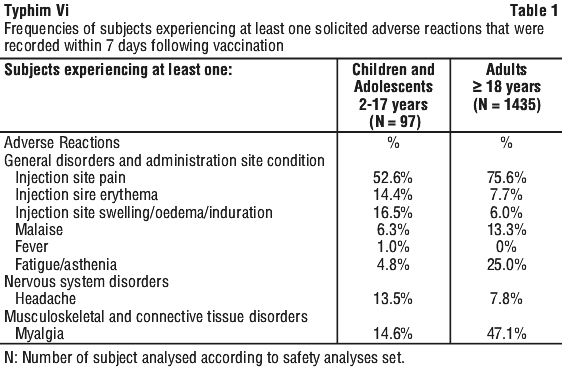
The most frequently reported adverse events reactions, in all age groups, after administration Typhim Vi were mild injection site pain.
In adults from 18 years of age, myalgia and fatigue were the most frequently reported systemic reactions.
In children and adolescents (from 2 to 17 of age), myalgia and headache were the most frequently reported systemic reactions.
The adverse reactions observed during clinical trials were generally of mild to moderate intensity, and appeared with 3 days after vaccination. Most reactions resolved spontaneously within 1 to 3 days after onset.
The Table 1 summarises the frequencies of subjects experiencing at least one solicited adverse reactions that were recorded within 7 days following vaccination in 1435 adults and 97 children and adolescents from 2 to 17 years of age.
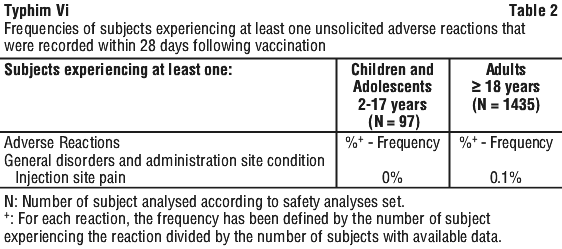
The Table 2 summarises the frequencies of subjects experiencing at least one unsolicited adverse reactions that were recorded within 28 days following vaccination in 1435 adults and 97 children and adolescents from 2 to 17 years of age.
In a U.S. Reimmunisation study, subjects who had received Typhim Vi 27 or 34 months earlier, and subjects who had never previously received a typhoid vaccination, were randomised to placebo or Typhim Vi, in a double blind study. In this study 5/30 (17%) primary immunisation subjects and 10/45 (22%) reimmunisation subjects had an objective local reaction (erythema and/or induration at the site of injection). No severe or unusual side effects were observed. Most subjects reported pain and/or tenderness (pain upon direct pressure). Local adverse experiences were generally limited to the first 48 hours. Results are summarised in Table 3.

Data from post-marketing surveillance.

Based on spontaneous reporting, the following additional adverse events have been reported during the commercial use of Typhim Vi. These events have been very rarely reported, however exact incidence rates cannot be calculated precisely.

Immune system disorder.

Anaphylactic/anaphylactoid reactions, including shock; serum sickness.

Skin and subcutaneous tissue disorders.

Allergic type reactions such as rash, pruritus, urticaria.

Gastrointestinal disorders.

Nausea, vomiting, diarrhoea, abdominal pain.

Musculoskeletal and connective tissue disorders.

Arthralgia.

Respiratory thoracic and mediastinal disorders.

Asthma.

Nervous system disorders.

Vasovagal syncope.

Reporting suspected adverse effects.

Reporting suspected adverse reactions after registration of the medicinal product is important. It allows continued monitoring of the benefit-risk balance of the medicinal product. Healthcare professionals are asked to report any suspected adverse reactions at http://www.tga.gov.au/reporting-problems.

4.9 Overdose

For general advice on overdose management, contact the Poisons Information Centre, telephone number 13 11 26.

5 Pharmacological Properties

5.1 Pharmacodynamic Properties

Pharmacotherapeutic group: Typhoid Vaccine, ATC code: J07AP03.

Mechanism of action.

This vaccine contains purified Vi capsular polysaccharide of Salmonella typhi (Ty 2 strain). Antibody sero-conversion is observed in over 90% of recipients 28 days after a single dose. Antibodies appear after approximately 7 to 15 days and reach peak values around 28 to 35 days after the injection. Persistence of the antibody response is at least 3 years. Protection is achieved in 60-80% of vaccinees during the first year and in 50-77% during the next 2 years.

Clinical trials.

Two formulations were utilized in studies of the typhoid Vi polysaccharide vaccine. These included the liquid formulation which is identical to Typhim Vi and lyophilised formulation. The protective efficacy of each of these formulations of the typhoid Vi polysaccharide vaccine was assessed independently in two trials conducted in areas where typhoid fever is endemic. A single intramuscular dose of 25 micrograms was used in these efficacy studies.
A randomised double blind controlled trial with Typhim Vi (liquid formulation) was conducted in five villages west of Kathmandu, Nepal. There were 6,908 vaccinated subjects: 3,454 received Typhim Vi and 3,454 in the control group received a 23 valent pneumococcal polysaccharide vaccine. Of the 6,908 subjects, 6,439 subjects were in the target population of 5 to 44 years of age. In addition, 165 children ages 2 to 4 years and 304 adults over 44 years of age were included in the study. The overall protective efficacy of Typhim Vi was 74% (95% confidence interval (CI): 49% to 87%) for blood culture confirmed cases of typhoid fever during 20 months of post-vaccination follow-up.
The protective efficacy of the typhoid Vi polysaccharide vaccine, lyophilised formulation, was evaluated in a randomised double blind controlled trial conducted in South Africa. There were 11,384 vaccinated children 5 to 15 years of age; 5,692 children received the Vi capsular polysaccharide vaccine and 5,692 in the control group received meningococcal polysaccharide (Groups A and C) vaccine. The protective efficacy for the Vi capsular polysaccharide (lyophilised formulation) group for blood culture confirmed cases of typhoid fever was 55% (95% CI: 30% to 70%) overall during 3 years of post-vaccination follow-up, and was 61%, 52% and 50%, respectively, for years 1, 2 and 3. Vaccination was associated with an increase in anti-Vi antibodies as measured by radioimmunoassay (RIA) and enzyme linked immunosorbent assay. Antibody levels remained elevated at 6 and 12 months post-vaccination.
An increase in serum anti-capsular antibodies is thought to be the basis of protection provided by Typhim Vi. However, a specific correlation of post-vaccination antibody levels with subsequent protection is not available and the level of Vi antibody that will provide protection has not been determined. Also, limitations exist for comparing immunogenicity. In endemic regions (Nepal, South Africa, Indonesia) where trials were conducted, pre-vaccination geometric mean antibody levels suggest that infection with S. typhi has previously occurred in a large percentage of the vaccinees. In these populations, specific antibody levels increased four-fold or greater in 68% to 87.5% of older children and adult subjects following vaccination. For 43 persons 15 to 44 years of age in the Nepal pilot study, geometric mean specific antibody levels pre- and 3 weeks post-vaccination were, respectively, 0.38 and 3.68 microgram antibody/mL by RIA; 79% had a four-fold or greater rise in Vi antibody levels.
Immunogenicity and safety trials were conducted in a racially mixed US population. A single dose of Typhim Vi vaccine induced a four-fold or greater increase in antibody levels in 88 and 96% of this adult population for 2 studies, respectively, following vaccination.
A double blind randomised controlled trial testing the safety and immunogenicity of Typhim Vi was performed in 175 Indonesian children. The percentage of 2 to 5 year old children achieving a four-fold or greater increase in antibody levels at 4 weeks post-vaccination was 96.3% (52/54) (95% CI: 87.3% to 99.6%), and in the study subset of 2 year old children was 94.4% (17/18) (95% CI: 72.7% to 99.9%). The geometric mean levels (microgram antibody/mL, by RIA) for the 2 to 5 year old children and the subset of 2 year olds were, respectively, 5.81 (4.36 to 7.77) and 5.76 (3.48 to 9.53).
In a U.S. Reimmunisation Study, adults previously immunised with Typhim Vi in other studies were reimmunised with a 25 micrograms dose at 27 or 34 months after the primary dose. Data on antibody response to primary immunisation, decline following primary immunisation and response to reimmunisation are presented in Table 4. Antibody levels attained following reimmunisation at 27 or 34 months after the primary dose were similar to levels attained following the primary immunisation. This response is typical for a T cell independent polysaccharide vaccine in that reimmunisation does not elicit higher antibody levels than primary immunisation.

5.2 Pharmacokinetic Properties

No data available.

5.3 Preclinical Safety Data

Genotoxicity.

Typhim Vi has not been evaluated for the genotoxic potential.

Carcinogenicity.

Typhim Vi has not been evaluated for the carcinogenic potential.

6 Pharmaceutical Particulars

6.1 List of Excipients

Phenol as preservative, Sodium chloride, Dibasic sodium phosphate dihydrate, Monobasic sodium phosphate dihydrate, Water for injection.

6.2 Incompatibilities

This vaccine must not be mixed with other vaccine or medicinal products.

6.3 Shelf Life

36 months.

6.4 Special Precautions for Storage

Store at 2°C to 8°C. Refrigerate. Do not freeze. Product that has been exposed to freezing should not be used. Protect from light.

6.5 Nature and Contents of Container

Single dose pre-filled syringe (0.5 mL).

6.6 Special Precautions for Disposal

After use, any remaining vaccine and container must be disposed of safely, preferably by heat inactivation or incineration, according to locally agreed procedures.

6.7 Physicochemical Properties

No data available.

7 Medicine Schedule (Poisons Standard)

S4 - Prescription Only Medicine.

Summary Table of Changes