


Consumer medicine information

Urocarb Tablets

Bethanechol chloride

BRAND INFORMATION

Brand name

Urocarb

Active ingredient

Bethanechol chloride

Schedule

S4


Consumer medicine information (CMI) leaflet

Please read this leaflet carefully before you start using Urocarb Tablets.

What is in this leaflet

This leaflet answers some common questions about Urocarb Tablets. It does not contain all the available information. It does not take the place of talking to your doctor or pharmacist.

All medicines have risks and benefits. Your doctor has weighed the risks of you using Urocarb Tablets against the benefits they expect it will have for you.

If you have any concerns about taking this medicine, ask your doctor or pharmacist.

Keep this leaflet with the medicine. You may need to read it again.

What Urocarb Tablets are used for

This medicine is used to treat certain disorders of the urinary tract or bladder such as urinary retention, a decrease in the urge or desire to urinate (pass water). This condition can sometimes arise after surgery or after giving birth. The condition can also be caused by an obstruction in the bladder and Urocarb is not used in these cases.

Urocarb Tablets contain bethanechol chloride, which mimics the action of a natural chemical in the body called acetylcholine. It causes the smooth muscle in the bladder to contract and the bladder to empty.

Ask your doctor if you have any questions about why this medicine has been prescribed for you. Your doctor may have prescribed it for another reason.

This medicine is not addictive.

It is available only with a doctor’s prescription.

Before you take Urocarb Tablets

When you must not take it

Do not take Urocarb Tablets if you:

  • are allergic to bethanechol or any of the other ingredients listed at the end of this leaflet.

Some of the symptoms of an allergic reaction may include:

  • shortness of breath
  • wheezing or difficulty breathing
  • swelling of the face, lips, tongue or other parts of the body
  • rash, itching or hives on the skin

Do not take Urocarb Tablets if you have any of the following:

  • asthma
  • overactive thyroid
  • heart failure
  • low blood pressure
  • stomach ulcer
  • epilepsy
  • Parkinson’s disease
  • kidney infection

Do not take this medicine if you are pregnant or may become pregnant. It may cause muscle contractions that could lead to miscarriage.

It may also affect your developing baby if you use it during pregnancy.

Do not take this medicine after the expiry date printed on the pack or if the packaging is torn or shows signs of tampering. If it has expired or is damaged, return it to your pharmacist for disposal.

If you are not sure whether you should start taking this medicine, talk to your doctor.

Before you start to take it

Tell your doctor if you have allergies to any other medicines, foods, preservatives or dyes.

Tell your doctor if you have or have had any of the following medical conditions:

  • a recent kidney infection
  • urinary tract blockage or difficult urination

Tell your doctor if you are breast-feeding. Your doctor can discuss with you the risks and benefits involved.

If you have not told your doctor about any of the above, tell him/her before you start taking Urocarb Tablets.

Taking other medicines

Tell your doctor or pharmacist if you are taking any other medicines, including any that you get without a prescription from your pharmacy, supermarket or health food shop. Your doctor and pharmacist have more information on medicines to be careful with or avoid while taking Urocarb Tablets.

How to take Urocarb Tablets

Follow all directions given to you by your doctor or pharmacist carefully. They may differ from the information contained in this leaflet.

If you do not understand the instructions on the pack, ask your doctor or pharmacist for help. It is important to take Urocarb Tablets exactly as your doctor has told you. If you take it less often than you should, it may not work as well and your condition may not improve. Taking it more often than you should may not improve your condition any faster and may cause or increase side effects.

How much to take

The usual dose of Urocarb Tablets is 10mg to 30 mg (1 to 3 tablets taken three or four times a day.

How to take it

Swallow the tablets whole with a full glass of water or let them dissolve under your tongue.

When to take it

Take your medicine on an empty stomach, for example, 1 hour before food or 2 hours after food. Taking these tablets close to meal times can cause upset stomach, nausea and vomiting.

How long to take it

Continue taking your medicine for as long as your doctor tells you. This medicine helps to control your condition, but does not cure it.

If you are not sure how long to take it, talk to your doctor or pharmacist.

If you forget to take it

If it is almost time for your next dose, skip the dose you missed and take your next dose when you are meant to.

Otherwise, take it as soon as you remember, and then go back to taking your medicine as you would normally.

Do not take a double dose to make up for the dose that you missed.

If you are not sure what to do, ask your doctor or pharmacist.

If you have trouble remembering to take your medicine, ask your pharmacist for some hints.

If you take too much (overdose)

Immediately telephone your doctor or the Poisons Information Centre (telephone 13 11 26) for advice, or go to Accident and Emergency at the nearest hospital, if you think that you or anyone else may have taken too much Urocarb. Do this even if there are no signs of discomfort or poisoning. You may need urgent medical attention.

While you are using Urocarb Tablets

Things you must do

If you are about to be started on any new medicine, remind your doctor and pharmacist that you are taking Urocarb Tablets.

Tell any other doctors, dentists, and pharmacists who treat you that you are taking this medicine.

If you are going to have surgery, tell the surgeon or anaesthetist that you are taking this medicine. It may affect other medicines used during surgery.

If you become pregnant while taking this medicine, tell your doctor immediately.

Things you must not do

Do not take Urocarb Tablets to treat any other complaints unless your doctor tells you to.

Do not give your medicine to anyone else, even if they have the same condition as you.

Side effects

Tell your doctor or pharmacist as soon as possible if you do not feel well while you are taking Urocarb Tablets.

This medicine helps most people with urinary retention, but it may have unwanted side effects in a few people. All medicines can have side effects. Sometimes they are serious, most of the time they are not. You may need medical attention if you get some of the side effects.

Do not be alarmed by the following lists of side effects. You may not experience any of them.

Ask your doctor or pharmacist to answer any questions you may have.

Tell your doctor or pharmacist if you notice any of the following and they worry you:

  • increased salivation
  • stomach pains
  • hot flushes
  • increased sweating
  • blurred vision
  • shortness of breath, wheezing or tightness in the chest

The above list includes serious side effects that may require medical attention. Serious side effects are rare.

Tell your doctor or pharmacist if you notice anything that is making you feel unwell.

Other side effects not listed above may also occur in some people.

After using Urocarb Tablets

Storage

Keep your tablets in the bottle until it is time to take them. If you take the tablets out of the bottle they may not keep well.

Keep your tablets in a cool dry place where the temperature stays below 30°C.

Do not store Urocarb Tablets or any other medicine in the bathroom or near a sink. Do not leave it on a window sill or in the car. Heat and dampness can destroy some medicines.

Keep it where children cannot reach it. A locked cupboard at least one-and-a-half metres above the ground is a good place to store medicines.

Disposal

If your doctor tells you to stop taking this medicine or the expiry date has passed, ask your pharmacist what to do with any medicine that is left over.

Product description

What it looks like

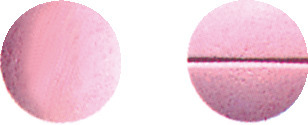
Urocarb tablets are round, light pink tablets with a break-line on one side. It is supplied in bottles of 100 tablets.

Ingredients

Urocarb Tablets contains 10 mg bethanechol chloride as the active ingredient. They also contain:

  • lactose monohydrate
  • wheat starch
  • acacia
  • hydrogenated vegetable oil
  • magnesium stearate
  • erythrosine (CI45430)
  • amaranth (CI16185)

Sponsor

Mayne Pharma International Pty Ltd
1538 Main North Rd
Salisbury South, SA 5106
Australia

Urocarb is a registered trade mark of Mayne Pharma International Pty Ltd

This leaflet was prepared in January 2019.

AUST R number 14861

Published by MIMS March 2019

BRAND INFORMATION

Brand name

Urocarb

Active ingredient

Bethanechol chloride

Schedule

S4


1 Name of Medicine

Bethanechol chloride.

2 Qualitative and Quantitative Composition

Urocarb tablets contain 10 mg bethanechol chloride.
Bethanechol chloride, a cholinergic agent, is a synthetic ester which is structurally and pharmacologically related to acetylcholine.

Excipients with known effect.

Urocarb contains lactose monohydrate and wheat starch. For the full list of excipients, see Section 6.1 List of Excipients.

3 Pharmaceutical Form

Urocarb tablets are round, light pink tablets with a break line on one side.

4 Clinical Particulars

4.1 Therapeutic Indications

Acute post-operative and postpartum non-obstructive urinary retention, and neurogenic atony of the urinary bladder with retention. Bethanechol has no clinically significant nicotinic stimulant activity.

4.2 Dose and Method of Administration

Oral or sublingual dose of 10 to 30 mg three to four times daily meets most needs. The effects sometimes appear within 30 minutes, but usually by 60 to 90 minutes and persist for about an hour. For urinary retention, it is preferable to give Urocarb on an empty stomach. If taken soon after eating, nausea and vomiting could occur.

4.3 Contraindications

Bethanechol is contraindicated in the following conditions and risk-benefit should be considered before prescribing:
Hypersensitivity to bethanechol or any of the ingredients in List of Excipients.
Bronchial asthma, latent or active - bethanechol may cause bronchospasm and may precipitate asthmatic attack.
Bradycardia (pronounced) - bethanechol slows heart rate and may exacerbate the condition.
Hyperthyroidism - risk of atrial fibrillation may be increased.
Coronary artery disease, especially occlusion (bethanechol may decrease coronary blood flow).
Vasomotor instability.
Hypotension - bethanechol may reduce blood pressure.
Peptic ulcer - bethanechol may aggravate symptoms probably by increasing acid secretion and/or by increasing gastric motility.
Epilepsy - although no causal relationship has been established, seizures have been reported in patients receiving bethanechol.
Parkinsonism - bethanechol may exacerbate this condition.
Conditions in which increased muscular activity of the gastrointestinal tract or urinary bladder might be harmful, such as anastomosis, recent bladder surgery, gastrointestinal resection; conditions in which strength or integrity of gastrointestinal (e.g. acute inflammation) or bladder wall is questionable, or gastrointestinal obstruction, or urinary tract obstruction (increased muscular activity of the gastrointestinal tract or urinary bladder may be harmful).

4.4 Special Warnings and Precautions for Use

Bacteriuria.

In urinary retention, if the sphincter fails to relax as bethanechol contracts the bladder, urine may be forced up the ureter into the kidney pelvis. If there is bacteriuria, this may cause reflux infection.

Postural hypotension.

Patients should be advised to exercise caution when getting up suddenly from a lying or sitting position.

Use in the elderly.

No data available.

Paediatric use.

No data available.

Effects on laboratory tests.

No data available.

4.5 Interactions with Other Medicines and Other Forms of Interactions

Caution is required when bethanechol is administered to patients being treated with other drugs that act on the parasympathetic nervous system, as pharmacologic interactions may occur. Some examples of drugs with potentials for such interactions are:
Cholinergic drugs, particularly cholinesterase inhibitors, where additive effects may occur.
Drugs with sympathomimetic properties, as their effects could be offset by bethanechol.
Drugs with anticholinergic properties (e.g. quinidine and procainamide), which may oppose the effect of bethanechol.
Ganglionic blocking agents (concurrent use with bethanechol may produce a critical fall in blood pressure, which is usually preceded by severe abdominal symptoms).

4.6 Fertility, Pregnancy and Lactation

Effects on fertility.

No data available.
(Category B2)
Adequate and well controlled studies in humans have not been done. Studies have not been done in animals. Bethanechol has a potent excitatory effect on smooth muscle and should be avoided during pregnancy.
No data available.

4.7 Effects on Ability to Drive and Use Machines

The effects of this medicine on a person's ability to drive and use machines were not assessed as part of its registration.

4.8 Adverse Effects (Undesirable Effects)

Adverse reactions are rare following oral administration of bethanechol chloride but are more common following subcutaneous injection. Adverse reactions are more likely to occur when dosage is increased.
The following adverse reactions have been observed:

Body as a whole.

Malaise.

Digestive.

Abdominal cramps or discomfort, colicky pain, nausea and belching, diarrhoea, borborygmi, salivation.

Renal.

Urinary urgency.

Nervous system.

Headache.

Cardiovascular.

A fall in blood pressure with reflex tachycardia, vasomotor response.

Skin.

Flushing producing a feeling of warmth, sensation of heat about the face, sweating.

Respiratory.

Bronchial constriction, asthmatic attacks.

Special senses.

Lacrimation, miosis.

Causal relationship unknown.

The following adverse reactions have been reported, and a causal relationship to therapy with bethanechol chloride has not been established:

Nervous system.

Seizures.

Reporting suspected adverse events.

Reporting suspected adverse reactions after registration of the medicinal product is important. It allows continued monitoring of the benefit-risk balance of the medicinal product. Healthcare professionals are asked to report any suspected adverse reactions at www.tga.gov.au/reporting-problems.

4.9 Overdose

Early signs of overdosage are abdominal discomfort, salivation, flushing of the skin ("hot feeling"), sweating, nausea, and vomiting.
Treatment of overdosage consists of administration of atropine, which may be repeated every 2 hours according to the clinical response. Subcutaneous injection of atropine is preferred, however in emergencies the intravenous route may be used to counteract severe toxic cardiovascular or bronchoconstrictor effects of bethanechol.
For information on the management of overdose, contact the Poison Information Centre on 13 11 26 (Australia).

5 Pharmacological Properties

5.1 Pharmacodynamic Properties

Mechanism of action.

Bethanechol chloride (Urocarb) is a quaternary ammonium parasympathomimetic agent with the muscarinic actions of acetylcholine. It is not inactivated by cholinesterase so that its action is more prolonged.
A selective stimulant of the smooth muscle of the gastrointestinal tract and the urinary bladder. It produces increase in tone and peristaltic activity of the stomach and intestines, increased oesophageal peristalsis and an increase in the resting pressure of the lower oesophageal sphincter. Bethanechol enhances the secretory activity of the pancreas and gastrointestinal tract and causes contraction of the detrusor muscle of the urinary bladder and decreased bladder capacity.
Effects on the Gl and urinary tracts sometimes appear within 30 minutes after oral administration of bethanechol chloride, but more often 60 to 90 minutes are required to reach maximum effectiveness.

Clinical trials.

No data available.

5.2 Pharmacokinetic Properties

Absorption.

Bethanechol chloride is a quaternary amine which is poorly absorbed from the gastrointestinal tract. Following oral administration, the effects of the drug may appear within 30 minutes and are usually maximal within 60 to 90 minutes.

Distribution.

At standard doses, bethanechol does not cross the blood-brain barrier. No further information is available about the distribution of bethanechol.

Metabolism.

The metabolic rate has not been determined, however bethanechol is not hydrolysed by cholinesterases and therefore its actions are more prolonged than those of acetylcholine.

Excretion.

Choline esters are rapidly eliminated by the kidneys. No further information is available about the excretion of bethanechol.

5.3 Preclinical Safety Data

Genotoxicity.

No data available.

Carcinogenicity.

No data available.

6 Pharmaceutical Particulars

6.1 List of Excipients

Urocarb contains lactose monohydrate, acacia, amaranth, erythrosine, magnesium stearate, wheat starch and hydrogenated vegetable oil.

6.2 Incompatibilities

Incompatibilities were either not assessed or not identified as part of the registration of this medicine.

6.3 Shelf Life

In Australia, information on the shelf life can be found on the public summary of the Australian Register of Therapeutic Goods (ARTG). The expiry date can be found on the packaging.

6.4 Special Precautions for Storage

Store below 30°C.

6.5 Nature and Contents of Container

HDPE bottles, 100 scored tablets.

6.6 Special Precautions for Disposal

In Australia, any unused medicine or waste material should be disposed of by taking to your local pharmacy.

6.7 Physicochemical Properties

Chemical structure.

Bethanechol chloride is designated chemically as 1-propanaminium, 2-[(aminocarbonyl)oxy]-N, N, N-trimethyl-chloride.
It is a white to off white crystalline powder, soluble in water and alcohol, and has a molecular weight of 196.68.

CAS number.

CAS 590-63-6.

7 Medicine Schedule (Poisons Standard)

Schedule 4 - Prescription Only Medicine.

Summary Table of Changes