



What is in this leaflet?
Please read this leaflet carefully before you take Zeffix tablets.
This leaflet answers some common questions about Zeffix tablets. It does not contain all of the available information.
It does not take the place of talking to your doctor or pharmacist.
All medicines have risks and benefits. Your doctor has weighed the expected benefits of you taking Zeffix against the risks this medicine could have for you.
If you have any concerns about taking this medicine, ask your doctor or pharmacist.
Keep this leaflet with the medicine. You may need to read it again.
What is Zeffix used for?
Zeffix belongs to a group of medicines called antivirals.
Zeffix is used to treat patients 2 years of age or over with long term (chronic) viral infection of the liver caused by hepatitis B.
Hepatitis B is a virus which damages the liver. Treatment with Zeffix can reduce the amount of hepatitis B virus in your body. This should lead to less liver damage.
Zeffix has not been shown to reduce the risk of passing hepatitis B to others. You will still be able to pass on the hepatitis virus by sexual contact or through your blood. You should use appropriate precautions.
Your doctor may have prescribed Zeffix for another reason.
Zeffix is not addictive.
If you are already taking this medicine lamivudine for HIV infection (3TC®, Combivir®), your doctor will continue to treat you with the higher dose for that treatment.
Before you take Zeffix
Do not take if:
You must not take Zeffix if:
- you have ever had an allergic reaction to lamivudine or any of the ingredients listed toward the end of this leaflet. (See "Ingredients").
- the expiry date (EXP) printed on the pack has passed.
- the packaging is torn or shown signs of tampering.
Tell your doctor if:
You must tell your doctor if:
- you are allergic to foods, dyes, preservatives or any other medicines.
- you have, or have ever had, kidney problems.
- you have or have ever had problems with your pancreas.
- you are breastfeeding, pregnant or trying to become pregnant.
Taking other medicines
Tell your doctor or pharmacist if you are taking any other medicines, including any that you get without a prescription from your pharmacy, supermarket or health food shop.
Some medicines and Zeffix may interfere with each other. These include:
- zalcitabine, used to treat HIV infection (sometimes called the AIDS virus).
- medicines (usually liquids) containing sorbitol and other sugar alcohols (such as xylitol, mannitol, lactitol or maltitol.
- other medicines containing lamivudine, used to treat HIV infection (sometimes called the AIDS virus.
- emtricitabine used to treat HIV infection or hepatitis B infection
- cladribine, used to treat hairy cell leukaemia.
Your doctor and pharmacist have more information on medicines to be careful with or avoid while taking this medicine.
How do I take Zeffix?
How much to take
Take Zeffix as directed by your doctor or pharmacist.
The normal dose for adults and children aged 12 years or above is one 100 mg tablet once a day. Your doctor may prescribe a different dosage, for example if you have kidney problems. Each patient responds to the treatment differently. Your doctor will check you by taking regular blood samples. The results will help decide when you should stop taking Zeffix.
How to take it
Zeffix tablets should be swallowed whole with a glass of water, and can be taken with or without food.
How long to take it for
In order for Zeffix tablets to be effective, you must take Zeffix tablets every day for as long as your doctor says you should take them.
What do I do if I take too much? (Overdose)
Immediately telephone your doctor or the Poisons Information Centre (telephone 13 11 26) for advice, if you think that you or anyone else may have taken too much Zeffix, even if there are no signs of discomfort or poisoning.
If you are not sure what to do, contact your doctor or pharmacist.
While you are taking Zeffix
Things you must do
Tell your doctor if, for any reason, you have not taken your medicine exactly as directed. Otherwise, your doctor may think that it was not working as it should and change your treatment unnecessarily.
If you forget to take a dose, do not take a double dose to make up for the dose that you missed.
Things you must not do
Do not stop taking Zeffix tablets, or change the dose without first checking with your doctor. If you stop taking Zeffix your hepatitis may get worse.
This can cause serious illness particularly if your liver is already not working very well. If you do have to stop taking Zeffix your doctor is likely to arrange tests over the following four months to check how well your liver is working.
Do not give this medicine to anyone else, even if their symptoms seem similar to yours.
Do not use Zeffix to treat any other complaints unless your doctor says to.
What are the side-effects?
Check with your doctor as soon as possible if you think you are experiencing any side effects or allergic reactions due to taking Zeffix, even if the problem is not listed below.
Like other medicines, Zeffix can cause some side-effects. If they occur, they are most likely to be minor and temporary. However, some may be serious and need medical attention.
The most commonly reported side-effects are:
- Headache.
- Vomiting and diarrhoea.
- Nausea.
- Fatigue/tiredness.
- Abdominal discomfort and pain.
- Coughing, with phlegm, not associated with a cold or flu.
- Dizziness.
- Abnormal Liver Function tests.
- Muscle disorders, (including muscle pain and cramps).
Tell your doctor immediately if you notice any of the following:
- Wheezing, swelling of the lips/mouth, difficulty in breathing, hayfever, lumpy rash (hives) or fainting. These could be symptoms of an allergic reaction.
This is not a complete list of all possible side-effects. Others may occur in some people and there may be some side-effects not yet known.
Do not be alarmed by this list of possible side-effects. You may not experience any of them.
How do I store Zeffix?
Keep this medicine where children cannot reach it, such as in a locked cupboard.
Do not leave in a car, on a window sill or in the bathroom.
Keep Zeffix tablets in a cool dry place where it stays below 30°C.
Keep Zeffix tablets in the blister pack until it's time to take them.
Return any unused or expired medicine to your pharmacist.
Product description
What Zeffix tablets look like
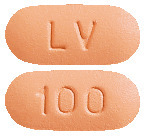
The tablets are butterscotch coloured, film-coated, capsule shaped, biconvex tablets engraved "LV" on one side and "100" on the other.
Zeffix tablets are supplied in foil blisters and are in a carton containing 28 tablets.
Ingredients
Zeffix tablets contain 100 mg of lamivudine. Your tablets also contain the following inactive ingredients:
- microcrystalline cellulose
- magnesium stearate
- titanium dioxide
- hypromellose
- sodium starch glycollate
- polyethylene glycol
- polysorbate 80
- macrogol 400
- iron oxide yellow CI 77192
- iron oxide red CI 77491.
Zeffix tablets do not contain lactose or gluten.
Supplier
Zeffix tablets is supplied by:
Arrow Pharma Pty Ltd
15-17 Chapel Street
Cremorne VIC 3121
Australia.
This leaflet was prepared in February 2023.
Zeffix tablets: AUST R 66828
Published by MIMS July 2024

 Data available in patients undergoing intermittent haemodialysis (4 hrs dialysis 2-3 times weekly), indicate that following the initial dosage reduction of Zeffix to correct for the patient's creatinine clearance, no further dosage adjustments are required while undergoing dialysis.
 Adverse reactions are listed below by system organ class and frequency. Frequency categories are only assigned to those adverse reactions considered to be at least possibly causally related to lamivudine. Frequencies are defined as: very common (≥ 1/10), common (≥ 1/100 to < 1/10), uncommon (≥ 1/1000 to < 1/100), rare (≥ 1/10,000 to < 1/1000) and very rare (< 1/10,000).
 The molecular formula of lamivudine is C8H11N3O3S and it has a relative molecular mass of 229.3.